
Pest
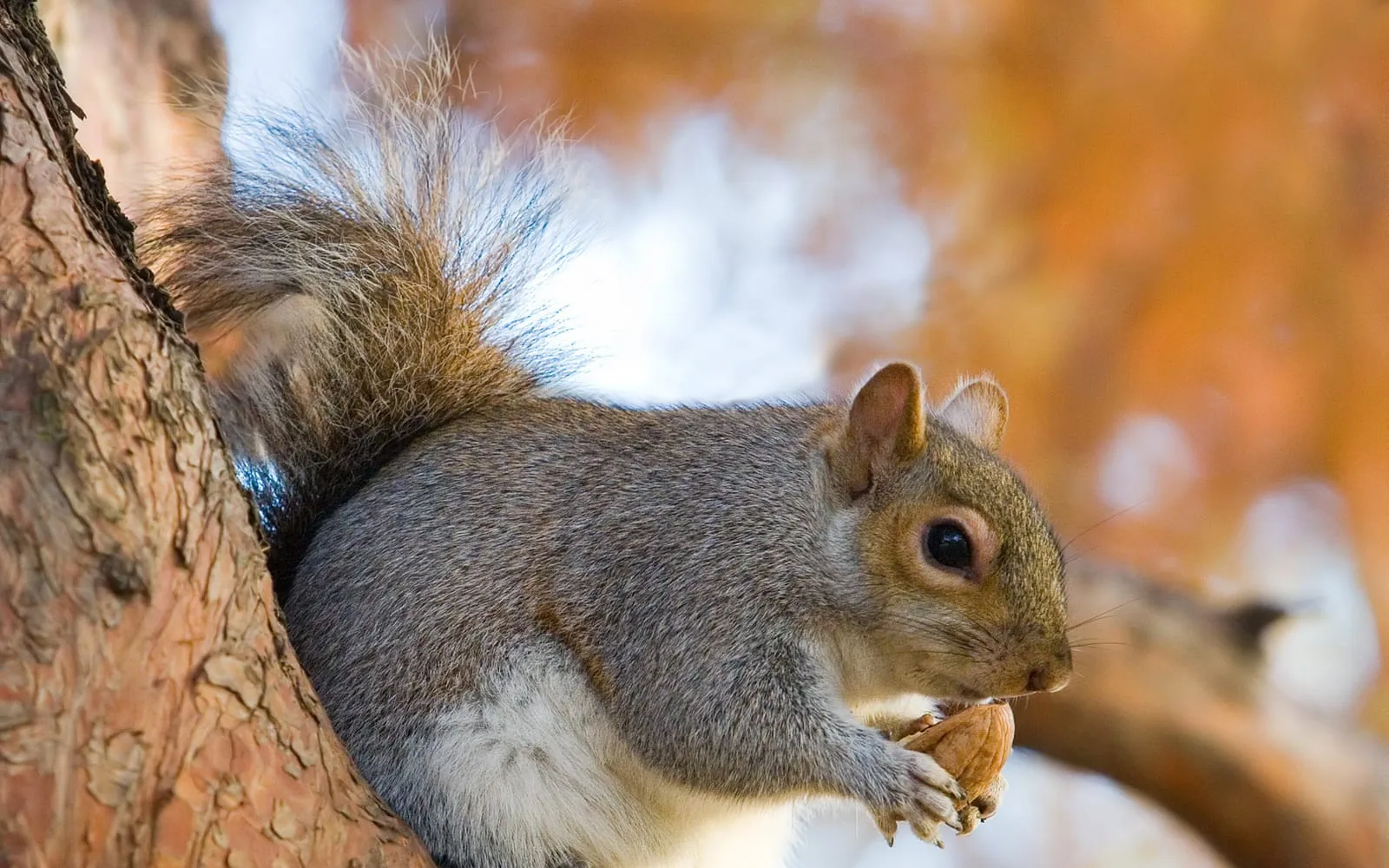
Squirrels and mice
Also called Grey squirrel, Mice, Voles
Squirrels and mice dig crocuses, take peas before germination and strip bark from young trees. Use barriers, storage and planting depth rather than poison in a garden.
At a glance
- Type
- Pest
- Cause
- Mammal
- Severity
- Destroys the crop or display
- Affects
- Garden plants, Herbs and edibles
- Active
- All year
- Established in
- Europe, North America and Asia
What you are seeing
- Freshly planted bulbs dug out and scattered, with neat conical holes left behind
- Bulbs and corms gone from a pot, with the compost thrown over the sides
- A sown row of peas or beans that never comes up, with the seed gone and the soil disturbed
- Bark stripped in patches partway up the trunk or along the branches of a young tree
- Nuts and fruit taken while still green and left half eaten
- Gnawed bark at ground level under mulch or long grass, with fine tooth marks
- Stored bulbs, corms and fruit eaten in the shed over winter
Before you treat anything
Do not put rodent poison out in a garden. A poisoned mouse is eaten by an owl, a kestrel, a hedgehog, a fox or a cat, and the poison goes with it. Baits are also a direct risk to children and pets. Traps and exclusion carry none of that.
What you are looking at
Crocus and tulip bulbs planted a fortnight ago are lying on the surface, or gone, with neat conical holes where they were. The compost from a pot is thrown over the sides. That is squirrels, and the freshly disturbed soil is what drew them.
A row of peas or broad beans sown three weeks ago has not come up. Scrape along the row and the seed has gone. That is mice, working the row from one end and taking the seed before it germinates, which is why nothing at all appears rather than seedlings being eaten.
Bark stripped in patches from the trunk or the upper branches of a young tree between May and July, with the wood exposed and pale, is grey squirrels. Bark gnawed at ground level under mulch or long grass, with finer tooth marks, is voles.
Nuts and fruit taken green and left half eaten under the tree is squirrels again.
Why the sowing method matters more than anything else
Almost every rodent problem in a vegetable garden comes down to putting food in the ground and waiting.
Peas, broad beans, French beans, sweetcorn and sunflowers are all seeds a mouse would go a long way for, and sowing them direct places them at a fixed, findable location for a fortnight. Nothing you spread on the surface changes that arithmetic.
Sowing into modules, root trainers or a length of guttering under cover, and planting out established seedlings, removes the vulnerable stage entirely. It also gives better germination, faster establishment and an earlier crop, so it is worth doing whether or not you have mice.
Bulbs work the same way. Squirrels find them because the soil has just been turned. Planting at a proper depth, firming the surface, watering it in and covering with mulch removes the signal. Wire mesh over the area for a few weeks removes the possibility.
Leave the poison out of it
Rodenticide in a garden does not stay in the rodent. A poisoned mouse becomes slow and easy to catch, and then it is eaten by a barn owl, a kestrel, a hedgehog, a fox or the neighbour’s cat, and the poison travels with it. Owls in particular are widely contaminated in Britain, and garden and outbuilding use is part of that.
Baits are also a straightforward hazard to children and pets.
Traps in a shed or greenhouse, exclusion, and changing how you sow do the same job with none of that, which is why nothing appears in the last two tiers of this page.
What to do about it
Sow peas and beans under cover and plant them out as seedlings.
Lay wire mesh over newly planted bulbs and pots, and lift it in spring.
Plant daffodils, alliums and snowdrops where squirrels are a fixture, and keep crocuses and tulips for protected ground.
Firm and mulch the soil after planting so it does not look freshly dug.
Guard the trunks of young trees and check the guards each year.
Net fruit early, supported clear of the crop, and check the netting daily.
Store bulbs, seed and fruit in rodent-proof containers and keep the shed tidy.
Keep mulch and long grass off the base of young trees.
What it gets mistaken for
Rabbits cut shoots cleanly at an angle and gnaw bark in a band at ground level.
Deer tear shoots off raggedly, well above rabbit height.
Slugs take seedlings after they have emerged and leave slime and rasped edges. A missing seed means a rodent.
Pigeons strip foliage from above in daylight and leave droppings.
Poor germination from cold wet soil or old seed also produces an empty row, so scrape along it and look before blaming anything. Seed still in place and rotted is a sowing problem rather than a mouse.
Badgers dig conical pits in lawns after grubs, which look like squirrel digging but are larger and confined to turf.
What to do, in order
Start here
Prevention, and the changes that stop the problem returning. Most of these pages should end at this tier.
- Sow peas and beans under cover and plant them out
- A row of peas sown direct is a row of food at a known address. Sow into modules, root trainers or a length of guttering in a cold frame or greenhouse, and plant out when the plants are up and growing. This single change ends the problem for most gardeners and is worth doing on its own merits, since the germination is better too.
- Plant the bulbs they leave alone
- Daffodils, alliums, snowdrops, camassia and fritillaries are all largely ignored, because most of them are unpalatable or toxic. Crocuses and tulips are the two that get dug up, so weight the planting accordingly where squirrels are a fixture.
- Plant deeper and firm the soil back
- Loose, freshly turned soil advertises where something has been buried. Plant at a proper depth, firm the surface, and water it in so it settles and looks undisturbed. A layer of mulch or leaf litter over the top helps further.
- Tidy the shed and store crops properly
- Mice take stored apples, bulbs and seed over winter. Rodent-proof containers, tidy shelves and no spilled birdseed make a shed far less attractive than a bag of daffodil bulbs left open on a bench.
- Keep grass and mulch off young tree stems
- Voles gnaw bark at ground level under cover. Leave a clear collar of bare ground around the base of a young tree rather than mulching right up to the stem, and they have nowhere to work unseen.
Then reach for a barrier
Netting, hand removal and water. Nothing here harms anything except the target.
- Lay wire mesh over newly planted bulbs
- Chicken wire pegged over the planting area, or a piece laid a few centimetres above the bulbs and covered with soil, stops the digging while letting the shoots through. Lift it in spring. On pots, a square of mesh over the compost surface does the same job.
- Guard the trunks of young trees
- A mesh sleeve on stakes keeps squirrels off the bark of a young tree. Check the fit annually so it does not constrict the trunk. Bark stripping in May, June and July is when most of the damage is done.
- Net fruit before it ripens
- Squirrels take apples, pears, nuts and soft fruit while still green. Netting has to go on early and be supported clear of the fruit, and it has to be checked daily so nothing is caught in it.
- Trap mice indoors, and know the law on squirrels
- Traps in a greenhouse or a shed are effective against mice. Grey squirrels are a different matter legally, since it is an offence in Britain to release a trapped grey squirrel back into the wild, so live-trapping one creates an obligation most gardeners would rather not have. Exclusion is the better route.
Plants affected
Guides that name it among the problems to watch for. The list is the plants it is characteristic of rather than everything it will feed on.