
Disorder
Wind rock
Also called Windrock, Root rock, Wind damage
Wind rock makes a shrub or sprout rock until a funnel opens around the stem. Firm plants in autumn, reduce tall growth where needed and stop water collecting around damaged roots.
At a glance
- Type
- Disorder
- Cause
- Growing conditions
- Severity
- Weakens the plant
- Affects
- Garden plants, Herbs and edibles
- Active
- All year
What you are seeing
- A funnel-shaped hole opening in the soil around the base of the stem
- The plant visibly moving at the base in wind, rather than only flexing above
- Water standing in the hollow around the stem after rain
- Leaves yellowing and growth stalling on a plant that looks otherwise sound
- Brussels sprouts and kale leaning over at an angle by midwinter
- Newly planted shrubs and trees failing to establish over their first two winters
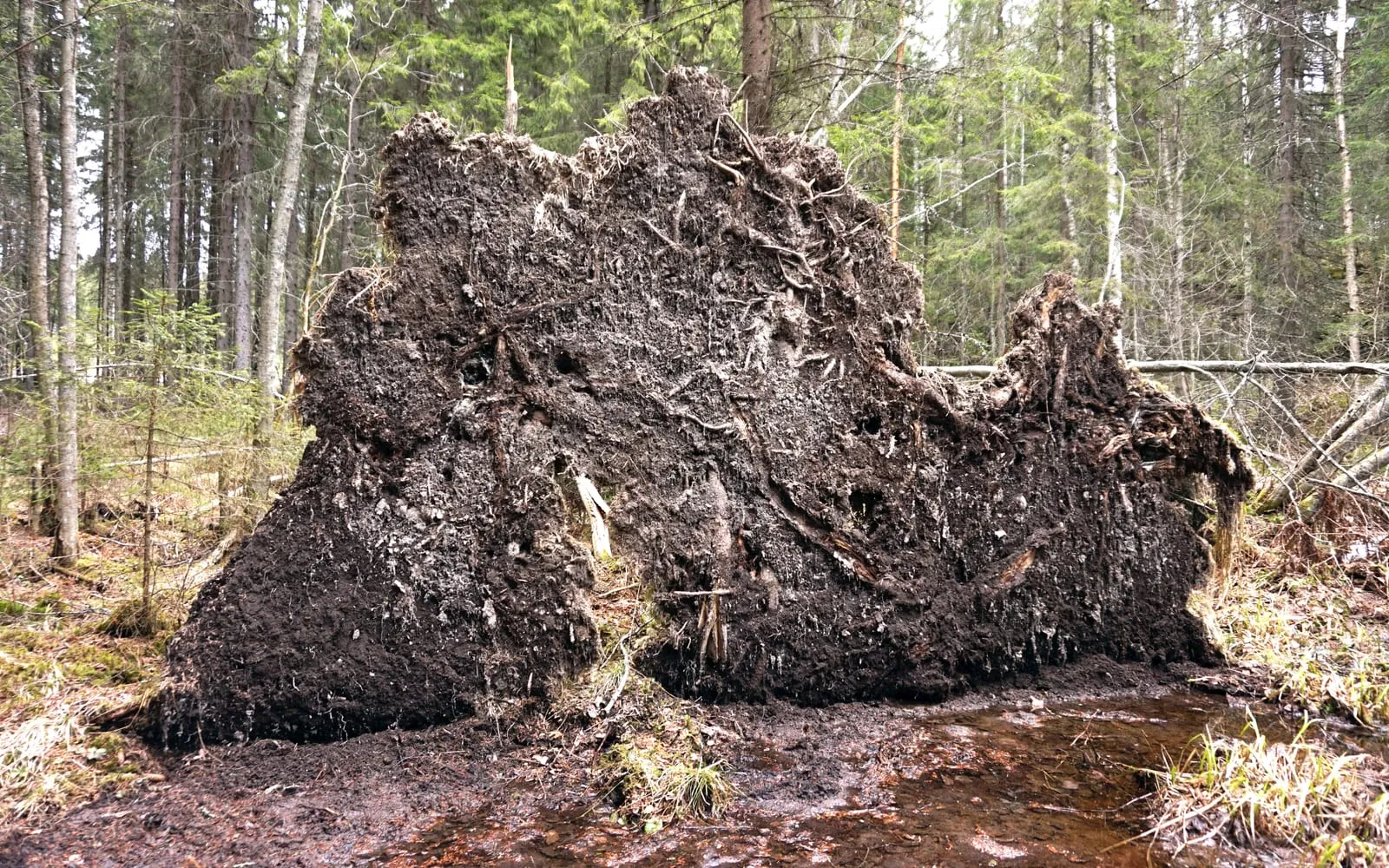
- Roots exposed at the surface, or torn where they enter the soil
Before you treat anything
A tree that has rocked badly enough to open a hole around the trunk may be unstable. Anything of size leaning over a path, a road or a building after a storm should be looked at by an arborist rather than pushed back upright.
What you are looking at
A shrub, a young tree or a tall brassica has a funnel-shaped hole in the soil around its stem, a few centimetres deep and wider at the top. Push the stem and the whole base moves rather than the top flexing.
After rain there is water sitting in that hollow.
Above ground the plant is yellowing, growing slowly and generally sulking on ground where everything else is fine.
Brussels sprouts and kale show it best. By midwinter on an exposed plot they are leaning at an angle, the sprouts have blown open, and there is a socket around every stem.
The hole is what does the damage
The rocking itself tears the fine roots that a plant needs to feed and drink with, which is enough on its own to check growth.
The hole is worse. It funnels rain straight down to the collar of the plant and holds it there, so the base of the stem sits in water through the winter. Collar rots and phytophthora both get in exactly there, and a great many plants recorded as dying of root rot were rocked first.
That is why filling the hollow matters as much as firming the soil. Two minutes with a heel and a spadeful of soil, done in November, prevents both the tearing and the puddle.
Staking, and how it usually goes wrong
A newly planted tree needs its root ball held still while the roots grow out into the surrounding soil. It does not need its trunk held still, because a trunk that flexes in wind lays down the wood that makes it strong.
So the stake goes in low, at about a third of the tree’s height, angled or vertical, with a single tie fitted loosely. That holds the roots and lets the top move.
The usual mistake is a tall stake with the tie near the top, left in place for ten years. The tree grows a slender trunk that has never had to support itself, the tie cuts into the bark as it thickens, and when the stake finally rots the tree goes over in the first gale.
Fit it low, check the tie annually, and take the stake out after two or three seasons.
What to do about it
Walk round after a gale and check anything tall for a socket at the base.
Tread the soil back firmly, fill the hollow so water cannot stand in it, and water it in.
Plant Brussels sprouts, kale and sprouting broccoli deep and firm them hard.
Earth up the stems of tall brassicas and leeks in autumn.
Cut leggy roses and buddleja back by about half in November, and do the real pruning in spring.
Stake new trees low, tie loosely, check yearly, and remove the stake after two or three years.
Support dahlias, sunflowers and sprouts before the weather rather than after it.
Keep mulch off the collar.
Plant a hedge rather than a solid fence where wind is the problem, since a hedge filters wind and a fence creates turbulence behind it.
What it gets mistaken for
Waterlogging affects the whole bed rather than producing a private puddle around one stem.
Root rot is frequently the cause of death and wind rock is frequently the reason it got in.
Transplant shock stalls a newly planted shrub that is nonetheless firm in the ground.
Vine weevil and other root pests stall a plant and leave the soil around the stem undisturbed.
Honey fungus kills from the base with white sheets under the bark and bootlaces in the soil, and a rocked plant is more vulnerable to it.
What to do, in order
Start here
Prevention, and the changes that stop the problem returning. Most of these pages should end at this tier.
- Plant tall brassicas deep and firm them hard
- Set Brussels sprouts, kale and purple sprouting broccoli with the lowest leaves at soil level, and tread the soil down around them properly. A brassica planted loosely in fluffy soil will be leaning by December and the sprouts will blow open.
- Choose the site for exposure
- A tall shrub in a wind funnel between two buildings, or on an exposed corner, will always be working against the weather. Plant windbreaks, use a hedge rather than a solid fence, and put the vulnerable things where the wind is already broken.
- Prune tall roses and buddleja by half in autumn
- This is the classic autumn job and it exists for exactly this reason. Cutting a leggy rose or a tall buddleja back by about half in November reduces the sail area, so winter gales cannot lever the roots about. The proper pruning happens in spring; this is a wind measure.
- Mulch, but keep it off the stem
- A mulch conserves moisture and improves the soil the roots are trying to grow into, and piled against a stem it holds water at the collar. Leave a clear collar of a few centimetres.
Then reach for a barrier
Netting, hand removal and water. Nothing here harms anything except the target.
- Refirm the soil and fill the hollow
- Where a socket has opened, tread the soil back in firmly all round the stem, add soil to fill the hollow so water cannot stand in it, and water it in to settle. Check again after the next gale. This takes two minutes and saves plants.
- Stake a new tree low and remove the stake in time
- A short stake fitted at about a third of the tree's height holds the root ball still while letting the top flex, which is what builds a strong trunk. Fit the tie loosely enough to allow thickening, check it every year, and take the stake out after two or three seasons. A tall stake left in for a decade produces a tree that cannot stand alone.
- Earth up leeks and tall brassicas
- Drawing soil up around the stems in autumn anchors them and closes any gap that has opened. On an exposed plot it is worth doing to the whole row.
- Support what needs it before the weather arrives
- Canes and ties on tall dahlias, sunflowers and sprouts go in early, while the plant is small enough to work around. Staking after a gale is first aid.
Plants affected
Guides that name it among the problems to watch for. The list is the plants it is characteristic of rather than everything it will feed on.
A common rose problem
This is one of the pests, diseases and disorders that rose growers meet most often. See it alongside the others on the common rose problems guide.
Common rose problems