
Edible
Winter squash
Cucurbita maxima
Also known as Pumpkin, Giant pumpkin, Hubbard squash
How to grow winter squash and pumpkins, Cucurbita maxima. Feeding a hungry plant, restricting the fruit for size, and the curing that decides whether they store.
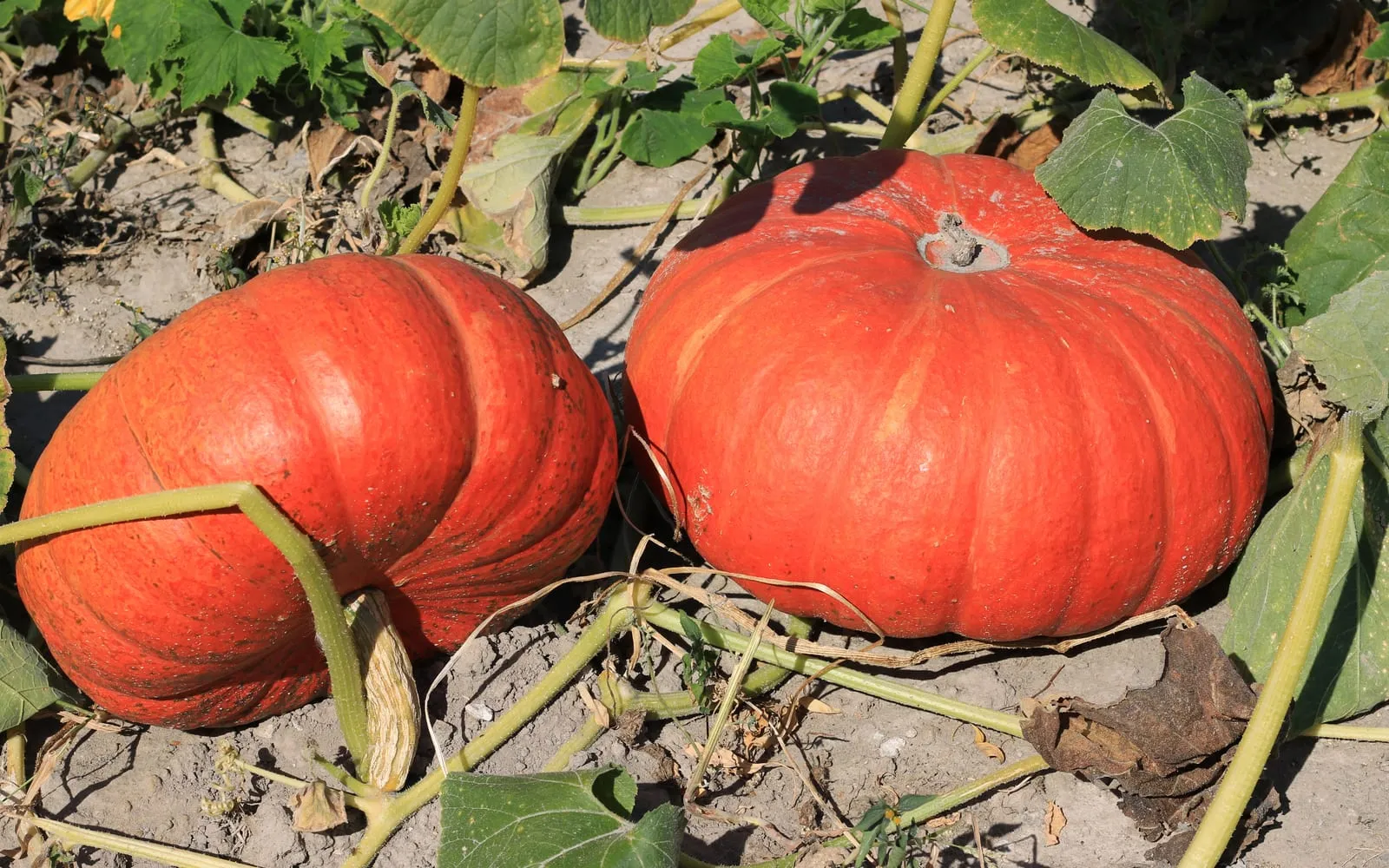
At a glance
- Difficulty
- Easy
- Water
- Generously and often through summer
- Light
- Full sun, and as warm a spot as possible
- Temperature
- Sow indoors. Frost kills it at both ends of the season
- Hardiness
- USDA 10-11, RHS H1c, hardy to 2 C
- Type
- Half-hardy annual, killed by the first frost
- Height
- 40-60 cm high, and 3-6 m across
- Native to
- South America, in Argentina, Bolivia and Uruguay
- Best month
- August in the Northern Hemisphere, February in the Southern Hemisphere
The fruit needs to ripen fully on the vine and then cure at 25 to 30 deg C for a fortnight, and a squash lifted green and stored cold rots instead of keeping. Cucurbita maxima tolerates cooler summers than butternut and is the squash of choice at high latitude. Allow 100 to 120 frost-free days.
Hardiness zones describe winter cold alone. Summer heat, humidity, rainfall and the length of the growing season decide as much, so treat the range as the outer limit rather than as a recommendation.
Every month named in this guide is for the temperate Northern Hemisphere. If you garden in the Southern Hemisphere, shift each one by six months, so August becomes February. Closer to the equator the wet and dry seasons matter more than the calendar, and the shift stops being a useful guide.
Not known to be toxic
- Safe to eat
- The flesh, the seeds and the flowers
Non-toxic. The ASPCA does not list Cucurbita among plants harmful to cats, dogs or horses, and squash is a food crop. Cooked plain pumpkin is routinely recommended by vets as a source of fibre for dogs with digestive trouble. The flowers are edible, and the seeds are worth roasting. One rare but real hazard is worth naming. Squashes, courgettes and marrows can contain cucurbitacins, intensely bitter compounds that the plant makes as a defence, and modern varieties have been bred to lack them. They occasionally reappear, most often in plants grown from seed saved from a garden where cross-pollination with an ornamental gourd has occurred, and occasionally after severe stress. Eating a fruit high in cucurbitacins causes violent vomiting and diarrhoea, a condition known as toxic squash syndrome, and deaths are recorded although they are very rare. The defence is simple and reliable. Taste a small piece raw before cooking, and if it is bitter, spit it out and throw the whole fruit away. Bitterness is not subtle, and no amount of cooking removes it. Buying fresh seed each year rather than saving your own removes the risk almost entirely.
Sources: ASPCA toxic and non-toxic plants, RHS potentially harmful garden plants
About
Winter squash is a summer crop that you eat in winter, which is the whole point of it. Cut in October, cured for a fortnight and stored somewhere cool and dry, a good squash keeps until March with no processing at all.
Cucurbita maxima is the species that produces the giants. Every record-breaking pumpkin, including the ones over a tonne, is this species, and so are Crown Prince, Blue Ballet, Turk’s Turban and most of the best-flavoured storing squashes.
What it wants is straightforward and immoderate. More sun than a cool climate usually provides, more manure than seems reasonable, and more water than any other vegetable in the garden. Give it those and it will produce a great deal of food from one plant.
Appearance and character
A sprawling half-hardy annual, running 3 to 6 m across the ground from a single crown. Those ground-covering leaves are why squash is the third of the three sisters, shading the soil below sweetcorn and climbing beans.
Stems are thick, round in section and softly hairy, which distinguishes Cucurbita maxima from the harder angular stems of Cucurbita pepo, the courgette and marrow species.
Leaves are very large, rounded to kidney-shaped and shallowly lobed, on long hairy stalks, and a mature plant covers several square metres.
Flowers are large, orange-yellow and trumpet-shaped. Male flowers come first on long thin stalks, and female flowers follow with a tiny swollen fruit already visible behind the petals.
Fruit varies enormously, from 1 kg to several hundred, in orange, blue-grey, green, cream and pink, smooth or heavily ribbed and warted.
The stalk is round and corky rather than ridged, which is another way of telling this species from the others.
Useful varieties include ‘Crown Prince’, blue-grey with dense orange flesh and the best keeper, ‘Uchiki Kuri’ is small, orange and reliable in a short season, ‘Turk’s Turban’ is ornamental and edible, and ‘Atlantic Giant’ is the record breaker.
Where it is from
South America, in the region of Argentina, Bolivia and Uruguay, domesticated from a wild ancestor around four thousand years ago.
This is a different domestication from the other squashes. Cucurbita pepo, which includes courgettes, marrows and the American Hallowe’en pumpkin, comes from Mexico, and Cucurbita moschata, the butternut group, from Central America. The three do not readily cross.
All arrived in Europe after 1492, and squash were established in European gardens by the seventeenth century.
Their tropical American origin sets every requirement. They need warmth, they are killed outright by frost, and they evolved in rich moist soil with a long growing season, which is why a cool summer is only just long enough.
The Hallowe’en association is North American and reached Europe only recently, and the carving pumpkins sold for it are usually Cucurbita pepo with thin watery flesh. The best eating squash is almost always maxima or moschata.
How it grows
Sow indoors in late April or early May, one seed per 9 cm pot, on its edge rather than flat, about 2 cm deep. Sowing on edge reduces the chance of the seed rotting.
Harden off carefully and plant out after the last frost, usually late May or early June.
Prepare the planting position properly. Dig a hole a spade’s depth, fill it with well-rotted manure or compost, and plant into a low mound on top. This is a very hungry plant.
Space plants 1.5 to 2 m apart for trailing varieties. They need more room than people give them.
Sink a plant pot or a length of pipe into the soil beside each plant at planting and water into that. It delivers water to the roots rather than the surface, which matters for something this thirsty.
Restrict the fruit for size and ripeness. Two or three fruits per plant for large varieties, four or five for small ones. Pinch out the growing tip two leaves beyond the last fruit you are keeping, and remove later flowers.
Slide a tile, a slate or a piece of wood under each developing fruit to keep it off wet soil.
Pollinate by hand in a cold wet summer. Pick a male flower, strip the petals and push it into the centre of a female flower in the morning.
Harvest in October before the first frost, when the skin is hard enough to resist a thumbnail and the stalk has begun to crack and dry. Cut with 5 to 10 cm of stalk attached, and never carry a squash by its stalk.
Cure the fruit. Leave them in the sun for ten to fourteen days, or somewhere warm and dry indoors, until the skin is hard. Curing is what turns a squash that rots in November into one that keeps until March.
Store somewhere cool, dry and airy at around 10 to 15 deg C, not touching each other, and check them monthly.
Through the seasons
Spring is sowing. Start seed indoors in late April, and plant out after the frosts into a heavily manured position.
Summer is growth and feeding. Water copiously, feed weekly once fruit sets, restrict the number of fruits, and hand-pollinate in poor weather.
Autumn is the harvest and the cure. Cut before the first frost in October, cure for a fortnight, then store.
Winter is eating. A well-cured squash of a good variety keeps into March, and the flavour improves for the first couple of months.
Care difficulty
Easy, and it needs generosity rather than skill.
Underfeeding and underwatering are the commonest reasons for small disappointing fruit.
Space is the other thing people misjudge. A trailing squash covers several square metres and swamps whatever is beside it.
Powdery mildew arrives every August and rarely matters, since the crop is nearly made by then.
Frost at both ends of the season is the hard limit, and it is why a cool-climate season is so tight.
Watering
Water generously and frequently. Winter squash is among the thirstiest things in a vegetable garden.
Water into a sunken pot or pipe beside the plant rather than over the leaves. It puts water at the roots and keeps the foliage dry, which slows mildew.
Mulch thickly around the plant once the soil has warmed.
Increase the volume as the fruit swells, which is when the demand peaks.
Reduce watering in September as the fruit ripens, which improves the keeping quality and the flavour.
Warning signs, diseases and pests
Small fruit that rot at the flower end usually means poor pollination. In a cold wet July there are too few insects flying, so hand-pollinate in the morning with a male flower.
Powdery mildew coats the leaves in white from August. It is close to universal and usually arrives after the fruit is set, so it matters less than it looks. Water at the base, space plants properly, and remove the worst leaves.
Fruit rotting where it touches the ground is prevented by sliding a tile or a board underneath each one.
Slugs destroy young plants. Protect them until they are well away.
Fruit that fails to ripen means too many were left on the plant, or the season ran out. Restrict to two or three per plant and remove late flowers.
Squash that rot in store within a few weeks were not cured properly, or were cut without a stalk, or were bruised. Cure for a fortnight and handle them gently.
A bitter taste in a raw sliver means cucurbitacins. Throw the whole fruit away.
Frost damage blackens the foliage overnight, and any fruit still on the plant should be used quickly rather than stored.
Squash vine borer, a wasp-mimicking day-flying moth, tunnels inside the stem across North and South America and can wilt a vine within days. Look for sawdust-like frass at a hole near the base, and slit the stem to remove the caterpillar if caught early. Cucumber beetle, small and striped or spotted yellow, can carry bacterial wilt, which has no cure. Row cover over young plants guards against both, and neither has established outside the Americas.
Growing environment
Full sun, and the warmest position available.
Deep, rich, moisture-retentive soil with as much well-rotted manure as you can supply. A squash planted on a compost heap does famously well.
Space of 1.5 to 2 m each way for trailing varieties. Bush varieties such as ‘Uchiki Kuri’ need about 1 m.
Shelter from wind, which tears the large leaves.
They can be trained up a strong frame to save space, with the fruit supported in nets, though only for smaller varieties.
The edge of a plot where the vines can run into a path or over a bank suits them well.
Avoid a cold exposed site, and avoid planting out before the frosts have finished.
Feeding
Prepare the ground with a very generous quantity of well-rotted manure or compost before planting.
Feed weekly with a high-potassium tomato fertiliser from the time the first fruit sets.
A nitrogen-rich feed early in the season builds the plant, and switch to potassium once fruiting starts.
Mulch with compost, which feeds and conserves moisture at the same time.
Stop feeding in September so the fruit ripens and hardens rather than continuing to swell.
Troubleshooting
The little fruits shrivel and rot at the end. Poor pollination, usually from a cold wet spell. Hand-pollinate in the morning using a male flower with its petals stripped off.
How many should I leave on the plant? Two or three for large varieties and four or five for small ones. Pinch out the tip two leaves beyond the last fruit you are keeping.
When do I pick them? October, before the first frost, when the skin resists a thumbnail and the stalk is cracking and drying. Cut with a good length of stalk.
Mine rotted in store by November. They were probably not cured. Leave them somewhere warm and dry for ten to fourteen days after cutting until the skin is hard, and never carry a squash by its stalk.
White powder all over the leaves. Powdery mildew, which arrives every August and usually after the crop is made. Water at the base and remove the worst leaves.
It has taken over the whole plot. Trailing varieties run 3 to 6 m. Train the vines where you want them, or grow a bush variety.
One tasted horribly bitter. Cucurbitacins. Spit it out and throw the whole fruit away. It happens occasionally with saved seed, and cooking does not remove it.
Which variety keeps best? ‘Crown Prince’ is the standard for storage and flavour, and ‘Uchiki Kuri’ is the most reliable in a poor summer.
Winter squash problem guides
Not sure what is wrong? See the common vegetable pests guide.