
Pest
Wireworms
Agriotes, Athous and Limonius species
Also called Wireworm, Click beetle larvae, Skipjack grubs
Thin orange-brown grubs that bore clean round tunnels deep into potatoes, carrots and seedling stems. Worst in the first years after grass is broken up, and the damage is done by a grub that takes four years to grow up.
At a glance
- Type
- Pest
- Cause
- Insect
- Severity
- Destroys the crop or display
- Affects
- Garden plants, Herbs and edibles
- Active
- March to October
- Established in
- Europe, North America, Central and South America, Africa, Asia, Australia and New Zealand
What you are seeing
- Narrow round holes bored straight into potato tubers, clean-edged and going deep
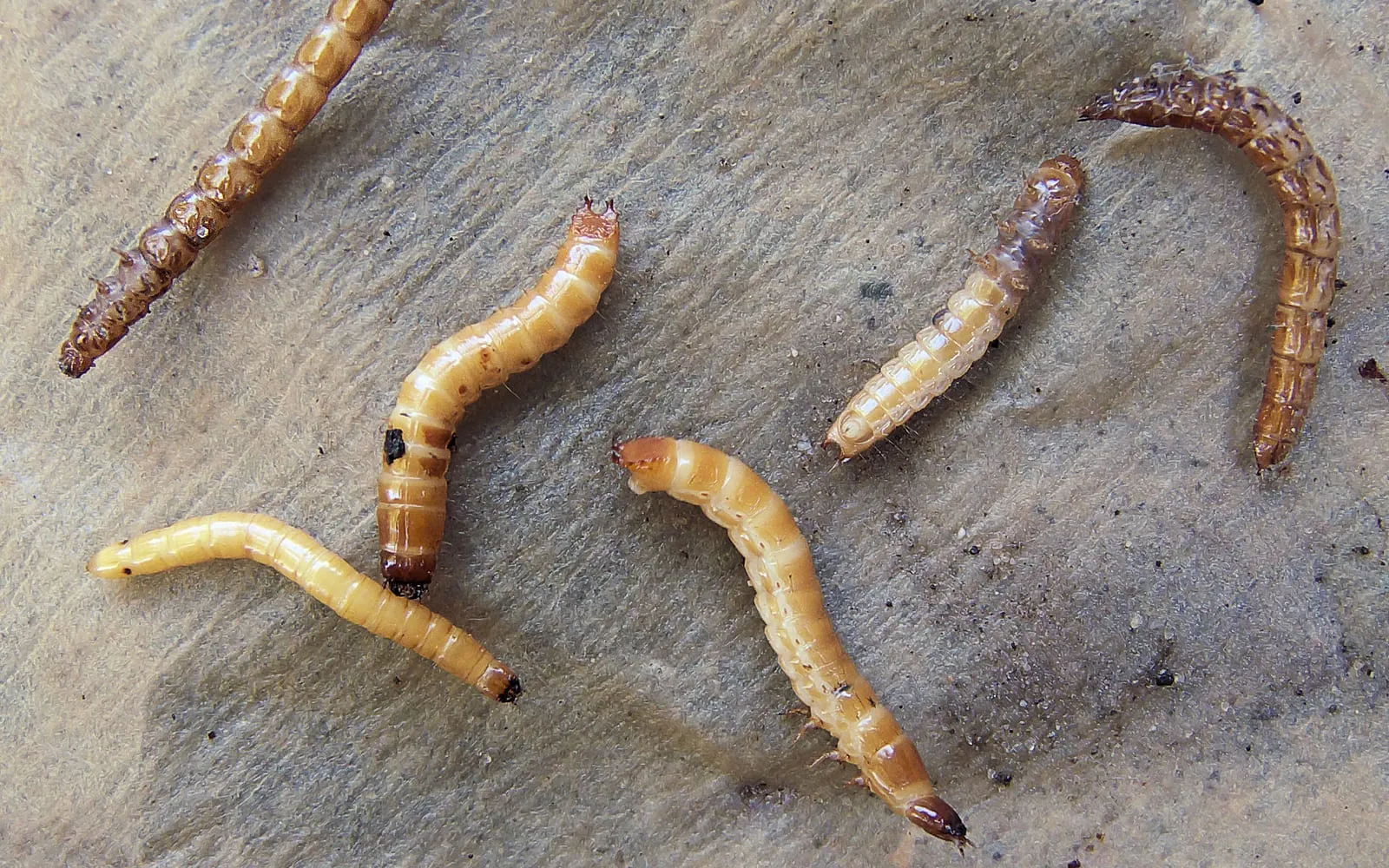
- Thin stiff grubs, orange to golden brown, up to 25 mm long, with three tiny pairs of legs at the front
- Seedlings and transplants wilting and dying one at a time across a row
- A young plant that pulls up with the stem chewed through below ground
- Carrots, beetroot and swedes tunnelled with fine bores rather than surface grazing
- Damage worst in the first three or four years after old turf has been dug up
- Small dark beetles that flip themselves into the air with a click when turned on their backs
Before you treat anything
A tuber with a wireworm bore in it is safe to eat once the tunnel is cut out, and the damage matters for storage rather than for health. Damaged potatoes rot in the sack and spoil the ones around them, so sort them out and use them first.
What you are looking at
Potatoes coming out of the ground with narrow round holes bored into them. The hole is about the width of a pencil lead, the edges are clean, and it runs straight in and keeps going. Cut the tuber and the tunnel crosses the flesh, sometimes right through and out the other side, often with a grub still in it.
Carrots, beetroot, swedes and parsnips take the same fine bores. In a bed of young plants the sign is different, with seedlings and transplants wilting one at a time down the row and pulling up with the stem eaten through below the soil.
The animal is thin, stiff and glossy, orange to golden brown, up to about 25 mm long, with three small pairs of legs crowded behind the head and nothing else along the body. It feels hard between your fingers. Every other grub you turn up in a vegetable bed is soft.
Four years underground for a fortnight in the air
The adult is a click beetle, a slim dark beetle a centimetre or so long that throws itself into the air with an audible snap when you turn it on its back. It does no damage and most people never connect the two.
Females lay into grass and into weedy soil in early summer. The grubs hatch small and stay in the soil for four or five years in a cool climate, growing slowly, feeding on roots and on anything starchy they meet. They pupate in late summer of the final year and the beetle emerges the following spring.
Nothing you do in one season removes a population with four more year-classes stacked underneath it, so a bed that is bad this year will be bad next year. Time and what you grow while you wait are what change it.
The grubs move up and down with the soil temperature. They feed in the top 15 cm in spring and again in autumn, and they go deeper in the heat of midsummer and in hard frost. Damage therefore comes in two waves, and a crop sitting in the ground through September is meeting the second one.
Old grass is where the trouble starts
Wireworms are a grassland animal. Under permanent turf a population feeds on grass roots, causes nothing anyone notices, and builds up over years. Break that turf for a vegetable plot or an allotment and the grubs are still there with the grass gone.
The first crop of potatoes into newly broken ground is the classic disaster, and the second and third are often no better. By the fourth or fifth year numbers have fallen a long way, because the old grubs have pupated and there is no grass left for the beetles to lay into.
The same applies on a smaller scale to a lawn dug up for a bed, a weedy corner brought into cultivation, and a plot left to grass over for a couple of years and then reclaimed. If you know the history of the ground you know what to expect from it.
Reading the hole
Wireworm damage in a potato gets blamed on slugs and the two look nothing alike once you know.
A slug hole has a wide ragged mouth and opens into a large irregular cavity inside the tuber, usually with slime, black frass and secondary rot in it. A wireworm bore is a clean round tunnel of even width that drives deep without opening out, and the flesh around it stays firm.
Both can be in the same potato, because slugs enlarge a wireworm hole and rots follow both.
Scab makes rough corky patches that stop at the skin. Carrot fly leaves rusty winding tunnels just below the surface near the top of the root, running along rather than in.
What to do about it
Find out what you have by burying halved potatoes on sticks every metre and lifting them every few days.
Wait three or four years after breaking grass before putting potatoes or carrots into that ground.
Grow beans, peas, brassicas, onions and leeks in the meantime, which come through with far less loss.
Grow earlies rather than maincrop and lift them as soon as they are ready.
Cultivate in spring and again in autumn, and go over the bed a fortnight after the first pass.
Keep couch grass and weedy fallow off the plot, since that is what feeds a population between crops.
Raise plants in modules and set them out with roots already made, so they are past the vulnerable stage faster.
Pick grubs out as you dig and leave turned ground open for the birds for a day.
Try nematodes on a small bed in warm damp soil, and expect a reduction rather than a cure.
What it gets mistaken for
Slugs bore wide ragged holes into hollow cavities, with slime and black frass.
Cutworms sever seedlings the same way and are fat, soft and curled into a C in the top few centimetres.
Potato scab roughens the skin and goes no deeper.
Carrot fly tunnels wind along under the skin and stain it rust brown.
Potato cyst nematode stunts the tops and leaves the tubers unmarked.
Leatherjackets are soft, grey-brown and legless, and they work in turf rather than in a dug bed.
What to do, in order
Start here
Prevention, and the changes that stop the problem returning. Most of these pages should end at this tier.
- Give newly broken ground three years before you plant potatoes in it
- A wireworm population builds up under permanent grass, where it lives on grass roots and does no harm anyone notices. Dig the turf up and the grubs are still there with nothing to eat but the crop. Numbers fall steeply over three or four years as the older grubs pupate and no new grass is there to lay into. Grow beans, peas, brassicas or onions through those years and keep potatoes and carrots for later.
- Lift potatoes as soon as they are ready
- Most tuber damage is done in the last few weeks before lifting and in the weeks after the crop is ready and still in the ground. A maincrop left in until October on infested land comes out riddled, while the same variety lifted in August is often clean. Where you know the ground is bad, grow earlies and get them out.
- Keep the ground free of grass and weeds
- Couch grass and a weedy fallow keep a population fed and breeding. Clean cultivation between crops removes what the adults lay into and starves the young grubs, and it is worth more on this pest than on most others.
- Cultivate in spring and again in autumn
- Turning the soil over exposes grubs and pupae to birds and to drying, and it breaks up the moist undisturbed layer they prefer. Rotavating does more than digging, and repeating it a fortnight later catches what the first pass missed. This thins a population rather than clearing it.
- Sow and plant into warm soil so plants get past the seedling stage fast
- A wireworm can kill a seedling and cannot kill an established plant. Anything that shortens the vulnerable weeks helps, so wait for the soil to warm, use modules rather than sowing direct where you can, and set out plants that already have a root system.
- Choose what you grow to suit the ground
- Beans, peas, brassicas, onions and leeks come through infested ground with far less loss than potatoes, carrots, beetroot or lettuce. On land recently under grass, plant the tolerant crops and wait.
Then reach for a barrier
Netting, hand removal and water. Nothing here harms anything except the target.
- Trap them with potato or carrot baits
- Push a halved potato or a thick slice of carrot onto a stick and bury it 5 to 10 cm deep every metre across the bed, marking each one. Lift them every few days, pick the grubs off and destroy them, and rebait. This works because the baits are more attractive than the crop, and it tells you how bad the infestation is before you commit a season to it.
- Sacrifice a catch crop of wheat or mustard
- Sow a dense patch of cereal three or four weeks before planting, then dig it out with the soil around the roots and remove it. The seedlings pull the grubs in and the whole lot goes off the plot together.
- Search behind the fork as you dig
- Wireworms are stiff, shiny and slow, and they are easy to see against turned soil. Working a bed over in early spring with a bucket beside you removes a useful number, and it costs nothing but the time.
- Follow the birds
- Robins, blackbirds and gulls take grubs off freshly turned ground. Leaving a dug bed open for a day rather than raking it flat straight away hands them the meal.
Then bring in the predators
Encourage what already lives in the garden, and buy predators in where the problem is under glass and nothing will arrive on its own.
- Water on Steinernema carpocapsae into warm moist soil
- Results against wireworms are patchier than against vine weevil or leatherjackets, because the grubs sit deep and their hard cuticle resists entry. Apply to soil above 12 deg C, water heavily before and after, and expect a reduction rather than a clearance. It is worth trying on a small bed and not worth the money on a field.Sold across Europe and North America for soil pests, and marketed for this one in some countries and not others. Australia and New Zealand approve far fewer nematode species and prohibit releasing an unapproved one, so check what is registered locally rather than ordering from abroad.
- Encourage the ground beetles
- Carabids hunt young wireworms in the top of the soil, and they live under stones, logs and a rough grass edge. A plot with permanent cover somewhere along its boundary carries far more of them than one hoed bare to the fence.
Biological controls are live organisms and their sale and release are regulated country by country. An agent sold freely in one place may be unapproved in another, so buy from a licensed supplier where you live and never import or move one yourself.
Plants affected
Guides that name it among the problems to watch for. The list is the plants it is characteristic of rather than everything it will feed on.
Common on UK allotments
This is one of the pests and diseases allotment growers meet most often. See it alongside the other common problems on the allotment guide.
Common allotment pests and diseasesA common vegetable pest
This is one of the pests that vegetable growers meet most often. See it alongside the others on the vegetable pests guide, grouped by how they feed and with prevention that works against most of them.
Common vegetable pests