
Pest
Eelworm
Globodera, Ditylenchus and Aphelenchoides species
Also called Nematodes, Potato cyst eelworm, Potato cyst nematode, Stem and bulb eelworm, Leaf eelworm
Plant-parasitic nematodes can stunt potatoes, bloat onion necks and thread the leaves of phlox. They are different from the beneficial nematodes sold for pest control, and each crop needs its own prevention plan.
At a glance
- Type
- Pest
- Cause
- Nematode
- Severity
- Destroys the crop or display
- Affects
- Garden plants, Herbs and edibles
- Active
- April to September
- Established in
- Worldwide
What you are seeing
- Patches of a crop growing poorly while the rest of the row looks normal
- Potato haulm yellowing from the bottom and dying back weeks early, with a small crop of tiny tubers
- Pinhead-sized white, yellow or brown balls on potato roots when a plant is lifted carefully in July
- Onion and garlic leaves bloated, twisted and pale, with soft swollen necks
- Phlox with narrow, thread-like distorted leaves and stems that split
- Dark wedge-shaped patches on leaves, sharply bounded by the veins, working up the plant from the bottom
- Brown concentric rings inside a daffodil bulb cut across
Before you treat anything
None of these nematodes affects people or pets. Potatoes from an infested crop are small but perfectly good to eat.
What you are looking at
Usually a patch. One part of a row of potatoes is half the height of the rest, yellows from the bottom up through July, and dies back weeks before its neighbours. Lifted, it gives a handful of marbles where the plants either side gave a decent root. The patch is in the same place the following year, and a little bigger.
That pattern is the signature of a soil-dwelling nematode, and it holds across the group. The damage is patchy, it maps onto nothing you can see on the surface, it persists through wet years and dry ones, and it does not respond to feeding.
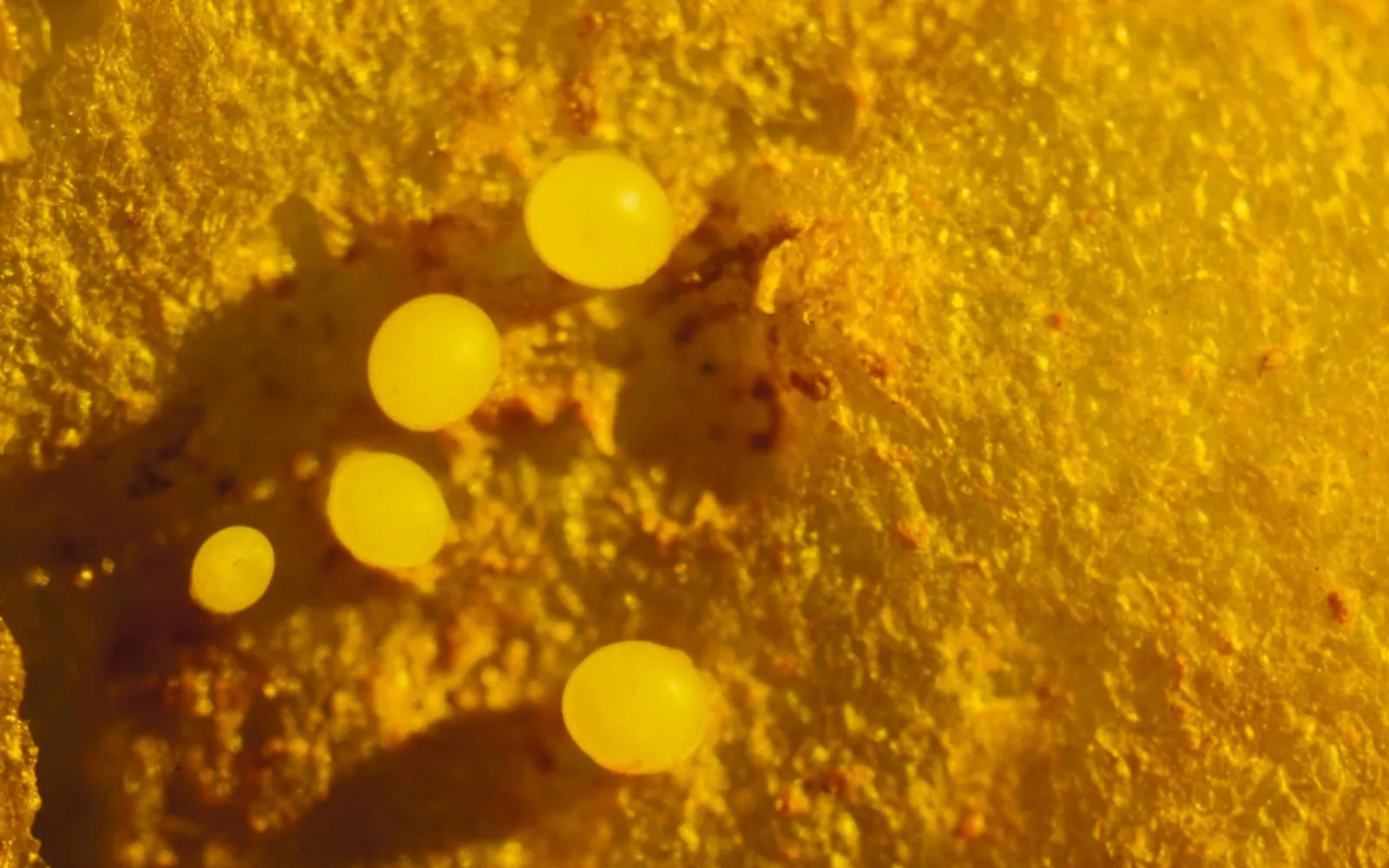
The confirmation is on the roots and it needs care. Lift a suspect potato plant in July with a fork, keeping as much root as possible, and wash it gently in a bucket. Potato cyst eelworm shows as balls the size of a pinhead attached to the roots, white or golden at first and browning as the season goes on. They are the swollen bodies of the females, each one packed with several hundred eggs.
Three different pests under one word
Eelworm is a name covering several unrelated groups, and what you do depends on which you have.
Potato cyst eelworm is the serious one on allotments, taking potatoes and tomatoes. It leaves the pinhead cysts on the roots and it stays in the soil for twenty years.
Stem and bulb eelworm attacks onions, garlic, daffodils, phlox and a long list of others. Onion leaves go bloated, pale and twisted and the neck turns soft. Phlox produces narrow, thread-like leaves on stems that split open. A daffodil bulb cut across shows brown concentric rings.
Leaf eelworm swims up the outside of a wet plant and enters through the pores. The damage is a dark wedge on the leaf, bounded sharply by the veins so that it looks cut out with a ruler, and it works up the plant from the bottom. It takes chrysanthemums, anemones, ferns and strawberries.
Root-knot nematodes are a fourth group with a page of their own, because almost nothing on this one applies to them. They swell the root itself into beads and knots that will not rub off, they have been recorded from over two thousand plant species, and the long rotation described below barely touches them.
Why rotation works here when it fails elsewhere
Rotation is offered for most soil problems and often does little. Against potato cyst eelworm the mechanism is unusually clear.
The eggs sit inside a hard cyst, which is the dead skin of the female, and they will not hatch on their own. What triggers them is a chemical that leaks out of potato and tomato roots as they grow through the soil nearby. When that signal arrives, most of the eggs in range hatch and the juveniles go looking for the root.
Take the host away and the signal never comes. The eggs stay sealed, and a proportion of them die of old age each year, somewhere around a fifth to a third. Come back after six or seven years and the population is a fraction of what it was. Come back after two and it has barely moved.
Growing a resistant variety does something slightly different and also useful. The roots still give off the signal, the eggs still hatch, and the juveniles then fail to develop on the resistant plant. The population is drawn out and wasted.
What this has to do with the nematodes you can buy
Gardeners buy nematodes in a packet to water onto the soil against vine weevil, slugs, chafer grubs and leatherjackets, which makes the word confusing.
Those are different species doing the opposite job. They hunt insect larvae, carry bacteria that kill them, and have no interest in plant roots. Nothing sold as a biological control will harm a plant, and nothing sold as a biological control will touch potato cyst eelworm either. The two uses of the word have nothing to do with each other beyond the shape of the animal.
There is no biological or chemical treatment available to a gardener for the plant-feeding nematodes. Everything on this page is avoidance, rotation, variety choice and hygiene.
What to do about it
Buy certified seed potatoes, clean sets and clean plants, and turn down divisions from an affected garden.
Rotate potatoes and tomatoes onto fresh ground with six or seven years between crops, rather than the two or three a normal rotation gives.
Grow resistant varieties, checking whether they resist the golden species, the pale species or both.
Take first earlies off infested ground and give up on maincrops there.
Water and mulch an affected crop through dry weather to compensate for the roots it has lost.
Dig out and bin phlox, chrysanthemums and daffodils showing stem or leaf eelworm, along with the soil around them.
Keep soil, tools and boots from moving between the clean and the infested ends of the plot.
Bin or burn the debris and keep it out of the compost heap.
What it gets mistaken for
Root-knot nematodes swell the root itself into beads that will not rub off. The cysts here sit on the surface of a normal-looking root and flick away with a fingernail.
Clubroot swells brassica roots into one fused, distorted club that rots and smells, and none of the eelworms on this page touch brassicas.
Root rot leaves roots brown and soft in wet ground. A cyst-studded root is firm.
Verticillium wilt browns a ring inside the stem, visible when a shoot is cut across.
Vine weevil grubs are large enough to see and eat the roots away entirely rather than swelling them.
Nitrogen shortage yellows a whole bed evenly and improves within a fortnight of feeding.
Waterlogging picks out the low ground and the wet season, and the pattern moves between years as the weather does.
What to do, in order
Start here
Prevention, and the changes that stop the problem returning. Most of these pages should end at this tier.
- Rotate, and give it longer than you think
- Potato cyst eelworm is the case where rotation earns its reputation, and the mechanism is clear. The eggs sit dormant inside a hard brown cyst, and what wakes them is a chemical signal leaking from a potato or tomato root nearby. No host means no signal, so the eggs stay in the cyst and a share of them die each year. Six or seven years between potato crops on the same ground takes a heavy infestation down to something croppable. Two years does very little.
- Grow resistant potato varieties, and check which species you have
- There are two potato cyst nematodes and resistance is specific. 'Maris Piper', 'Sante', 'Cara' and 'Rocket' resist the golden one and do nothing against the pale one, which is now the commoner of the two on ground that has grown potatoes for years. Varieties with resistance to the pale species are fewer and worth seeking out by name. Growing a resistant variety also lowers the population, since the eggs hatch and the juveniles then fail to establish.
- Start with certified seed and clean plants
- Almost every new infestation arrives on something brought in. Buy certified seed potatoes rather than planting supermarket tubers, buy onion sets and garlic from a supplier rather than saving your own from an affected crop, and refuse gifts of phlox, chrysanthemum and daffodil divisions from a garden where the symptoms are showing.
- Grow early potatoes where the ground is infested
- First earlies are lifted in June and July, before the nematodes have completed a generation and before the crop has suffered much. It is a way of getting a harvest off ground that will not support a maincrop, and it keeps the population from building further.
- Feed, water and mulch an affected crop generously
- A damaged root system cannot reach far, so the plant behaves as though it is in a drought whenever the surface dries. Watering through dry spells and mulching heavily will not kill anything, and it often gets an acceptable crop off ground that would otherwise fail.
- Keep soil where it is
- Cysts travel on boots, on tools, on wheelbarrow tyres and in the soil around bought plants. Working the clean end of the plot first, knocking the soil off tools before moving, and not borrowing a rotavator that has been on another allotment are all worth doing, because this is a problem that is far easier to keep out than to manage once it is in.
- Do not compost the affected material
- Haulm, bulbs, roots and infested soil all carry the pest, and a garden heap does not get hot enough for long enough to kill cysts. Bin it or burn it.
Then reach for a barrier
Netting, hand removal and water. Nothing here harms anything except the target.
- Lift and destroy affected plants as soon as you are sure
- Phlox, chrysanthemums and daffodils showing stem or leaf eelworm are best dug out whole, with the soil around them, and binned. These species spread plant to plant and along a row, and a clump left in place to see whether it improves is a clump seeding the bed.
- Leave the ground bare, or grow something unrelated, for a full season
- Stem and bulb eelworm has a wide host range including many weeds, so a weedy fallow is no fallow at all. Either keep the ground clean of weeds as well as crops, or sow it with a grass or a cereal, which this group does not attack.
- Move susceptible ornamentals to fresh ground when you replant
- Replanting phlox into the spot the old clump came out of puts new stock onto the population that killed it. Take healthy divisions from the tips of clean shoots, or buy in, and plant somewhere else in the garden.
Plants affected
Guides that name it among the problems to watch for. The list is the plants it is characteristic of rather than everything it will feed on.
Common on UK allotments
This is one of the pests and diseases allotment growers meet most often. See it alongside the other common problems on the allotment guide.
Common allotment pests and diseases