
Edible
Chinese Cabbage
Brassica rapa subsp. pekinensis
Also known as Napa cabbage, Wong bok, Peking cabbage
How to grow Chinese cabbage, Brassica rapa subsp. pekinensis. The July sowing that stops it bolting, keeping slugs out of the heart, and growing it for kimchi.
At a glance
- Difficulty
- Moderate
- Water
- Steadily, and never allow a dry week
- Light
- Full sun, with light shade acceptable for late sowings
- Temperature
- 13-20 deg C. Bolts above 25 deg C and after a cold check
- Hardiness
- USDA 4-10, RHS H4, hardy to -5 C
- Type
- Annual, or a biennial run as an annual
- Height
- 30-50 cm
- Native to
- Eastern Asia
- Best month
- July in the Northern Hemisphere, January in the Southern Hemisphere
It bolts from both ends of the range, running to seed after a cold check below about 10 deg C and refusing to heart above 25. That leaves a narrow sowing window, which in most climates falls in late summer for an autumn crop. Spring sowings bolt far more often than they heart.
Hardiness zones describe winter cold alone. Summer heat, humidity, rainfall and the length of the growing season decide as much, so treat the range as the outer limit rather than as a recommendation.
Every month named in this guide is for the temperate Northern Hemisphere. If you garden in the Southern Hemisphere, shift each one by six months, so July becomes January. Closer to the equator the wet and dry seasons matter more than the calendar, and the shift stops being a useful guide.
Not known to be toxic
- Safe to eat
- The whole head, raw, cooked or fermented
Chinese cabbage is a food crop and carries no toxicity concern for people. The RHS does not list it as a potentially harmful garden plant and the ASPCA does not list Brassica rapa as toxic to cats and dogs, though a dog eating a quantity of raw brassica is likely to get wind and a loose stomach. It is one of the mildest brassicas and one of the lowest in glucosinolates, which is why it ferments into kimchi without the sulphurous edge a cabbage would bring. It carries the usual brassica vitamin K load, worth a mention for anybody taking warfarin, where consistency of intake is the practical advice. Home fermentation carries its own food-safety considerations around salt concentration and temperature, and those belong with a fermentation guide rather than a growing one.
Sources: RHS potentially harmful garden plants, ASPCA toxic and non-toxic plants
About
Chinese cabbage is the barrel-shaped head sold as napa or wong bok, and it is the vegetable kimchi is made from. It is the same species as the turnip and pak choi, selected in a third direction for a dense upright heart.
It wants the same July sowing pak choi does, for the same reason. Long days and summer heat push Brassica rapa into flower, and a plant that bolts before it hearts up is a total loss rather than a reduced crop.
Where it differs from pak choi is in what it asks for once sown. Ten weeks in the ground, rich soil, and water every week without a break. A head that stops growing halfway does not restart, and the result is a loose collection of leaves rather than the solid heart the crop exists for.
Appearance and character
An upright barrel or cylinder, 25 to 40 cm tall and tightly packed, in most varieties. Some are squatter and rounder, and ‘Kasumi’ and similar F1 types are the tall ones that slice cleanly.
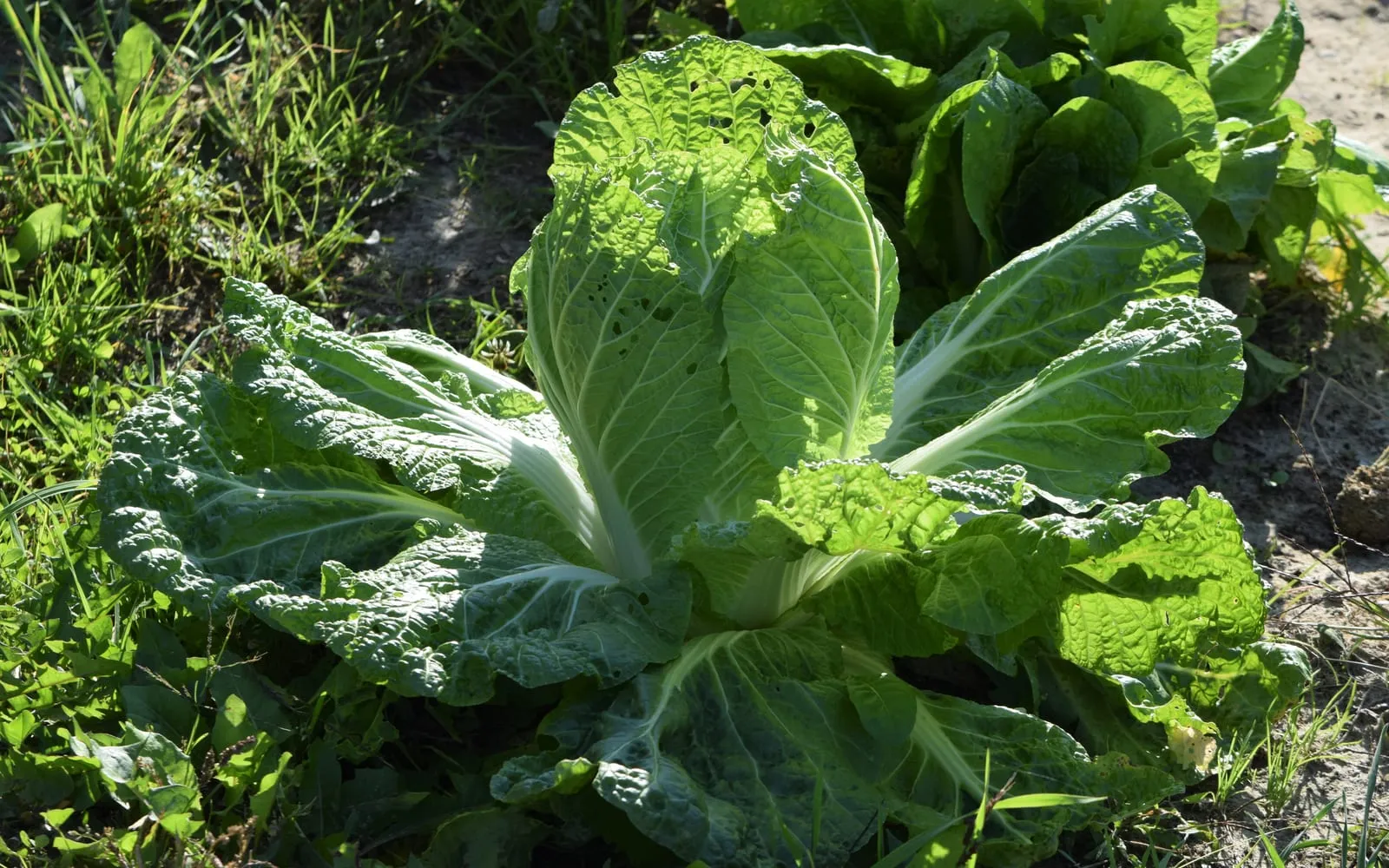
Leaves are pale green at the tips, fading to cream and then white at the base, heavily crinkled and puckered across the blade, with broad flat white midribs that make up much of the weight.
The texture is the point. Crisp and watery in the rib, soft and frilled at the leaf edge, and the two behave quite differently in a pan.
Flavour is mild, sweet and faintly cabbage-like with almost no sulphur.
A bolting plant pushes a flower stem out of the top of the developing head and opens small yellow flowers. The head never closes after that.
Where it is from
Chinese cabbage arose in China, most likely along the Yangtze, as a cross between pak choi and a turnip form of the same species. Records of the heading type go back to around the fourteenth century, later than pak choi.
Northern China grows it as the winter staple, storing it in clamps and cellars in quantities that still shape the autumn markets. Korea grows it for kimjang, the communal autumn kimchi-making that UNESCO lists as intangible cultural heritage.
The name napa comes from Japanese nappa, a general word for leaf vegetables, rather than from the Californian valley.
British catalogues carried it from the 1970s, largely through Joy Larkcom’s seed-collecting work, and the midsummer sowing date that makes it viable in a cool climate came from the same source.
How it grows
Sow direct where it is to grow, or in modules for planting out at three weeks. Chinese cabbage transplants less willingly than most brassicas and a root disturbance is one of the things that triggers bolting, so modules need care and a fast turnaround.
Sow at 1 cm deep in rows 45 cm apart, and thin to 35 cm apart. Crowding gives small loose heads.
Germination takes four to seven days.
Heads form from about eight weeks and are ready at ten to twelve. Squeeze the head to check, since a firm one is ready and a soft one needs another fortnight.
Cut at the base with a knife, leaving the stump. A second flush of loose leaves often follows and is worth eating.
Sow from mid-July to mid-August. Earlier sowings bolt and later ones run out of season.
Through the seasons
Spring and early summer are the wrong time outdoors. Anything sown before midsummer bolts. A March sowing under glass, cut young for leaves rather than heads, is the only spring use worth making of the seed.
Mid-July to mid-August is the sowing window. Prepare the bed with compost first, since the crop is a heavy feeder and there is no time to correct a poor start.
Autumn is the growing season, and the watering has to keep up through September. Net against caterpillars and go out after slugs on damp evenings.
Late autumn is the harvest, from late September into November. Chinese cabbage takes a light frost and stores for several weeks in a cool shed wrapped in newspaper. Clear the bed before hard frosts, which turn the heart to mush.
Care difficulty
Harder than pak choi and harder than most brassicas, on three counts.
Bolting is the first, and it is entirely a sowing-date problem. Mid-July onwards, direct sown or in fast modules, and never checked.
Slugs are the second and are worse here than in any other crop in this wave. The head is dense, damp and dark inside, which is ideal slug habitat, and by the time damage shows they are living in the middle of it. Prevention beats inspection, so keep the surrounding ground clear, water in the morning, and patrol.
Heart rot is the third. Grey mould and bacterial soft rot both get into a head sitting wet through a cool damp autumn. Wide spacing and watering at the base do more than anything else.
Water and feeding are the routine work, and the crop is demanding on both.
Watering
Water heavily and regularly from thinning to harvest. A head is largely water and the plant builds it in about six weeks, so any interruption shows in the size.
Around 15 litres per square metre weekly in dry weather, given as a single soak. In a dry September that goes up rather than down.
Water at the base and in the morning. Water sitting in the developing heart overnight is what starts grey mould, and a wet surface at dusk is an invitation to slugs.
Mulch after thinning to hold moisture, and keep the mulch clear of the stems.
Irregular watering splits the outer ribs and lets rot in, which is the same mechanism that splits a cabbage.
Warning signs, diseases and pests
Slugs and snails are the defining pest. They work into the heart, and by the time the outer leaves show holes the inside is fouled. Clear hiding places around the bed, water in the morning, patrol with a torch on damp evenings, and consider a nematode drench in a wet autumn.
Bolting sends a flower stem out of the top of the head. It cannot be reversed. Sow after mid-July.
Grey mould and bacterial soft rot both turn the heart brown and slimy in a wet autumn. Space the plants at 35 cm, water at the base, and cut affected heads out of the row rather than leaving them.
Flea beetle shot-holes the seedlings. Fine mesh from sowing.
Cabbage white caterpillars are still active into September and work into the head. Net with 7 mm mesh from sowing rather than after the first butterfly.
Small pinholes and papery windowpane patches, with a thin pale green caterpillar that drops off on a silk thread when touched, is diamondback moth. It breeds year-round through the crop’s home range in Asia and is the most economically damaging brassica pest anywhere it is grown. The same mesh keeps it off.
Clubroot and cabbage root fly apply as to all brassicas. Lime to pH 7 and rotate on four years.
Growing environment
Full sun, with light afternoon shade acceptable for the earliest sowings in the window.
Rich, deep, moisture-retentive soil is a requirement rather than a preference. Dig in a bucket of well-rotted compost per square metre before sowing.
Lime to pH 6.5 or 7.
Shelter matters. The heads are top-heavy and a September gale rocks them loose, which lets rot into the stem.
Space at 35 cm each way. Closer planting is the commonest cause of small heads and rot in this crop.
Rotate on four years with the other brassicas.
A cloche or fleece tunnel from October keeps the heads clean and extends the harvest by three or four weeks.
Feeding
Chinese cabbage is a heavy feeder building a large amount of leaf in a short time.
Dig in well-rotted compost or manure before sowing, at around a bucket per square metre. This is one of the few crops in the wave where generous organic matter is right.
Feed with a nitrogen-rich liquid feed every fortnight from three weeks after thinning until the heads start to firm. Leafy growth is the crop, so nitrogen is appropriate here in a way it is not for turnip or swede.
Stop feeding once the head is firm. Late nitrogen makes soft leaves that rot.
Avoid fresh manure, which encourages soft growth and rot.
Troubleshooting
A flower stem coming out of the top. Bolting, from sowing before midsummer. Sow from mid-July.
Loose leaves instead of a firm head. Too little water, too little feed, or too little space. Give 35 cm each way, compost at sowing and a fortnightly liquid feed.
Brown slimy heart. Grey mould or bacterial soft rot, from a wet autumn and close spacing. Space wider, water at the base in the morning, and remove affected plants.
Holes and slime trails deep in the head. Slugs. Clear the surrounding ground, patrol on damp evenings, and consider nematodes.
Shot holes across the seedlings. Flea beetle. Fine mesh from the day of sowing.
Swollen roots and a wilting plant. Clubroot. Lime to pH 7 and rotate on four years.
Can I grow it for kimchi? Yes, and this is the species kimchi is made from. Grow a tall variety, cut in October, and follow a tested recipe for the salting stage rather than improvising.
Is napa cabbage the same thing? Yes. Napa, wong bok and Chinese leaf are all this plant.
Chinese Cabbage problem guides
Not sure what is wrong? See the common vegetable pests guide.
- Slugs and snails, which get into the heart and are hard to reach
- Bolting, which ruins an early sowing
- Flea beetle on seedlings
- Cabbage white caterpillars
- Diamondback moth, especially serious across Asia where it breeds year-round
- Clubroot
- Grey mould rotting the heart in a wet autumn
- Cabbage root fly
- Tipburn browning the leaf edges inside the head