
Disease
Verticillium wilt
Verticillium dahliae
Also called Verticillium, Verticillium dahliae, Wilt disease
Verticillium wilt can make a maple lose one branch at a time while the rest looks healthy. A cut through affected wood shows staining, and replanting needs resistant species.
At a glance
- Type
- Disease
- Cause
- Fungus
- Severity
- Can kill the plant
- Affects
- Garden plants, Herbs and edibles
- Active
- June to September
- Established in
- Worldwide
What you are seeing
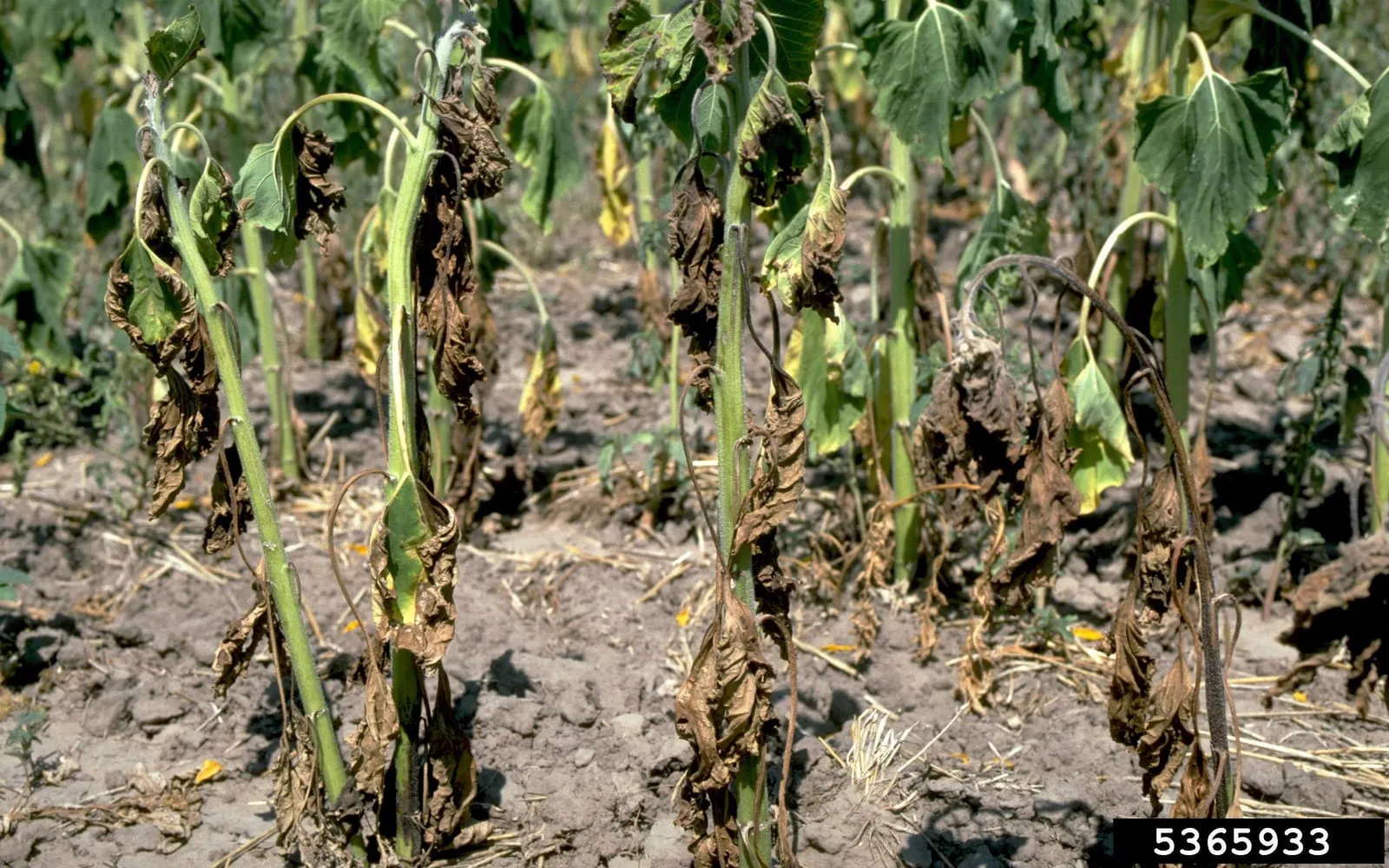
- One branch, or one side of a plant, wilting while the rest carries on normally
- Leaves yellowing from the margins and between the veins before browning
- Wilting on hot afternoons that recovers overnight, in the early stages
- Dead leaves staying attached to the affected branch
- A brown, olive or greenish stain in the wood when a wilted branch is cut
- Another branch going the same way the following summer
- Tomatoes and dahlias yellowing from the bottom of the plant upwards
Before you treat anything
Harmless to people and animals. Fruit and vegetables from an infected plant are safe to eat, though the crop is usually poor.
What you are looking at
One branch wilts. The leaves on it flag on a hot afternoon and pick up again by morning, then a few days later they yellow from the margins and between the veins, brown, and hang there dead. Everything else on the plant looks perfectly well.
The following summer another branch goes the same way, and then another. A Japanese maple lost to this usually takes three or four years about it, dying by degrees while the gardener watches and waters.
On tomatoes, dahlias and strawberries it works from the bottom of the plant upwards instead, yellowing the older leaves first, stunting the growth and ruining the crop.
One cut settles it
Take a wilted branch, ideally one at least as thick as a pencil, and cut across it. Then split it lengthways.
Verticillium leaves a stain in the wood, brown or olive or faintly green, showing as a broken ring or as streaks running along the grain just under the bark. Healthy wood is pale and even.
That stain is the fungus in the water-conducting vessels, which is also the whole explanation of the symptoms. It gets in through the roots from the soil, grows up inside the plumbing, and blocks it. Where the plumbing is blocked, the leaves cannot drink, so the branch fed by those vessels wilts while its neighbour is unaffected.
Wood with no stain means the wilting has another cause, and that is worth knowing before writing a tree off.
Nothing will cure it, and something can still be done
No product available to a gardener or a grower treats verticillium wilt. The fungus lives in the soil as microsclerotia, resting bodies tough enough to sit in the ground for fifteen years and longer, and nothing applied to a plant reaches them.
What does work is vigour. The plant defends itself by walling off infected vessels, and a plant with water, food and an uncompacted root run does that far better than one competing with grass in dry soil. Trees kept properly for a decade after diagnosis are common, and so are trees dead in two seasons because nobody watered them.
The other thing that works is choosing correctly afterwards. Conifers, grasses, bamboos and ferns cannot get it at all. Among broadleaves, birch, hornbeam, beech, oak, apple, pear and hawthorn are rarely troubled. Replacing a dead acer with a birch is a real answer; replacing it with another acer is not.
What to do about it
Confirm it by cutting a wilted branch and looking for the stain.
Water, mulch and feed the plant properly, and clear grass and weeds from the root area.
Cut affected branches back into clean unstained wood.
Take out a plant that has lost several branches, lift as much root as you can, and burn or bin the whole thing.
Do not compost any part of it and do not shred it for mulch.
Replant with something outside the host range, and never with the same species.
For vegetables, rotate, use grafted tomatoes on resistant rootstocks, and grow in containers of fresh compost where a greenhouse border is infected.
What it gets mistaken for
Honey fungus kills from the roots and collar upwards, with a sheet of white fungal growth under the bark at ground level and black bootlaces in the surrounding soil. Verticillium leaves the base of the plant sound.
Phytophthora root rot kills the roots and the collar on wet ground, and the whole plant declines together rather than one limb at a time.
Drought wilts everything at once and recovers completely after a soak.
Silver leaf stains wood too, and it silvers the foliage first and belongs almost entirely to plums and cherries.
Clematis wilt collapses a whole clematis stem within a day, usually just as the buds are about to open, and is a different fungus with a much simpler answer: cut it to the ground and it usually reshoots.
Fusarium wilt does very nearly the same thing as verticillium on many of the same plants, and the management is identical, so telling the two apart matters to a laboratory rather than to a gardener.
What to do, in order
Nothing available to a gardener will cure this once a plant has it. The steps below are about limiting the spread and deciding what to plant in its place.
Start here
Prevention, and the changes that stop the problem returning. Most of these pages should end at this tier.
- Keep an infected plant growing as hard as you can
- A vigorous plant walls the fungus into the branches it has already taken and can live for years with it. Mulch, water through every dry spell, feed in spring, and keep grass and weeds off the root area. This is the difference between losing a maple in two seasons and keeping it for ten.
- Never replant a susceptible species in the same ground
- The fungus survives in soil as resting bodies for fifteen years or more, so replacing a dead acer with another acer repeats the whole thing. Removing the soil is impractical in a border and would not be thorough enough anyway.
- Replant with something it cannot infect
- Conifers, grasses, bamboos and ferns are immune, which covers a great deal of ground. Among broadleaved trees and shrubs, birch, hornbeam, beech, oak, apple, pear and hawthorn are rarely affected. That is a wide enough choice to replant a border properly rather than settling for whatever is left.
- Rotate the vegetables and buy grafted tomatoes
- Tomatoes, potatoes, strawberries and dahlias all take it. Move them round the plot, and where a greenhouse border has the disease, use grafted plants on resistant rootstocks or grow in containers of fresh compost.
- Buy clean plants and keep the tools clean
- The fungus arrives on infected nursery stock, on soil carried between gardens, and on tools. Inspect what you buy, and wash a spade that has been used on a known infected site.
Then reach for a barrier
Netting, hand removal and water. Nothing here harms anything except the target.
- Cut out affected branches into clean wood
- Follow the stain by cutting progressively back towards the trunk until the cut face shows clean, and take a further margin beyond that. This buys the plant time rather than curing it, and it improves how the plant looks in the meantime.
- Take out and destroy a plant that is failing
- Once several branches have gone, or the stain has reached the main stem, the plant will not recover. Lift it with as much root as you can get out, and bin or burn it rather than composting or shredding it.
- Do not compost anything from an affected plant
- A garden heap never gets hot enough to kill the resting bodies, and spreading that compost distributes the disease across the whole garden.
Plants affected
Guides that name it among the problems to watch for. The list is the plants it is characteristic of rather than everything it will feed on.
A common tomato problem
This is one of the problems tomato growers meet most often. See it alongside the other pests, diseases and disorders on the tomato guide.
Common tomato problems