
Edible
Pepino
Solanum muricatum
Also known as Pepino melon, Melon pear, Tree melon, Sweet cucumber
How to grow pepino, Solanum muricatum. The melon pear for a cool-climate greenhouse, growing it from cuttings, and the long ripening the fruit needs.
At a glance
- Difficulty
- Moderate
- Water
- Every two or three days in summer, sparingly in winter
- Light
- Full sun under glass or in a polytunnel
- Temperature
- 18-25 deg C. Growth stops below 12 deg C and frost kills it
- Hardiness
- USDA 9-11, RHS H2, hardy to 0 C
- Type
- Tender perennial, kept from year to year under glass
- Height
- 60-100 cm, sprawling wider
- Native to
- The Andes of Peru, Colombia and Chile
- Best month
- March in the Northern Hemisphere, September in the Southern Hemisphere
An Andean plant that wants the conditions of its home altitude, with warm days, cool nights and no frost at all. Fruit set fails above about 30 deg C and growth stops below 12. It fruits well in a frost-free Mediterranean climate, under glass in a cool one, and poorly in the humid tropics.
Hardiness zones describe winter cold alone. Summer heat, humidity, rainfall and the length of the growing season decide as much, so treat the range as the outer limit rather than as a recommendation.
Every month named in this guide is for the temperate Northern Hemisphere. If you garden in the Southern Hemisphere, shift each one by six months, so March becomes September. Closer to the equator the wet and dry seasons matter more than the calendar, and the shift stops being a useful guide.
Toxic if eaten
- Safe to eat
- The ripe fruit, peeled or unpeeled
- Harm from
- Eating it
- Affects
- People, cats and dogs
The ripe pepino fruit is a food crop grown commercially in Peru, Chile and New Zealand and is safe. The rest of the plant is not. Solanum muricatum sits in the same genus as potato, aubergine and deadly nightshade, and its leaves, stems and unripe fruit contain solanine and related glycoalkaloids. The RHS lists Solanum species among plants harmful if eaten and the ASPCA lists the genus as toxic to cats, dogs and horses, so keep pets from chewing the foliage. Unripe fruit is the practical risk here, because a pepino takes a long time to ripen and looks tempting well before it is ready. A ripe fruit has turned from green to cream or pale gold with purple streaking, gives slightly to a thumb, and smells faintly of melon. A hard green fruit is unripe and will upset your stomach. The skin is edible on ripe fruit and is often peeled because it is thin and slightly bitter.
Sources: RHS potentially harmful garden plants, ASPCA toxic and non-toxic plants
About
The pepino is an Andean fruit that tastes like a mild honeydew melon crossed with a cucumber, growing on a soft sprawling shrub in the same genus as the potato. Outside the subtropics it is a greenhouse plant and a good one, since it is easier than a melon and considerably more productive.
Its useful trick is that it is a perennial and roots from cuttings in days. A plant taken as a cutting in September and overwintered on a windowsill starts the next season months ahead of anything grown from seed, and that head start is what gets the fruit ripe.
Seed is worth avoiding where you can. Most named varieties are propagated vegetatively, seed-grown plants are variable, and several commercial clones set fruit without pollination while seedlings often do not.
Appearance and character
A sprawling shrubby plant, 60 cm to a metre tall and wider, with soft green stems that root wherever they touch damp compost.
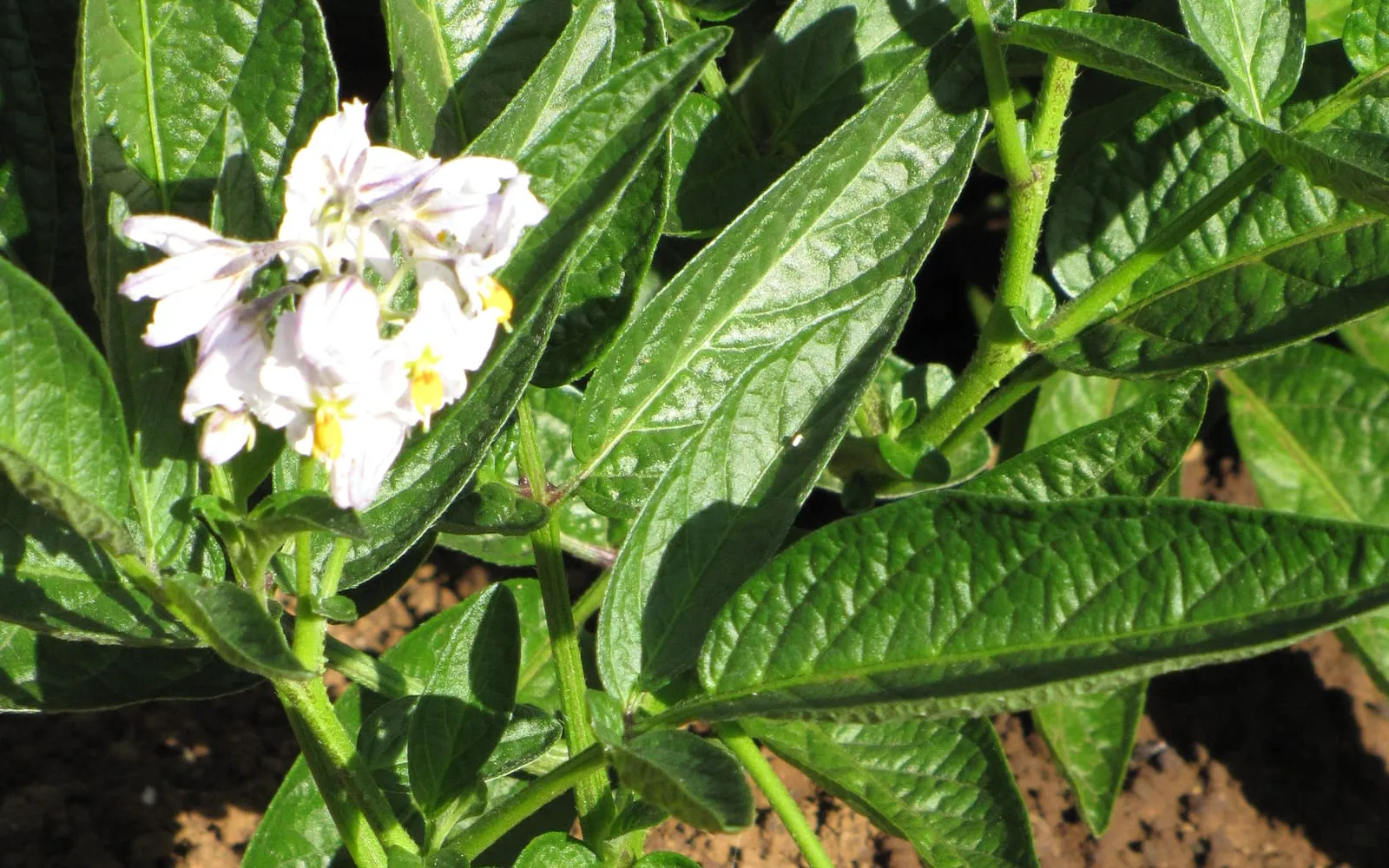
Leaves are narrow to oval, soft, mid-green, and often held in pairs of unequal size, which is a common trait in the genus.
Flowers are small and star-shaped, white streaked with purple-blue, in clusters, and they look much like a potato flower.
Fruit is oval to egg-shaped, 8 to 15 cm long, ripening from green to cream or pale gold with lengthwise purple streaks and stippling.
Flesh is pale yellow to golden, juicy and mild, with a small central seed cavity and few seeds in most varieties.
Flavour is delicate and floral, closer to a honeydew melon than to anything savoury, with a cucumber note.
Where it is from
The pepino comes from the Andes of Peru, Colombia and Chile, and it has been cultivated there for thousands of years. Moche pottery from northern Peru depicts it clearly.
No wild population of Solanum muricatum is known, which is a sign of a long domestication history. Its closest wild relatives grow in the same region.
Spanish chroniclers recorded it in the sixteenth century, and unlike the potato and the tomato it did not travel.
New Zealand and Chile developed it commercially in the twentieth century, and most of the named varieties in circulation, including the widely grown ‘Pepino Gold’, come from that work.
European growers have kept it under glass since the Victorian period as a curiosity, and it remains one.
How it grows
Take cuttings rather than sowing seed. A 10 cm cutting from a soft shoot roots in water or damp compost within a fortnight at any time from spring to early autumn.
Where you start from seed, sow indoors in February or March at 18 to 20 deg C, and expect variable plants.
Plant into a greenhouse border, a growbag or a 30 cm pot in May, at 60 cm apart.
Stake or cage the plant, since the stems are soft and sprawl under the weight of fruit.
Pinch out the growing tip at 40 cm to force branching.
Thin the fruit. Two or three fruits per stem is what will ripen properly in a short temperate season, and a plant left to set everything ripens nothing.
Pick from September when the skin has turned cream or gold with purple streaking, the fruit gives to a thumb, and it smells faintly of melon.
Overwinter the plant under glass at 10 deg C or more, or take cuttings in September and keep them on a windowsill.
Through the seasons
Late winter starts seed in February or March where cuttings are unavailable, and brings overwintered plants back into growth.
Spring grows plants on under cover. Pot on, pinch out at 40 cm, and harden off for a greenhouse border planting in May.
Summer is growth and flowering. Water every two or three days, feed fortnightly once fruit sets, and tap the stems on sunny mornings to help pollination.
Autumn ripens the crop from September. Reduce watering. Take cuttings for next year in September, which is the most reliable way to keep a good plant.
Winter holds the plant at 10 deg C or more, kept just moist and cut back by half.
Care difficulty
Moderate, and easier than melon or watermelon.
The ripening period is the difficulty. Pepino fruit takes a long time to colour and sweeten, and a cool autumn runs out of light in October. Starting early from an overwintered plant or a rooted cutting is the answer.
Thinning the fruit is the technique. Two or three per stem.
Warmth is needed rather than heat. This plant fruits at temperatures a watermelon would refuse, which is why it is a realistic greenhouse crop.
Whitefly and red spider mite are the glasshouse pests.
Judging ripeness takes a season’s practice, and colour, feel and smell together are the test.
Watering
Water every two or three days in summer, keeping the compost evenly damp.
Irregular watering causes blossom drop and split fruit.
Water at the base rather than over the foliage, since the soft stems are prone to grey mould in a humid greenhouse.
Damp the greenhouse floor on hot mornings against red spider mite.
Reduce watering in autumn as the fruit ripens, which concentrates the flavour.
Water an overwintered plant sparingly, keeping it just moist rather than damp.
Container growing works well in a 30 cm pot or a growbag, watered daily from July.
Warning signs, diseases and pests
Whitefly build up quickly under glass and coat the leaves in honeydew. Introduce Encarsia parasitic wasps early.
Red spider mite bronzes and speckles the leaves in dry heat. Damp down daily and use Phytoseiulus predators.
Aphids cluster on the growing tips and spread virus. Wash them off.
Blossom drop follows cold nights, dry air or dry roots. Keep the greenhouse above 12 deg C at night and water evenly.
Grey mould rots the soft stems in a still humid greenhouse. Ventilate and remove affected material.
Fruit that stays hard and green through October means too many fruits, too late a start, or too little light. Thin harder and start earlier next year.
Split fruit follows a heavy watering after a dry spell.
Growing environment
Full sun under glass or in a polytunnel. Outdoors it survives a warm summer in the south and rarely ripens fruit.
Free-draining, moderately fertile soil or a good multipurpose compost.
Neutral to slightly acid, pH 6 to 7.
Temperatures of 18 to 25 deg C by day and above 12 at night.
Space at 60 cm, with stakes or a cage.
Frost-free space at 10 deg C or more for overwintering, which is what makes the crop work outside the subtropics.
Rotate with tomatoes, aubergines, peppers and potatoes on three years.
Feeding
Use a balanced liquid feed from planting until fruit sets.
Switch to a high-potash tomato feed fortnightly once fruit is swelling.
Avoid nitrogen after flowering, which gives soft leafy growth and delays ripening.
Stop feeding in October.
An overwintered plant needs no feeding until March.
Troubleshooting
The fruit stayed hard and green. Too many fruits on the plant, too late a start, or too little autumn light. Thin to two or three fruits per stem and start from an overwintered plant or a rooted cutting.
Flowers appear and fall off. Blossom drop from cold nights, dry air or dry roots. Keep nights above 12 deg C and water evenly. Tapping the stems on sunny mornings helps pollination.
It sprawled everywhere and snapped. Soft stems and no support. Stake or cage at planting and pinch out at 40 cm.
Clouds of whitefly. Introduce Encarsia parasitic wasps under glass before the population builds.
The fruit tasted of nothing. Picked unripe, or the plant carried too many fruits. Wait for cream or gold skin with purple streaking, a slight give to a thumb, and a faint melon smell.
Grey fuzzy mould on the stems. Grey mould in a still humid greenhouse. Ventilate, water at the base, and remove affected growth.
Should I grow from seed or cuttings? Cuttings. They root within a fortnight, they come true to the parent, and a rooted cutting overwintered on a windowsill starts months ahead of a seedling.
Will it survive outdoors over winter? No. Frost kills it. Keep a plant or a cutting at 10 deg C or more.
Pepino problem guides
Not sure what is wrong? See the common vegetable pests guide.