
Edible
Soya Bean
Glycine max
Also known as Soybean, Edamame, Soja, Daidzu
How to grow soya beans, Glycine max. The most valuable legume in agriculture, why most of it is eaten by animals, and the day length that stops it cropping at high latitude.
At a glance
- Difficulty
- Moderate
- Water
- Steady moisture through flowering and pod fill
- Light
- Full sun
- Temperature
- 20-30 deg C, and growth stops below 15
- Hardiness
- USDA 9-11, RHS H2, hardy to 0 C
- Type
- Tender annual legume
- Height
- 50-120 cm
- Native to
- northern and central China
- Best month
- May and September in the Northern Hemisphere, November and March in the Southern Hemisphere
Flowering is triggered by shortening days, and cultivars are sorted into maturity groups from 000 to X by the latitude band they suit, so a group IV variety grown at 50 degrees never matures and a group 00 variety in the subtropics flowers as a seedling and yields nothing. Match the group to the latitude before anything else.
Hardiness zones describe winter cold alone. Summer heat, humidity, rainfall and the length of the growing season decide as much, so treat the range as the outer limit rather than as a recommendation.
Every month named in this guide is for the temperate Northern Hemisphere. If you garden in the Southern Hemisphere, shift each one by six months, so May becomes November. Closer to the equator the wet and dry seasons matter more than the calendar, and the shift stops being a useful guide.
Toxic if eaten
- Safe to eat
- The seed, cooked, and the immature pods boiled as edamame
- Do not eat
- Raw and undercooked seed
- Harm from
- Eating it
- Affects
- People, dogs and cats
Soya is one of the 14 allergens British food businesses must declare, and soya allergy is common in children, usually appearing in the first year of life. Reactions range from mild to severe. Separately, raw soya beans are not edible. They contain trypsin inhibitors that block protein digestion, lectins, and other heat-labile compounds, and eating them raw causes nausea, vomiting and cramps. Proper cooking destroys them, which is why every traditional soya food involves prolonged boiling, fermenting or both, and why edamame is always boiled rather than eaten from the pod. Raw or lightly cooked soya beans are toxic to dogs and cats for the same reason. Soya contains isoflavones, plant compounds with weak oestrogen-like activity, and the evidence on human health effects from normal dietary amounts does not support the alarm often attached to them.
Sources: Food Standards Agency on the 14 named allergens, Food Standards Agency on food allergy and intolerance
About
Soya is the most valuable legume in world agriculture and one of the four crops, with maize, wheat and rice, that most of the global food system rests on. Around 130 million hectares are under it, chiefly in Brazil, the United States and Argentina.
Most of it is not eaten by people directly. Crushing a soya bean gives about 18 per cent oil and 80 per cent meal, and that meal is the protein in the feed for most of the world’s chickens, pigs and farmed fish. Buying a chicken means buying soya at one remove, and the connection between soya demand and deforestation in the Amazon and the Cerrado runs through that meal rather than through tofu.
The direct food uses are older and East Asian. Tofu, soy sauce, miso, tempeh, natto, soya milk and edamame all come from the same bean handled differently, and most involve either prolonged cooking or fermentation, because the raw bean is not edible.
Appearance and character
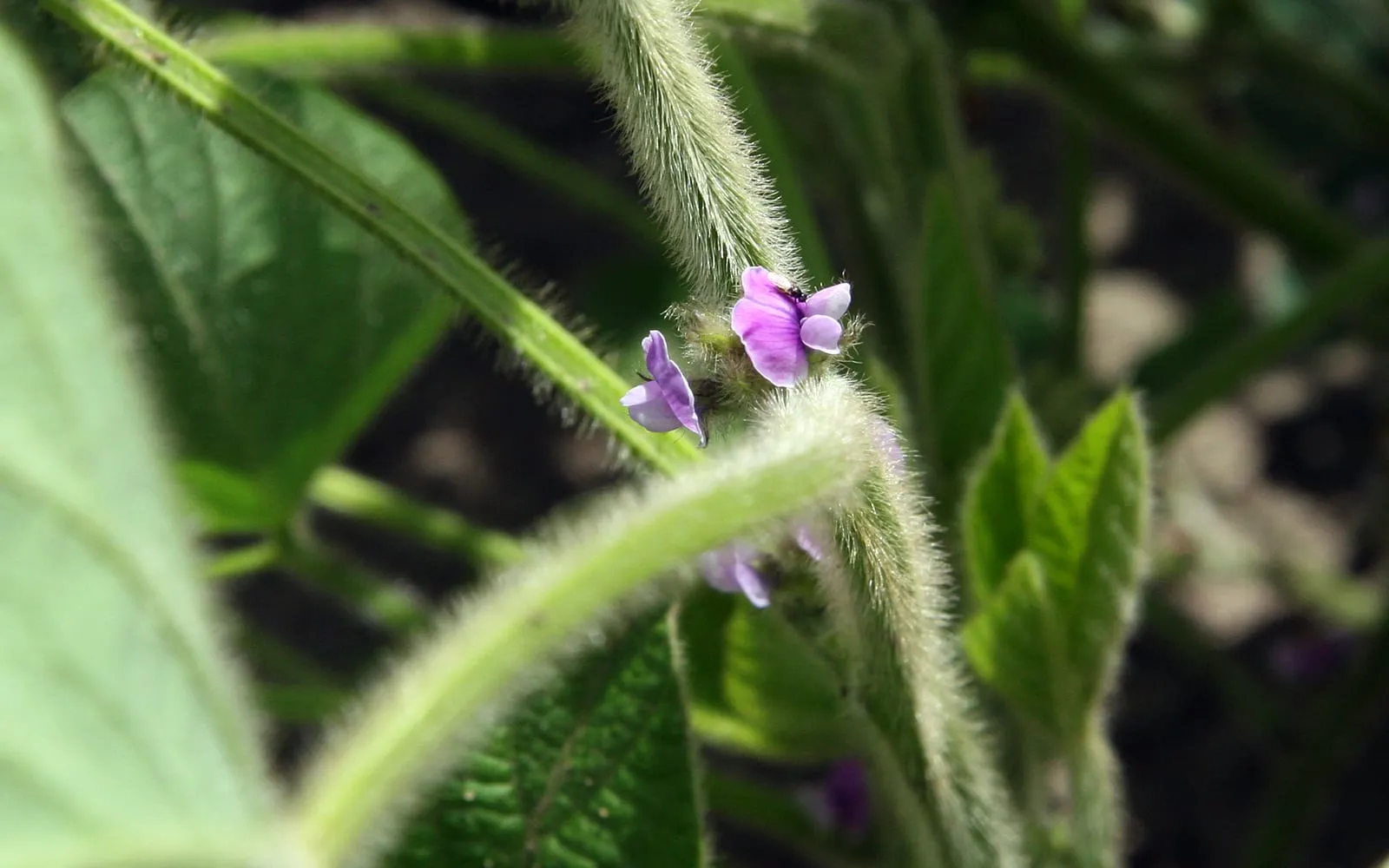
The plant is an upright bushy annual, covered all over in fine brown or grey hairs, with trifoliate leaves like a large bean. It stands knee to waist high and branches from the base.
The flowers are small and easy to miss, 5 to 7 mm, white or pale purple, carried in small clusters at the leaf joints. They self-pollinate before opening, so a single plant sets seed without help.
The pods are short, flat, and covered in the same dense hair, and they hang in clusters carrying two to four seeds each. Picked green and boiled, those pods are edamame. Left to dry, they turn brown and brittle and the seed inside becomes the familiar cream, yellow, green, brown or black bean depending on the variety.
Where it is from
Soya was domesticated in China from the wild vine Glycine soja, with the archaeological and genetic evidence pointing to somewhere in the Yellow river region between 7000 and 5000 BC. Wild soja still climbs through scrub across eastern Asia.
The crop spread through Korea, Japan and south east Asia over the following millennia, and the fermented and coagulated foods that define East Asian cooking developed alongside it. Tofu is documented in China from the Han period.
Its arrival in the West was late and its rise abrupt. Soya reached Europe as a botanical curiosity in the eighteenth century and became an agricultural crop in the United States only in the twentieth. The expansion into South America dates from the 1970s, and Brazil is now the largest producer in the world.
How it grows
Soya germinates in warm soil and pushes its seed leaves above ground, which makes the seedling vulnerable to slugs and birds in a way that a pea or a lentil is not.
Root nodules form within a few weeks, hosting Bradyrhizobium bacteria that fix nitrogen. The partnership is specific, and soil that has never carried the crop frequently lacks the right strain, so an inoculant makes a visible difference.
The flowering trigger is what limits the crop at high latitude. Most cultivars are short-day plants that will not flower until nights lengthen past a threshold, and above about 50 degrees that threshold arrives too late for the pods to fill before the cold. Cultivars bred for northern Europe are day-neutral or very early, and choosing one of those is the difference between a crop and a green bush.
Through the seasons
Sow indoors in April in modules, or outdoors from late May once the soil is above 15 deg C, at 3 to 4 cm deep and 10 cm apart in rows 45 cm apart.
Growth is slow in June and quick in July. Flowering starts in July or August depending on variety, and pods fill over six weeks after that.
For edamame, pick the pods green and plump in August or September and boil them in salted water for five minutes. For dry beans, harvest in late September or October when the pods have turned brown and rattle, then dry the plants under cover and thresh.
Care difficulty
Growing soya at high latitude is a cultivar question before it is a gardening question. An ordinary agricultural or Asian cultivar will grow into a fine leafy plant and never set a pod, because it is waiting for a night length that arrives in September. Buy an early or day-neutral one bred for the latitude you are at.
Given the right variety, the crop is straightforward. It fixes its own nitrogen, tolerates a range of soils, and needs only warmth and steady moisture.
Slugs and pigeons are the practical enemies at the seedling stage, since the seed leaves come up above ground and are large and soft. Start in modules and plant out at 10 cm, or net the row.
Watering
Soya wants steady moisture more than most pulses, and the critical period is flowering and pod fill. Drought then causes flowers to abort and pods to fill poorly.
Water weekly with a good soak through July and August in a dry summer. A mulch helps more than frequent light watering.
Stop once the pods have yellowed. Moisture at the end delays ripening and invites sclerotinia and botrytis into a crop that is starting to senesce.
Warning signs, diseases and pests
The commonest failure is not a disease at all. A plant that grows well all summer and sets no pods has been sown from a cultivar waiting for shorter nights, and nothing can be done about it in that season.
Slugs and pigeons take the seedlings. Soya emerges with two large fleshy seed leaves that both find attractive, and a row can be cleared in a night.
Sclerotinia shows as a white cottony growth on the stems with hard black structures inside, usually starting where a flower has fallen and lodged in a leaf joint. It thrives in a dense crop in wet weather. Botrytis does something similar in grey.
Root rot follows cold wet soil and shows as yellowing plants that lift easily. Aphids gather on the growing tips, and red spider mite appears under glass if the air is dry.
Japanese beetle skeletonises leaves between the veins and is a major pest of this crop where established across most of the United States. It reached northern Italy in 2014 and southern Switzerland since, and the rest of Europe treats a sighting as notifiable.
Brown marmorated stink bug punctures developing pods, leaving shrivelled or discoloured seeds, and is already established across North America and a growing list of European countries.
Growing environment
Full sun and warmth. Soya grows properly above 20 deg C and stalls below 15, and a cool July puts the whole schedule back at a point in the season when there is nothing to spare.
Soil should be free-draining and near neutral, from pH 6 to 7. Cold wet ground rots the seed and prevents nodulation.
A polytunnel or a sheltered south-facing bed makes a substantial difference here, both by adding heat and by protecting flowering from a wet August. Even under cover the variety choice still decides whether the plant flowers at all.
Feeding
Do not feed nitrogen. Soya fixes its own once the nodules form, and added nitrogen suppresses them and produces a leafy plant with fewer pods.
Inoculate rather than fertilise. The Bradyrhizobium strain that nodulates soya is frequently absent from soil that has never carried it, and an inoculant sold for soya is worth more to the crop than any bag of feed.
A light potash dressing at flowering is reasonable on poor ground. Cut the plants at the base at harvest and leave the roots, so the nitrogen stays behind.
Troubleshooting
Why did my soya plants never flower? Day length. Most soya varieties are short-day plants that wait for nights to lengthen past a threshold, and above about 50 degrees that comes too late in the season. Buy an early or day-neutral cultivar bred for your latitude.
Can I eat the beans raw? No. Raw soya contains trypsin inhibitors and lectins that cause nausea, vomiting and cramps. Every traditional soya food involves prolonged boiling, fermentation or both, and edamame is always boiled.
What is edamame? The immature green pods, picked plump and boiled in salted water for about five minutes, then eaten by squeezing the beans out. Any soya variety can be picked this way, though some are bred for it.
Is soya a common allergen? Yes, and it is one of the 14 that British food businesses must declare. Soya allergy usually appears in the first year of life.
Do I need to inoculate? On new ground, nearly always. The bacteria that nodulate soya are often absent from soil that has never grown it, and without them the plant scrapes what nitrogen it can from the soil and grows poorly.
Is most soya eaten by people? No. Most of the crop is crushed for oil, and the meal that remains feeds chickens, pigs and farmed fish. That feed demand is what connects soya to deforestation in South America.
Are the isoflavones a problem? The evidence on normal dietary amounts does not support the concern often attached to them. Soya isoflavones have weak oestrogen-like activity, which is not the same thing as an effect at the levels people eat.
Why is the plant so hairy? Dense brown or grey hairs cover the stems, leaves and pods, which is a species character and one of the quickest ways to tell soya from a French bean at a glance.
Soya Bean problem guides
Not sure what is wrong? See the common vegetable pests guide.
- Slugs on young plants, which will take a whole row
- Aphids on the growing tips
- Pigeons, which strip the seedlings
- Sclerotinia and botrytis in a wet season
- Root rot on cold wet ground
- Red spider mite under glass in a dry summer
- Japanese beetle across the US, newly arrived in northern Italy and Switzerland
- Brown marmorated stink bug puncturing pods, established across North America and Europe