
Edible
Adzuki Bean
Vigna angularis
Also known as Azuki, Aduki, Red mung bean, Hongdou
How to grow adzuki beans, Vigna angularis. Sowing, spacing, summer warmth, drying the seed and using the red beans for sweet paste.
At a glance
- Difficulty
- Moderate
- Water
- Steady through flowering and pod fill
- Light
- Full sun
- Temperature
- 20-30 deg C, and it tolerates cooler conditions than mung bean
- Hardiness
- USDA 9-11, RHS H2, hardy to 0 C
- Type
- Tender annual legume
- Height
- 30-90 cm
- Native to
- East Asia, Japan and northern China
- Best month
- May, June and September in the Northern Hemisphere, November, December and March in the Southern Hemisphere
It tolerates cooler conditions than mung bean and matures in 90 to 120 days, which brings it within reach of a warm temperate summer. Flowering is short-day in most cultivars, so the crop sets late and a high-latitude grower races the first frost.
Hardiness zones describe winter cold alone. Summer heat, humidity, rainfall and the length of the growing season decide as much, so treat the range as the outer limit rather than as a recommendation.
Every month named in this guide is for the temperate Northern Hemisphere. If you garden in the Southern Hemisphere, shift each one by six months, so May becomes November. Closer to the equator the wet and dry seasons matter more than the calendar, and the shift stops being a useful guide.
Edible, with limits
- Safe to eat
- The dried seed cooked, and the young pods cooked
- Do not eat
- Raw dried seed
- Harm from
- Eating it
- Affects
- People, dogs and cats
Adzuki beans are safe once cooked and are eaten in enormous quantities across East Asia. Like every pulse, the raw dried seed contains lectins and protease inhibitors and should be boiled rather than eaten raw or lightly sprouted, though the levels are nowhere near those in raw kidney beans. Adzuki is not one of the 14 named allergens in Britain, and legume allergy nonetheless exists, with cross-reactivity between pulses documented. Cooked adzuki in small amounts is safe for dogs and cats. Sweetened red bean paste is a different matter for a pet, since the sugar content is high, and anything containing xylitol is dangerous to dogs.
Sources: Food Standards Agency on the 14 named allergens, Food Standards Agency on food allergy and intolerance
About
Adzuki is the bean East Asia turns into pudding. Boiled with sugar and mashed into anko, it fills mochi, dorayaki, taiyaki, buns and ice lollies across Japan, China and Korea, and it is one of very few pulses anywhere used mainly as a sweet rather than a savoury.
The plant is a small bushy Vigna, closely related to mung bean, and it has a reputation among East Asian cooks for cooking down to a smooth paste in a way other beans do not. The starch granules break down cleanly and the skin softens, which is exactly what a paste needs.
Its domestication is unusually complicated. Genetic work suggests the crop was domesticated more than once from the wild Vigna angularis variety nipponensis, independently in Japan and in China, which is uncommon and which shows up as two distinct genetic groups in modern varieties.
Appearance and character
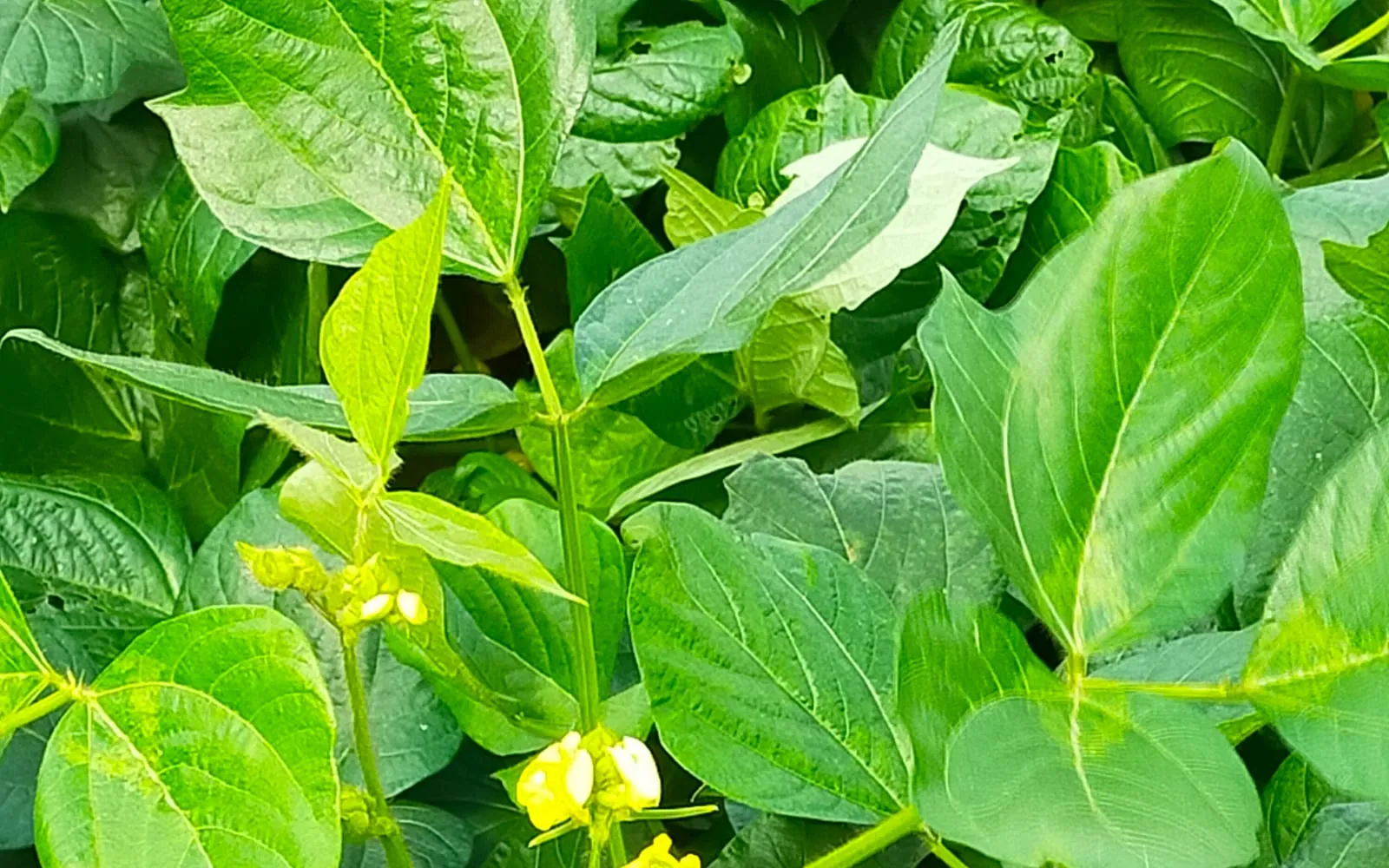
The plant is a compact upright bush, usually thigh high, with trifoliate leaves whose leaflets are broad and often faintly lobed. It carries fine hairs and branches freely from the base.
The flowers are bright yellow pea flowers, larger and more conspicuous than mung bean’s, carried in small clusters on stalks that stand above the foliage. They self-pollinate before opening.
The pods are slender cylinders 5 to 13 cm long, smooth rather than hairy, hanging in small groups and ripening from green to pale straw. Inside are the seeds sold in every bag of adzuki, small and oblong and glossy, a deep red-brown carrying a distinct white line along the hilum. White, black and mottled varieties exist and are less common.
Where it is from
Adzuki was domesticated in East Asia from the wild Vigna angularis variety nipponensis, which grows across Japan, Korea, China and the Himalaya. Charred seeds from Japanese Jomon sites suggest use from around 4000 BC and cultivation somewhat later.
The genetic evidence points to more than one domestication, with Japanese and Chinese material forming distinct groups. That makes adzuki one of a small number of crops independently brought into cultivation in two places from the same wild species.
Japan and China are the main producers today, with Hokkaido supplying most of Japan’s crop, and adzuki is grown in Korea, Taiwan, and on a small scale in the United States, New Zealand and Britain.
How it grows
Adzuki germinates in warm soil and lifts its seed leaves above ground, so the seedling stage is exposed to slugs and pigeons.
Nodules form on the roots and fix nitrogen through Bradyrhizobium strains shared with mung bean and cowpea. A plot that has grown either will usually nodulate adzuki without an inoculant.
Flowering starts eight to ten weeks after sowing and continues for a month, so pods ripen in sequence rather than together. Ripe pods shatter, though less violently than mung bean’s. The crop takes 100 to 120 days from sowing to a full dry harvest, which is at the outer edge of what a short season allows.
Through the seasons
Sow indoors in April in modules, or outdoors from late May once the soil is above 15 deg C. Adzuki tolerates a cooler start than mung bean, which makes it the better bet of the two outdoors in a cool summer.
Plant out or thin to 15 cm apart in rows 45 cm apart. Growth is steady through June and July, and flowering begins in late July.
Harvest through September, picking pods as they turn straw-coloured, or cutting the whole plant at the end of the month if frost threatens and hanging it under cover to finish. Thresh by beating the dry pods in a bag.
Care difficulty
Adzuki is the most likely of the Asian pulses to crop outdoors in a cool summer, because it tolerates cooler conditions than mung bean or soya and it is not strongly day-length sensitive in the varieties usually sold.
The season is still tight. A hundred days from a late May sowing takes you to early September, which leaves little room for a cool July. Starting under cover in April buys three weeks and is worth doing.
Otherwise the crop is undemanding. It fixes its own nitrogen, picks up few diseases outside its homeland, and needs only warmth, drainage and protection from slugs while it is small.
Watering
Water through establishment and keep the plants moist through flowering and pod fill, which is when drought reduces the crop most.
A weekly soak in a dry July and August is enough. The plant is reasonably drought tolerant once established, with a deeper root system than mung bean.
Stop once most pods have coloured. Late moisture keeps the plant flowering when it should be finishing, and a cool September is short of the warmth needed to fill anything set that late.
Warning signs, diseases and pests
Powdery mildew is the commonest disease on a crop in a cool climate, showing as a white dusty coating on the leaves late in the season. On a plant that is close to harvest it does little real damage.
Root rot follows cold wet soil, producing yellow plants that lift easily with brown roots. A warm start and free drainage prevent it.
Aphids colonise the growing tips and flower clusters, reducing pod set and spreading virus. Slugs and pigeons take the seedlings, which emerge with large soft seed leaves.
Pod shattering costs seed if the crop is left standing after the pods have dried. Pick over the plants as pods colour, or cut the whole plant and finish the drying under cover.
Growing environment
Full sun and a warm sheltered position. Adzuki grows at 20 to 30 deg C and tolerates a cooler summer than mung bean or soya, though it still wants better than a shaded corner.
Soil should be free-draining, near neutral at pH 6 to 7, and moderately fertile. Wet heavy ground causes root rot and poor nodulation.
Frost ends the crop, which is the practical deadline. Cut and hang the plants under cover if the forecast turns cold before the pods have dried on the plant.
Feeding
Feed nothing. The plant fixes its own nitrogen, and fertiliser suppresses the nodules and produces a leafy plant carrying fewer pods.
An inoculant sold for cowpea or mung bean will serve if the plot has never grown a Vigna, since the same bacterial group nodulates the genus.
Cut at the base at harvest rather than pulling, leaving the roots and their nodules in the ground for the following crop.
Troubleshooting
What is red bean paste made from? These beans. Boiled with sugar and mashed, adzuki becomes anko, which fills mochi, dorayaki, taiyaki and steamed buns across East Asia. Tsubuan is the chunky version and koshian the smooth strained one.
Can I grow adzuki in a cool climate? More easily than mung bean or soya. It tolerates a cooler summer and is not strongly day-length sensitive, though it needs about a hundred days, so start it under cover in April.
Do I need to soak them? For cooking, an hour or two helps, and adzuki cooks faster than most beans without soaking. Forty to fifty minutes of boiling is usual.
Are they the same as red kidney beans? No. Adzuki is a Vigna and kidney bean is a Phaseolus. Raw kidney beans carry phytohaemagglutinin at levels that cause severe illness, and adzuki does not approach that.
Why do my pods burst? Ripe adzuki pods shatter, though less sharply than mung bean’s. Pick pods as they turn straw-coloured rather than waiting for the whole plant.
Can I sprout them? Yes, and they are sold for sprouting. Use seed intended for that purpose, rinse two or three times daily, and refrigerate the result.
What is the white line on the seed? The hilum, the scar where the seed was attached to the pod, which in adzuki is a conspicuous white stripe and is one of the quickest ways to identify the bean in a bag.
Adzuki Bean problem guides
Not sure what is wrong? See the common vegetable pests guide.