
Pest
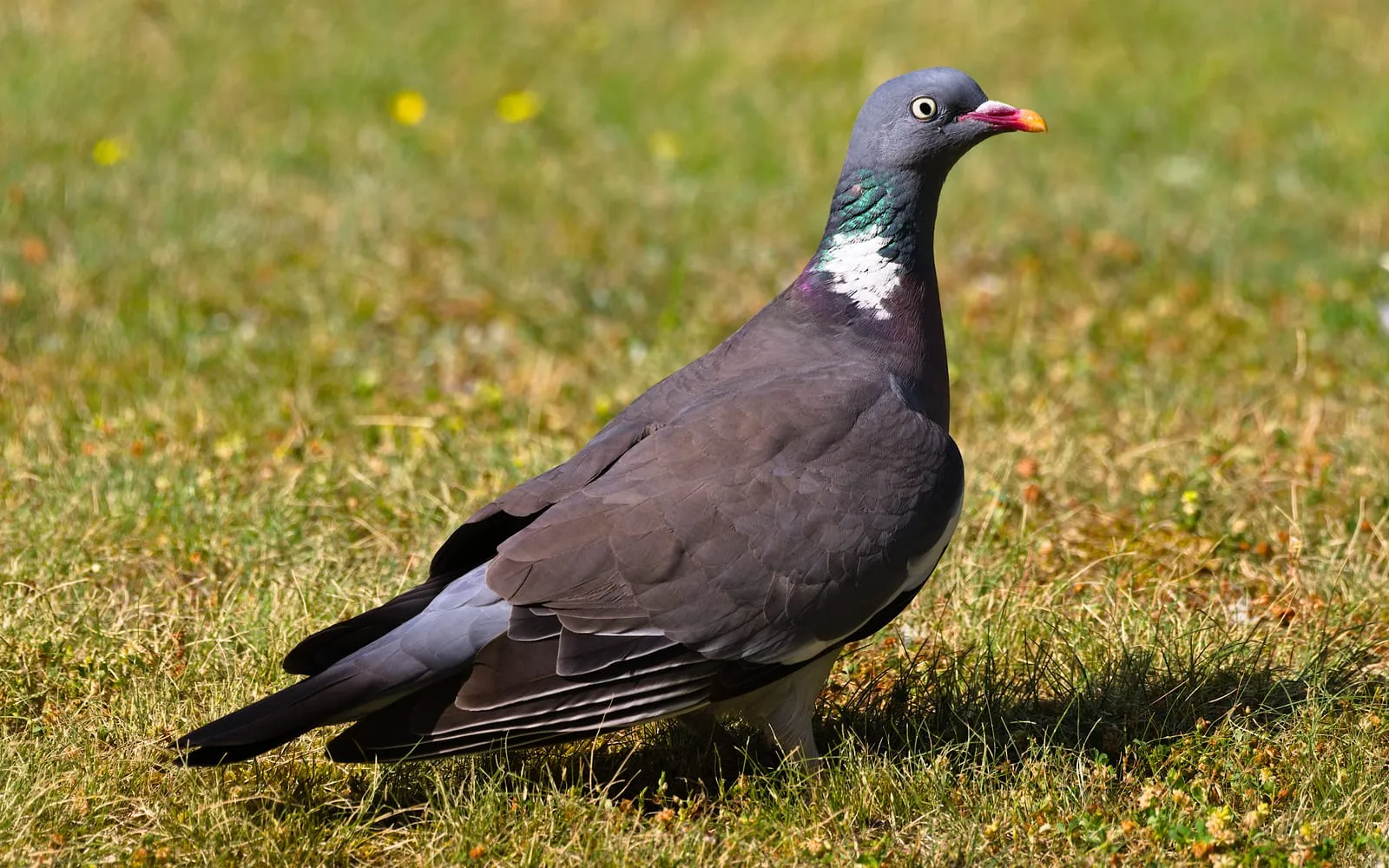
Wood pigeons
Columba palumbus
Also called Pigeon damage, Wood pigeon, Bird damage
Wood pigeons reduce cabbages and sprouts to bare midribs between November and March. Netting works only when it is taut, supported clear of the crop and sealed so birds cannot get trapped.
At a glance
- Type
- Pest
- Cause
- Bird
- Severity
- Destroys the crop or display
- Affects
- Herbs and edibles, Garden plants
- Active
- All year
- Established in
- Europe, North America, Asia, Australia, New Zealand, Africa and Central and South America
What you are seeing
- Brassica leaves torn away until only the thick midribs and stalks are left
- Damage appearing in daylight, and worst between November and March
- Ragged torn leaf edges rather than clean holes or rasped patches
- Grey-white droppings on the plants and the soil around them
- Rows of pea and bean seedlings pulled up or grazed off
- Blossom and fat buds stripped from fruit trees and currants in early spring
- Soft fruit and cherries taken as they colour
Before you treat anything
Netting is the hazard on this page rather than the birds. Fit it taut, peg every edge, and check it daily. Loose or forgotten netting kills birds and hedgehogs, and a bird caught by the wing will not free itself.
What you are looking at
A row of cabbages, sprouts or kale reduced to a set of bare white midribs and stalks standing in the ground. The leaf blade has been torn away and what is left looks skeletal, and it happened over a few days in the middle of winter.
Look for grey-white droppings on the plants and on the soil around them, and for torn rather than cut leaf edges. Pigeons pull rather than bite, so the damage is ragged.
It happens in daylight, which is unusual enough among garden pests to be a diagnosis on its own. Almost everything else on this site works at night.
In spring the same birds take pea and bean seedlings as they emerge, strip fat buds and blossom off fruit trees and currants, and later take cherries and soft fruit as they colour.
Why nothing except netting works
Wood pigeons are large, intelligent, numerous and hungry, and in a hard winter a brassica bed is the best food available for miles.
Every scaring device sold for them works on novelty. A hanging CD, a strip of foil, a plastic hawk, a humming line or a scarecrow produces a few days of caution and then becomes part of the scenery. Moving them regularly stretches that out. None of it holds a bed through February.
What does work is a physical barrier, and how it is fitted decides whether it works at all. A net lying directly on the plants is no obstacle, because a pigeon lands on it and feeds through the mesh. The net has to be held clear on a frame of hoops, canes or a permanent cage, and it has to be pulled taut and pegged at every edge.
That last part is also the safety requirement. Slack netting catches birds by the wing and traps hedgehogs, and it does so quietly. A taut net on a frame, walked past once a day, is both more effective against pigeons and far safer for everything else.
What to do about it
Build or buy a cage for the winter brassicas and net it properly, well clear of the foliage, taut and pegged down.
Put the netting on in autumn, before the first cold spell, rather than after the first damage.
Check it daily.
Group the winter brassicas in one bed at planning stage so one cage covers them.
Raise peas and beans under cover and plant them out at a decent size.
Use fleece or fine mesh over emerging rows and young transplants.
Cage soft fruit and cherries rather than draping netting over the bushes.
Use scarers as a supplement, move them often, and expect little.
What it gets mistaken for
Cabbage caterpillars chew holes through the blade and leave green-black frass pellets packed into the heart of the plant.
Slugs and snails rasp holes at night on low soft growth and leave slime trails.
Rabbits cut shoots cleanly at an angle and work at a consistent low height.
Deer tear foliage off well above rabbit height.
Wind damage shreds brassica leaves along the veins in an exposed position and leaves the midribs intact, which can look similar until you notice there are no droppings.
Frost damage on brassicas produces papery, bleached and blistered patches on leaves that are otherwise whole.
What to do, in order
Start here
Prevention, and the changes that stop the problem returning. Most of these pages should end at this tier.
- Accept that scarers stop working
- Hanging CDs, foil strips, humming line, plastic hawks and scarecrows all work for a few days and then stop, because pigeons learn quickly and there is a great deal of food at stake. Moving them every few days extends the effect a little. None of it is a substitute for a physical barrier, and anyone who has watched a pigeon sit on a plastic hawk knows it.
- Grow the vulnerable crops where you can cover them
- Brassicas need protecting from November to March, which is the whole of their standing period. Planning the plot so the winter brassicas sit together in one bed makes a single cage practical, where the same plants scattered around the garden cannot be covered at all.
- Sow peas and beans under cover
- Pigeons take pea and bean seedlings as they emerge. Raising them in modules or guttering and planting them out at a decent size gets them past the stage that is worth a pigeon's attention, and it dodges the mice at the same time.
- Expect the worst of it in hard weather
- Wood pigeons turn to gardens when the fields have nothing. A cold snap in January will strip a brassica bed that was untouched in December, so the netting needs to be on before the weather turns rather than in response to it.
Then reach for a barrier
Netting, hand removal and water. Nothing here harms anything except the target.
- Net properly, on a frame, taut and clear of the leaves
- Netting is the answer and the fitting is what decides whether it works. Use a frame of canes, hoops or a permanent cage so the net sits well clear of the foliage, because a pigeon will stand on a net lying across a cabbage and eat straight through it. Mesh of 20 to 30 mm, pulled taut and pegged down at every edge.
- Check the netting daily
- Slack netting catches birds by the wing and by the leg, and it catches hedgehogs. This is a welfare obligation rather than a suggestion. Taut netting rarely traps anything and a daily walk past the cage catches what does.
- Use fleece or mesh over seedling rows
- Lightweight fleece or fine mesh over hoops protects emerging peas, beans and brassica transplants through the few weeks when they are most attractive, and it keeps frost off at the same time.
- Cage soft fruit rather than draping it
- A fruit cage over currants, gooseberries and cherries protects the crop and keeps the net off the branches. Netting thrown loosely over a bush is where most bird entanglements happen.
Plants affected
Guides that name it among the problems to watch for. The list is the plants it is characteristic of rather than everything it will feed on.
Common on UK allotments
This is one of the pests and diseases allotment growers meet most often. See it alongside the other common problems on the allotment guide.
Common allotment pests and diseasesA common vegetable pest
This is one of the pests that vegetable growers meet most often. See it alongside the others on the vegetable pests guide, grouped by how they feed and with prevention that works against most of them.
Common vegetable pests