
Pest
Pea and bean weevil
Sitona lineatus
Also called Pea weevil, Bean weevil, Sitona weevil, Pea leaf weevil
Neat semicircular bites all round the leaf edges of peas and broad beans. The notching alarms people and costs an established plant nothing. The damage that costs you a crop is underground and invisible.
At a glance
- Type
- Pest
- Cause
- Insect
- Severity
- Cosmetic
- Affects
- Garden plants, Herbs and edibles
- Active
- March to October
What you are seeing
- Neat U-shaped or semicircular notches bitten in from the leaf margin
- Notches evenly spaced round the edge of the leaf, so it looks scalloped
- Damage on peas, broad beans and other legumes and on nothing else in the bed
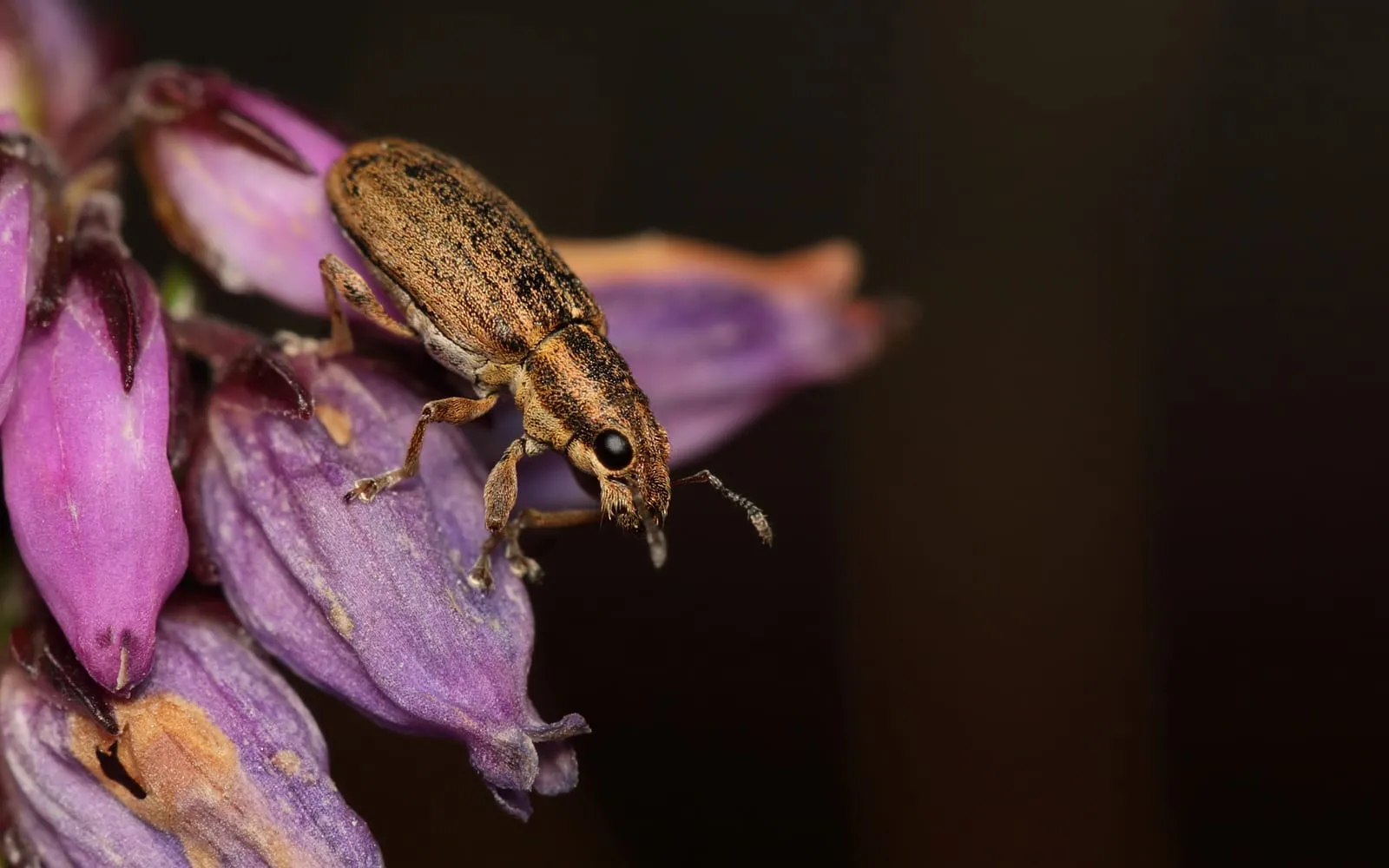
- Small dull grey-brown weevils about 5 mm long with faint pale stripes along the back
- Weevils dropping to the ground and staying still when disturbed
- Seedlings checked or killed where the notching takes most of the first leaves
- Established plants notched all over and cropping normally
- Root nodules hollowed out when a plant is dug up and washed
Before you treat anything
Nothing here is harmful and notched leaves have no effect on the peas or beans you eat. The name causes some confusion with the bean weevils, Bruchus species, whose grubs develop inside stored dried beans and leave round exit holes. Those are a different insect and a storage problem.
What you are looking at
Neat semicircular bites taken out of the edges of pea and broad bean leaves, evenly spaced all the way round so the leaf looks scalloped. Nothing else in the bed is touched.
The insect is a dull grey-brown weevil about 5 mm long with faint pale stripes running along its back and the long snout weevils have. It feeds at night and in dull weather, and when you disturb the plant it drops to the ground and stays motionless, so people see the damage for weeks before they see the animal.
An established plant covered in notches goes on to crop perfectly well.
The notching is not the damage
The scalloped leaves are what brings people to this page and they are close to irrelevant.
A pea or a broad bean past the seedling stage has far more leaf area than it needs, and the notches take a small fraction of it from the margins, where the loss costs least. Plants notched all over from top to bottom set a normal crop.
There are two situations where it does matter, and neither is the one people worry about.
The first is a seedling. A plant with two or three small leaves that loses most of them is checked or killed outright, so a cold slow spring in which peas sit at the two-leaf stage for a fortnight is when losses happen.
The second is underground, and it is invisible. The larvae hatch and burrow down to feed on the root nodules, the swellings where rhizobium bacteria fix nitrogen from the air for the plant. A heavy larval population hollows those out and the plant loses its own nitrogen supply.
That shows above ground as pale, stunted, slow growth rather than as anything you could attribute to an insect. Where a crop is notched and also pale, lift a plant and wash the roots, because empty or missing nodules turn a cosmetic problem into one worth feeding the crop over.
Timing is the whole of the control
The adults spend the winter in field margins, hedge bottoms and rough grass, and fly into legume crops in spring as the temperature climbs.
A broad bean sown in autumn is a substantial plant by the time that flight arrives and never notices it. The same variety sown in March meets the flight as a seedling. Moving the sowing date is therefore worth more than anything applied to the crop, and raising plants in modules to set out with several leaves already made achieves the same thing on a garden scale.
Fleece over a newly sown row covers the vulnerable weeks and comes off before flowering, since broad beans and peas want the pollinators.
What to do about it
Ignore the notching on an established plant.
Sow broad beans in autumn where the climate allows, or raise plants in modules and set them out well grown.
Fleece a newly sown row and take it off before flowering.
Lift and wash a plant where the crop is pale as well as notched, and look at the nodules.
Feed the crop where the nodules have been eaten out.
Rotate peas and beans off the same ground for a few years.
Keep the rough margins that support the ground beetles.
What it gets mistaken for
Vine weevil notches evergreen shrubs and pot plants irregularly rather than legumes evenly.
Slugs make ragged holes anywhere on the leaf and leave slime.
Caterpillars leave larger irregular holes and dark pellets of frass.
Flea beetles pit the leaf surface with round holes and jump when disturbed.
Capsid bugs leave small brown-edged holes in puckered distorted growth.
Bruchus bean weevils are a different insect entirely, developing inside stored dried beans and leaving round exit holes.
What to do, in order
Start here
Prevention, and the changes that stop the problem returning. Most of these pages should end at this tier.
- Ignore it on an established plant
- A pea or a bean past the seedling stage carries heavy notching all round its leaves and crops normally, because the tissue removed is a small fraction of the leaf area and the plant grows past it. Well-meaning treatment of an established crop is effort spent on a cosmetic problem.
- Get seedlings through the vulnerable stage quickly
- The one time it matters is when a seedling has few leaves and loses much of them. Sow into warm soil, or raise plants in modules and set them out with several leaves already made, and the crop passes the risk in days rather than weeks.
- Sow at the right time to miss the main flight
- Adults overwinter in field margins and hedge bottoms and fly into crops in spring as temperatures rise. An autumn-sown broad bean is well grown before that flight arrives, and an early spring sowing meets it head on as a seedling. Where losses have been bad, moving the sowing date is worth more than anything applied.
- Keep the nitrogen-fixing bacteria working
- The larvae eat the root nodules where rhizobia fix nitrogen, so a heavy infestation costs the plant its own nitrogen supply. On poor ground that shows as pale stunted growth. A modest feed carries the crop through and is a reasonable response where a bed has a history.
- Rotate away from legumes
- The weevil is confined to legumes, so a rotation that keeps peas and beans off the same ground for a few years reduces the local population, particularly the part of it overwintering in the plot itself.
Then reach for a barrier
Netting, hand removal and water. Nothing here harms anything except the target.
- Fleece the seedlings and take it off at flowering
- Horticultural fleece or fine mesh over a newly sown or planted row keeps the adults off through the stage that matters. Remove it once the plants are growing strongly and before flowering, since broad beans and peas need the pollinators.
- Dig one plant up and look at the nodules
- Where a crop is pale and stunted as well as notched, lift a plant and wash the roots. Nodules hollowed out or missing tell you the larvae are the reason rather than the soil, and that changes the response from doing nothing to feeding the crop.
Then bring in the predators
Encourage what already lives in the garden, and buy predators in where the problem is under glass and nothing will arrive on its own.
- Leave the ground beetles the field margin supports
- Carabid beetles take both adults and larvae, and the rough margin, beetle bank or log pile that supports them is doing the work here. Clearing every edge to the fence removes the predators without touching the weevil.
Biological controls are live organisms and their sale and release are regulated country by country. An agent sold freely in one place may be unapproved in another, so buy from a licensed supplier where you live and never import or move one yourself.
Plants affected
Guides that name it among the problems to watch for. The list is the plants it is characteristic of rather than everything it will feed on.
Common on UK allotments
This is one of the pests and diseases allotment growers meet most often. See it alongside the other common problems on the allotment guide.
Common allotment pests and diseases