
Edible
Butter Bean
Phaseolus lunatus
Also known as Lima bean, Madagascar bean, Sieva bean
How to grow butter beans, Phaseolus lunatus. The heat they need in a cool summer, climbing and bush forms, and why they must always be boiled hard.
At a glance
- Difficulty
- Moderate
- Water
- Twice weekly once flowering starts
- Light
- Full sun under glass or in the warmest sheltered position
- Temperature
- 20-28 deg C. Growth stops below 15 deg C
- Hardiness
- USDA 9-11, RHS H1b, hardy to 5 C
- Type
- Tender annual, or a short-lived perennial in the tropics
- Height
- 60 cm as a bush, 2-3 m as a climber
- Native to
- Central and South America
- Best month
- May in the Northern Hemisphere, November in the Southern Hemisphere
A longer season than french bean at 90 to 120 days, and flowers that drop above about 30 deg C, which together confine it to warm regions with a long mild summer. Nothing below 15 deg C. Wild and heirloom types carry enough cyanogenic glycoside to need boiling in an open pan.
Hardiness zones describe winter cold alone. Summer heat, humidity, rainfall and the length of the growing season decide as much, so treat the range as the outer limit rather than as a recommendation.
Every month named in this guide is for the temperate Northern Hemisphere. If you garden in the Southern Hemisphere, shift each one by six months, so May becomes November. Closer to the equator the wet and dry seasons matter more than the calendar, and the shift stops being a useful guide.
Poisonous if eaten
- Safe to eat
- The seeds, thoroughly cooked, and young pods when cooked
- Harm from
- Eating it
- Affects
- People, cats and dogs
Raw butter beans are genuinely dangerous and this is the most serious safety point in the whole of this wave. Phaseolus lunatus seeds contain the cyanogenic glycoside linamarin, which releases hydrogen cyanide when the tissue is damaged by chewing or crushing. Wild and coloured landraces contain far more of it than the pale commercial varieties, and several countries regulate the maximum permitted level in imported beans. The treatment is straightforward and non-negotiable. Soak dried beans for at least twelve hours, discard the soaking water, then boil hard in fresh water for at least thirty minutes with the lid off so the released cyanide escapes as vapour. Never cook them in a slow cooker without boiling first, because the temperature is high enough to release the cyanide and too low to destroy it. Freshly shelled green beans from the garden also need boiling rather than a light steam. Butter beans additionally contain phytohaemagglutinin, the lectin that makes undercooked kidney beans cause violent vomiting, and the same hard boil deals with it. Keep raw and dried beans away from pets.
Sources: RHS potentially harmful garden plants, ASPCA toxic and non-toxic plants
About
Butter beans are the large flat cream-coloured beans of a Sunday stew, and they are a different species from the runner and French beans already covered in these guides. That difference shows in the growing. Phaseolus lunatus wants more heat and a longer season than either.
In a cool summer that puts them under glass or in the warmest sheltered outdoor corner, sown in May and cropped as green shelled beans in September rather than as dried ones. Ripening a dry crop outdoors is possible in a hot summer and unreliable in anything less.
The safety point matters more for this bean than for anything else in this wave. Butter beans contain a cyanide-releasing compound and must be boiled hard. Nothing about that is optional, and slow cookers are the specific hazard.
Appearance and character
Either a compact bush 60 cm tall or a twining climber reaching 2 to 3 m, depending on variety.
Leaves are trifoliate like other beans, with three broad pointed leaflets, in a mid-green, slightly thicker and glossier than a French bean’s.
Flowers are small, pale greenish-white to lilac, in loose clusters, and much less showy than a runner bean’s scarlet.
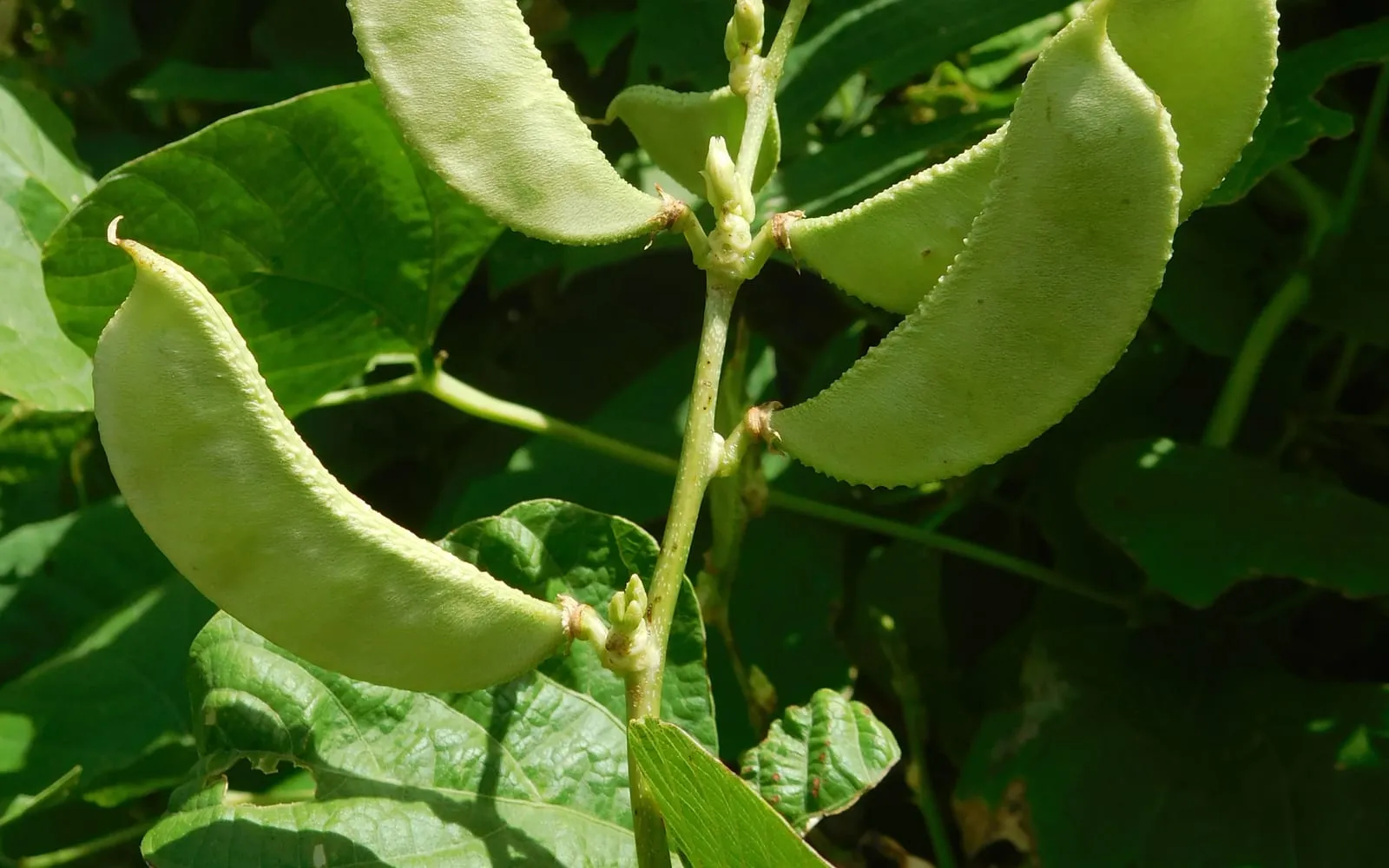
Pods are the identification. Short, broad, flat and distinctly curved like a crescent moon, 5 to 12 cm long, holding two to four seeds.
Seeds are large, flat and kidney-shaped, cream in the commercial varieties and mottled purple, red or black in the landraces. The coloured ones contain far more of the cyanogenic compound.
Flavour cooked is mild, floury and buttery, quite unlike a French bean.
Where it is from
Phaseolus lunatus was domesticated twice, independently. A small-seeded form in Mexico and Central America around 7,000 years ago, and a large-seeded form in the Andes of Peru around 4,000 years ago.
The Andean large-seeded form is the butter bean of European shops. The Central American small-seeded form is the sieva bean of the American south.
Lima, the Peruvian capital, gave the American name, and crates of the beans were labelled with the port of shipment.
Moche pottery from northern Peru depicts the beans repeatedly, sometimes with markings suggesting they were used in a system of notation.
Portuguese and Spanish trade carried them to Africa and Asia, where the Madagascar bean name attached to one large-seeded type.
Northern Europe has grown them only under glass, and they have never been a field crop there.
How it grows
Sow indoors in late April or May at 18 to 20 deg C, one seed to a 9 cm pot. Germination takes seven to fourteen days and fails in cold wet compost.
Plant out after the last frost, in late May or June, into a greenhouse border, a polytunnel or the warmest sheltered outdoor bed.
Space bush varieties at 25 cm and climbing ones at 20 cm along a support.
Give climbing varieties a proper structure. Canes, netting or strings to 2.5 m, since they climb as vigorously as a runner bean.
Pinch out the tips of climbers when they reach the top of the support.
Pick green shelled beans from August, when the pods are well filled and still green. This is the realistic crop in a cool summer.
For dried beans, leave the pods on the plant until they are brown and papery and the seeds rattle, then shell and dry them thoroughly indoors. This needs a hot summer and a sheltered position.
Through the seasons
Late spring is sowing, indoors in late April or May at 18 to 20 deg C.
Early summer is planting out, from late May, with the support already in place. Water in and mulch.
Summer is growth and flowering. Water twice weekly once flowering starts, since dry roots at that stage cause the flowers to drop.
Late summer fills the pods. Pick green shelled beans from August, and keep picking to encourage more.
Autumn finishes the crop. Leave a few pods to dry on the plant for seed if the weather allows. Frost ends everything.
Care difficulty
Moderate, and heat is the limiting factor.
Warmth decides the crop. Growth stops below 15 deg C and the plant wants 20 to 28, which means glass or a very sheltered warm corner where summers are cool.
Blossom drop follows cold nights or dry roots at flowering, which is the same failure runner beans have and worse here.
Water at flowering and pod fill is the routine job that matters most.
Slugs take young plants and blackfly colonise the tips.
Cooking safely is a kitchen matter rather than a growing one, and it is the most important thing on this page.
Watering
Water twice weekly from the moment flowering starts, which is the critical period for this crop.
Dry roots at flowering cause the flowers to drop without setting pods, which is the commonest way a bean crop disappoints.
Mulch after planting to hold moisture around the shallow roots.
Water at the base rather than over the foliage, which reduces halo blight.
Damp the greenhouse floor in hot weather against red spider mite.
Reduce watering once the pods are filling if you want a dry crop, since damp weather at that stage causes the seeds to sprout in the pod.
Warning signs, diseases and pests
Blackfly colonise the growing tips from June. Pinch out the tips once the plant has reached its support, wash the colonies off, and leave the predators to the rest.
Slugs graze young plants to the ground. Protect transplants for the first fortnight.
Red spider mite bronzes the leaves in dry glasshouse heat. Damp down daily.
Halo blight spots the leaves with small dark patches surrounded by a pale yellow ring, and it is seed-borne. Use bought seed rather than saving from an affected crop, and remove affected plants.
Blossom drop follows cold nights or dry roots. Water and wait for warmth.
Pods failing to fill means poor pollination in cold weather, or too little water.
Seeds sprouting inside the pod mean damp weather during ripening.
Mexican bean beetle, a coppery ladybird-like beetle that eats leaves rather than aphids, skeletonises the foliage from the underside and is worst in the Mid-Atlantic and Appalachian United States. It has not established outside the Americas.
Growing environment
Full sun under glass or in a polytunnel, or the warmest, most sheltered outdoor position in the south.
Free-draining, moderately fertile soil.
Neutral to slightly acid, pH 6 to 7.
Temperatures of 20 to 28 deg C by day and above 15 at night.
A support of 2.5 m for climbing varieties, or bush varieties where space or height is limited.
Shelter from wind, which damages the soft foliage and knocks the flowers off.
Rotate with other legumes on three years.
Feeding
Dig compost into the bed before planting and keep it moderate.
Butter beans fix their own nitrogen through root nodules, so nitrogen feeding is unnecessary and gives leaf rather than pods.
Give a potash-rich feed once the pods start forming.
Never use fresh manure.
Leave the roots in the ground when clearing the plants, since the nitrogen nodules benefit whatever follows.
Troubleshooting
The flowers dropped without setting pods. Blossom drop from cold nights or dry roots. Water twice weekly from first flower and grow under cover where the summer is cool.
The plants sat still all summer. Too cold. Growth stops below 15 deg C. This is a greenhouse crop where summers are cool.
The pods never dried on the plant. A normal outcome in a cool summer. Pick and use them as green shelled beans from August instead, which is the realistic crop.
Black clusters all over the tips. Blackfly. Pinch out the growing tips once the plant reaches the top of its support and wash the colonies off.
Dark spots with pale yellow halos on the leaves. Halo blight, which is seed-borne. Remove affected plants and use fresh bought seed next year.
The seeds sprouted inside the pod. Damp weather during ripening. Pick and use them green, or bring whole plants under cover to finish.
How long do I have to boil them? Soak dried beans at least twelve hours, throw the soaking water away, then boil hard in fresh water for at least thirty minutes with the lid off. Fresh green beans from the garden also need boiling rather than steaming.
Can I use a slow cooker? Not without boiling them hard first. A slow cooker reaches a temperature that releases the cyanide and never gets hot enough to drive it off, which is the specific hazard with this bean.
Butter Bean problem guides
Not sure what is wrong? See the common vegetable pests guide.