
Pest
Capsid bugs
Miridae
Also called Common green capsid, Tarnished plant bug, Mirid bug
Capsid bugs feed on young leaves and leave small tattered holes with brown edges after the leaf expands. The insect is often gone by the time damage appears, and most plants grow through it.
At a glance
- Type
- Pest
- Cause
- Insect
- Severity
- Cosmetic
- Affects
- Garden plants, Herbs and edibles
- Active
- May to September
- Established in
- Worldwide
What you are seeing
- Many small ragged holes with brown or rust-coloured rims, in the youngest leaves at the shoot tips
- Leaves puckered, crumpled and lopsided as they expand
- Shoot tips killed outright, so the plant branches from lower down
- Flower buds distorted, one-sided or failing to open on dahlias and chrysanthemums
- Small bumpy corky patches on apples and currants
- No insect present when the damage is found
- Fast-moving green or straw-brown bugs about 6 mm long that drop or fly when disturbed
Before you treat anything
Harmless. Fruit with corky capsid marks is perfectly good to eat.
What you are looking at
The newest leaves at the tips of the shoots are full of small holes. The holes are ragged rather than clean, each ringed with a narrow rim of dead brown or rusty tissue, and the leaf around them is puckered and lopsided as though it grew unevenly. Which is exactly what happened.
There is nothing on the plant. No caterpillar, no droppings, no slime, no webbing. That absence is the strongest clue in the whole diagnosis.
Dahlias and chrysanthemums show it worst, along with currants, gooseberries, fuchsias, roses and apples. On fruit it leaves small bumpy corky patches instead of holes.
The damage arrives after the insect has left
A capsid bug feeds by pushing its mouthparts into soft young tissue and injecting saliva that breaks the cells down so it can drink them. Each feeding puncture kills a pinhead of tissue in a leaf that is still tightly folded in the bud.
The leaf then grows. The living tissue expands and the dead spots cannot, so they tear, and each tear becomes a hole with a dead rim. The leaf ends up crumpled because it grew around a set of holes.
All of that takes a week or two, by which time the bug has moved on. That is why nobody ever finds the culprit, and why spraying the damage is pointless: the insect that caused it is somewhere else, quite possibly in another garden.
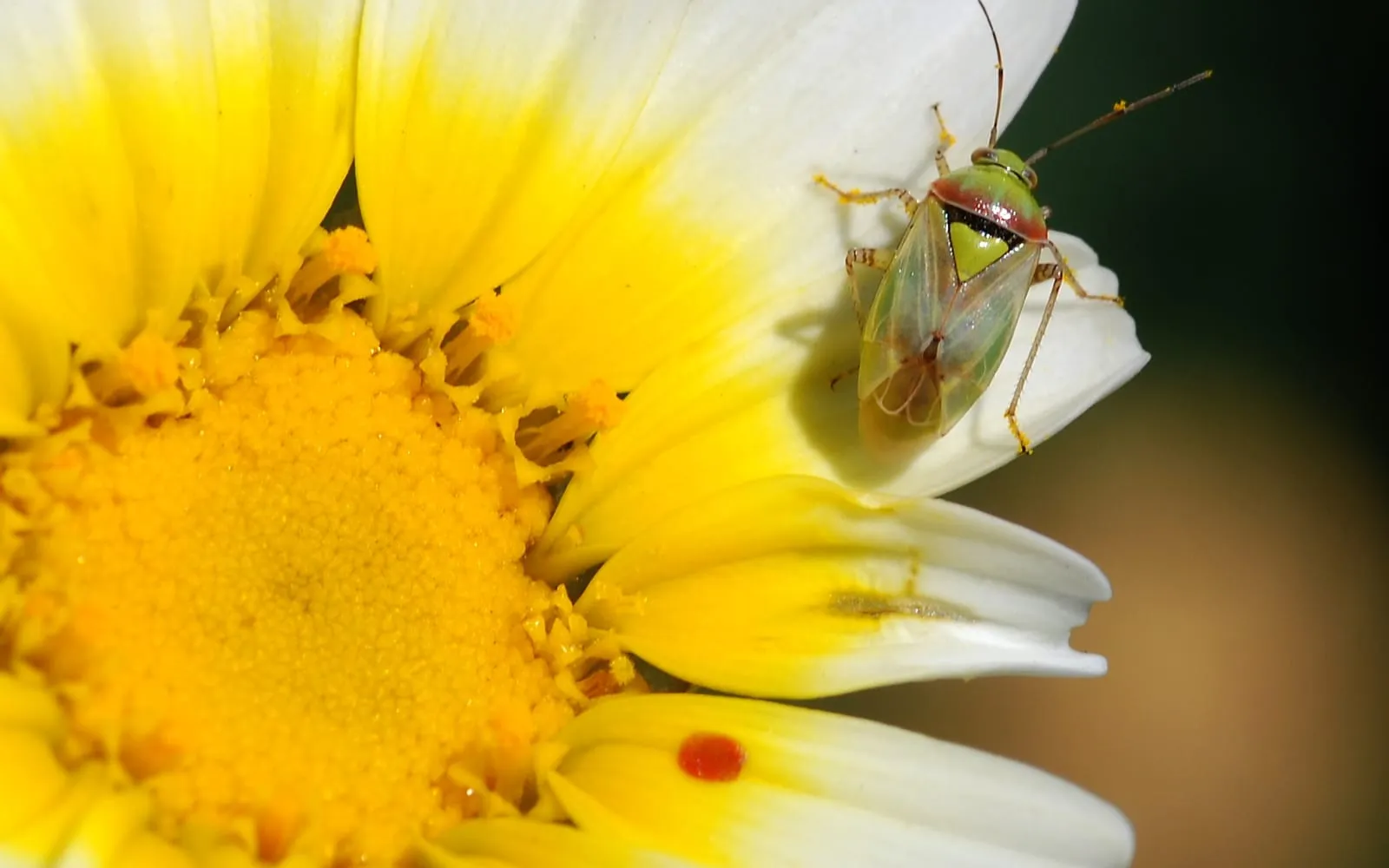
The bugs themselves are around 6 mm long, soft-bodied, green or straw-brown, with long antennae and long legs. They run fast, drop off at the slightest disturbance and fly readily. Early morning is the only time most people see one.
Why this page recommends doing nothing
The damage is superficial. The plant keeps growing, the holes do not spread, and a border that looked chewed in June looks perfectly normal by the middle of August.
There is no product available to gardeners that would help, and if there were, the timing problem would defeat it. What a spray would reliably do is kill the ladybirds, hoverfly larvae and predatory bugs sitting on the same foliage, and some capsids are themselves predators of aphids and mites.
The one exception is a plant grown for its flowers where the buds are being wrecked. Pinching out the worst shoot tips lets it break lower down and produce something worth cutting.
What to do about it
Confirm the diagnosis by the pattern rather than by finding the insect. Ragged brown-rimmed holes in the newest growth, with no frass and no slime, is this.
Pinch out badly damaged shoot tips on dahlias and chrysanthemums.
Clear weeds and dead stems from around affected plants over the winter.
Then leave it. The plant will outgrow it and so will you.
What it gets mistaken for
Caterpillars leave clean chewed edges, dry pellets of frass on the leaves below, and usually the caterpillar.
Slugs work at ground level on soft low growth at night and leave slime trails. Capsid damage is at the shoot tips, often at head height.
Flea beetles pepper brassica and rocket leaves with tiny round shot holes, without the brown rims and without distortion.
Sawfly larvae feed in groups from the outside of the leaf and are easy to find.
Mosaic viruses distort and pucker new leaves in a very similar way, and they mottle the tissue light and dark green rather than perforating it.
Frost damage on early growth browns whole leaf margins and shoot tips in one event, and it goes no further once the weather turns.
What to do, in order
Start here
Prevention, and the changes that stop the problem returning. Most of these pages should end at this tier.
- Tolerate it on most plants
- Capsid damage looks far worse than it is. The plant grows on, the affected leaves stay on the plant, and by August nobody can see where it happened. On anything grown for foliage or for a crop rather than for exhibition, doing nothing is the right answer.
- Clear weeds and litter around the affected plants
- Several species overwinter as eggs in the stems of weeds and in dead plant material, and others shelter under debris. A tidy border in winter carries fewer, and the effect is modest.
- Accept that timing defeats spraying
- By the time the holes appear the insect has moved on, often weeks earlier and often to another plant. Spraying the damage achieves nothing except killing whatever else is on the leaf, which is why no product is listed here.
Then reach for a barrier
Netting, hand removal and water. Nothing here harms anything except the target.
- Pick off the worst shoot tips on show plants
- On dahlias and chrysanthemums being grown for the flowers, taking out a badly distorted shoot tip lets the plant break below it and produce something usable. That is the only intervention worth the effort.
- Look for them at dawn if you want to see one
- Capsids are fast, they drop off the plant at the first movement, and they fly. Early morning while it is still cool is the only realistic chance of catching one on the plant. Do it once to settle what you have and then stop looking.
Plants affected
Guides that name it among the problems to watch for. The list is the plants it is characteristic of rather than everything it will feed on.
Common on UK allotments
This is one of the pests and diseases allotment growers meet most often. See it alongside the other common problems on the allotment guide.
Common allotment pests and diseasesA common rose problem
This is one of the pests, diseases and disorders that rose growers meet most often. See it alongside the others on the common rose problems guide.
Common rose problems