
Edible
White Lupin
Lupinus albus
Also known as Lupini, Lupin bean, Termis, Altramuz
How to grow white lupin, Lupinus albus. The bar snack that takes a week to make safe, a named allergen in Britain, and roots that mine phosphate out of dead soil.
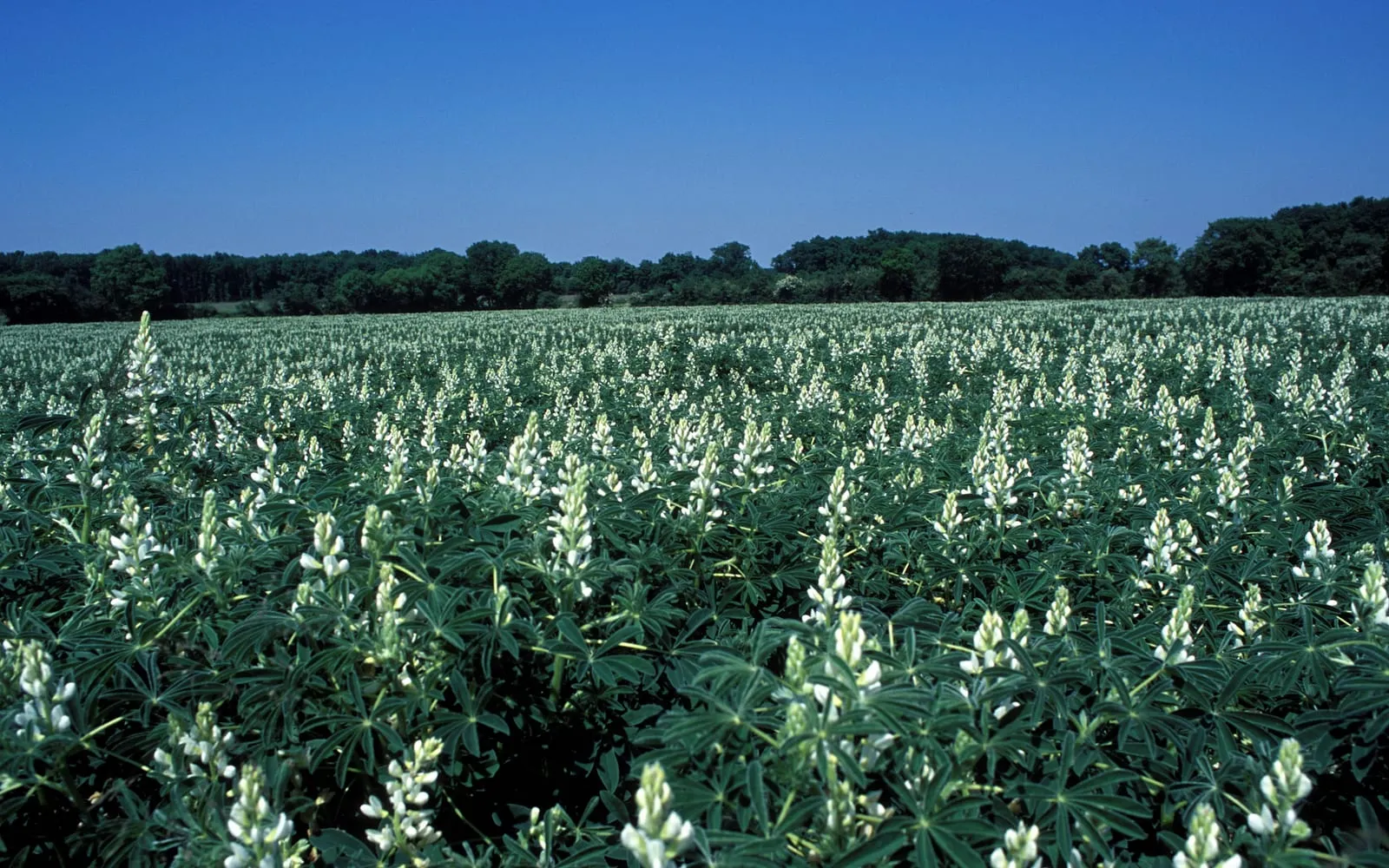
At a glance
- Difficulty
- Moderate
- Water
- Rain-fed in a temperate climate
- Light
- Full sun
- Temperature
- Cool suits it. It germinates at 6 deg C and dislikes heat above 30
- Hardiness
- USDA 5-9, RHS H4, hardy to -8 C
- Type
- Hardy annual legume
- Height
- 60-150 cm
- Native to
- the Balkans, the eastern Mediterranean
- Best month
- March, April and September in the Northern Hemisphere, September, October and March in the Southern Hemisphere
Cool springs suit it and heat above 30 deg C at flowering costs the crop. It fixes nitrogen and will take acid soil that beans and peas refuse, which is its main agricultural value. Anthracnose is the limiting disease in humid climates. Only sweet, low-alkaloid cultivars are edible without long soaking.
Hardiness zones describe winter cold alone. Summer heat, humidity, rainfall and the length of the growing season decide as much, so treat the range as the outer limit rather than as a recommendation.
Every month named in this guide is for the temperate Northern Hemisphere. If you garden in the Southern Hemisphere, shift each one by six months, so March becomes September. Closer to the equator the wet and dry seasons matter more than the calendar, and the shift stops being a useful guide.
Poisonous if eaten
- Safe to eat
- The seed of sweet varieties, or of bitter varieties after prolonged soaking
- Do not eat
- Raw seed, and any seed that still tastes bitter after processing
- Harm from
- Eating it
- Affects
- People, dogs, cats and horses
Lupin is one of the 14 allergens British food businesses must declare, and lupin flour appears in bread, pastry and gluten-free products. Lupin allergy is closely linked to peanut allergy, with a substantial proportion of peanut-allergic people reacting to lupin, and reactions can be severe. Separately, the seed carries quinolizidine alkaloids, chiefly lupanine and sparteine, which are bitter and neurotoxic. Poisoning causes dry mouth, blurred vision, dilated pupils, confusion, rapid heartbeat and, in serious cases, respiratory difficulty, and hospital cases are reported every year from people eating home-prepared lupini that were not soaked for long enough. Traditional preparation is to boil the seed and then soak it in repeated changes of water for up to a week, tasting until no bitterness remains. Any bitterness means it is not ready. Sweet lupin varieties bred for low alkaloid content still need cooking and should be bought as such rather than assumed. Garden lupins in a border are a different species with the same class of alkaloids, and their seeds and pods must not be eaten. Lupin alkaloid poisoning of sheep and cattle grazing bitter varieties is well documented, and horses are also affected.
Sources: Food Standards Agency on the 14 named allergens, Food Standards Agency on food allergy and intolerance, RHS on potentially harmful garden plants
About
White lupin is an ancient Mediterranean crop with an unusual requirement: the seed has to be soaked for days before anyone can eat it. Bitter varieties carry quinolizidine alkaloids at concentrations that cause real poisoning, and the traditional preparation of boiling and then soaking in repeated changes of water for up to a week exists to wash them out.
The result is lupini, sold in brine as a bar snack around the Mediterranean and across the Middle East, firm and yellow and slightly waxy. Egyptian termis, Italian lupini and Spanish altramuces are all this plant.
Twentieth-century breeding produced sweet lupins with low alkaloid content, which opened the crop to animal feed and to food manufacture, and lupin flour now turns up in bread, pasta and gluten-free products. That is why lupin is one of the 14 allergens British labelling law names, and why anyone with a peanut allergy needs to know about it.
Appearance and character
The plant is upright and branching, with the palmate leaves that identify every lupin: five to nine leaflets radiating from a single point on a long stalk, like the fingers of a hand. In white lupin the leaflets are broad and blunt and carry silky hairs underneath.
The flowers stand in dense upright spikes at the branch tips, white or white with a blue flush, smaller and less showy than the garden lupins bred from American species. They are largely self-pollinating.
The pods are broad and flat, 6 to 10 cm long, covered in short dense hair, and they carry three to six large seeds. The seed is the distinguishing feature. It is flattened and squarish, cream or white, and unusually large for a legume at around 1 cm across.
Where it is from
White lupin was domesticated in the Balkans and the eastern Mediterranean from the wild Lupinus albus subspecies graecus, which still grows in Greece and western Turkey. Cultivation is documented in Egypt and Greece well over two thousand years ago.
Romans grew it as a food and a green manure, and Roman agricultural writers describe both the soaking process and the practice of ploughing the crop in to improve the soil. Egyptian termis has been eaten continuously since antiquity.
Modern cultivation is modest and concentrated in the Mediterranean, Egypt, and increasingly in Australia, which grows large areas of narrow-leafed lupin rather than this species. Britain grows small quantities of sweet lupins for protein.
How it grows
White lupin germinates in cool soil, from about 6 deg C, and lifts its large seed leaves above ground on a stout stem.
Its root system does something remarkable. On phosphate-poor soil the plant produces cluster roots, dense bottlebrush-like masses of fine rootlets that release organic acids and phosphatase enzymes into a small volume of soil, dissolving phosphate that is chemically locked up and unavailable to other plants. It is one of the most effective phosphate miners in agriculture.
Nodules form and fix nitrogen through Bradyrhizobium strains specific to lupins, which are often absent from soil that has not grown them.
The plant flowers from June, sets pods over several weeks, and matures unevenly. Ripe pods shatter in hot dry weather, which is the main harvest loss.
Through the seasons
Sow from March to April, as soon as the ground is workable, at 3 to 4 cm deep and 10 to 15 cm apart in rows 45 cm apart. The seed is large and easy to handle.
Growth is steady through May, and the flower spikes appear in June. Flowering continues for several weeks and pods form behind the flowers.
Harvest in September when the pods have turned brown and rattle, checking them regularly, since they shatter once fully dry. Cut the plants, dry them under cover, and thresh. Then begin the soaking, which is a separate and longer job than the growing.
Care difficulty
Growing the plant is straightforward on the right soil and impossible on the wrong one. White lupin will not tolerate lime, and on a chalky or heavily limed plot it goes yellow between the leaf veins from iron deficiency and never recovers. Check the pH before sowing.
On acid or neutral sandy ground it is easy. It fixes its own nitrogen, mines its own phosphate, and needs no feeding at all.
The processing is where the real work is, and it is the reason most people who grow this once do not grow it again. A week of soaking with daily water changes turns a bitter seed into a bar snack, and cutting the process short is how people end up in hospital.
Watering
Rain-fed in a temperate climate. White lupin has a deep taproot and cluster roots that explore the soil thoroughly, and it tolerates dry conditions well.
Water only if flowering coincides with a genuine drought. Once the pods are filling, stop, because moisture then delays maturity and invites botrytis into a crop that should be drying.
Waterlogging kills it, and the plant is particularly intolerant of wet feet in combination with alkaline soil.
Warning signs, diseases and pests
Anthracnose is the most serious disease of lupins worldwide. It shows as sunken lesions with orange spore masses on stems and pods, twisting and bending the stem at the lesion, and it is seed-borne, so it arrives with infected seed and should never be saved from.
Lime-induced chlorosis is the commonest problem on alkaline soil, and it is not a disease. Leaves go yellow between green veins, starting at the top of the plant, because the soil is too alkaline for the roots to take up iron. There is no in-season fix. Grow it somewhere else next time.
Botrytis attacks flowers and pods in a wet season, coating them in grey mould. Root rot follows waterlogging.
Aphids build up on the flower spikes, and pigeons and slugs take seedlings. Pods shatter in a hot dry September, so check them daily as they brown.
Growing environment
Full sun and acid to neutral soil. This is the requirement that decides everything: white lupin needs a pH below about 7 and does badly above 6.8, and a chalky garden is the wrong place for it entirely.
Light sandy soils suit it, including ground too poor and too phosphate-deficient for most crops, which is precisely where its cluster roots earn their keep.
Cool conditions suit it and heat does not. The plant flowers poorly above 30 deg C, so a cool summer is close to ideal, and the risk is a wet September rather than a hot July.
Feeding
Feed nothing. White lupin fixes its own nitrogen and extracts its own phosphate through cluster roots, and it is one of very few crops that can be relied on to supply both for itself.
Do not lime the ground for it. Liming is the standard advice for most legumes and it is exactly wrong here, since alkalinity is what stops the plant taking up iron.
An inoculant is worth using on a plot that has never grown lupins, since the specific Bradyrhizobium strains they need are often absent from soil that has not carried the crop.
Troubleshooting
Can I eat lupin seeds straight from the plant? No. Bitter varieties carry quinolizidine alkaloids that cause dry mouth, blurred vision, confusion and rapid heartbeat, and hospital cases occur every year from under-soaked lupini.
How do I prepare lupini? Soak the dry seed overnight, boil it for an hour or two, then soak it in fresh water for up to a week, changing the water at least twice a day and tasting one each day. It is ready when no bitterness remains, and any bitterness means it is not. Then store it in brine.
Are sweet lupins safe without soaking? They still need cooking, and they need to be bought as sweet varieties rather than assumed. Alkaloid content in a nominally sweet variety can rise under stress, so the taste test is worth doing regardless.
Can I eat seeds from a garden lupin? No. Border lupins are American species carrying the same class of alkaloids and they should never be eaten. Keep the seed pods away from children.
Why are my leaves yellow between the veins? Lime-induced iron chlorosis. The soil is too alkaline for white lupin, which needs a pH below about 7. Nothing will fix it in season.
Is lupin an allergen? Yes, and it is one of the 14 that British food businesses must declare. Lupin allergy is closely linked to peanut allergy, and a substantial proportion of peanut-allergic people react to it.
Why is it good for the soil? It fixes nitrogen and it produces cluster roots that dissolve phosphate other plants cannot reach. Roman farmers ploughed it in for that reason and modern growers use it on phosphate-poor land.
Do I need to inoculate? On a plot that has never grown lupins, yes. The bacteria that nodulate them are specific and often absent from soil that has not carried the crop.
White Lupin problem guides
Not sure what is wrong? See the common vegetable pests guide.