
Edible
Lentil
Lens culinaris
Also known as Masoor, Dal, Puy lentil, Beluga lentil
How to grow lentils, Lens culinaris. One of the eight founder crops, the shape that named the optical lens, and a pulse that grows in a cool climate better than most people think.
At a glance
- Difficulty
- Moderate
- Water
- Rain-fed in a temperate climate. Water only through a dry flowering
- Light
- Full sun
- Temperature
- Cool suits it. It germinates at 5 deg C and dislikes heat above 30
- Hardiness
- USDA 5-9, RHS H4, hardy to -8 C
- Type
- Hardy annual legume
- Height
- 20-50 cm
- Native to
- the Fertile Crescent, south-eastern Turkey and Syria
- Best month
- March, April and August in the Northern Hemisphere, September, October and February in the Southern Hemisphere
It germinates in soil around 5 deg C and needs a dry finish, so the crop belongs in cool springs followed by dry summers. Heat above 30 deg C at flowering empties the pods. Humid ripening weather brings disease and stains the seed, which is why the trade sits in Canada, Turkey, India and Australia rather than anywhere maritime.
Hardiness zones describe winter cold alone. Summer heat, humidity, rainfall and the length of the growing season decide as much, so treat the range as the outer limit rather than as a recommendation.
Every month named in this guide is for the temperate Northern Hemisphere. If you garden in the Southern Hemisphere, shift each one by six months, so March becomes September. Closer to the equator the wet and dry seasons matter more than the calendar, and the shift stops being a useful guide.
Edible, with limits
- Safe to eat
- The dried seed, cooked
- Do not eat
- Raw and undercooked seed
- Harm from
- Eating it
- Affects
- People, dogs and cats
Lentils are safe and nutritious once cooked and are eaten daily by hundreds of millions of people. Raw lentils contain lectins and protease inhibitors that cause digestive upset, so they should be cooked rather than eaten raw, and sprouted lentils should be cooked briefly rather than eaten entirely raw for the same reason. The quantities involved are far below the levels in raw red kidney beans, which are in a different category altogether. Lentils are not a named allergen in Britain, though legume allergy is real and cross-reactivity with peanut and other pulses occurs. In dogs and cats, cooked lentils in small amounts are safe. There is an ongoing veterinary question about grain-free pet foods high in pulses and a possible association with dilated cardiomyopathy in dogs, which is unresolved and worth discussing with a vet rather than acting on from a label.
Sources: Food Standards Agency on the 14 named allergens, Blue Cross on foods poisonous to dogs
About
The lentil is one of the eight founder crops of Neolithic agriculture, among the first plants anyone farmed anywhere, and it has been eaten continuously in the same region for ten thousand years. Wild lentils were gathered in the Near East well before that.
Its shape gave the world a word. The Latin for lentil is lens, and when seventeenth-century opticians needed a name for a piece of glass thick in the middle and thin at the edges, they took it from the seed. Every camera, every pair of spectacles and every telescope carries the name of this plant.
It also does something no cereal does. Lentils fix their own nitrogen through bacteria in root nodules, taking it from the air and leaving some of it in the soil, which is why pulses and cereals have been rotated together since farming began. Britain grows lentils commercially in a small way, and they succeed in a garden more readily than their reputation suggests.
Appearance and character
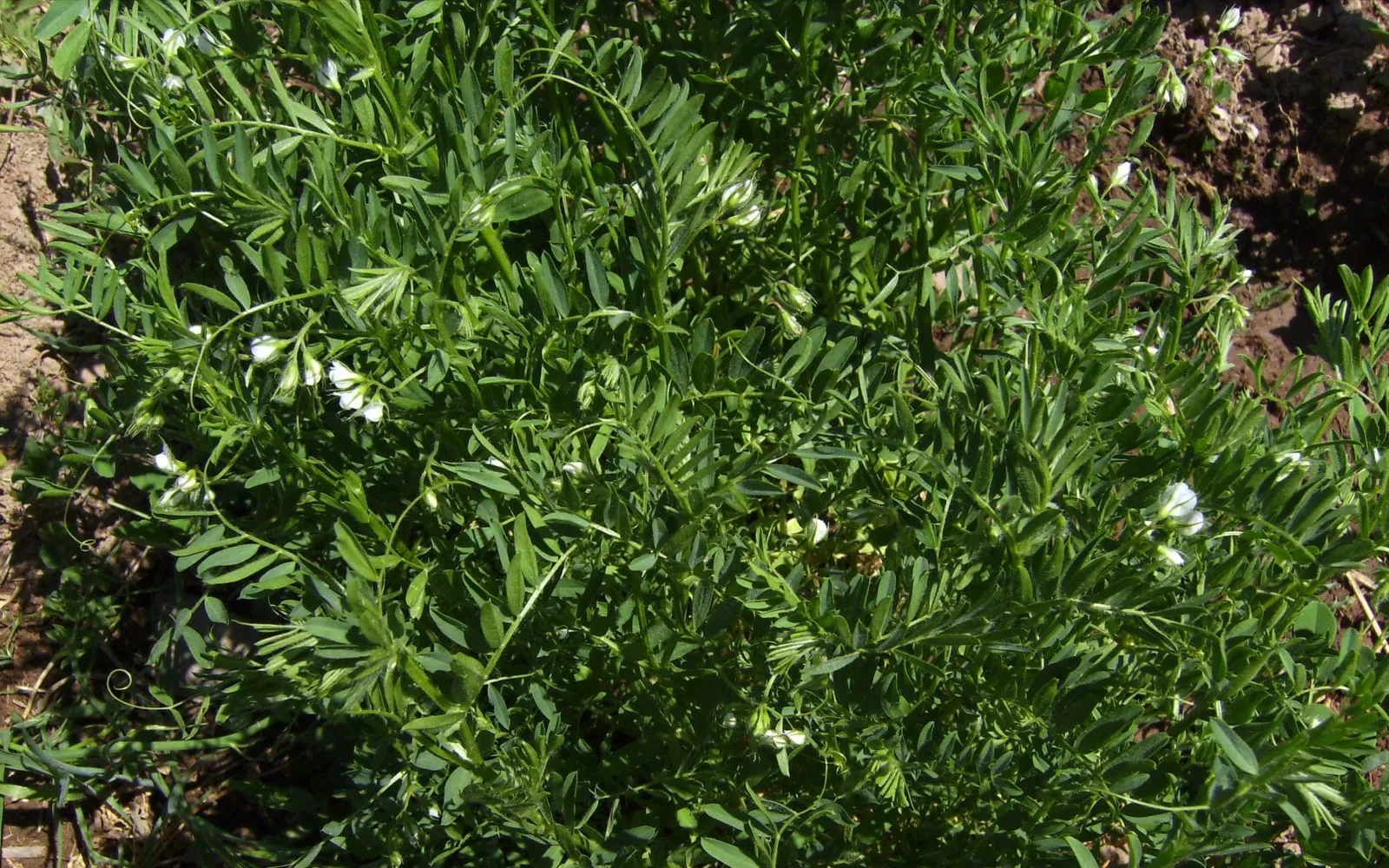
The plant is small and wiry, rarely above knee height, with slender stems and pinnate leaves made of four to seven pairs of small oblong leaflets ending in a short tendril or a bristle. It looks like a delicate vetch, which is what it is.
The flowers are tiny, 5 to 8 mm, pale blue, white or lilac, and easy to miss. They are carried one to four together on a short stalk from a leaf joint, and they self-pollinate before they open.
The pod is the distinctive part. It is short, flat and broad, usually holding just two seeds, and when it is full it looks like a small flattened envelope. The seed inside is the familiar disc, biconvex and 4 to 7 mm across, in colours from the red-orange of split masoor to the deep slate of beluga and the mottled green-grey of puy.
Where it is from
The wild ancestor is Lens culinaris subspecies orientalis, which grows in stony open ground across south-eastern Turkey, Syria, Iraq and Iran. Domestication happened in that arc around 8500 BC, and lentils are among the eight founder crops alongside einkorn, emmer, barley, pea, chickpea, bitter vetch and flax.
The crop spread with agriculture into Egypt, Greece, the Indian subcontinent and across Europe. Lentil remains turn up in Bronze Age Britain, and the plant is mentioned repeatedly in the Hebrew Bible, including in the pottage Esau traded his birthright for.
India is now the largest consumer and Canada the largest exporter, with a substantial crop on the prairies. France protects the green lentil of Le Puy with a protected designation, and Britain has grown a small commercial crop since the 2010s.
How it grows
Lentils germinate in cool soil, from about 5 deg C, which is why they can be sown early. The seedling emerges with the seed leaves staying underground, so a plant damaged at the surface can regrow from the base.
Nodules form on the roots within a few weeks, populated by Rhizobium bacteria that fix atmospheric nitrogen in exchange for sugars. Slice one open and it should be pink inside, which is leghaemoglobin doing the same oxygen-handling job that haemoglobin does in blood. A white or green nodule is not fixing.
The plant branches from the base, flowers over several weeks from mid-summer, and sets pods as it goes. Ripening is uneven. The lower pods are dry while the top of the plant is still flowering, so the harvest is a compromise between waiting for the top pods and losing the bottom ones to shattering.
Through the seasons
Sow from March to April, as soon as the ground is workable and not waterlogged. Sow 3 to 4 cm deep in rows 20 to 30 cm apart, thickly enough that the plants support each other, since a thin stand lodges.
The crop grows slowly at first and picks up in May and June. Flowering starts in late June and continues through July, with pods forming behind the flowers as they go.
Harvest in August when most pods have turned brown and rattle. Pull or cut the whole plants, dry them under cover for a fortnight, then thresh by beating them in a bag or treading them on a sheet. Winnow, and dry the seed thoroughly before storing.
Care difficulty
Lentils are easier than their absence from vegetable plots suggests. They germinate in cold soil, need no feeding, tolerate drought and poor ground, and have no complicated timing.
Two things cause trouble. The plants are weak-stemmed and a wet summer flattens them, which makes harvesting difficult and invites botrytis into the collapsed crop. And the yield per square metre is low, so a bed that would grow enough potatoes for a month gives you enough lentils for two meals.
Sow thickly, on the driest ground you have, and accept that this is a crop grown for interest and rotation value more than for the larder.
Watering
Rain-fed in a temperate climate. Lentils are drought tolerant, root deeply for their size, and were selected in a region where the rain stops in April.
Water only if flowering coincides with a real drought, which in a cool summer it rarely does. Once the pods have filled, stop entirely, since moisture at that stage delays ripening and encourages disease in a crop that is already lying down.
Waterlogging is the reliable way to kill them. Lentils will not tolerate wet feet at any stage, and a heavy soil that lies wet in spring is the wrong place for this crop.
Warning signs, diseases and pests
Aphids are the main insect problem, colonising the growing tips and flowers and spreading virus as they go. Pea aphid is the usual species, and a bad infestation distorts the tips and reduces pod set.
Ascochyta blight shows as tan lesions with dark margins on leaves, stems and pods, spreading in wet weather and carried on seed. Do not save seed from an affected crop.
Botrytis takes hold in a collapsed crop, coating the stems and pods in grey fuzz. It is a consequence of lodging and wet weather rather than an independent problem, and sowing thickly on free-draining ground is the prevention.
Pea and bean weevil notches the leaf margins in neat semicircular bites, which looks dramatic on a young plant and rarely matters. Slugs take seedlings in a wet spring, pigeons graze young plants, and root rot follows waterlogging.
Growing environment
Full sun and free drainage. Lentils belong on light, stony, alkaline ground of the kind that grows a poor crop of everything else.
The pH range runs from about 6 to 8, with a preference for the alkaline end. On acid soil the plant grows poorly and the nitrogen-fixing bacteria work badly, so lime an acid plot the autumn before.
Cool conditions suit the crop and heat does not. Lentils flower poorly above 30 deg C, and a cool summer is close to ideal from the plant’s point of view. The weakness in a maritime climate is rain at harvest rather than temperature.
Feeding
Do not feed lentils nitrogen. The plant fixes its own through root nodules, and adding nitrogen suppresses the nodules and produces leafy growth with fewer pods.
A light dressing of a high-potash feed at flowering can help on very poor ground. Phosphate matters more than nitrogen for nodule formation, so a plot short of phosphate is worth correcting before sowing.
The soil benefits after the crop rather than the crop benefiting from the soil. Leave the roots in the ground when you harvest, cutting the plants at the base rather than pulling them, so the nitrogen in the nodules stays where it is.
Troubleshooting
Can lentils be grown in a cool climate? Yes, and Britain grows them commercially in a small way. They germinate in cold soil and like a cool summer. The problem is rain in August, which flattens the crop and complicates the harvest.
Why is my lentil crop lying flat? Weak stems and wet weather. Lentils lodge readily, and a thin stand lodges worse than a thick one because the plants have nothing to lean on. Sow thickly next time.
Do I need to inoculate the seed? Not usually. The Rhizobium strains that nodulate lentils are widespread in temperate soil, particularly where peas or beans have grown. Where a plot has never grown a legume, an inoculant is worth trying.
Why are my red lentils orange? Red lentils are masoor with the seed coat removed and the seed split, which exposes the orange cotyledons. The whole seed looks brown or green on the outside.
Can I sow lentils from a packet in the kitchen cupboard? Whole brown or green lentils often germinate. Red split lentils never will, since they have been hulled and split.
Do I have to soak them before cooking? No. Lentils cook in 20 to 40 minutes without soaking, which is the main practical difference between them and the larger pulses.
Can I eat them raw or sprouted? Cook them. Raw lentils contain lectins and protease inhibitors that cause digestive upset, and even sprouted lentils are better cooked briefly.
What makes puy lentils different? Growing conditions and variety. Lentilles vertes du Puy carry a French protected designation and are grown on volcanic soil in the Auvergne. Similar varieties grown elsewhere are sold as green lentils.
Lentil problem guides
Not sure what is wrong? See the common vegetable pests guide.