
Pest
Woodlice and millipedes
Oniscidea and Diplopoda
Also called Woodlouse, Millipede, Slater, Pillbug, Sowbug, Roly-poly
Woodlice and millipedes usually eat tissue that is already rotting, so they often get blamed for damage they did not start. They can still graze seedlings under glass, hollow fruit on wet soil and damage potatoes in damp ground.
At a glance
- Type
- Pest
- Cause
- Woodlouse or millipede
- Severity
- Cosmetic
- Affects
- Garden plants, Herbs and edibles, Houseplants
- Active
- All year
- Established in
- Worldwide
What you are seeing
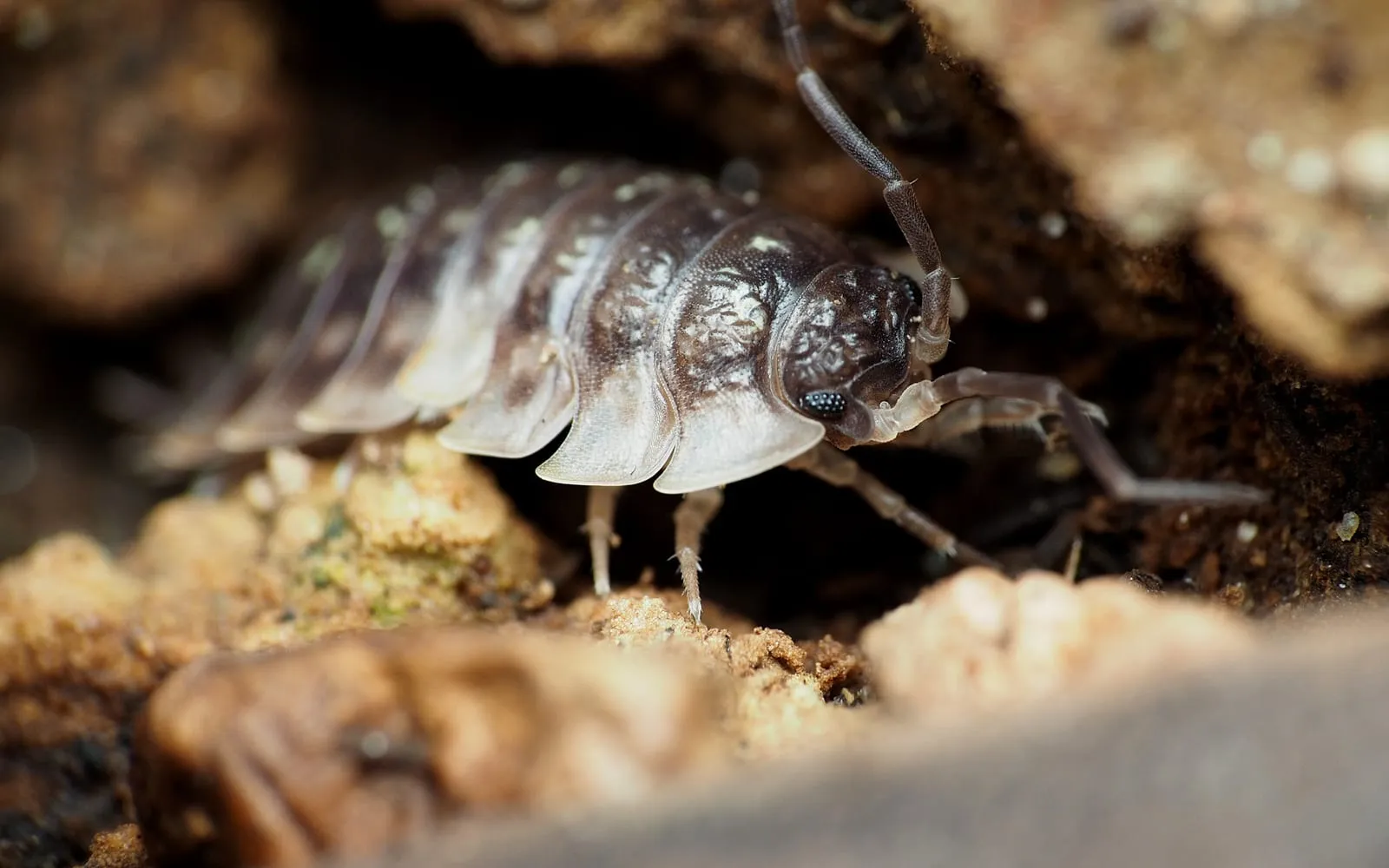
- Grey segmented woodlice, seven pairs of legs, scattering when a pot or log is lifted
- Slow cylindrical millipedes with two pairs of legs on each segment, coiling into a flat spiral when disturbed
- Both found inside damage that already existed, in rotting wood, soft fruit or a spoiling tuber
- Seedlings under glass grazed at the stem base or the leaf edges nibbled overnight
- Strawberries lying on wet ground hollowed out from the underside
- Fine holes in potato tubers with a flat-backed millipede coiled in the cavity
- Large numbers in a greenhouse, a cold frame or under seed trays kept permanently damp
Before you treat anything
Neither bites nor stings, and neither carries anything that harms people. Millipedes of some species release a defensive fluid containing benzoquinones that stains skin brown and stings the eyes, so wash your hands after handling a large one and keep them away from your face. Centipedes are a different animal and a few tropical species can bite painfully, though nothing in a temperate garden will.
What you are looking at
Lift a pot, a board or a piece of bark and a crowd of grey armoured animals runs for cover. Some of them roll into a tight ball. Nearby something long, dark and cylindrical moves slowly along on a great many short legs and curls into a flat spiral when you touch it.
Both are in the strawberry with a hole in it, in the rotting apple, in the potato with a cavity, and under the seed tray where half the seedlings have gone. Being present at every scene has earned them the blame for a great deal they did not do.
What they eat
Woodlice and millipedes are detritivores. They break down dead leaves, rotting wood, compost and soft decaying matter, and between them they do a large share of the work that turns last year’s garden into this year’s soil. Their mouthparts suit material that is already soft.
So the ordinary case is that something else made the wound. A slug rasps into a strawberry, a wireworm bores into a potato, brown rot softens an apple, frost splits a stem, and the woodlice and millipedes arrive afterwards to eat the damaged tissue. Find them in a cavity and you are looking at the second animal on the scene.
Do not pick them out of compost heaps or log piles. A garden with a good population of both is processing organic matter.
When they do cause damage
Three situations cause real damage. All three involve a large population beside soft, damp plant tissue.
Seedlings under glass are the commonest. A greenhouse floor damped down twice a day, trays standing on saturated capillary matting, and stacks of pots along the wall build up numbers that then graze the stems and leaf edges of seedlings overnight. The damage is irregular grazing rather than a clean cut, and it stops where the dry ground starts.
Soft fruit lying on wet soil is the second. Strawberries and melons resting on damp ground get hollowed from underneath, sometimes with a woodlouse still in the cavity in the morning. A slug usually started it, and mulching the fruit off the soil fixes both.
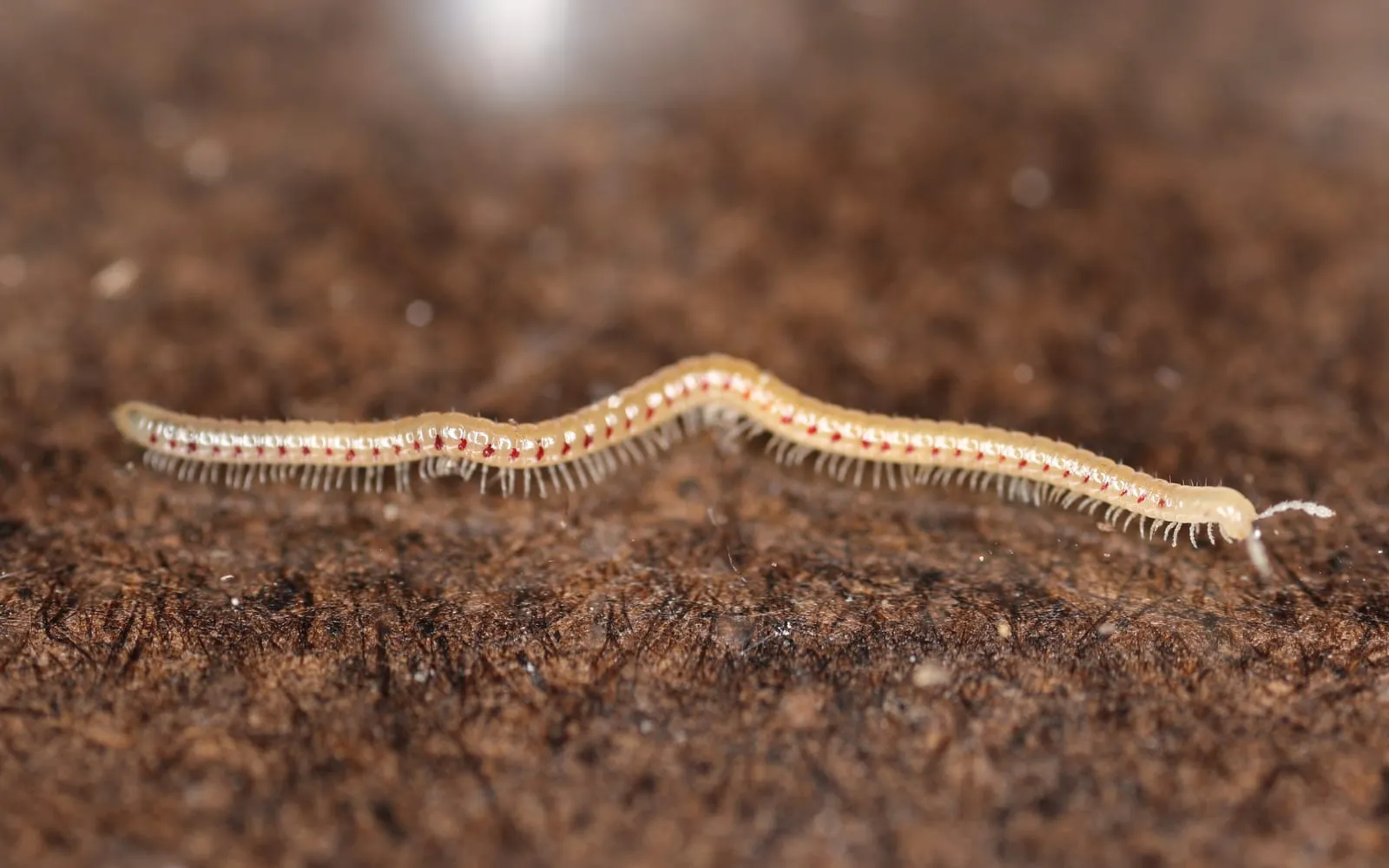
The spotted millipede in potatoes is the third and the one where a millipede does start the damage. Blaniulus guttulatus, a slender pale species with a row of red spots down each side, enters tubers directly as well as through existing holes, and it is a recognised pest of potatoes, beetroot and other roots left in wet ground.
Millipede or centipede
Do not confuse millipedes with centipedes.
A millipede has two pairs of legs on each body segment, a rounded body, and it moves slowly. When disturbed it coils into a spiral. It eats dead plant matter.
A centipede has one pair of legs per segment, a flattened body, longer legs, and it runs. It has a pair of poison claws behind the head and it hunts slugs, insect larvae and other small animals in the soil. It is a predator you want.
Count the legs on a segment before deciding what you are holding. Nothing in a temperate garden will bite you either way.
What to do about it
Look for the wound that came first, since in most cases neither animal opened it.
Move the boards, bricks, upturned pots and stacked trays out of the propagating area.
Water the plants rather than the greenhouse floor, and raise trays onto open staging.
Ventilate, so the air over the seedlings is not permanently saturated.
Mulch strawberries and squash so the fruit never touches wet soil.
Lift potatoes as soon as they are ready and sort the damaged ones out for immediate use.
Trap under scooped orange halves overnight and tip the catch onto the compost heap.
Put a collar round a transplant worth protecting.
Keep the compost bin away from the cold frame.
Leave both alone everywhere else, and leave the centipedes alone entirely.
What it gets mistaken for
Slugs and snails make the first hole in nearly every case, and the slime trail in the morning says so.
Wireworms bore the clean round tunnel a millipede later occupies.
Brown rot and other fruit rots soften the flesh before anything arrives to eat it.
Damping off kills seedlings from a shrivelled dark stem base and spreads through a tray in a circle.
Vine weevil adults notch leaf margins in neat semicircles rather than grazing them.
What to do, in order
Start here
Prevention, and the changes that stop the problem returning. Most of these pages should end at this tier.
- Work out whether they are the cause before doing anything
- Both groups eat decaying plant material, and both are found inside damage far more often than they start it. A woodlouse in a rotting apple and a millipede in a slug hole are eating what was already spoiled. Before treating either, look for the slug trail, the wireworm bore, the rot or the frost split that opened the wound.
- Take away the damp cover they live under
- Both need constant damp and die quickly in the open. Bricks, boards, upturned pots, old growbags, stacked trays and permanently wet matting under a bench are where the populations sit, and moving them is what reduces the numbers in a greenhouse. Away from the seedlings a log pile is a good thing, so relocate rather than clear.
- Keep the greenhouse floor drier
- Damping down a whole floor twice a day and standing every tray on sodden capillary matting builds the conditions they need. Water plants rather than the floor, raise trays onto open staging so air moves under them, and ventilate.
- Keep strawberries and squash off wet soil
- Fruit resting on damp ground gets found by everything. Straw, mats or a few tiles under the fruit keep it dry, and they cut slug damage at the same time, which is what was making the first hole.
- Lift potatoes promptly and store them sound
- Millipedes enter tubers through wounds and through holes made by slugs and wireworms, and a crop left in wet ground through autumn gives them weeks to do it. Lift as soon as the crop is ready, and sort out damaged tubers rather than sacking them with the rest.
- Do not compost near the seedbed
- A compost heap or a leaf mould bin is full of both, correctly, since that is their job. Standing it next to a cold frame or a row of seed trays puts a large population within crawling distance of the one place they do harm.
Then reach for a barrier
Netting, hand removal and water. Nothing here harms anything except the target.
- Trap them under a scooped-out half orange or potato
- Lay hollowed citrus halves cut side down, or a scooped potato, among the seedlings in the evening and collect them in the morning. Woodlice gather underneath in numbers. Tip them out at the far end of the garden rather than killing them, since they are worth having in the compost.
- Raise young plants where they cannot reach them
- Seed trays on open staging with dry gaps around them, or in a propagator lifted off the floor, are effectively out of reach. Most damage under glass happens to trays standing on the ground or on wet matting.
- Protect individual seedlings with a collar
- A cut-down bottle or a cardboard tube pushed into the compost round a transplant does the same job here as it does against cutworms, and it costs nothing.
- Clear away dead plant material as it appears
- Fallen leaves, dead seedlings and old stems in a propagating area feed a population up to the size where it starts on the living plants. Somewhere with nothing rotting in it supports few of either.
In pictures
Plants affected
Guides that name it among the problems to watch for. The list is the plants it is characteristic of rather than everything it will feed on.
A common houseplant pest
This is one of the pests and problems that houseplant owners meet most often. See it alongside the others, with a quick table for telling them apart, on the houseplant pests guide.
Common houseplant pests