
Disease
Sooty mould
Also called Sooty mold, Black mould on leaves, Honeydew mould
Leaves turning black and sticky under a tree or a houseplant. Sooty mould grows on the honeydew that sap-sucking insects drip, so the fix is whatever is feeding overhead.
At a glance
- Type
- Disease
- Cause
- Fungus
- Severity
- Cosmetic
- Affects
- Garden plants, Houseplants, Herbs and edibles
- Active
- June to October
- Established in
- Worldwide
What you are seeing
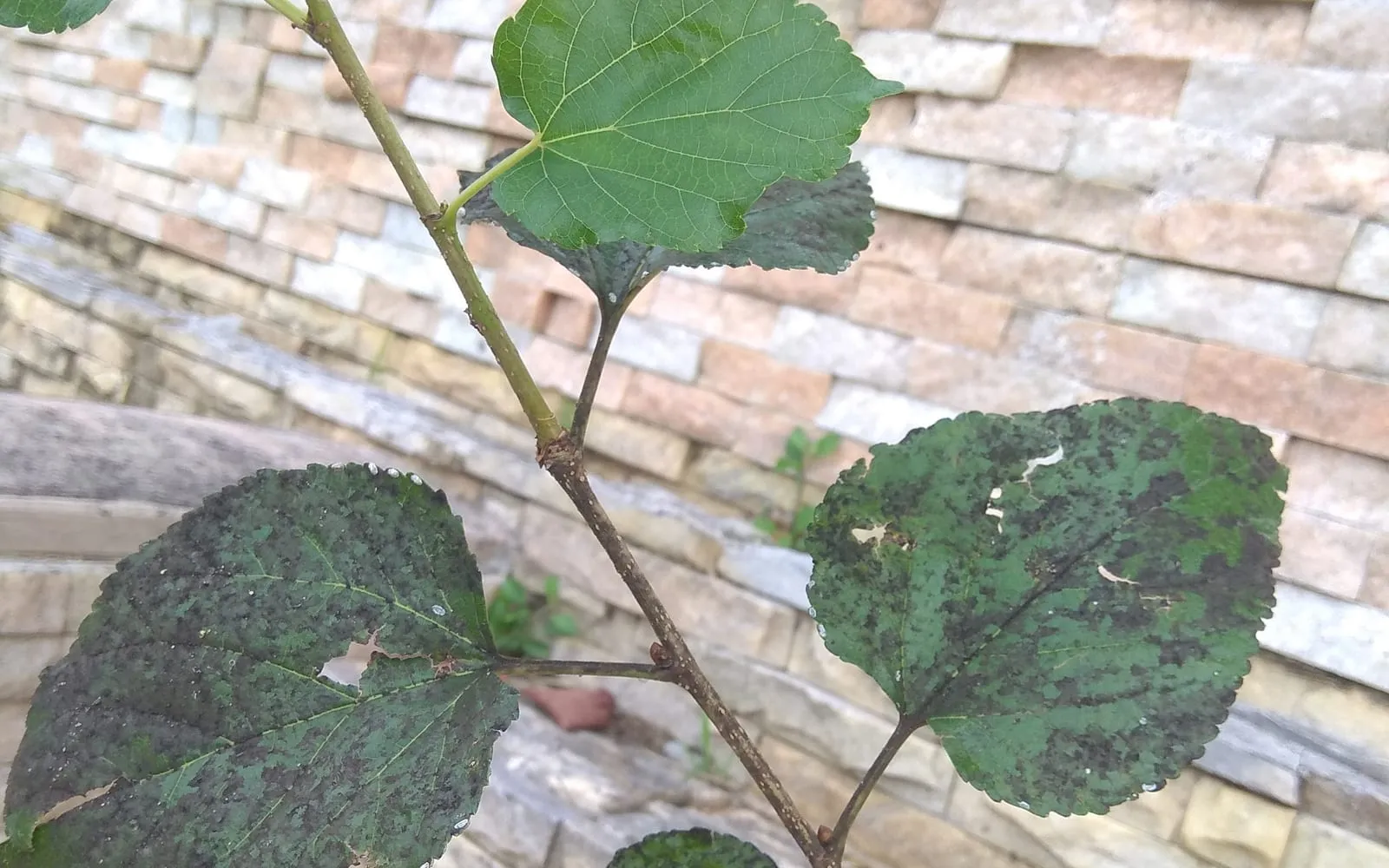
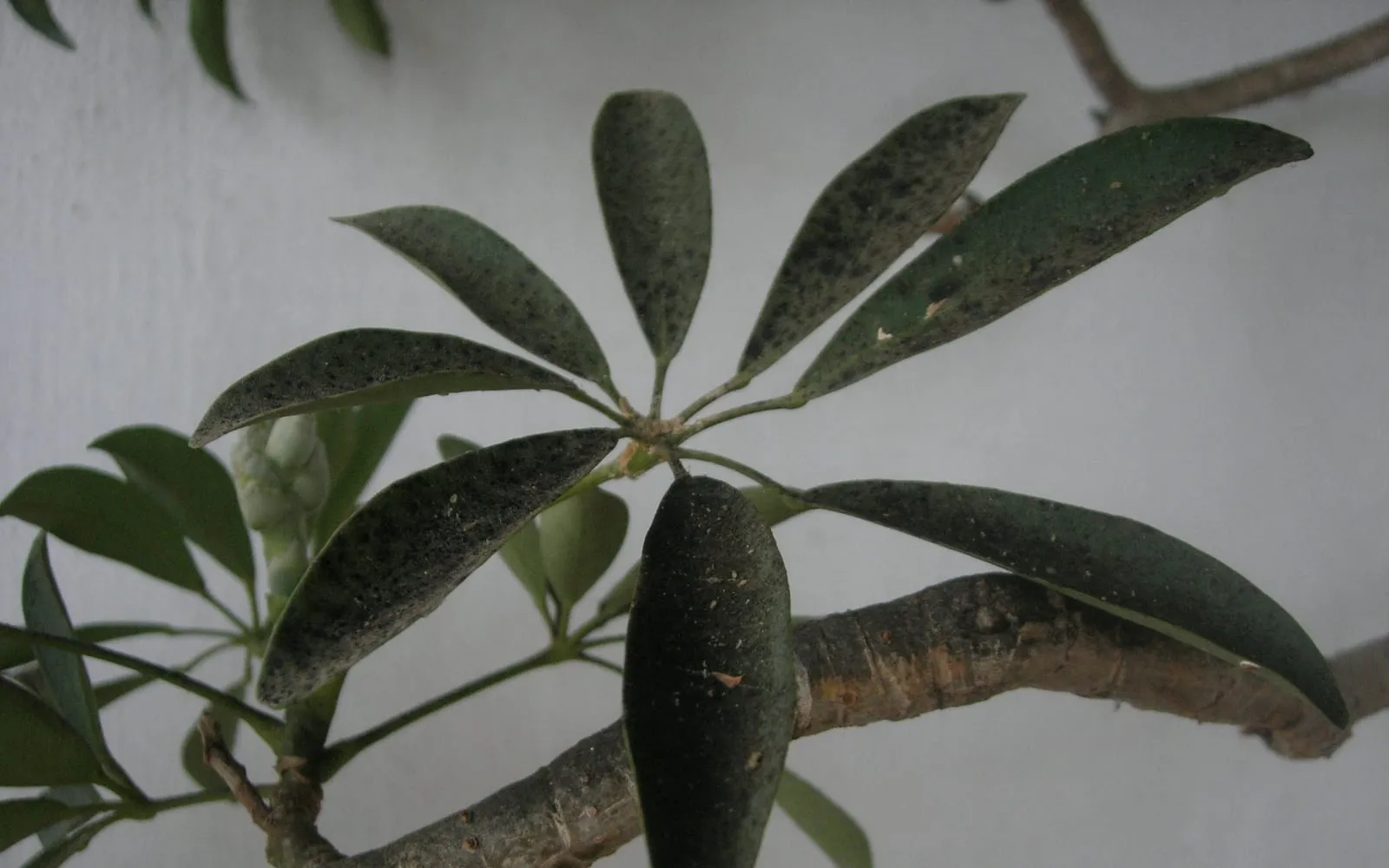
- A black or dark grey film over the upper surfaces of leaves
- Leaves and stems sticky to the touch before the black film appears
- The film flaking or washing off to leave sound green leaf beneath
- Sticky black spotting on paths, furniture, cars and anything under the plant
- Ants running up and down the stems
- Aphids, scale insects, whitefly or mealybugs on the growth above the blackened leaves
- Older leaves affected and the newest growth still clean
Before you treat anything
Sooty mould is harmless to people and pets. Wash edible leaves and fruit thoroughly before use. Honeydew on a path or a set of steps is slippery once it gets wet.
What you are looking at
The leaves have gone black, as though someone had held a candle under them, and they were sticky for a week or two before that. Run a finger over one and the black comes away. Underneath, the leaf is green and sound.
Look at where the black is. It is on the upper surfaces, heaviest on the older leaves, and the newest growth at the top is usually clean. Anything standing under the plant has the same sticky black spotting on it, which is how most people meet this on a car parked beneath a lime tree.
Nothing is infecting the plant
Sooty mould is a group of fungi that live on sugar. They cannot penetrate a leaf and they take nothing from the plant. What they are growing on is honeydew, the sugary liquid that sap-sucking insects excrete after taking more sap than they can use.
That means the mould is a symptom of an insect, always, and treating the mould treats nothing. Wash a plant clean and leave the aphids on it and the black is back within the month.
The harm it does is small. A heavy coating blocks light, so a badly affected plant photosynthesises less and may drop older leaves early, and fruit and foliage look ruined. Nothing dies of it.
Find what is dripping
Honeydew falls, so the producer is above the damage. Follow the black upwards and check the shoot tips, the undersides of the leaves and the stems overhead.
Aphids are the usual answer outdoors, and lime, sycamore, cherry, rose and willow are the plants that produce the most spectacular examples. A lime avenue in July drips visibly.
Scale insects are the usual answer on evergreens and under glass, and they are easy to miss because they look like part of the bark. Bay, citrus, camellia, holly and oleander are the plants to check. Run a thumbnail along a stem and scales pop off.
Whitefly and mealybugs do the same job in a greenhouse and on houseplants.
Ants are the tell that saves the most time. A column of ants running up and down a stem is farming something for its honeydew, and it will lead you to the colony.
What to do about it
Find the insect above the black and deal with that. Everything else is housekeeping.
Wash a houseplant’s leaves with warm water and a drop of washing-up liquid, supporting each leaf, then wipe over with clean water.
Hose down a shrub outdoors, or prune out the worst encrusted shoots.
Leave a large tree alone and move whatever is parked under it.
Keep the ladybirds, lacewings and hoverflies rather than spraying, since they are what ends an aphid outbreak outdoors.
Wash edible leaves and fruit before use.
What it gets mistaken for
Powdery mildew is white rather than black and it grows into the leaf surface, so a rubbed patch shows damaged tissue underneath rather than clean green.
Black spot on roses makes discrete black patches with fringed yellow edges, fixed in the leaf and impossible to wipe away.
Sooty blotch on apples is a different fungus, growing on the fruit skin in a wet autumn without any honeydew involved, and it also wipes off.
Airborne soot and road dust settle evenly over a plant near a road, and they come off with plain water and no stickiness beforehand.
Bacterial and fungal leaf spots stay put when rubbed and have defined edges. The wipe test settles it in a second.
What to do, in order
Start here
Prevention, and the changes that stop the problem returning. Most of these pages should end at this tier.
- Look above the black leaves, not at them
- Honeydew falls. Whatever is producing it is on the growth overhead, so a blackened leaf halfway down a bay tree points at scale insects higher up, and a blackened car points at the lime tree it is parked under. Find the insect, deal with that, and the mould stops arriving.
- Take the ants as the signal they are
- Ants running a steady column up a stem are farming sap-suckers for their honeydew, and they defend them from ladybirds and hoverfly larvae. The ants are not eating the plant. Where they are, look for aphids or scale at the top of their route.
- Accept it on a large tree
- A mature lime dripping honeydew in July is beyond treatment and beyond need. The tree is unharmed and the aphid population collapses by autumn. Move the car and the garden furniture rather than trying to treat thirty metres of canopy.
- Go easy on nitrogen feeds
- Soft sappy growth from heavy feeding is what aphids build up on fastest, indoors and out. A balanced feed at the stated rate produces a plant that carries fewer of them.
Then reach for a barrier
Netting, hand removal and water. Nothing here harms anything except the target.
- Wash the leaves with warm soapy water
- The mould is sitting on the surface and comes off. On a houseplant, support each leaf and wipe both sides with a soft cloth wrung out in warm water with a drop of washing-up liquid, then wipe again with clean water. On a shrub outdoors, a hose does most of it.
- Deal with the insect first
- Washing the leaves without removing the sap-sucker means doing it again in three weeks. Take the aphids off with a jet of water, wipe scale insects off with a cloth, or hang traps for whitefly under glass, and clean the foliage afterwards.
- Prune out the worst growth on a shrub
- Where a bay or a camellia is heavily encrusted, cutting out the most infested shoots removes both the insects and the blackened leaves in one operation and lets air and light into what is left.
Then bring in the predators
Encourage what already lives in the garden, and buy predators in where the problem is under glass and nothing will arrive on its own.
- Keep the predators that eat the honeydew producers
- Ladybirds, hoverfly larvae, lacewings and parasitic wasps are what normally hold aphids and scale in check outdoors. Nothing sprayed for sooty mould does any good, and an insecticide sprayed at the aphids removes the predators along with them and lengthens the problem.
Biological controls are live organisms and their sale and release are regulated country by country. An agent sold freely in one place may be unapproved in another, so buy from a licensed supplier where you live and never import or move one yourself.
In pictures
Plants affected
Guides that name it among the problems to watch for. The list is the plants it is characteristic of rather than everything it will feed on.
A common houseplant pest
This is one of the pests and problems that houseplant owners meet most often. See it alongside the others, with a quick table for telling them apart, on the houseplant pests guide.
Common houseplant pests