
Disorder
Guttation
Also called Weeping leaves, Crying plant, Leaf sweating, Root pressure exudation
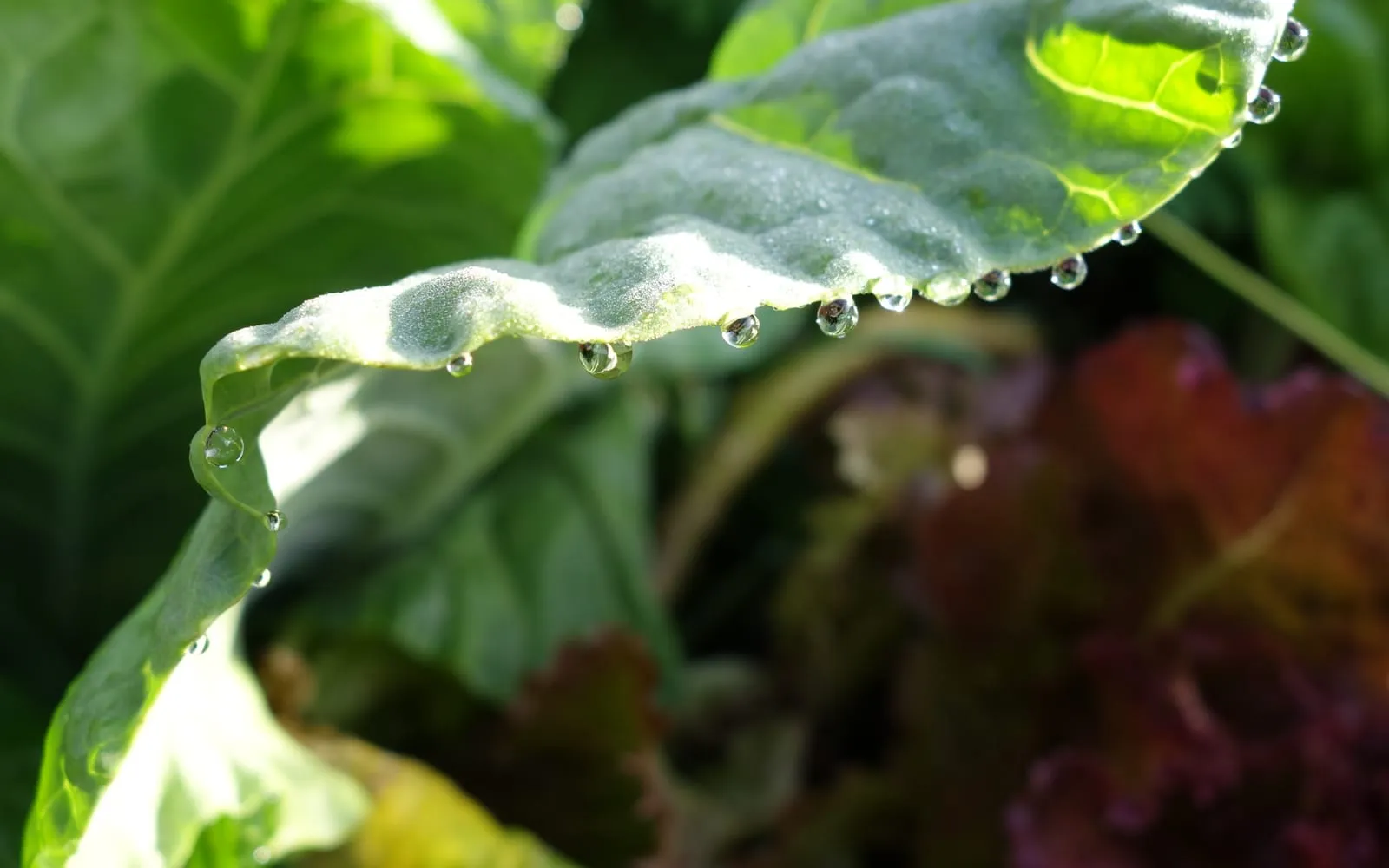
Clear drops along a leaf margin at dawn, gone by mid-morning, leaving a white crust behind. The plant is pushing sap out under root pressure, which is normal, and the crust is what makes people think they have scale insects.
At a glance
- Type
- Disorder
- Cause
- Growing conditions
- Severity
- Cosmetic
- Affects
- Houseplants, Herbs and edibles, Garden plants
- Active
- All year
What you are seeing
- Clear water droplets hanging from the tips and edges of leaves first thing in the morning
- Drops spaced regularly along the margin rather than scattered over the surface
- Everything dry again by the middle of the morning
- A white, chalky or faintly brown crust left at the leaf tip where drops have dried
- Wet patches or spots on the floor, the windowsill or the furniture below a large-leaved houseplant
- Grass and strawberry leaves rimmed with beads at dawn in still, humid weather
- The leaf margin browning slowly over months where drops dry repeatedly in the same place
Before you treat anything
Guttation fluid from aroids such as monstera, alocasia, philodendron and dieffenbachia carries the same needle-shaped calcium oxalate crystals as the sap, so it can irritate skin and mouths. Wipe drips off floors rather than letting a cat or a dog lick them up, and wash your hands after handling a plant that has been weeping. The fluid from a plant treated with a systemic pesticide carries the pesticide with it.
What you are looking at
Drops of clear water hanging from the tips of the leaves at six in the morning. On a monstera or an alocasia they can be large enough to fall and mark the floor. On a lawn or a strawberry bed they sit as a rim of beads all round each leaf edge, catching the light.
Two details separate this from dew. The drops are at the margins and the tips rather than spread over the whole surface, and they are on the plant alone while everything around it stays dry.
By the middle of the morning they have gone, and where a drop dried rather than fell there is a small white or faintly brown crusty spot left at the leaf edge. That crust brings more people to this page than the drops do, because it looks convincingly like scale insects.
The plant is pushing, not leaking
During the day a plant moves water by pulling. Evaporation from the leaves puts the whole column under tension and drags water up from the roots, which is what transpiration means.
At night the stomata close and that pull stops. The roots do not stop. They carry on actively loading mineral ions into the xylem, water follows those ions in by osmosis, and with nothing evaporating at the top the pressure has nowhere to go. Root pressure builds until the sap is forced out through the only openings available.
Those openings are hydathodes, small permanently open pores sitting at the ends of the veins at the leaf margin and tip. They are modified stomata that have lost the ability to close, and their job is exactly this. So guttation is a designed release valve rather than a failure of one.
The conditions it needs are warm moist soil, a plant with a working root system, and air humid enough that nothing evaporates overnight. All three together describe a well-watered houseplant in a warm room, or a lawn before dawn in late spring.
The crust, and the brown tip that follows
What comes out is dilute xylem sap rather than pure water. It carries dissolved minerals, a little sugar and some enzymes, and when a drop dries in place the water goes and the solids stay.
Repeat that every morning for a few months on the same square millimetre of leaf and the concentration builds up. The tissue right at the tip eventually dies and browns, which is one of the several routes to a brown leaf tip on a houseplant that is otherwise being looked after well.
Feeding heavily makes it worse, since a stronger feed produces a saltier sap. Cutting the feed rate is usually enough to stop the marking, and wiping the tips off every few days deals with the rest.
When it is telling you something
Guttation on its own is not a fault. Guttation every single morning is worth reading, because it means root pressure is building strongly every night, which means the roots are sitting in more water than the plant is using.
That is the same condition that produces root rot, fungus gnats and yellowing lower leaves, so a plant weeping heavily every morning is worth a check of the compost, the drainage and the saucer before anything else.
Crops have their own reason to care. Several bacteria get into plants by swimming in through the hydathodes, and the guttation fluid gives them both the route and the medium. Black rot in brassicas and bacterial blight in rice both enter this way, drawn back in through the pore when the drop is reabsorbed at sunrise. That is the argument for spacing a brassica bed properly and for watering the soil rather than the foliage, and it is why a still humid night followed by a warm morning is when those diseases spread.
What to do about it
Ignore it where it happens occasionally on a healthy plant.
Water less, and check the drainage, where it happens every morning.
Move some air across a crowded group of houseplants.
Halve the feed if the tips are crusting and browning.
Wipe the deposits off the tips with a damp cloth.
Put a tray or a mat under a large plant that drips onto a wooden floor.
Space brassicas and water at the base rather than over the leaves.
Keep pets away from drips on the floor under an aroid.
What it gets mistaken for
Honeydew from aphids, whitefly, scale or mealybug is sticky, lands over the upper surfaces of the lower leaves and coats whatever sits beneath the plant. Look above the sticky leaf for the insects producing it.
Scale insects are firmly attached lumps that need scraping off and sit along the veins and stems. A dried guttation spot wipes away with a cloth.
Hard water deposits whiten the pot rim and the compost surface too, and mark the leaf wherever a splash landed.
Dew covers everything in the vicinity, including the pot, the table and the window.
Oedema raises corky blisters on the underside of the leaf, which is the same imbalance expressed in a way that does not go away by lunchtime.
What to do, in order
Start here
Prevention, and the changes that stop the problem returning. Most of these pages should end at this tier.
- Leave it alone if it happens occasionally
- A few drops on the tips of a monstera or an alocasia on a humid morning is the plant working normally and needs no response at all. It is commonest in the hours before dawn, in warm still air, on a plant that was watered the day before, and it stops on its own.
- Water less if it happens every morning
- Persistent heavy guttation means the roots are pushing more water into the plant than the leaves are losing, which is another way of saying the compost is wetter than it needs to be. Let the top few centimetres dry before watering again, empty the saucer, and check that the pot drains freely.
- Move air across the plant
- Still, saturated air stops the leaves losing water, which is the condition that lets root pressure build. A cracked window, a gentle fan or more space between plants reduces both the guttation and the fungal problems that thrive in the same conditions.
- Feed lightly, since the drops are carrying the feed back out
- Guttation fluid is dilute sap and it holds dissolved minerals. Where a plant is fed heavily, the drops carry more salt, and the residue left as they dry is what browns the leaf tip over time. Halving the feed usually stops the marking without stopping the guttation.
- Do not let the crop stay wet at the leaf margin
- Several bacterial diseases enter through the same pores the drops come out of, black rot in brassicas being the one gardeners meet most. Spacing plants for airflow, watering at the base and avoiding overhead irrigation in the evening all shorten the time the fluid sits on the edge.
Then reach for a barrier
Netting, hand removal and water. Nothing here harms anything except the target.
- Wipe the tips down
- Where a crust has built up at the leaf edge, wipe it off with a cloth wrung out in soft water. It comes away easily and the leaf underneath is undamaged, which is also the quickest way to prove to yourself that it was not a scale insect.
- Stand a large plant somewhere the drips do not matter
- A mature monstera or alocasia can put out enough fluid overnight to mark a wooden floor or a windowsill. A tray, a mat or a shift of position is the whole fix.
Plants affected
Guides that name it among the problems to watch for. The list is the plants it is characteristic of rather than everything it will feed on.
A common houseplant pest
This is one of the pests and problems that houseplant owners meet most often. See it alongside the others, with a quick table for telling them apart, on the houseplant pests guide.
Common houseplant pests