
Edible
Ethiopian Mustard
Brassica carinata
Also known as Abyssinian mustard, Carinata, Ethiopian kale, Gomen
How to grow Ethiopian mustard, Brassica carinata. A second natural brassica hybrid, the leaf vegetable behind gomen, and the oilseed being turned into aviation fuel.
At a glance
- Difficulty
- Easy
- Water
- Moderate. It is more drought tolerant than cabbage or rape
- Light
- Full sun
- Temperature
- Tolerates heat and drought better than other brassicas
- Hardiness
- USDA 8-11, RHS H3, hardy to -2 C
- Type
- Annual, spring or autumn sown
- Height
- 100-200 cm
- Native to
- the Ethiopian highlands
- Best month
- April, May and September in the Northern Hemisphere, October, November and March in the Southern Hemisphere
Heat and drought tolerance are what set it apart, and it holds a crop through conditions that stop the European brassicas. It is a staple leaf vegetable in the Ethiopian highlands and an oilseed elsewhere. Frost ends it, so temperate growers treat it as a summer annual.
Hardiness zones describe winter cold alone. Summer heat, humidity, rainfall and the length of the growing season decide as much, so treat the range as the outer limit rather than as a recommendation.
Every month named in this guide is for the temperate Northern Hemisphere. If you garden in the Southern Hemisphere, shift each one by six months, so April becomes October. Closer to the equator the wet and dry seasons matter more than the calendar, and the shift stops being a useful guide.
Edible, with limits
- Safe to eat
- The leaves and shoots cooked, and the seed as a condiment
- Do not eat
- The seed oil of high-erucic types, and the meal
- Harm from
- Eating it
- Affects
- People and horses
The leaves are a staple vegetable across Ethiopia and Eritrea and are safe cooked. The seed is a different matter. Brassica carinata naturally carries high levels of erucic acid and glucosinolates, higher than traditional rapeseed did, which is why the oil is being developed as an industrial and aviation fuel feedstock rather than as a food oil, and why the residual meal needs treatment before it can be fed to animals. Do not press the seed of an ordinary variety for cooking oil. Low-erucic food types have been bred and are not what a garden seed packet will contain. As with every brassica forage, feeding large quantities of the green plant to sheep or cattle risks haemolytic anaemia and goitre, so it should be a part of a ration rather than the whole of it.
Sources: Food Standards Agency on plant toxins, British Horse Society on poisonous plants
About
Ethiopian mustard is the second brassica in this collection that arose as a natural hybrid. Where oilseed rape combines turnip and cabbage, Brassica carinata combines black mustard, Brassica nigra, with cabbage, Brassica oleracea, and it happened in the Ethiopian highlands rather than in Europe.
In Ethiopia and Eritrea it is a leaf vegetable before it is anything else. Gomen, the cooked greens served with injera, is usually this plant, and it is grown in kitchen gardens and small fields across the highlands. The seed is used as a condiment and pressed for a cooking oil locally.
Its recent visibility comes from aviation. Carinata’s seed oil is high in erucic acid, which makes it poor food and good feedstock, and it is being grown under contract in the southern United States, Argentina and Australia specifically for conversion into sustainable aviation fuel.
Appearance and character
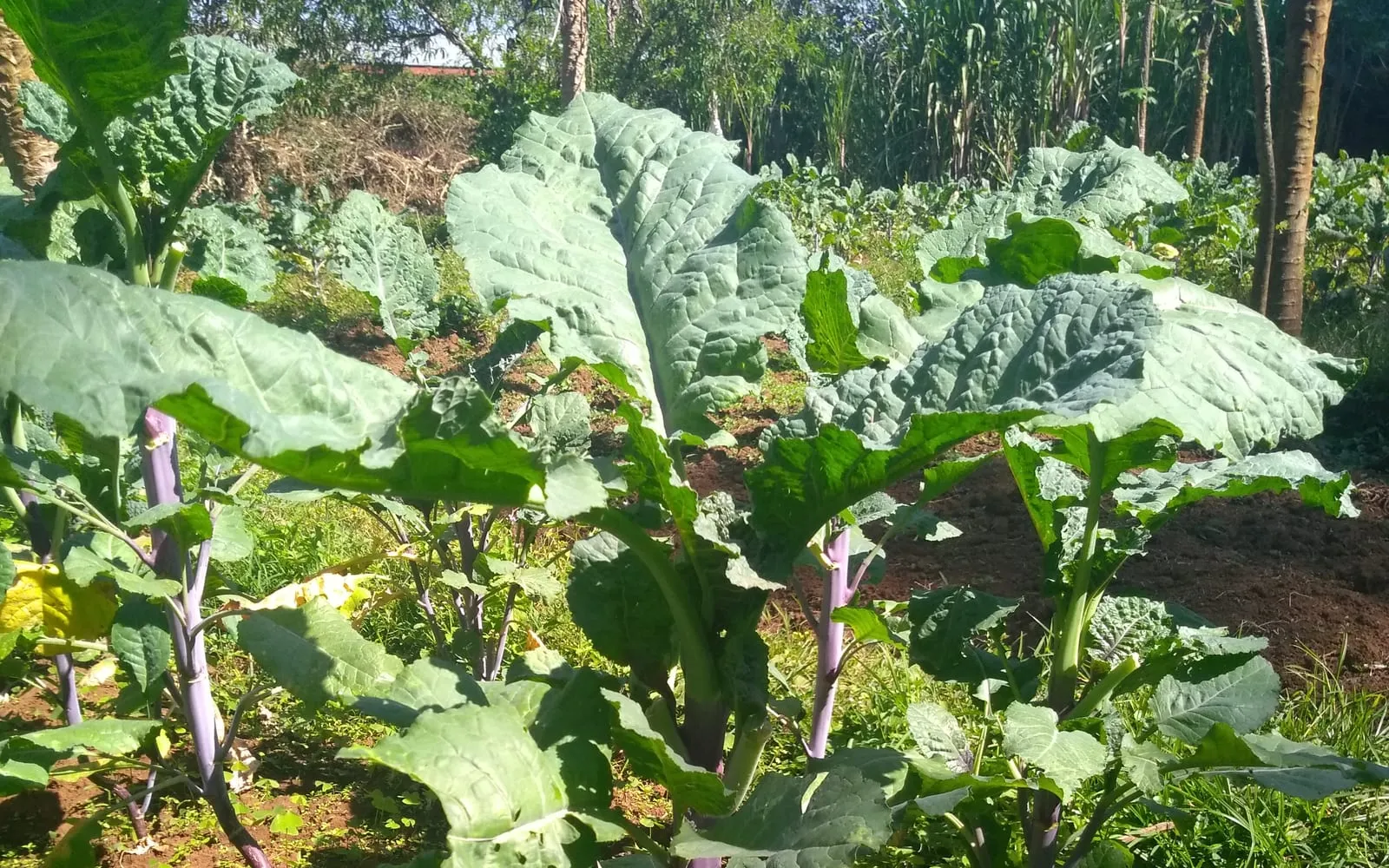
The plant is upright and strongly branched, taller than most brassicas at up to two metres, with broad oval leaves that are usually smooth and dark green with prominent pale midribs. The leaves have long stalks and a slightly puckered surface.
The flowers are the usual four yellow brassica petals in a cross, carried in spikes at the branch tips, paler than oilseed rape and produced over a longer period.
The pods are slender, upright and beaked, held closer to the stem than rape’s, and they shatter less readily, which is one of the crop’s agricultural advantages. The seeds are small, round, and reddish-brown to dark brown.
Where it is from
Brassica carinata arose in the Ethiopian highlands from a natural cross between black mustard and cabbage, and the plant is not found wild anywhere. Its existence depends on cultivation, as oilseed rape’s does.
It has been grown in Ethiopia and Eritrea for at least several thousand years, primarily as a leaf vegetable and secondarily for seed. Local varieties are adapted to highland conditions from 1,500 to 2,500 m.
Interest from outside began in the late twentieth century, first as a source of disease resistance for breeding into oilseed rape, and more recently as a dedicated industrial oilseed. Contract growing for aviation fuel began in the 2010s.
How it grows
Ethiopian mustard germinates readily in cool soil and grows fast, producing broad leaves within a few weeks. It is more vigorous at the seedling stage than oilseed rape, which is part of why it suffers less from flea beetle.
The plant branches strongly and flowers over a long period from midsummer, setting pods behind the flowers as it goes.
It tolerates heat, drought and poor soil better than other cultivated brassicas, and it carries useful resistance to several diseases that trouble rape, including blackleg. Those two properties are the reason breeders keep going back to it.
Pods mature over several weeks and shatter less than rape’s, which makes the harvest less urgent.
Through the seasons
For leaves, sow from April to July in succession, thinly in rows 30 cm apart, and thin to 20 cm. Pick individual leaves from six weeks onward, taking the outer ones and leaving the growing point.
For seed, sow in April and let the plants run. They branch through the summer, flower from July, and set pods through August.
Harvest seed in September when the pods have browned. Cut the plants, dry them under cover, and thresh. An autumn sowing will overwinter in a mild winter and flower early the following spring.
Care difficulty
This is one of the easier plants in the wave. Ethiopian mustard germinates readily, grows fast, tolerates drought and heat, resists several brassica diseases, and produces a useful leaf crop within six weeks.
The usual brassica problems still apply. Cabbage white caterpillars will strip a leaf crop in a fortnight, pigeons graze it, and clubroot builds up on ground that has grown brassicas too often.
Do not press the seed for cooking oil. Ordinary varieties carry high erucic acid, which is the whole reason the crop is being developed for fuel rather than for food.
Watering
Water a leaf crop regularly, since drought makes the leaves tough and bitter and encourages the plant to bolt.
A seed crop needs much less. The plant is more drought tolerant than cabbage or rape and will finish on limited water.
Free drainage matters as with any brassica, since waterlogged ground causes root problems and makes clubroot worse where it is present.
Warning signs, diseases and pests
Cabbage white caterpillars are the main problem on a leaf crop, and the large white lays in batches on the undersides of leaves. Look for the yellow egg batches and remove them rather than waiting for the caterpillars.
Small pinholes and papery windowpane patches, with a thin pale green caterpillar that drops off on a silk thread when touched, is diamondback moth. It is a major pest of this crop across its home range in East Africa, where it breeds year-round, and is the most economically damaging brassica pest worldwide.
Flea beetle shot-holes the seedlings, though carinata’s seedling vigour carries it through better than oilseed rape manages.
Cabbage aphid forms grey-green waxy colonies on the flower spikes and growing tips, distorting the growth and reducing seed set.
Clubroot produces swollen distorted roots and wilting plants on ground where brassicas have been grown repeatedly. It persists in soil for many years, so rotate widely and lime an acid plot.
Growing environment
Full sun on drained ground. The plant is adapted to Ethiopian highland conditions, which means strong light, cool nights and a dry season, and it handles a cool summer without complaint.
Soil tolerance is broad, from acid to neutral, and the plant produces on ground that would give a thin cabbage crop. Lime an acid plot if clubroot is a concern.
It is hardier than it looks. An autumn sowing survives a mild winter and flowers early, and the plant tolerates heat and drought at the other end far better than most brassicas.
Feeding
Feed a leaf crop with nitrogen, since leaves are what you are growing and the plant responds well. One dressing at six weeks and another after a heavy picking suits it.
Feed a seed crop less. Nitrogen produces a tall leafy plant that lodges and delays maturity.
Sulphur matters to this crop as it does to oilseed rape, and a sulphur deficiency shows as pale young leaves while the older ones stay green. A balanced granular feed containing sulphur covers it.
Troubleshooting
Is this the same as mustard greens? No, though they are close. Mustard greens sold in seed catalogues are usually Brassica juncea. Ethiopian mustard is Brassica carinata, a different natural hybrid, with broader smoother leaves and a milder flavour.
Can I eat the leaves? Yes, cooked, and they are a staple across Ethiopia and Eritrea as gomen. Pick young outer leaves and cook them the way you would cook kale or spring greens.
Can I press the seed for oil? Not for cooking. Ordinary carinata carries high erucic acid and glucosinolates, which is why the crop is being developed as an industrial and aviation fuel feedstock rather than as a food oil.
Why is it being grown for jet fuel? Its oil converts well into aviation fuel, it grows as a winter cover crop in the southern United States and South America without displacing food crops, and its high erucic acid, which rules it out as food, is no obstacle for fuel.
Is it easier than cabbage? In several ways. It is more drought tolerant, more vigorous as a seedling, and resists blackleg and several other brassica diseases. It gets the same caterpillars and the same clubroot.
How tall does it get? Up to two metres if left to flower and seed, which is taller than most people expect from a brassica. A leaf crop picked regularly stays much shorter.
Will it survive the winter? An autumn sowing usually will where the winter is mild, flowering early the following spring. A hard winter will take it.
Ethiopian Mustard problem guides
Not sure what is wrong? See the common vegetable pests guide.