
Edible
Amazonian Basil
Ocimum campechianum
Also known as Wild Basil, Albahaca del Monte
How to grow Amazonian basil, Ocimum campechianum, the clove-scented wild basil of tropical America, and how it differs from sweet basil in the kitchen.
At a glance
- Difficulty
- Moderate
- Water
- Keep the soil evenly moist
- Light
- Full sun to light shade
- Temperature
- Frost-tender; needs steady warmth
- Hardiness
- USDA 10-11, RHS H2, hardy to 4 C
- Type
- Tender annual or short-lived perennial
- Height
- 20 to 40 cm
- Native to
- Tropical America
A tropical basil grown as a tender annual wherever the winter frosts. It lives on as a short-lived perennial only where it never freezes, and everywhere colder it is sown fresh each year and killed by the first frost. It needs steady warmth and a long, warm season to grow well, and a cold, wet spring checks it in the way it does sweet basil.
Hardiness zones describe winter cold alone. Summer heat, humidity, rainfall and the length of the growing season decide as much, so treat the range as the outer limit rather than as a recommendation.
Not known to be toxic
- Safe to eat
- The leaves, used as a culinary herb
Amazonian basil is a culinary herb, closely related to sweet basil, and its leaves are used the same way in cooking. It is not listed as toxic to people, and it is eaten and used in folk medicine across its native range. As with other basils, normal culinary use of the leaves is considered safe, and growing or handling the plant is not treated as hazardous.
Sources: RHS potentially harmful garden plants, North Carolina Extension plant toxicity database
About
Amazonian basil is a wild and semi-cultivated basil of tropical America, grown for aromatic leaves with a stronger, more clove-like pungency than sweet basil. It grows through the Amazon basin and across warm lowland America, both as a spontaneous plant of clearings and gardens and as a herb tended for the kitchen and for folk remedies.
It is a close relative of the sweet basil of Mediterranean and Asian cooking and of holy basil, and it is grown in much the same way, as a bushy, tender, warmth-loving annual raised from seed each year. It has a stronger clove and spice scent, and the plant is looser and less tidy than a pot of sweet basil.
For cooking it gives a warmer, more peppery basil flavour, and in a warm climate it is an easy, productive herb. In a cool climate it is a summer plant for a pot or a warm bed, and this guide covers raising it for the kitchen.
Appearance and character
Leaves are oval, pointed and toothed, held in opposite pairs, mid green and aromatic, releasing a clove-like, peppery basil scent when brushed or crushed. They are the part used in cooking.
Stems are square, in the way of the mint family, branching into a bushy plant that stands twenty to forty centimetres tall, looser and often more sprawling than a neat pot of sweet basil.
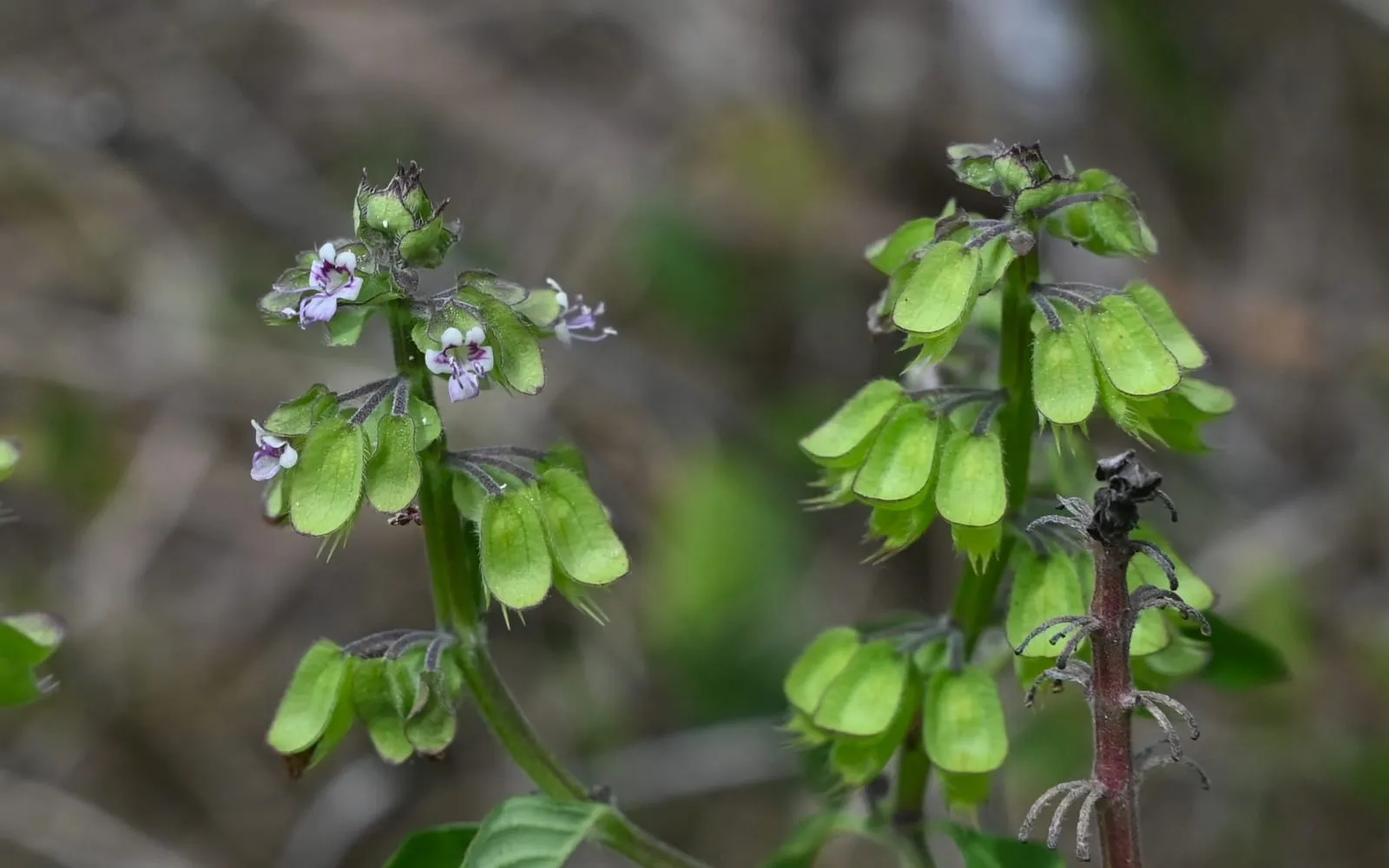
Flowers are small and white to pale mauve, in slender spikes at the shoot tips, much like other basils. Pinching them out keeps the plant leafy and productive, as with sweet basil.
The plant self-seeds readily in warm ground. Across its range, seedlings appear in gardens and clearings, which is part of why it grows both wild and tended in the same places.
Where it is from
Ocimum campechianum grows across tropical America, from Mexico and the Caribbean through the Amazon basin, in warm lowland clearings, gardens, roadsides and river margins. It grows in hot, humid, sunny places.
Give it warmth, sun and moist, fertile soil. It has no tolerance for frost, so it grows year-round only in the tropics and behaves as a summer annual anywhere with a cold season, in the same way as its cultivated basil relatives.
How it grows
Sow seed in warmth in spring, around 18 to 24 deg C, on the surface of moist compost, since like other basils it germinates best warm and with light. Grow the seedlings on without a chill, which checks them.
Plant out or pot on once the nights are reliably warm and all frost has passed, into fertile, moist, free-draining soil in full sun or light shade. In a cool summer it does better in a greenhouse, a polytunnel or a pot that can sit in warmth.
Pinch out the growing tips regularly to keep the plant bushy and to delay flowering, harvesting leaves as you go. Removing the flower spikes as they form keeps the plant producing fresh, tender leaves.
Keep it warm and evenly moist, and expect it to die at the first frost, so gather a final harvest before then and save seed if you want it again. It self-seeds where the season is long and warm enough.
Through the seasons
Spring is for sowing in warmth under cover and growing the young plants on steadily, never letting them chill.
Early summer is planting-out time, once frost is past and the soil has warmed, into a sunny, sheltered spot.
Summer is the main season of leafy growth and harvest, when the plant is at its most productive in the heat. Pinch out flowers to keep leaf coming.
Autumn ends the crop where frost arrives. Take a final harvest and collect seed beforehand.
Care difficulty
Moderate, and much like growing sweet basil. The plant itself is easy in warmth, with sun, moisture and feeding. The difficulty is cold: it must not be chilled as a seedling or caught by frost, and in a cool climate it needs the shelter of glass or a warm spot. Treat it as a heat-loving annual and it crops well.
Watering
Keep the soil or compost evenly moist through the growing season, watering regularly in warm weather without letting the roots stand wet. Basil dislikes both drying out and waterlogging, and even moisture gives the best leaf.
Water in the morning and at the base instead of over the foliage, which keeps the leaves dry and reduces the risk of rot in humid, still air. Pots dry fast in summer and need frequent attention.
Warning signs, diseases and pests
Aphids and whitefly gather on soft growth, especially under cover, and can be washed off or kept down by outdoor predators. Healthy, well-grown plants tolerate light attacks.
Damping off flattens seedlings sown too cold, too wet or too thickly. Sow thinly in warmth, use fresh compost and water from below to prevent it.
Frost kills the plant outright, so grow it as a warm-season crop and gather it before the cold. It is a culinary herb with no toxic hazard.
Growing environment
Full sun to light shade suits it, with plenty of warmth the key to good growth. In a cool, dull spot it grows poorly, and it is far more productive in a hot, sheltered position or under glass.
The soil should be fertile, moist and free-draining, enriched with compost, of the kind that suits any leafy annual herb. Cold, heavy, wet ground checks it.
A warm bed, a large pot on a sunny patio, a greenhouse or a polytunnel all suit it. In a cool climate, a container is often the most reliable option because it can be moved to the warmest spot.
Feeding
Feed every few weeks through the growing season with a balanced liquid feed to keep leafy growth coming, since regular picking and watering use the plant’s reserves. A feed higher in nitrogen supports leaf, which is what you are growing it for.
Plants in pots need feeding more often than those in the ground, as watering washes nutrients from the limited compost.
Troubleshooting
How is it different from ordinary basil? It is a close wild relative of sweet basil with a stronger, more clove-like, peppery scent and a looser, more sprawling habit. It is used in cooking in the same way but gives a warmer, spicier note.
The seedlings collapsed at the base. Damping off, from sowing too cold, too wet or too crowded. Start again with fresh compost, sow thinly in warmth, and water from below.
It has started flowering and the leaves taste different. That is normal once a basil runs to flower. Pinch out the flower spikes as they form to keep the plant leafy and the flavour mild, and harvest regularly.
Will it survive the winter? Only where it never frosts. Elsewhere it is a frost-tender annual killed by the first frost, so save or buy seed and sow again each spring, or grow it on under glass.
Can I eat it like other basil? Yes. The leaves are a culinary herb used just as sweet basil is, with a stronger clove note, and it is closely related to the other basils such as lemon basil. Pick young leaves from a plant grown without pesticides.