
Disease
Downy mildew
Peronosporaceae
Also called Lettuce downy mildew, Basil downy mildew, Onion downy mildew
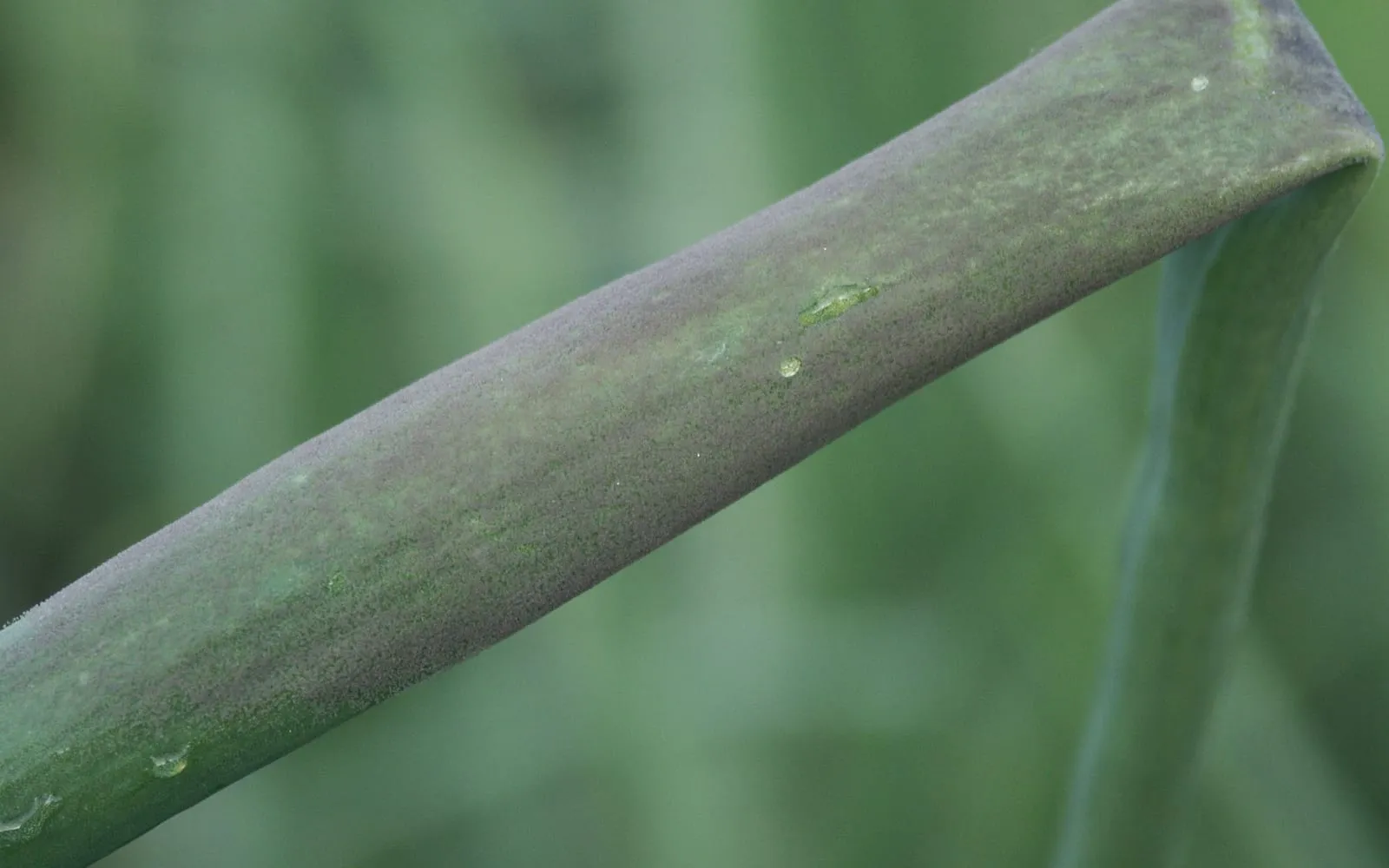
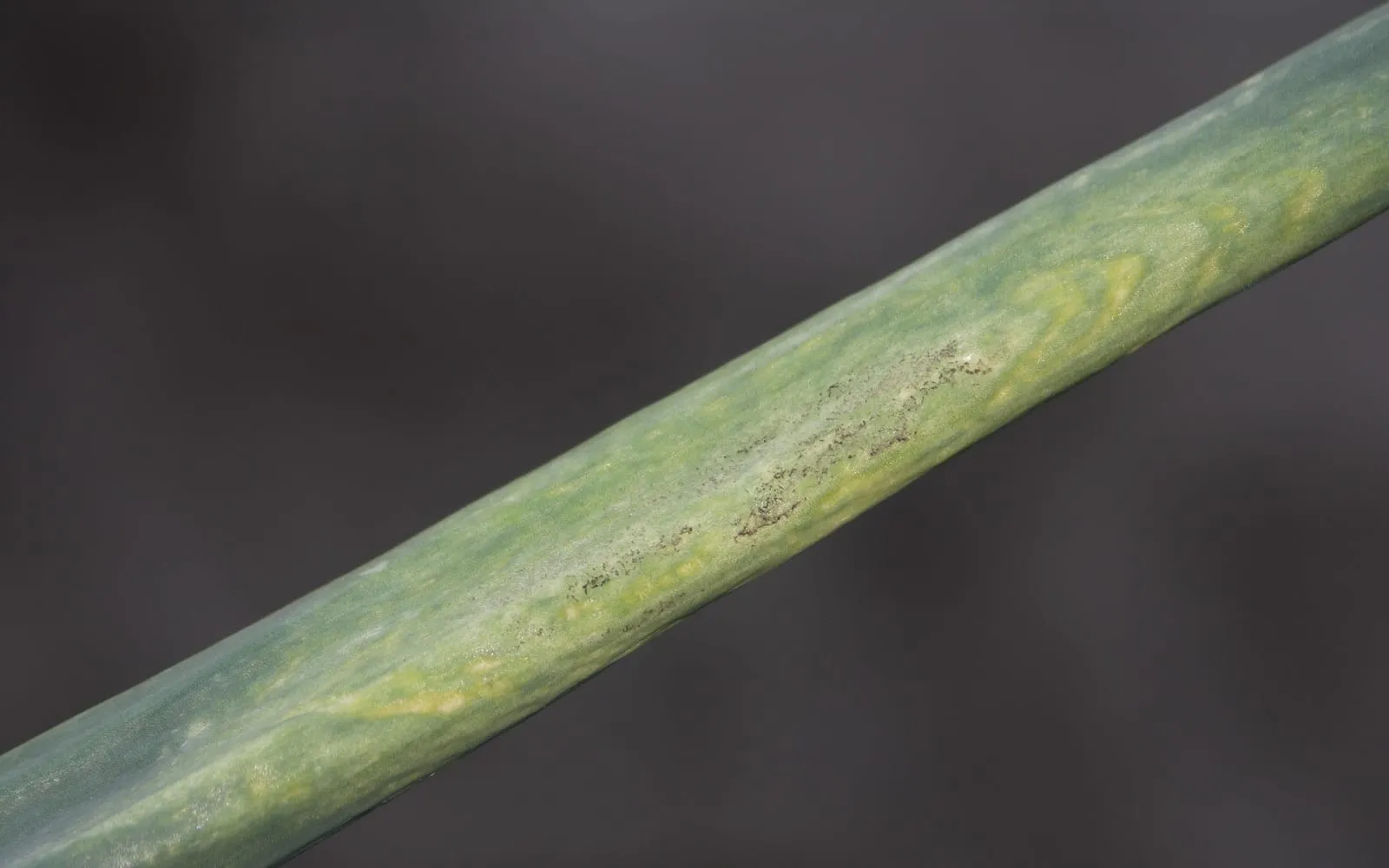
Downy mildew causes angular yellow blotches held between the veins, with a grey or purple bloom underneath. It spreads in wet foliage and still air, unlike powdery mildew on dry-stressed plants.
At a glance
- Type
- Disease
- Cause
- Oomycete (water mould)
- Severity
- Destroys the crop or display
- Affects
- Herbs and edibles, Garden plants
- Active
- May to September
- Established in
- Worldwide
What you are seeing
- Pale yellow or brown patches on the upper leaf surface with straight edges where they meet a vein
- A fine off-white, grey or purple bloom on the underside, directly beneath each patch
- Patches browning and drying from the centre as the disease progresses
- Outer lettuce leaves collapsing and rotting from the base
- Onion leaves greying, collapsing halfway up and dying back from the tip
- Basil turning yellow between the veins with a dark grey fuzz beneath
- Whole seedlings lost in a cold frame or a crowded tray
Before you treat anything
Affected leaves are unappetising rather than harmful, and secondary rots follow quickly. Discard leaves that have collapsed or gone slimy rather than washing them and using them.
What you are looking at
Pale yellow blotches appear on the upper surface of a leaf. Their edges are straight where they meet a vein, so the patch looks angular rather than round, and it stops dead at the vein instead of running across it.
Turn the leaf over. Directly under each yellow patch there is a fine bloom, off white to grey or purple depending on the species, and it will not rub off the way a dust would.
On lettuce the outer leaves go first and then collapse and rot at the base. On onions the leaves grey over, fold halfway up and die from the tip. On basil the yellowing runs between the veins with a dark grey fuzz beneath, which is what sends most people to look this up.
The opposite of powdery mildew in almost every way
The two names sound like variants of one thing and they behave as opposites.
Powdery mildew grows on the surface of the leaf, shows as white dust on the top, rubs off on a finger, and is at its worst in warm dry weather where the plant is short of water at the root.
Downy mildew grows inside the leaf and sends its spore-bearing structures out through the pores on the underside. It appears yellow from above, will not rub off, and needs cool wet conditions with the leaf staying wet for hours.
Getting the two the right way round changes what you do. Watering a dry plant helps against powdery mildew and makes downy mildew worse.
Downy mildews are also not fungi. They are oomycetes, water moulds, the same group as potato blight, which is why products aimed at true fungi are weak against them. No amateur fungicide in Britain treats these anyway, so the question rarely arises in practice.
One name, many organisms
Downy mildew is a family rather than a species, and each member is tied to its own host. The one on your lettuce cannot move to your onions and the one on your basil cannot touch the grapevine.
That matters for rotation. Moving lettuce to a new bed is worth doing, and it does nothing about the onions there. It also means resistance bred into a lettuce cultivar protects lettuce and nothing else.
Two of these have changed British gardening within living memory. Basil downy mildew arrived in the late 2000s and made outdoor basil unreliable across the country. Impatiens downy mildew swept through busy lizzies from 2011 and took what had been the best-selling bedding plant in Britain off the shelves for years, until resistant series were bred.
What to do about it
Water at the base, in the morning, and keep the foliage dry.
Space plants further apart than the packet suggests and thin the seedlings early.
Ventilate anything under cover, even on cool days.
Pick off marked leaves as soon as they appear and take them off the plot.
Pull out collapsing plants rather than nursing them.
Choose resistant cultivars, and read the resistance list in the catalogue rather than the headline.
Rotate lettuce and spinach around the plot, and clear the old crop out instead of digging it in.
What it gets mistaken for
Powdery mildew coats the upper surface white and comes off on a finger.
Magnesium deficiency yellows between the veins on older leaves, with soft graded edges, and there is nothing on the underside. It greens up after a feed.
Grey mould grows a loose fuzz that puffs spores when disturbed and usually starts from a dead flower or a wound.
Rust breaks the surface into raised pustules that shed coloured powder onto a finger.
Potato and tomato blight, which is the closest relative on this list, produces dark brown blotches on the leaf that spread across veins without regard to them, often with a pale halo, and it moves through a plant in days rather than weeks.
What to do, in order
Start here
Prevention, and the changes that stop the problem returning. Most of these pages should end at this tier.
- Water the soil in the morning, never the leaves
- The spores need several hours of liquid water on a leaf to germinate. Watering at the base, early enough that any splashes dry by mid-morning, removes the condition the disease depends on. An evening sprinkler over a lettuce bed is the single most reliable way to produce it.
- Space the crop and thin the seedlings
- Air moving between plants dries the foliage. Crowded lettuce, dense rows of spinach and overfilled seed trays hold humidity at the leaf surface all day. Sow thinner than feels comfortable and thin early.
- Ventilate cold frames, cloches and greenhouses
- Cover keeps the rain off and the humidity in, and the second half of that is what matters here. Open the vents on any day above about eight degrees, even in a shower.
- Grow resistant cultivars
- Lettuce breeding against this disease is decades old and seed catalogues list the resistances against each cultivar. Basil 'Prospera' was bred specifically for resistance to basil downy mildew, which has made basil hard to grow outdoors since it arrived. Read the small print before ordering.
- Rotate, and clear the debris
- Several of these species leave resting spores in the soil and in the crop residue that last for years. Move lettuce and spinach around the plot, and pull the old crop out rather than digging it in.
- Sow spinach and lettuce outside the worst months
- Cool damp conditions suit the disease, so spring and autumn sowings in Britain are the vulnerable ones. Late-summer sowings that mature in drier weather often come through clean, and chard stands in for spinach through a wet spell.
- Open the canopy on a grapevine
- Take leaves off around the bunches from midsummer so light and air reach them and the fruit dries quickly after rain. A congested vine under glass, watered overhead, gets this every year.
Then reach for a barrier
Netting, hand removal and water. Nothing here harms anything except the target.
- Pick off marked leaves as soon as you see them
- Each patch is producing spores on its underside within days. Removing those leaves, and taking them away rather than dropping them on the bed, slows the spread through a row noticeably.
- Pull out badly affected plants
- A collapsing lettuce in the middle of a row will infect its neighbours for a fortnight before it finally dies. Lift it, and lift the ones either side if they are already marked.
In pictures
Plants affected
Guides that name it among the problems to watch for. The list is the plants it is characteristic of rather than everything it will feed on.
Common on UK allotments
This is one of the pests and diseases allotment growers meet most often. See it alongside the other common problems on the allotment guide.
Common allotment pests and diseasesA common rose problem
This is one of the pests, diseases and disorders that rose growers meet most often. See it alongside the others on the common rose problems guide.
Common rose problems