
Edible
American Basil
Ocimum americanum
Also known as Hoary basil, Lime basil, Sanjeevani
How to grow hoary basil, Ocimum americanum. The lime and lemon-scented basil of Africa and Asia, why its name is misleading, and growing it under glass.
At a glance
- Difficulty
- Moderate
- Water
- When the top 2 cm of compost is dry, in the morning
- Light
- Full sun. A windowsill or greenhouse where summers are cool
- Temperature
- Damaged below 10 deg C and killed by frost
- Hardiness
- USDA 10-11, RHS H1b, hardy to 8 C
- Type
- Tender annual
- Height
- 20-50 cm
- Native to
- Africa and Asia
- Best month
- June and July in the Northern Hemisphere, December and January in the Southern Hemisphere
It stands heat and humidity better than sweet basil and keeps producing through a tropical wet season, which is why it is the everyday basil across much of Southeast Asia. Nothing below 10 deg C. It bolts quickly, and pinching the flower spikes out is what keeps a plant in leaf.
Hardiness zones describe winter cold alone. Summer heat, humidity, rainfall and the length of the growing season decide as much, so treat the range as the outer limit rather than as a recommendation.
Every month named in this guide is for the temperate Northern Hemisphere. If you garden in the Southern Hemisphere, shift each one by six months, so June becomes December. Closer to the equator the wet and dry seasons matter more than the calendar, and the shift stops being a useful guide.
Not known to be toxic
- Safe to eat
- Leaves, flowers and seeds
Non-toxic. Hoary basil is a culinary herb used across Africa and Asia and it appears on neither the RHS list of potentially harmful garden plants nor the ASPCA list. Leaves and flowers are eaten, and the seeds are soaked in water to make a gelatinous drink in the same way as sweet basil seed. The distilled essential oil is a concentrated product and carries the usual caution that applies to every aromatic member of the mint family: it irritates skin undiluted and should not be given to animals.
Sources: RHS potentially harmful garden plants, ASPCA toxic and non-toxic plants
About
Hoary basil is the basil whose name sends people in the wrong direction. Ocimum americanum comes from Africa and Asia, and it has nothing to do with the Americas at all. Linnaeus applied the name on the basis of a specimen with a bad provenance and it has stuck ever since.
The scent varies by cultivar and it is usually citrus. Lime basil is a selection of this species, and so are several plants sold as lemon basil, which is where the confusion with the hybrid lemon basil begins.
It is one of the parents of that hybrid, and the seeds are the same gelatinous kind used in Asian drinks. As a garden plant it is a tender annual that wants the same treatment as any basil, meaning warmth, light and careful watering.
Appearance and character
A compact bushy annual, 20 to 50 cm, branching freely and staying tidier than sweet basil.
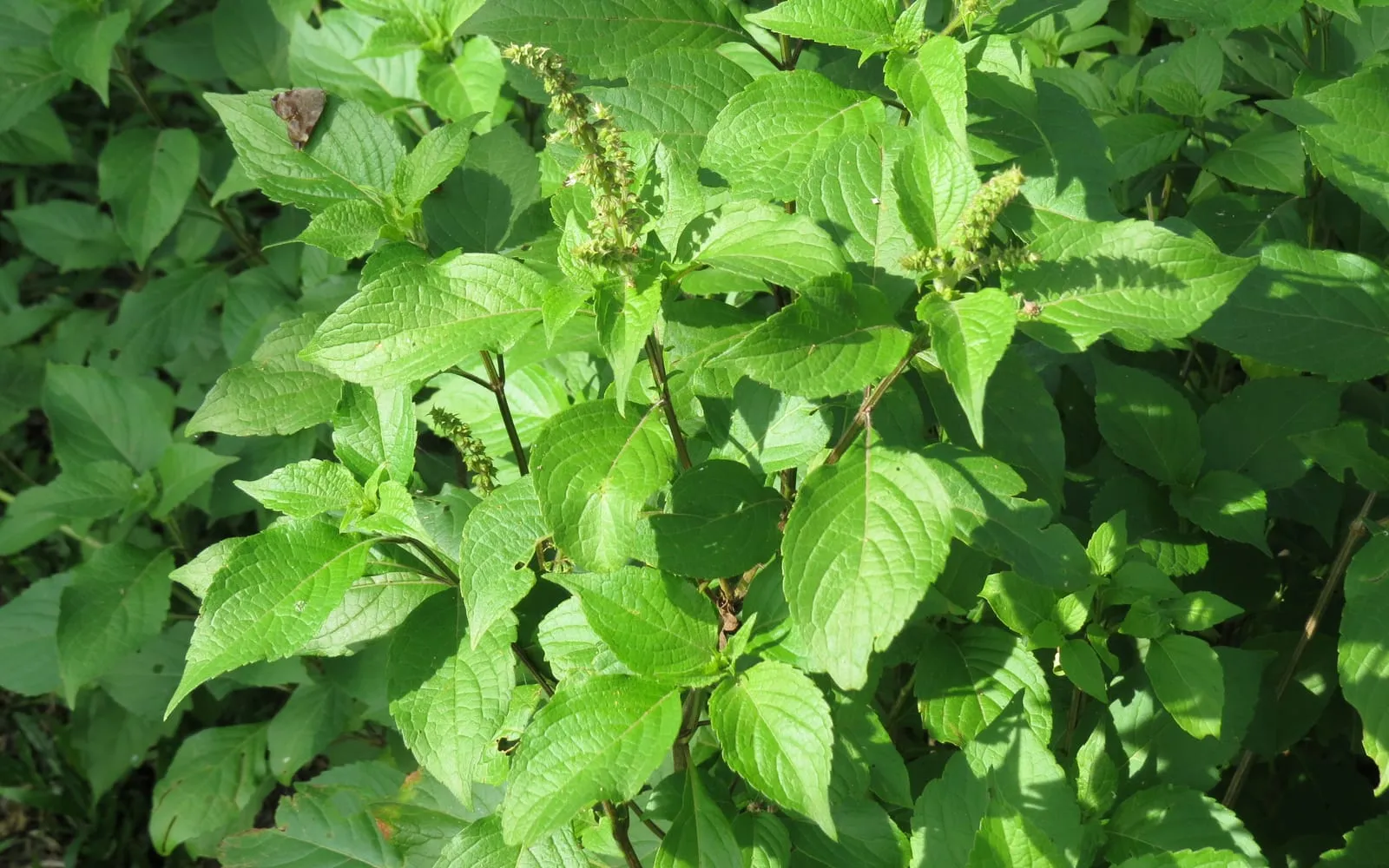
Leaves are small and narrow, 2 to 4 cm, light green, slightly toothed and covered in fine hairs, which is what the name hoary refers to.
Flowers open in slender spikes at the shoot tips, small and white, from midsummer. The plant flowers readily and early.
Stems are square, green and hairy, staying soft rather than going woody.
The scent depends on the cultivar and is usually citrus, with lime the most common. Some selections smell of lemon and some are closer to camphor.
Seeds swell into a gelatinous coat in water, which is the property used in the drinks sold across south-east Asia.
Where it is from
Hoary basil is native to tropical Africa and to south and south-east Asia, growing on disturbed ground and cultivated across both regions.
The name americanum is a mistake that never got corrected. Linnaeus described the species in 1755 from material with an inaccurate locality, and botanical naming rules mean the earliest published name stands regardless of whether it makes sense.
Africa uses it widely as a culinary and medicinal herb, and it appears in cooking from Senegal to Ethiopia.
Thailand and Vietnam both grow it, and its seeds are the basis of the basil seed drinks sold across the region.
In India it is grown as a culinary basil and appears in traditional medicine, where one selection is sold as sanjeevani.
Western seed catalogues sell it mostly as lime basil, and few of them mention the botanical name at all.
How it grows
Sow indoors from March at 20 deg C. Surface sow onto damp compost and press the seed in, since it needs light.
Germination takes one to two weeks in warmth.
Prick out into small pots and grow on somewhere bright and warm.
Pot on into 15 cm pots of free-draining compost, or plant three or four to a larger pot.
Keep it above 15 deg C. It stops growing below 10 deg C.
Pinch the tips from 15 cm and keep pinching. This species flowers early, so weekly pinching matters more than it does with sweet basil.
Remove flower spikes as they form unless you want seed.
Sow again in June for a later batch, since plants tire.
Harvest whole shoot tips rather than picking single leaves.
Collect seed in late summer if you want it, and it stores well.
Through the seasons
Winter there is nothing. It is a tender annual.
Spring is sowing, from March in warmth.
Early summer is the start of picking. Pinch hard from the beginning.
Midsummer is the main crop and the start of flowering. Pinch spikes weekly.
Late summer is when the first sowing tires and a June sowing takes over.
Autumn ends it. Plants decline as the nights cool and die at the first cold snap.
Care difficulty
Moderate, with the same three requirements as every basil in this wave.
Warmth is first: 20 deg C to germinate and 15 deg C to grow well, which means indoors or under glass where summers are cool.
Careful watering is second. Morning watering, no saucer, and let the surface dry between times.
Flowering control is third, and this species needs more of it than sweet basil because it runs to flower faster. Pinch weekly.
Light is the fourth thing and the one people underestimate. A dim windowsill produces a pale leggy plant.
Given those, it is productive, compact and easier to keep tidy than sweet basil.
Watering
Water in the morning when the top 2 cm of compost has dried.
Water the compost rather than the foliage.
Never leave the pot in a saucer of water. Cold wet compost overnight is what kills basils.
Use tepid rather than cold water.
Water every two or three days in summer and less as growth slows.
Water a greenhouse border plant more generously than a potted one.
Warning signs, diseases and pests
Damping off collapses seedlings at the base in cold wet compost. Sow into warm fresh compost and water carefully.
Blackening at the stem base on an older plant is root rot, and there is no cure.
Dull spotted bronzed leaves mean cold rather than disease.
Aphids on the tips should be rubbed off rather than sprayed.
Whitefly under glass needs sticky traps and a biological control.
Constant flower spikes are normal for this species. Pinch them weekly.
Pale leggy growth means too little light.
Growing environment
Full sun and warmth. A greenhouse, conservatory or the brightest windowsill.
Minimum 15 deg C for growth, and it declines below 10 deg C.
Free-draining compost in a pot, with perlite or grit added.
pH around 6 to 7.
Outdoors it manages a warm sheltered patio from mid-June to early September.
Good ventilation under glass, since soft basil growth in still humid air brings whitefly and mould.
Feeding
A weak balanced liquid feed every three weeks from May to August.
Avoid heavy nitrogen, which gives soft growth with less scent.
Do not feed a plant that has stopped because of cold.
Fresh compost each year rather than feeding an old pot harder.
Lean growing concentrates the citrus scent that makes the plant worth having.
Troubleshooting
Why is it called American basil? A naming mistake that stuck. Linnaeus described it in 1755 from material with a bad locality, and the rules of botanical naming keep the earliest published name whether or not it makes sense. The plant is African and Asian.
Is this the same as lemon basil? Not quite. Lemon basil, Ocimum citriodorum, is a hybrid with this species as one parent. Plants sold as lime basil are usually this species. Both smell of citrus and the labelling in seed catalogues is inconsistent.
It flowered almost immediately. This species runs to flower faster than sweet basil. Pinch the tips weekly from 15 cm.
The stem went black at the base. Root rot from cold wet compost. Water in the morning and empty the saucer.
Nothing germinated. Too cold. It needs 20 deg C.
What are basil seed drinks? The seeds swell into a gelatinous coat in water and are used in sweet drinks across south-east Asia. This species and sweet basil are both used for it.
Can I grow it outside? From mid-June to early September in a warm sheltered spot, in a pot you can bring in.