
Outdoor plant
Missouri Gourd
Cucurbita foetidissima
Also known as Buffalo Gourd, Stinking Gourd, Calabazilla
What Missouri gourd is, Cucurbita foetidissima. The foul-smelling desert vine with a massive root, bitter striped gourds, and the soap made from them.
At a glance
- Difficulty
- Easy
- Water
- None once established; it is deeply drought-adapted
- Light
- Full sun
- Temperature
- Heat-loving; the top growth dies back at frost
- Hardiness
- USDA 5-9, RHS H4, hardy to -20 C
- Type
- Long-lived herbaceous perennial from a huge taproot
- Height
- Vines to 6 m long, sprawling instead of tall
- Native to
- Central and southwestern North America
A desert and dry-plains perennial built for heat and drought. The vines are killed by autumn frost and the plant regrows each spring from an enormous deep taproot that stores water and food, so an established plant survives both hard drought and a cold winter underground. It needs full sun, poor free-draining soil and as much heat as it can get, and rots in rich, wet ground.
Hardiness zones describe winter cold alone. Summer heat, humidity, rainfall and the length of the growing season decide as much, so treat the range as the outer limit rather than as a recommendation.
Toxic if eaten
- Do not eat
- The flesh of the gourd and the foliage, which are intensely bitter
- Harm from
- Eating it
- Affects
- People, cats and dogs
The gourds and foliage contain cucurbitacins, the bitter compounds that make a wild squash inedible, and eating the flesh causes nausea, vomiting and diarrhoea. The bitterness is severe enough that few people or animals swallow much, which limits most cases to an unpleasant stomach upset instead of anything worse. Serious poisoning is uncommon, but the plant should not be treated as food. The seeds were processed and eaten historically once cleaned of the bitter pulp, which is a different thing from eating the raw gourd.
Sources: RHS potentially harmful garden plants, North Carolina Extension plant toxicity database
About
Missouri gourd is noticeable by smell. Brush against the foliage and it gives off a strong odour that earns the species name foetidissima, meaning most stinking, and the folk name stinking gourd. It is a wild desert and dry-plains vine of central and south-western North America, not a garden or food plant.
The plant that shows above ground is only part of it. A mature Missouri gourd grows from a huge taproot, which can reach the size of a person and weigh many kilograms, storing water and food that let the plant survive drought and regrow year after year.
It has a long history of use despite the smell. The gourds lather in water because they are rich in saponins, and Indigenous peoples used them as a soap. The oily, protein-rich seeds and the starchy root have both been studied as possible crops for arid land.
Appearance and character
Leaves are large, up to about thirty centimetres, grey-green, rough and roughly triangular with a pointed tip, standing stiffly up from the trailing stems. Their size and pale, coarse look are distinctive, and crushing them releases the foul scent.
Vines trail out from a central crown instead of climbing, radiating several metres in every direction across open ground. A single old plant can cover a wide patch.
Flowers are large, yellow and bell-shaped, opening in the morning, with separate male and female flowers on the same plant in the way of squashes generally.
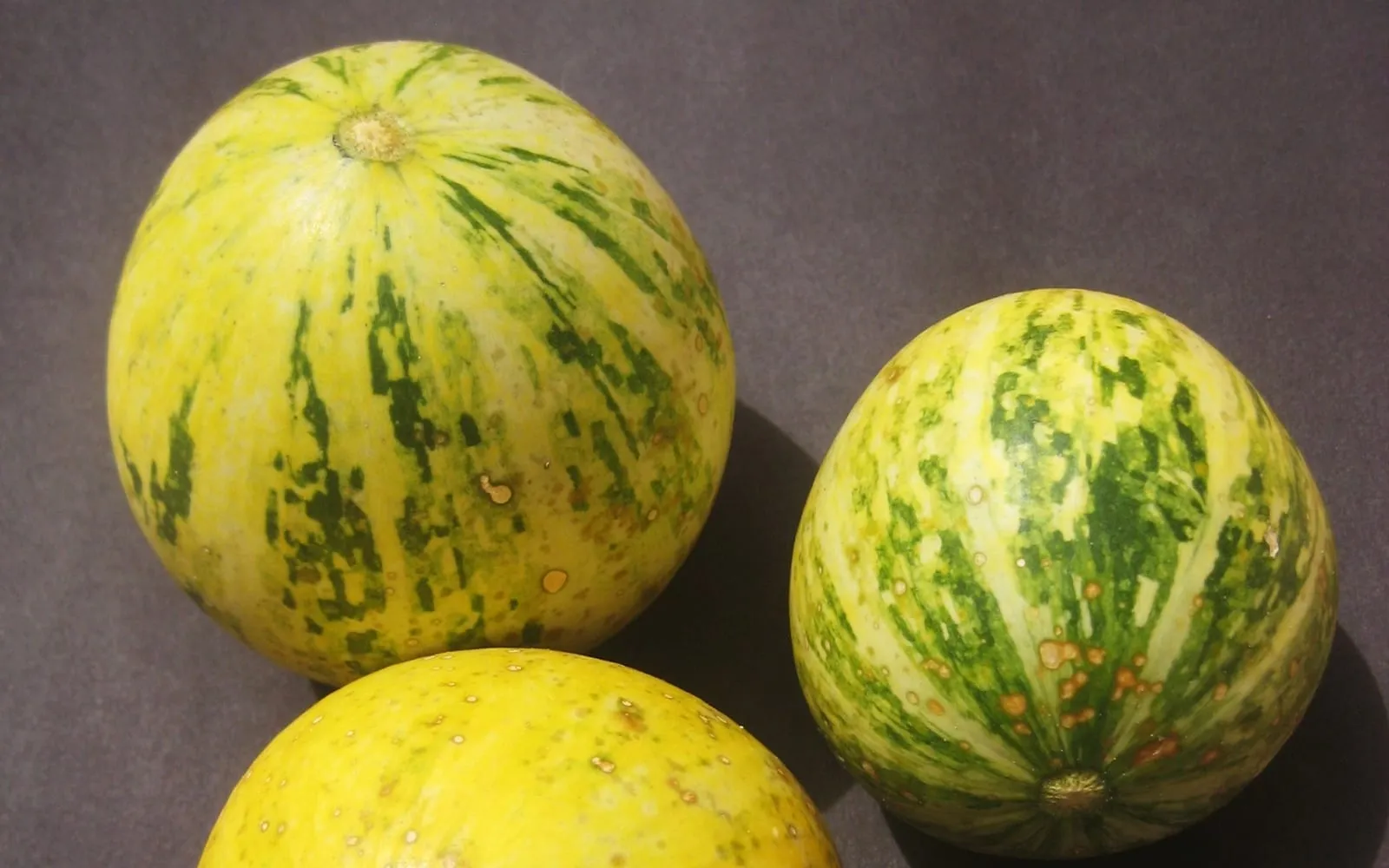
Gourds are round, seven to eight centimetres across, green with paler stripes at first and ripening to a plain lemon yellow. They are hard, dry and light when mature, and full of flat pale seeds.
The taproot is deep and massive. It is the reason the vine can reappear each spring in ground that looks far too dry for such large top growth.
Where it is from
Cucurbita foetidissima grows across the central and south-western United States into Mexico, on roadsides, overgrazed rangeland, dry washes and other open, disturbed, sunny ground. It is a plant of hot, dry, poor soils.
That origin explains its toughness. It is adapted to long drought, intense heat and thin soil, drawing on its deep root through dry spells, and it often colonises bare, damaged ground where little else grows. It has no need of the care a garden plant expects.
How it grows
The vines grow from the crown of the taproot each spring, spreading fast across the ground through the heat of summer and flowering and fruiting as they go. The plant sprawls instead of climbs, though it will scramble over low obstacles.
Autumn frost kills the top growth, and the plant survives winter in its root. It returns the following spring, often larger and wider. Over years the root and the patch both enlarge.
It is rarely grown deliberately, though its drought tolerance has occasionally been used for erosion control and dryland planting. As an unwanted plant it is persistent, because the deep root regrows after the top growth is cut.
Through the seasons
Spring brings the vines shooting out from the crown as the ground warms, the grey leaves expanding quickly.
Summer is rapid sprawling growth, yellow flowers, and the striped young gourds forming across the spreading stems.
Autumn ripens the gourds to hard yellow shells full of seed, and the first frost then blackens and kills the vines.
Winter is dormancy. The plant lives in its deep root, with the dry gourds often left scattered on the ground.
Care difficulty
Nothing about it is demanding, because it is a tough wild perennial adapted to heat and poor soil. If anything the difficulty runs the other way: in a garden it can spread widely and smother neighbours, and its deep root makes an unwanted plant hard to remove. Grown on purpose for a dry, hot bank it needs no attention at all.
Watering
None is required once the plant is established. The huge taproot stores water and carries it through long droughts, which is exactly what the species is built for. Extra watering is unnecessary and rich, damp soil will rot the root rather than help it.
Warning signs, diseases and pests
The gourds and foliage are bitter and cause stomach upset if eaten, so keep children and pets from chewing them, though the harsh taste and hard, dry shells mean few swallow enough to be badly harmed. Do not treat the gourds as food.
The plant has few pests. It is a chemically defended wild species that most animals avoid. Its own vigour is the main nuisance, since the sprawling vines can overrun smaller plants in a season.
The smell of the crushed leaves is unpleasant but harmless, and is part of the plant.
Growing environment
Full sun and heat are what it needs, matching the open desert and roadside habitats it comes from. It has no tolerance for shade.
The soil should be poor, dry and sharply drained, sandy or gravelly for preference. Rich, moisture-retentive or waterlogged ground is wrong for it and rots the root.
It needs plenty of room to sprawl and no support, since it trails instead of climbs. On a hot, dry, awkward bank where little else will grow, that sprawl can be an advantage.
Feeding
Do not feed it. The plant is adapted to poor soils and gains nothing from fertiliser, which would only push soft growth. The deep root finds what little the plant needs on its own.
Troubleshooting
It smells awful when I touch it. That is normal and is where the name foetidissima comes from. The odour is harmless; it is the character of the foliage.
Can I eat the gourds? No. The flesh is intensely bitter and causes stomach upset. Only the cleaned seeds were used historically as food, after the bitter pulp was removed, which is not something to attempt casually.
It has taken over a corner of the garden. The vines sprawl widely from a deep root. Cut back the top growth to control the spread, but be aware that killing the plant means removing the large root, which is a considerable dig.
Why does it survive with no watering? Because of its enormous taproot, which stores water and food and carries the plant through drought and winter. This is a desert perennial, and watering it is neither needed nor helpful.
Is it the same as an ornamental or edible gourd? No. It is a wild relative of the squashes, bitter and inedible, grown by nobody for its fruit. The hard dry gourds are sometimes kept as curiosities but are not food.
Missouri Gourd problem guides
Not sure what is wrong? See the common vegetable pests guide.