
Outdoor plant
Finger-Leaf Gourd
Cucurbita digitata
Also known as Fingerleaf Gourd, Fingerleaf Squash
What fingerleaf gourd is, Cucurbita digitata, a desert vine with narrow finger-like leaflets and small bitter striped gourds.
At a glance
- Difficulty
- Easy
- Water
- None once established
- Light
- Full sun
- Temperature
- Heat-loving; frost kills the top growth
- Hardiness
- USDA 8-10, RHS H3, hardy to -7 C
- Type
- Herbaceous perennial from a deep storage root
- Height
- Vines to 4 m long, trailing
- Native to
- The southwestern United States, Mexico
A plant of the hot Sonoran and Chihuahuan deserts, adapted to fierce heat and long drought. It regrows each year from a deep perennial root and needs a long, hot, dry summer to thrive. It is more tender than the plains gourds and dislikes cold, wet winters, so outside a hot dry climate it is a curiosity instead of a plant that persists.
Hardiness zones describe winter cold alone. Summer heat, humidity, rainfall and the length of the growing season decide as much, so treat the range as the outer limit rather than as a recommendation.
Toxic if eaten
- Do not eat
- The gourd flesh and foliage, which are extremely bitter
- Harm from
- Eating it
- Affects
- People, cats and dogs
Like the other wild gourds, fingerleaf gourd contains bitter cucurbitacins in its flesh and leaves, and eating them brings on nausea and stomach upset. The intense bitterness stops most people and animals from swallowing much, so serious poisoning is unlikely, but the gourds are not food. The seeds were cleaned and used historically once separated from the bitter pulp, which does not make the raw gourd safe to eat.
Sources: RHS potentially harmful garden plants, North Carolina Extension plant toxicity database
About
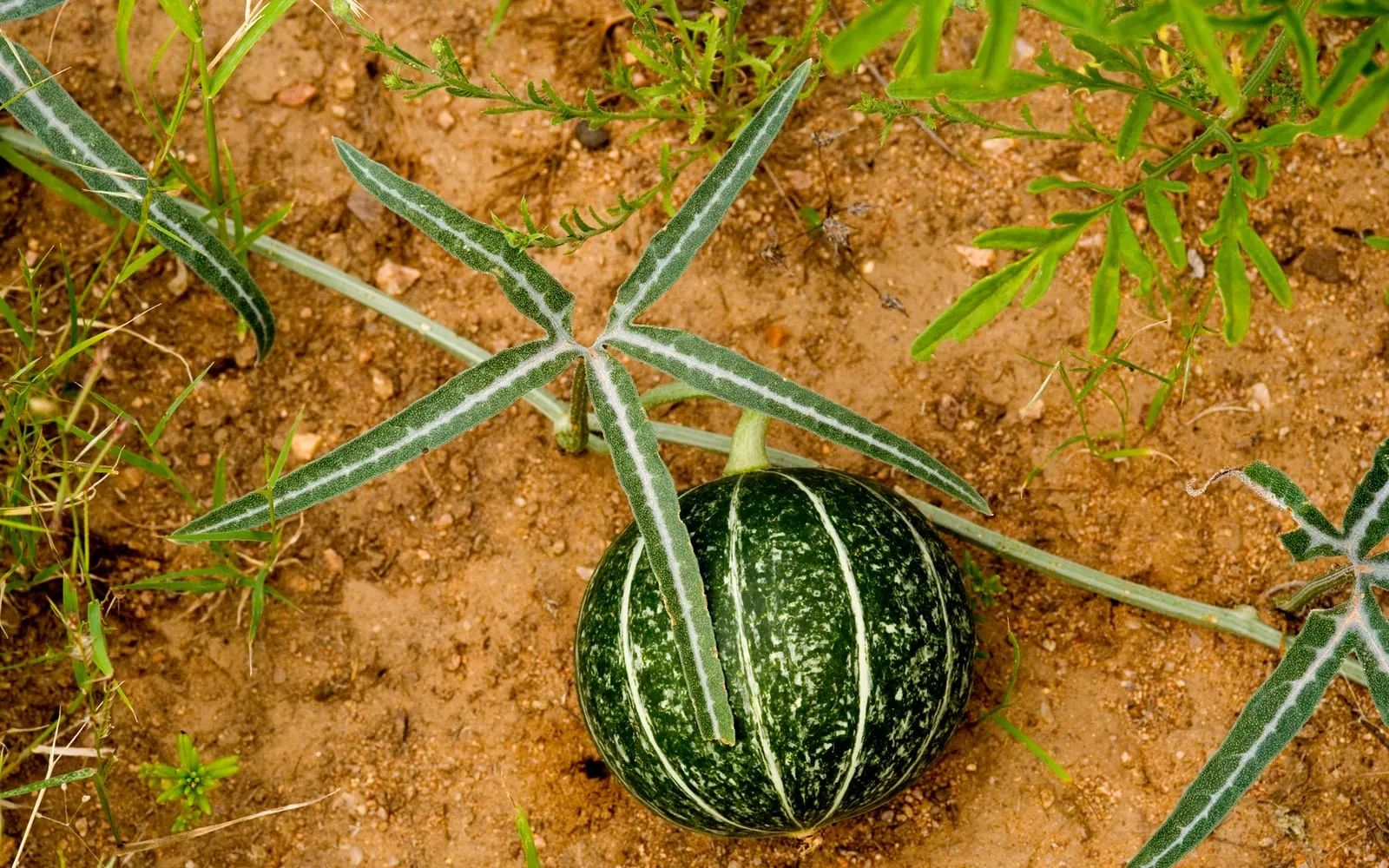
Fingerleaf gourd is named for its leaves, which are cut deeply into narrow, finger-like segments that look like a splayed hand or a bird’s foot. That divided leaf is the quickest way to tell it from its relatives, whose leaves are broader and less deeply lobed. It is a wild vine of the American south-west and northern Mexico, not a garden or food plant.
Below ground it grows from a deep perennial root, as many wild gourds do. That root lets it survive long desert droughts and return year after year from ground that bakes hard in summer.
The small striped gourds it produces are hard, dry and bitter. They are inedible, though the plant is chemically and ecologically interesting as one of a small group of drought-hardy perennial squashes native to the deserts.
Appearance and character
Leaves are divided almost to the base into five slender, deeply toothed lobes, narrow and finger-like, mid to grey green and rough in texture, and they give the plant its name. No other common wild gourd has leaves so finely cut.
Vines are slim and trailing, running over the ground and scrambling through low vegetation instead of climbing high, reaching a few metres from the root.
Flowers are yellow and funnel-shaped, opening in the cooler part of the day, with male and female flowers borne separately on the same plant.
Gourds are small and round, roughly six to eight centimetres across, green with pale stripes ripening to yellow, hard-shelled and full of flat seeds. They are lighter and drier than a kitchen squash.
The root is deep and swollen. It stores water and reserves through drought and winter, then fuels the next season’s growth, and it is far larger than the slender vines above it suggest.
Where it is from
Cucurbita digitata is native to the Sonoran and Chihuahuan deserts of the south-western United States and northern Mexico, growing in sandy washes, on rocky slopes and along disturbed roadsides in hot, arid country.
Its home explains its needs and its limits. It is adapted to extreme heat, drought and free-draining desert soils, and it is markedly less cold-hardy than the gourds of the higher, cooler plains. It suits hot, dry climates and struggles anywhere cold and wet.
How it grows
The vines emerge from the perennial root as the desert warms, trailing out and growing quickly through the hot months, flowering and setting their small gourds across the summer. Growth follows the heat and any available moisture.
When frost or the dry season ends the growing period, the top growth dies away and the plant survives in its deep root, ready to resprout when conditions return. The root enlarges over the years.
It is seldom cultivated, being a desert wildflower instead of a crop or ornamental. Where it grows near gardens in its native range it needs no help, and its deep root makes it persistent.
Through the seasons
Spring to early summer starts vine growth from the root as the heat builds, with the finger-shaped leaves opening along the stems.
Summer is the main growth and flowering, the small striped gourds forming on the trailing stems in the hottest, driest part of the year.
Autumn is when the gourds ripen to hard yellow shells. Cold or continued drought then ends the season’s top growth.
Winter is dormancy in the root, especially where nights turn cold, with the dry gourds persisting on the ground.
Care difficulty
It is undemanding to the point of thriving on neglect, provided the climate is hot and dry enough. In a suitable desert climate it needs little help. In a cool or wet one it will not persist outdoors at all, so the difficulty is matching it to an arid, frost-poor setting instead of tending it.
Watering
None is needed once established. The deep root stores water for the dry season, and the plant is adapted to survive on desert rainfall alone. Watering adds nothing and, on heavy or poorly drained soil, encourages the root to rot.
Warning signs, diseases and pests
The gourds and leaves are bitter and cause stomach upset if eaten, so keep them away from children and pets. Their harsh taste and dry, hard shells mean few people or animals eat much, but they are not food.
Pests are few. As a bitter, chemically defended desert plant it is left alone by most grazers and suffers little in the wild.
Its trailing vines can scramble over and shade low-growing neighbours, which is the main nuisance where it grows close to other plants.
Growing environment
Full sun and intense heat suit it, matching the open desert it comes from. Shade and cool, dull sites do not suit it.
The soil must be dry and sharply drained, sandy or rocky instead of rich. Damp, heavy or fertile ground does not suit it and will rot the root over a wet winter.
It sprawls across open ground and needs room instead of support. It is only likely to persist in a climate close to a hot, dry, sunny slope.
Feeding
Do not feed it. It is a desert plant adapted to poor soils and gains nothing from added fertility, which would only encourage soft growth.
Troubleshooting
How do I tell it from the other wild gourds? By the leaves. Fingerleaf gourd has leaves cut into five narrow, finger-like lobes, far more deeply divided than the broad, hand-shaped leaves of coyote gourd or the large grey triangular leaves of Missouri gourd.
Can I eat the gourds? No. The flesh is intensely bitter and causes stomach upset. Only the cleaned seeds have been used as food historically, after the bitter pulp was removed.
Will it grow in my cool climate? Probably not outdoors. It is a hot-desert perennial, more tender than the plains gourds, and it does not persist through a cold, wet winter. It needs an arid, frost-poor climate.
Why does it need no watering? Its deep storage root stores enough water to survive desert drought, so it gets by on natural rainfall. Extra water is unnecessary and risks rotting the root.
Is it related to pumpkins and squashes? Yes, it is a wild member of the same genus, Cucurbita, but a bitter, inedible desert perennial instead of an edible crop.
Finger-Leaf Gourd problem guides
Not sure what is wrong? See the common vegetable pests guide.