
Edible
Japanese wineberry
Rubus phoenicolasius
Also known as Wineberry, Wine raspberry, Dewberry
How to grow Japanese wineberry, Rubus phoenicolasius. Red bristled canes that glow in winter, and fruit that arrives in the gap between raspberries and blackberries.
At a glance
- Difficulty
- Easy
- Water
- Weekly in dry spells through summer
- Light
- Full sun to part shade
- Temperature
- Fully hardy to -20 deg C
- Hardiness
- USDA 5-8, RHS H6, hardy to -25 C
- Type
- Deciduous perennial with biennial canes
- Height
- 2-3 m, and as wide when trained
- Native to
- Japan, Korea, China
- Best month
- July and August in the Northern Hemisphere, January and February in the Southern Hemisphere
Hardy and easy, and that is the trouble with it. It is listed as an invasive species through much of the eastern United States, where birds carry the seed into woodland and the arching canes root wherever they touch down. Grow it in a controlled spot, and check the local status first.
Hardiness zones describe winter cold alone. Summer heat, humidity, rainfall and the length of the growing season decide as much, so treat the range as the outer limit rather than as a recommendation.
Every month named in this guide is for the temperate Northern Hemisphere. If you garden in the Southern Hemisphere, shift each one by six months, so July becomes January. Closer to the equator the wet and dry seasons matter more than the calendar, and the shift stops being a useful guide.
Not known to be toxic
- Safe to eat
- The ripe fruit
The fruit is food and the plant carries no toxicity concern. Neither the RHS nor the ASPCA lists Rubus as harmful, and the ASPCA does not record the genus as toxic to cats or dogs. Leaves have a long history as a herbal tea and present no hazard. The practical risks are physical rather than chemical. Prickles and bristles scratch, and a scratch from a cane that has been lying in soil is worth washing properly. Fruit picked at knee height beside a path or a field edge may carry contamination from animals, which is a foraging caution rather than a garden one.
Sources: RHS potentially harmful garden plants, ASPCA toxic and non-toxic plants
About
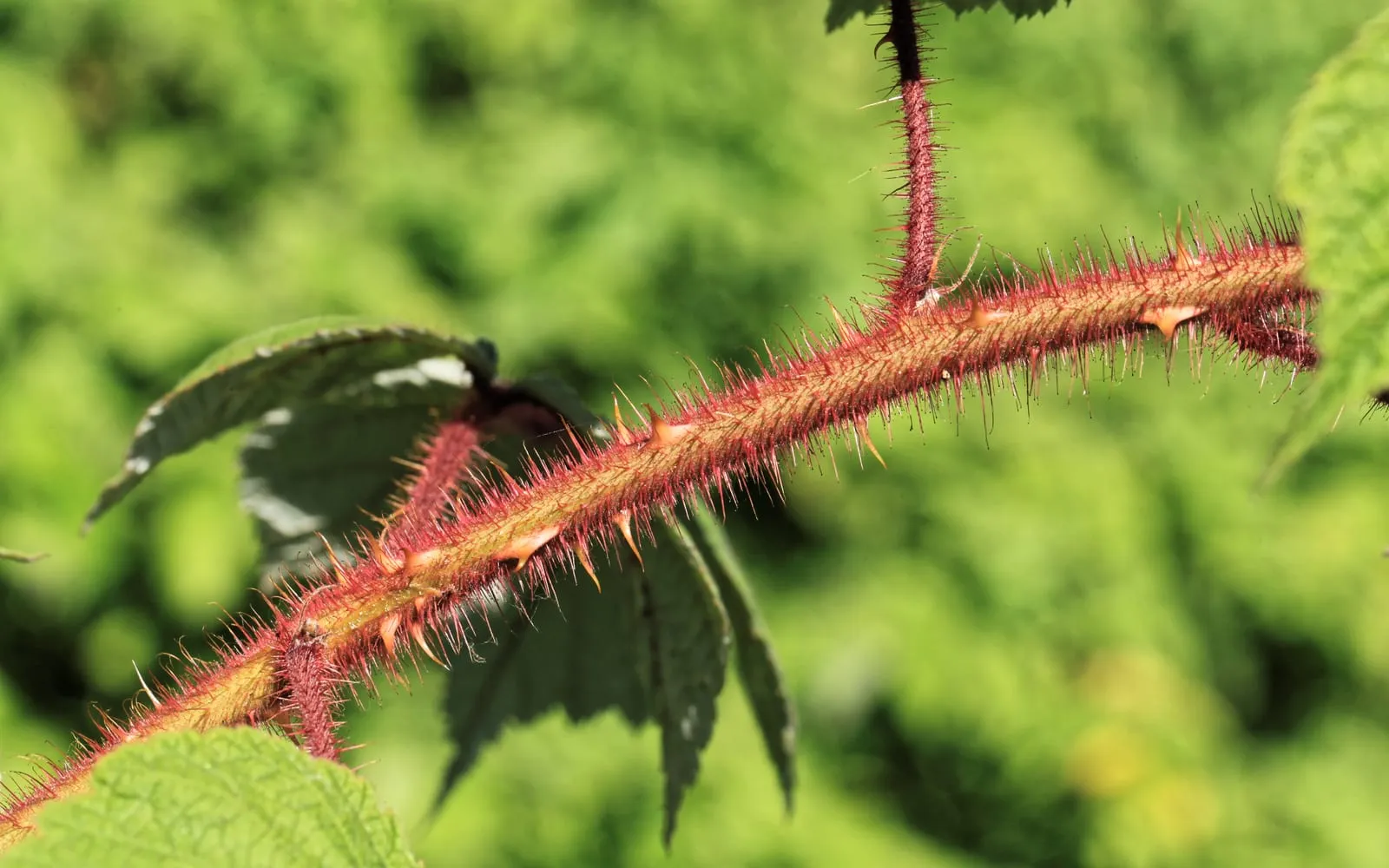
Wineberry canes are covered from base to tip in fine red bristles that catch low winter sun and light the whole plant up. Gardeners who grow it for fruit often admit the winter stems were the reason they kept it.
The fruit habit is unusual. Each berry develops inside a closed calyx covered in the same sticky red hairs, and stays sealed until it ripens. The calyx then peels back and presents a glossy orange-red berry, which is a good deal more elegant than a raspberry announcing itself green.
Flavour sits between a raspberry and a redcurrant, sweet with a clean sharp edge, and the berries are smaller and juicier than a raspberry.
It crops in late July and August, filling the gap after summer raspberries finish and before blackberries start. That timing is a large part of its value.
Appearance and character
A cane fruit with the biennial habit of a raspberry. Canes grow one year, fruit the next, and then die.
The canes are the plant’s signature, arching to 3 m and clothed in dense soft red glandular bristles rather than hard prickles. They are unpleasant to grip but do not tear skin the way a blackberry does.
Leaves are in threes, the end leaflet much the largest, dark green above and strikingly white-felted underneath.
Flowers are small and pinkish in July, held in clusters, mostly hidden inside the bristly calyces.
Fruit is 1 cm across, orange-red, glossy and hollow when picked, sitting free of the receptacle as a raspberry does.
Where it is from
Rubus phoenicolasius is native to Japan, Korea and northern China, growing on woodland edge and in scrub.
It reached Europe and North America in the 1890s, brought in as an ornamental and as breeding stock for raspberry improvement.
In the eastern United States that introduction went badly. The plant escaped into woodland edge and floodplain, where tip-rooting canes and bird-sown seed let it form dense stands, and several states now list it as invasive.
Europe has seen nothing on that scale. It naturalises occasionally in the milder parts, and the tip-rooting habit is a garden management issue rather than a countryside one.
The species name means bloody hair, which describes the red bristles exactly.
How it grows
Buy a container-grown plant, or take a rooted tip from a friend’s plant in autumn.
Plant in autumn or early spring, in sun or light shade, in soil improved with compost.
Put in supports before the canes grow. Two horizontal wires at 1 m and 1.5 m against a fence, or a post and wire row, will do.
Tie the new canes in as they extend, fanning them along the wires. Loose canes arch to the ground and root at the tips, which is how one plant becomes six.
Cut the fruited canes to ground level immediately after harvest, and tie in the new season’s canes to replace them. This is the whole of the pruning.
It is self-fertile, so a single plant crops well.
Through the seasons
New canes emerge from the base in spring and extend fast through May and June.
Last year’s canes flower in June and July, small pink flowers tucked inside their bristly cases.
Fruit ripens from mid-July into August. The calyx peels back when the berry is ready, which makes ripeness obvious from a distance.
Pick every day or two in the season. The fruit is soft and does not hold once ripe.
Cut out the fruited canes as soon as picking finishes, which opens the plant up and lets the new canes ripen properly.
Winter is when the plant earns its second keep, with bare red bristled canes against a fence.
Care difficulty
Easy. It is hardier, more disease-resistant and less demanding than a summer raspberry.
Pruning is simple and unambiguous. Fruited canes come out, new canes go in, once a year.
The one habit needing attention is tip-rooting. Canes left to trail will root and spread, so tie them in or cut them back.
Birds want the fruit and netting is worth it on a small plant.
Nothing else needs doing. No spraying, no thinning, no winter protection.
Watering
Water weekly through dry spells in summer, giving 15 litres at a time.
Moisture through July matters most, since that is when the fruit is sizing and ripening.
Water at the base rather than over the plant. Wet fruit and wet foliage encourage grey mould.
Mulch in spring with compost or well-rotted manure, kept off the cane bases, which holds moisture and feeds at the same time.
An established plant on decent soil copes with an ordinary cool summer without watering.
Warning signs, diseases and pests
Grey furry mould on ripening fruit. Grey mould, which follows wet weather and crowded canes. Thin the canes, pick regularly and remove affected fruit.
Small white grubs inside picked berries. Raspberry beetle. Cultivating the soil lightly beneath the plants in winter exposes the pupae to birds.
Curled shoot tips with clustered insects. Aphids, which matter mainly because they spread virus between plants.
Fruit vanishing as it ripens. Birds. Net from the point the first calyx peels back.
White powdery film on leaves in a dry summer. Powdery mildew. Mulch and water, and the plant grows through it.
New plants appearing where cane tips touched soil. Tip-rooting. Sever and lift them, or tie the canes up before it happens.
Fruit collapsing into a soft, weeping mess within a day of ripening. Spotted wing drosophila, established across North America and Europe since 2008 and still a quarantine priority in Australia and New Zealand. Pick promptly and cover the crop with fine mesh where it occurs.
Growing environment
Full sun gives the heaviest crop. Light shade is tolerated well, which makes it useful along a partly shaded fence.
Soil should be moisture-retentive and well-drained, at pH 5.5 to 7. It is less fussy than a raspberry about soil type.
Shelter improves fruit quality, since wind dries the berries and knocks ripe fruit off.
Cold is no problem, with hardiness well beyond temperate winters.
Allow 2.5 to 3 m of wire per plant. A row against a fence or a boundary is the most practical layout, and it makes an effective informal barrier.
Feeding
Feed once in early spring with a balanced general fertiliser, or mulch with well-rotted manure.
Manure suits it particularly well, supplying nitrogen for the new canes and holding moisture at the same time.
Avoid feeding after midsummer, which produces soft late growth that does not ripen before winter.
On poor sandy soil a second light feed in May supports cane growth.
Sulphate of potash in late winter improves fruiting where canes are strong but the crop is light.
Troubleshooting
Few berries on strong canes. Too much nitrogen, or the fruited canes were left in and crowded the new ones out.
Fruit small and dry. Drought in July. Water and mulch through the ripening period.
Canes rooting everywhere. Tips left touching the ground. Tie them in, and lift the rooted tips in autumn.
Fruit mouldy before it ripens. Wet weather and congestion. Thin the canes to about eight per plant and improve airflow.
Plant declining after several years with mottled leaves. Virus, spread by aphids. Dig it out and replant clean stock elsewhere.
Berries not releasing cleanly. Picked before the calyx peeled back. Wait for the case to open by itself.
Japanese wineberry problem guides
Not sure what is wrong? See the common vegetable pests guide.