
Edible
Raspberry
Rubus idaeus
Also known as Garden raspberry, European raspberry
How to grow raspberries, Rubus idaeus. Summer against autumn fruiting and why the pruning differs completely, building the support, and raspberry beetle.
At a glance
- Difficulty
- Easy
- Water
- Weekly through summer while the fruit swells
- Light
- Full sun, tolerating light shade better than most fruit
- Temperature
- Very hardy. Raspberries are a cool-climate crop
- Hardiness
- USDA 3-8, RHS H7, hardy to -35 C
- Type
- Perennial root system with biennial canes
- Height
- 1.2 m for autumn types to 2 m for summer ones
- Native to
- Europe and northern Asia, including native British woodland
- Best month
- July in the Northern Hemisphere, January in the Southern Hemisphere
Heat sets the southern limit rather than cold. Raspberry roots suffer above about 30 deg C, so the crop fails in hot summers even where the winter would suit it, and the commercial map runs through Scotland, Poland, Oregon and the Chilean south. Summer-fruiting types need 800 to 1600 chill hours; autumn types fruit on new canes and need far less.
Hardiness zones describe winter cold alone. Summer heat, humidity, rainfall and the length of the growing season decide as much, so treat the range as the outer limit rather than as a recommendation.
Every month named in this guide is for the temperate Northern Hemisphere. If you garden in the Southern Hemisphere, shift each one by six months, so July becomes January. Closer to the equator the wet and dry seasons matter more than the calendar, and the shift stops being a useful guide.
Not known to be toxic
- Safe to eat
- The fruit, and the leaves as a herbal tea
Non-toxic. The ASPCA does not list raspberry among plants harmful to cats, dogs or horses, and the fruit is safe for all of them in modest amounts. The leaves have a long history of use as a herbal tea, particularly in late pregnancy, and while that use is traditional rather than well evidenced, the leaves are not poisonous. One point of ordinary caution applies. Wilted Rubus leaves, like those of many rose family plants, can develop small amounts of cyanogenic compounds as they break down, so cut prunings should not be left where livestock graze, although raspberry is far less significant in this respect than cherry or laurel. The canes carry fine prickles that catch skin, and the practical hazard in growing raspberries is scratched forearms rather than poisoning. Wear long sleeves when tying in and pruning.
Sources: ASPCA toxic and non-toxic plants, RHS potentially harmful garden plants
About
Raspberries divide into two groups that are grown and pruned completely differently, and confusing them is the commonest reason a row stops producing.
Summer-fruiting raspberries crop in June and July on canes grown the previous year. Autumn-fruiting ones crop from August to the first frost on canes grown in the same season.
The pruning follows from that. Autumn types are cut to the ground every February, which takes ten minutes and cannot go wrong. Summer types need the fruited canes cut out and the new ones tied in, and cutting the wrong ones removes next year’s crop.
For a beginner, autumn raspberries are the better bet. They need no support in a sheltered spot, they escape raspberry beetle almost entirely, and the pruning is foolproof.
Appearance and character
A clump of upright canes rising from a perennial root system that spreads outward by suckers, often several metres over a few years.
Canes are green in their first year and turn brown and woody in their second, and they carry fine soft prickles rather than the hooked thorns of a bramble.
Leaves are divided into three or five toothed leaflets, mid-green above and distinctly white-felted underneath, which is the quickest way to tell a raspberry from a bramble.
Flowers are small, white and inconspicuous, and bees work them heavily.
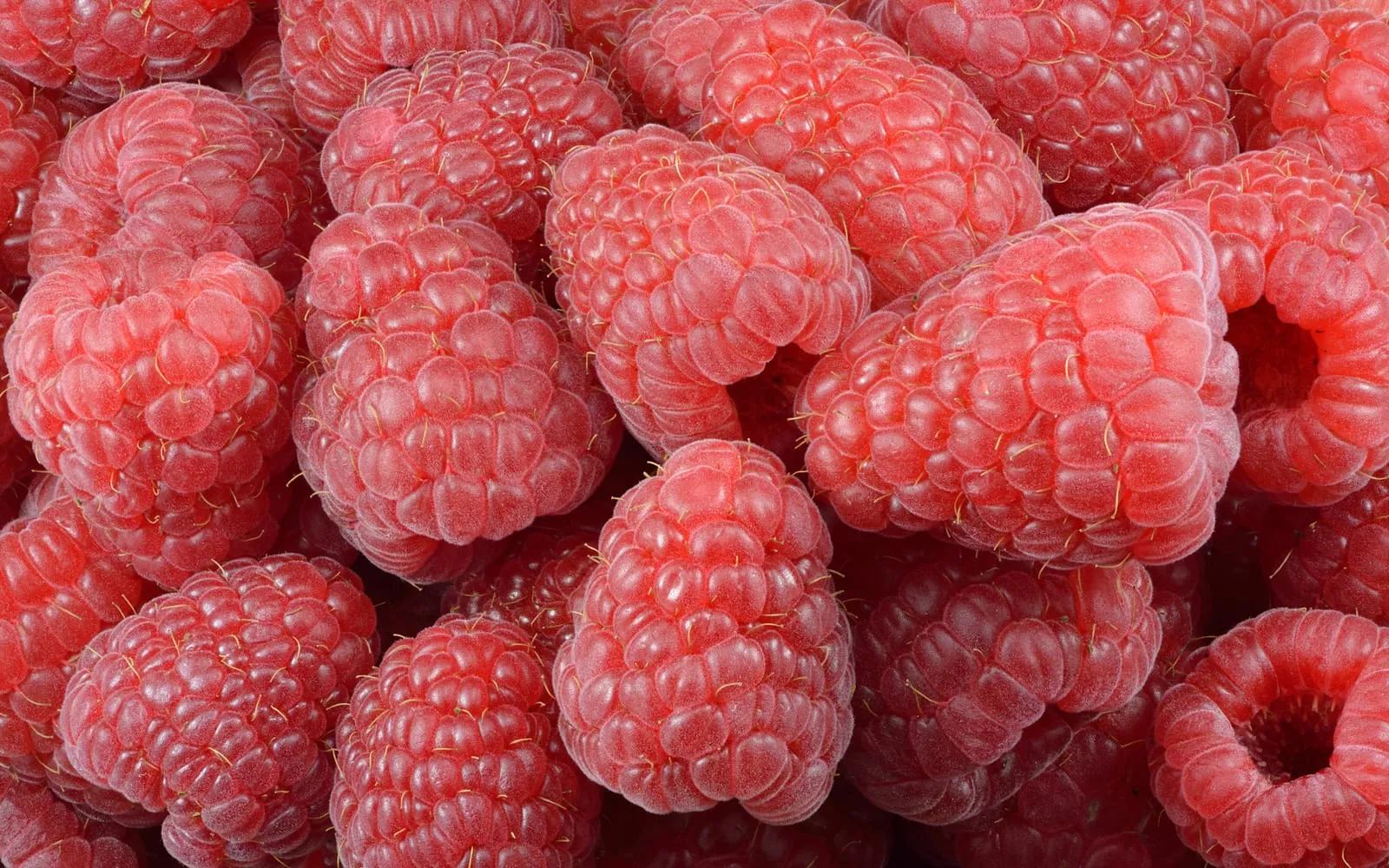
Fruit is an aggregate of small drupelets that pulls free from a white core, leaving the characteristic hollow centre. Blackberries keep the core, which is the botanical difference between them.
Yellow and purple varieties exist and are grown identically.
Where it is from
Europe and northern Asia, including Britain, where wild raspberries grow in woodland clearings, on heaths and along the edges of upland woods.
The species name idaeus refers to Mount Ida in Turkey, where classical writers placed the plant, though its natural range is far wider and considerably further north.
Its habitat is the key to cultivation. Raspberries are plants of woodland clearings, growing in cool moist conditions with leaf litter underfoot and their roots in the shade. That explains the preference for a cool climate, the tolerance of light shade, the need for organic matter, and the dislike of dry chalky soil.
Scotland grows better raspberries than southern England for exactly this reason.
The plant colonises ground after disturbance and then spreads by suckering, which is why a garden row wanders and needs containing.
How it grows
Plant bare-root canes from November to March, 40 cm apart in rows 1.8 m apart, with the roots 5 to 8 cm deep. Cut every newly planted cane down to 25 cm after planting, and do not let them fruit in the first year.
Summer-fruiting varieties need a post and wire support. Two posts with three horizontal wires at 75 cm, 105 cm and 150 cm is the standard.
Autumn-fruiting varieties often manage without support, and a single wire or a row of string keeps them tidy.
New canes emerge from the base each spring. Thin them to the strongest six or eight per plant and remove the rest, including any that stray into the path.
Prune summer types immediately after fruiting in late summer, cutting the canes that carried fruit right down to the ground and tying in the new green ones.
Prune autumn types by cutting every cane to ground level in February.
Suckers appear well away from the row and should be dug or pulled out unless you want the row to widen.
Through the seasons
Winter is planting and pruning. Plant bare-root canes, cut autumn varieties to the ground in February, and mulch the row.
Spring brings new canes. Thin them, tie in summer varieties as they grow, and feed in March.
Summer is the main crop for summer varieties, from late June. Water steadily, net against birds, and cut out the fruited canes as soon as picking ends.
Autumn carries the second crop, from August until frost. Autumn raspberries often produce the better fruit and almost always the cleaner fruit.
Care difficulty
Easy, and among the highest-value crops for the space in a temperate garden.
The pruning distinction is the only conceptual hurdle, and getting it wrong costs a year rather than the plants.
Raspberry beetle is the main pest and it affects summer varieties far more than autumn ones, since the beetle has finished flying by August.
Birds take the crop unless it is netted.
Spreading is the long-term nuisance. A raspberry row expands by suckers and needs edges maintained.
The plants themselves are hardy, long-lived and untroubled by cold.
Watering
Water weekly through summer, particularly while the fruit is swelling. Raspberry roots are shallow and dry out quickly.
Mulch thickly with well-rotted manure or compost each spring, which conserves moisture, feeds the row and suppresses weeds.
Never let the ground dry out completely in June and July, since that is when fruit size is decided.
Avoid overhead watering in humid weather, which encourages grey mould on the fruit.
Do not hoe deeply around the canes. The roots run just below the surface and are easily damaged.
Warning signs, diseases and pests
Raspberry beetle is the grub inside the fruit. The adult lays in the flowers and the larvae feed at the stalk end, leaving a dried brown patch and a small white maggot. Autumn-fruiting varieties largely escape it because they flower after the beetle has finished. Pheromone traps help, and thorough picking with prompt removal of infested fruit reduces next year’s numbers.
Cane blight causes canes to die suddenly in summer, with dark brittle patches at the base that snap easily. Cut affected canes right out below soil level and burn them. It enters through wounds, so avoid damaging the base when hoeing.
Spur blight shows as purple blotches around the buds on new canes, which then fail to produce fruiting side shoots the following year. Cut out affected canes and improve airflow by thinning.
Grey mould rots the fruit in wet weather. Pick regularly and remove affected berries.
Yellowing leaves with green veins usually means iron deficiency on chalky soil. Raspberries dislike lime, and a mulch of ericaceous compost or a chelated iron feed helps.
Canes appearing metres from the row are suckers. Dig them out.
Very few new canes each spring means an old exhausted stool or a starved row.
Japanese beetle skeletonises leaves and eats into the ripening fruit, feeding in visible groups. It is well established across most of the United States, reached northern Italy in 2014 and southern Switzerland since, and the rest of Europe treats a sighting as notifiable.
Brown marmorated stink bug punctures the ripening fruit and is already established across North America and a growing list of European countries.
Spotted wing drosophila lays eggs in fruit while it is still ripening, and this is one of the crops it damages worst, since raspberry’s soft skin offers little resistance. It has been established across North America and Europe since 2008 and remains a quarantine priority in Australia and New Zealand. Pick promptly and cover the crop with fine mesh where it occurs.
Growing environment
Full sun for the heaviest crop, and raspberries tolerate light shade better than almost any other fruit, which makes them useful on a north-facing plot.
Moisture-retentive, slightly acid soil rich in organic matter. They dislike chalk and thin dry ground.
Good drainage matters despite the demand for moisture, since waterlogged roots bring cane blight and root rot.
A post and wire support for summer varieties, put in before planting.
Space rows 1.8 m apart so that you can pick from both sides and air moves through.
Shelter from strong wind, which damages the canes and knocks the fruit.
Netting against birds is effectively compulsory from June.
Feeding
Mulch generously with well-rotted manure or garden compost every spring. This is the main feed and it does most of the work.
Apply sulphate of potash in late winter to support fruiting.
A general-purpose fertiliser in March suits a row on poor soil.
Avoid lime and mushroom compost, both of which raise the pH and cause the iron deficiency that yellows the leaves.
Avoid heavy nitrogen, which produces tall soft canes that fall over and fruit poorly.
Troubleshooting
Which canes do I cut? On autumn varieties, cut every cane to the ground in February. On summer varieties, cut out the canes that have just fruited as soon as picking ends, and keep the new green ones for next year.
Small white maggots at the stalk end of the fruit. Raspberry beetle. Grow autumn-fruiting varieties, which largely escape it, and use pheromone traps.
Canes died suddenly in summer with dark brittle bases. Cane blight. Cut them out below ground level and burn them.
Yellow leaves with green veins. Iron deficiency, usually on chalky soil. Mulch with ericaceous compost and apply chelated iron.
Canes coming up all over the garden. Suckering, which is normal. Dig them out and maintain a defined edge to the row.
Hardly any fruit. Either the wrong canes were pruned out, the row is starved, or a summer variety lost its crop to raspberry beetle.
Do I need a support? Summer varieties yes, a post and wire system. Autumn varieties usually manage without one in a sheltered spot.
Can I get two crops from autumn raspberries? Leaving the canes unpruned gives a small early summer crop on the old wood and a later autumn one. It usually produces worse fruit overall than cutting everything down.
Raspberry problem guides
Not sure what is wrong? See the common vegetable pests guide.
- Raspberry beetle, which puts the grub in the fruit
- Grey mould in wet summers
- Japanese beetle across the US, newly arrived in northern Italy and Switzerland
- Brown marmorated stink bug, established across North America and Europe
- Spotted wing drosophila, established across North America and Europe since 2008