
Edible
Lesser Galangal
Alpinia officinarum
Also known as Chinese ginger, Sand ginger, Gao liang jiang
How to grow lesser galangal, Alpinia officinarum. The smaller, hotter galangal of Chinese cooking, how it differs from the greater, and growing the rhizome under glass.
At a glance
- Difficulty
- Moderate
- Water
- Two or three times a week in growth, sparingly in winter
- Light
- Bright light with shade from the hottest sun
- Temperature
- Growing above 18 deg C. Damaged below 10 deg C
- Humidity
- Moderate to high
- Hardiness
- USDA 9-11, RHS H1c, hardy to 10 C
- Type
- Tender evergreen perennial
- Height
- 60-120 cm
- Native to
- southern China
- Best month
- April and October in the Northern Hemisphere, October and April in the Southern Hemisphere
Southern China and Vietnam, and hardier than greater galangal. The rhizome is smaller, redder and considerably hotter.
Hardiness zones describe winter cold alone. Summer heat, humidity, rainfall and the length of the growing season decide as much, so treat the range as the outer limit rather than as a recommendation.
Every month named in this guide is for the temperate Northern Hemisphere. If you garden in the Southern Hemisphere, shift each one by six months, so April becomes October. Closer to the equator the wet and dry seasons matter more than the calendar, and the shift stops being a useful guide.
Not known to be toxic
- Safe to eat
- The rhizome
Non-toxic. Lesser galangal is a culinary spice and a traditional Chinese medicine with a long record of use, and it appears on neither the RHS list of potentially harmful garden plants nor the ASPCA list. The rhizome is the part used, and it is hot and pungent enough that quantity limits itself. Medicinal preparations are more concentrated than culinary use, and the usual advice about not improvising with them applies. The essential oil is a concentrated product rather than a strong version of the spice.
Sources: RHS potentially harmful garden plants, ASPCA toxic and non-toxic plants
About
Lesser galangal is the hotter one. It is a smaller plant than greater galangal with a smaller, redder, far more pungent rhizome, and it belongs to Chinese cooking rather than Thai. Guangdong cooking uses it with beef and in braises, and it goes into some Chinese medicinal preparations and into a number of spice blends.
It is also the galangal of medieval Europe. The galingale that appears in English medieval recipes and in Chaucer is more often this species than the greater one, and it was valued as a warming spice and a medicine.
Growing it is much like growing greater galangal, with a smaller and more manageable plant. It is evergreen, so it wants a frost-free winter rather than a dry dormancy.
Appearance and character
An upright clump of slender leafy stems, 60 cm to 1.2 m, from a creeping rhizome.
Leaves are narrow and lance-shaped, 20 to 30 cm, mid green and smooth, in two ranks up the stem. They are noticeably narrower than greater galangal’s.
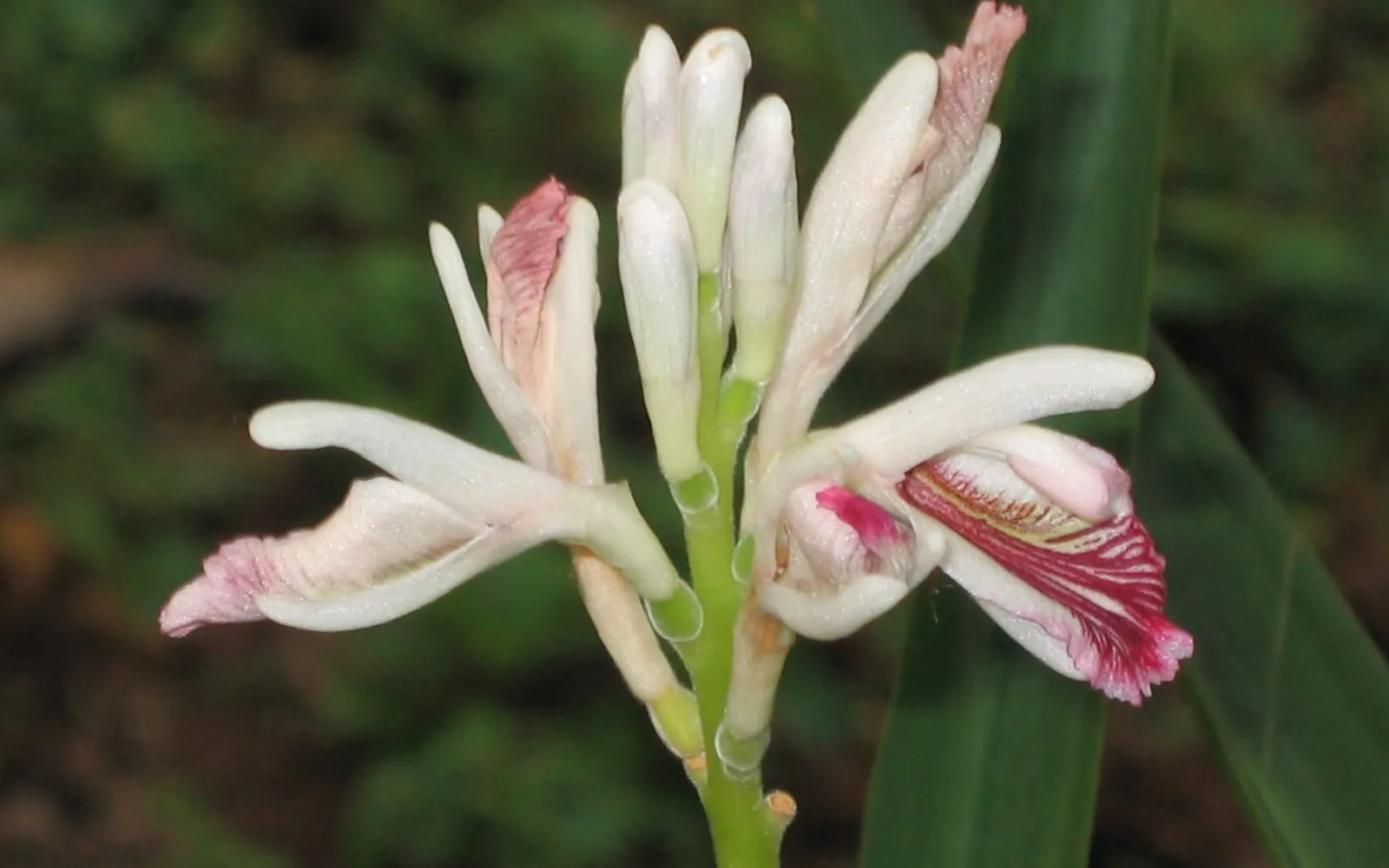
Flowers appear on short spikes at the top of the stems, white with red streaks on the lip.
The rhizome is smaller than greater galangal’s, reddish-brown outside, with close-set rings, and much harder and more fibrous.
The scent is sharper and hotter than greater galangal, with a pronounced peppery bite and a resinous note.
The whole plant is smaller and tidier, which makes it more manageable under glass.
Where it is from
Lesser galangal is native to southern China, particularly Guangdong and Hainan, and it is cultivated there and in south-east Asia.
Chinese use is both culinary and medicinal. It appears in the classical Chinese pharmacopoeia as gao liang jiang, and it is used in braises and with beef in Cantonese cooking.
It reached Europe through Arab traders and became a standard medieval spice. Galingale is named in English recipe collections from the fourteenth century, and Chaucer’s Cook is described as knowing how to use it.
European medicine used it into the early modern period, and it kept a place in some liqueurs and bitters.
It is still grown commercially in southern China, largely for the domestic market and for the traditional medicine trade rather than for export as a culinary spice.
How it grows
Buy a rhizome from a Chinese grocer or a specialist supplier in spring. It is harder to find than greater galangal.
Cut into sections with two or three buds each and let the cuts dry for a day.
Plant 5 cm deep in rich free-draining compost, in a wide pot of at least 25 cm.
Start it warm, above 22 deg C. Sprouting takes four to eight weeks.
Grow it under glass in bright light with shade from the hottest sun.
Water and feed generously while growing.
Keep it above 10 deg C in winter, watering sparingly. It is evergreen and should not be dried out completely.
Harvest in autumn from the outside of the clump, replanting the rest.
Expect a worthwhile harvest in the second or third year, since the rhizome is small and slow to bulk.
Through the seasons
Winter is survival under glass above 10 deg C, watered sparingly, with the leaves held rather than lost.
Spring brings new shoots. Divide, repot and start feeding.
Early summer is when growth accelerates.
Midsummer is peak growth.
Late summer is when the rhizome thickens.
Autumn is harvest and the point to reduce watering for winter.
Care difficulty
Moderate, and the same job as greater galangal on a smaller scale.
Warmth is the requirement. Minimum 10 deg C in winter and above 22 deg C for growth.
The evergreen habit means it needs a frost-free space with light watering through winter rather than dry storage.
Overwatering a cool plant rots the rhizome, and drying it out entirely also damages it, so the winter watering needs judgement.
Sprouting is slow, taking four to eight weeks.
Sourcing the rhizome is the practical difficulty. It is far less widely sold than greater galangal and often has to come from a specialist.
Watering
Water sparingly until shoots appear.
Water generously once growing, two or three times a week and daily in a hot greenhouse.
Keep the compost evenly damp through the growing season.
Reduce watering from September.
Water sparingly through winter without letting the rhizome dry out completely.
Use tepid water in winter.
Warning signs, diseases and pests
Soft rot at the rhizome comes from cold wet compost in winter and is the main loss.
A rhizome that never sprouts was too cold, too wet, or not viable.
Spider mite produces fine stippling and webbing in dry heated air.
Scale insects sit on the leaf undersides as brown limpets.
Mealybug hides at the shoot bases.
Brown leaf tips mean dry air.
Yellowing and collapse mean cold.
Small thin rhizomes mean too little heat or food, or lifting too early. This species bulks slowly.
Growing environment
A heated greenhouse or conservatory. No outdoor option outside the tropics.
Minimum 10 deg C in winter and above 22 deg C for growth.
Bright light with shade from the hottest sun.
Rich, moisture-retentive, free-draining compost in a wide pot.
pH from 5.5 to 7.
Moderate to high humidity. The plant is smaller than greater galangal and easier to fit into a conservatory.
Feeding
Feed a balanced liquid feed fortnightly from May to August.
Potash in late summer helps the rhizome bulk up.
Stop feeding in September and give nothing through winter.
Repot into fresh compost each spring, dividing at the same time.
Rich compost matters more than fertiliser for a rhizome crop.
Troubleshooting
How is it different from greater galangal? Smaller plant, smaller redder rhizome, and much hotter and more pungent. Greater galangal belongs to Thai cooking; this one belongs to Chinese cooking and to the herbal trade.
Where do I buy it? A Chinese grocer or a specialist supplier. It is far less widely sold than greater galangal.
Nothing sprouted for six weeks. Normal. Keep the compost barely damp and the temperature above 22 deg C.
Should I store it dry over winter? No. It is evergreen, so keep it frost free and slightly damp rather than drying it out.
Is this the galingale of medieval recipes? Usually, yes. Medieval English galingale is more often this species than the greater one.
The rhizome is tiny after a season. It bulks slowly. Give it two or three years before expecting a useful harvest.
How do I use it? Sliced thinly and infused, or ground. It is hot enough that small amounts do the work.