
Pest
Raspberry beetle
Byturus tomentosus
Also called Raspberry fruitworm, Loganberry beetle
Raspberry beetle leaves a small brown grub at the stalk end of the fruit and a dried, hardened feeding patch. Autumn-fruiting varieties usually escape it, while summer varieties need monitoring around flowering.
At a glance
- Type
- Pest
- Cause
- Insect
- Severity
- Weakens the plant
- Affects
- Herbs and edibles
- Active
- May to August
- Established in
- Europe and Asia
What you are seeing
- A small cream or pale brown grub in the hollow of a picked raspberry
- A dried, hardened, brown patch at the stalk end of the fruit
- Fruit that will not part cleanly from the plug when picked
- Small brown beetles about 4 mm long inside the open flowers in late spring
- Ripe fruit shrivelled on one side while the rest of it looks sound
- Worst on summer raspberries, loganberries and early blackberries
Before you treat anything
The grubs are harmless if eaten. Salt water brings them out of the fruit for anyone who would rather they did not reach the bowl.
What you are looking at
You pick a raspberry and the stalk end has a dry brown patch, hard and shrunken, where the rest of the berry is soft and red. Tip the fruit into a bowl and a pale cream grub a few millimetres long, with a darker head and brown plates along its back, works its way out of the hollow.
On the plant the damage shows as fruit that will not come away cleanly. A sound raspberry slides off its plug; one that has been fed on at that point tears.
Blackberries and loganberries get the same beetle and show it as a shrivelled, hardened section of the fruit while the drupelets around it ripen normally.
Where it comes from
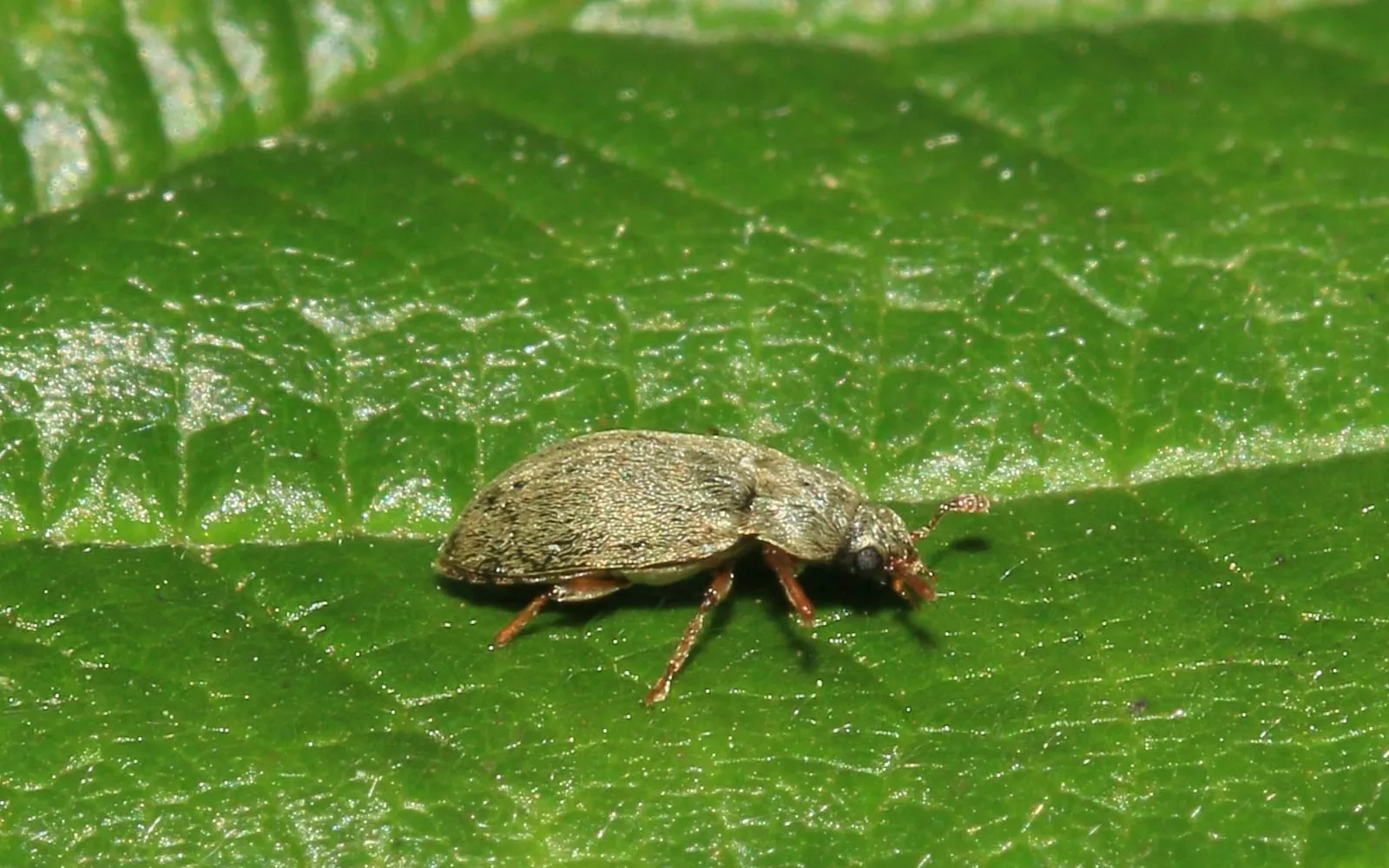
The adult is a small oval beetle about 4 mm long, greyish-brown and covered in fine hairs. It emerges from the soil in late April and May, feeds first on the flowers of nearby trees and shrubs, and then moves onto raspberry and blackberry flowers as they open.
Inside the open flower it feeds on the anthers and lays eggs. The larva hatches onto the developing fruit and feeds at the plug end, which is why the damage is always at the top of the berry and never in the middle.
When the fruit ripens or falls, the larva drops to the ground, burrows into the top few centimetres of soil, and pupates there over the winter. The next generation comes up through that same soil the following spring, which is why the problem stays in one row of canes year after year and why forking the ground underneath in winter is worth doing.
Why autumn raspberries escape
The beetle’s egg-laying runs from late May to about the middle of July, tied to when the flowers are open.
Summer-fruiting raspberries flower squarely inside that window. Autumn-fruiting varieties flower from midsummer onwards, after most of the beetles have finished, and the fruit forms when the adults have gone. The result is a crop that is usually clean without any intervention at all.
Anyone who has fought this pest for several seasons on a summer row should treat that as the recommendation. Autumn varieties also crop when there is less other fruit about, they are cut to the ground in February rather than needing the old canes untangled, and they need no support in a sheltered spot.
Early blackberries sit in the same risky window and later ones largely miss it, so the same logic applies there.
What to do about it
Plant autumn-fruiting varieties, and treat this as the fix rather than as a suggestion.
On summer canes, hang white sticky traps with a flower lure at the top of the row in early May.
Fork the soil under the row shallowly between November and February so that birds and frost reach the pupae.
Pick every two or three days and take off the overripe and mummified fruit as well as the good.
Tap the canes over a pale tray during flowering and collect the beetles that drop.
Soak fruit destined for jam or the freezer in cold salted water for twenty minutes, and stop worrying about it.
What it gets mistaken for
Grey mould covers the whole berry in a soft grey felt and spreads to the fruit touching it. Beetle damage is dry, firm and confined to the stalk end.
Capsid bug feeds on the flower earlier and leaves fruit hard and lopsided with nothing inside it.
Raspberry cane midge produces splits and darkened patches on the canes near ground level rather than damage to the fruit.
Earwigs found sheltering inside ripe raspberries during the day are eating very little and are worth leaving alone, since they take aphids off the same canes at night.
Birds strip whole fruit and leave the plug bare on the cane. The beetle leaves the fruit in place with a patch spoiled.
Not established in Australia and New Zealand
Do not prune, spray or otherwise treat a suspected case. Doing so risks spreading an organism the country has kept out, and it disturbs the evidence needed to identify it. Photograph what you can see, leave the plant alone, and contact your national or state plant health authority. The control advice further down this page is written for regions where this problem is already established.
Byturus tomentosus is European and western Asian, and EPPO records it from Ireland east to the Russian Far East with nothing at all in the Americas. North America has a close relative, Byturus unicolor, which behaves much the same way in a raspberry, so a North American grower should confirm which insect they have before following advice written for the European one. North America is left off both lists here for that reason, since the handful of records claiming the European beetle are too few, and too easily confused with its cousin, to call either way. Australia and New Zealand have neither species.
What to do, in order
The steps below apply where this problem is already established.
Start here
Prevention, and the changes that stop the problem returning. Most of these pages should end at this tier.
- Grow autumn-fruiting raspberries
- This is the whole answer for most gardens. The beetle lays into flowers from late May to July, and autumn varieties such as 'Autumn Bliss', 'Polka' and 'Joan J' flower after that window has closed. Growers who switch stop finding grubs, without traps, cultivation or anything else. Where both are grown, expect the summer canes to carry the problem and the autumn canes to be clean.
- Cut autumn canes to the ground in winter and keep the two types apart
- Autumn raspberries fruit on new canes and are cut down completely in February, which removes any overwintering stage carried on the wood. Keeping a summer row well away from an autumn row also stops the beetle drifting from one to the other in June.
- Pick every ripe fruit, and pick often
- Overripe and mummified berries left on the cane hold grubs that drop into the soil beneath and become next year's beetles. Picking every two or three days through the season removes them along with the crop.
- Accept the grub where the crop is for jam
- A tub of raspberries stood in cold salty water for twenty minutes brings the grubs out, and they float off. For jam, cordial or the freezer this is the entire solution and no other control is needed.
Then reach for a barrier
Netting, hand removal and water. Nothing here harms anything except the target.
- Fork over the soil under the canes in winter
- The larvae drop from the fruit into the top few centimetres of soil in late summer and pupate there. Light forking or hoeing beneath the row between November and February turns them up for robins and blackbirds and exposes them to frost. Keep it shallow, because raspberry roots run near the surface.
- Hang a white sticky trap with a flower lure in late spring
- Traps sold for this pest use a white cross-vane panel and a lure that mimics the scent of the flowers. Hang them at the top of the canes in early May, one for every few metres of row. They catch enough beetles to reduce damage on a garden row and they also tell you when the beetles have arrived.
- Shake the canes over a tray at flowering
- The adults sit inside the open flowers and drop when disturbed. Holding a light-coloured tray under a section of cane and tapping it sharply brings them down where they can be seen and removed. Ten minutes on a warm still afternoon in June accounts for a surprising number.
Plants affected
Guides that name it among the problems to watch for. The list is the plants it is characteristic of rather than everything it will feed on.