
Edible
Pacific Blackberry
Rubus ursinus
Also known as Trailing Blackberry, California Blackberry, Dewberry
How to grow Pacific blackberry, Rubus ursinus. Why a male plant flowers but never fruits, the trailing canes that root wherever they touch soil, and the intense flavour that breeders keep borrowing for cultivated blackberries.
At a glance
- Difficulty
- Moderate
- Water
- Regular water through spring and summer, especially while fruiting
- Light
- Full sun to part shade; fruits best with several hours of direct sun
- Temperature
- Fully hardy; prefers a mild, damp maritime climate
- Hardiness
- USDA 6-9, RHS H6, hardy to -20 C
- Type
- Deciduous trailing bramble
- Height
- Canes trail 3-6 m along the ground or a support
- Native to
- western North America
A native of the cool, wet Pacific coast rather than the continental interior, and it takes a mild, damp winter and a cool summer more comfortably than a hot, dry one. Its cold tolerance is real, but a long, humid, sweltering summer suits it far less than the coastal climate it evolved in, and fruit quality suffers where nights stay hot through ripening.
Hardiness zones describe winter cold alone. Summer heat, humidity, rainfall and the length of the growing season decide as much, so treat the range as the outer limit rather than as a recommendation.
Not known to be toxic
- Safe to eat
- The ripe fruit
Pacific blackberry is a genuine food plant, the wild parent behind many cultivated trailing blackberry varieties, and its fruit carries no documented toxicity. Neither the RHS harmful plants index nor the ASPCA toxic and non-toxic plants list carries an entry for Rubus ursinus specifically, and the wider bramble genus is not associated with poisoning in people or pets. The practical hazard is entirely mechanical: the trailing canes are armed with numerous small, hooked thorns that catch skin and clothing readily, and a patch left to sprawl unchecked becomes an effective, if unintentional, barrier. Keep that in mind when siting it near a path used by children or pets, since the injury this plant causes is a scratch rather than anything chemical.
Sources: RHS potentially harmful garden plants, ASPCA toxic and non-toxic plants
About
Pacific blackberry is the wild trailing bramble of the North American west coast, low-growing and thorny, producing small, intensely sweet fruit prized above many cultivated blackberries for its flavour. Unlike the upright canes of a garden blackberry, its stems trail along the ground or scramble over whatever they meet, so growing it well in a garden usually means training the canes onto a wire or trellis rather than letting them sprawl. It is also dioecious in most wild populations, meaning individual plants carry either male or female flowers rather than both, which shapes how a garden planting needs to be set up for fruit.
Appearance and character
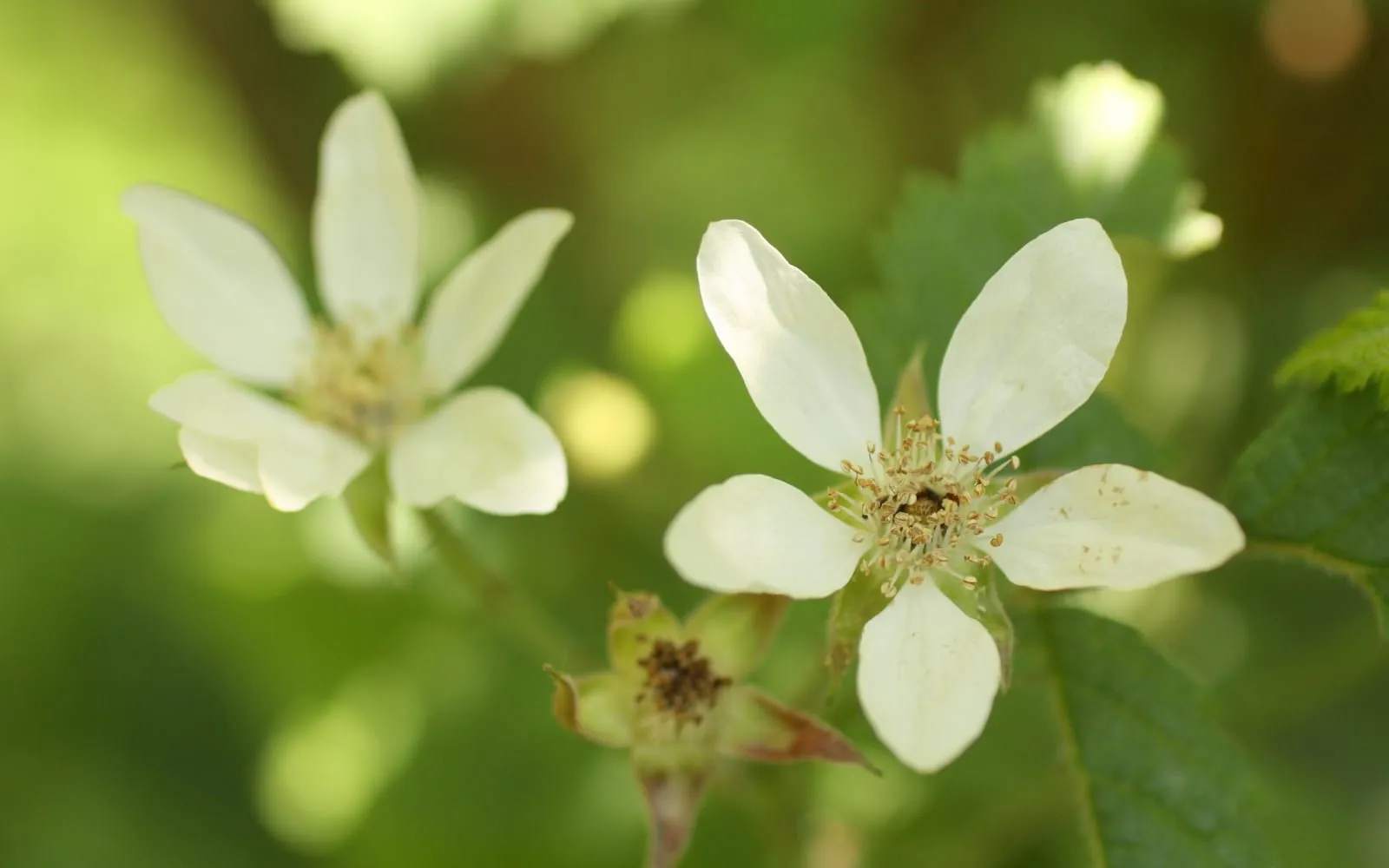
Canes are slender, wiry and covered in small, hooked prickles, trailing along the ground unless trained upward, and rooting wherever a cane tip touches damp soil. Leaves are compound, usually in threes, matte green above and paler beneath, turning shades of red and purple in a cool autumn. Flowers are white, five-petalled and produced in small clusters in spring; because most wild plants are dioecious, a male plant produces pollen but no fruit, while a female plant needs a male nearby to set fruit at all. The fruit itself is smaller than most cultivated blackberries, deep purple-black at full ripeness, with a rich, complex sweetness that plant breeders have used for generations to improve the flavour of larger, more productive garden varieties.
Where it is from
Rubus ursinus is native along the Pacific coast of North America, from British Columbia south through California, typically found in open woodland, clearings and disturbed ground within reach of coastal fog and rainfall. That maritime origin explains its preference for a mild, damp climate over a hot, dry one, and its native range overlaps closely with where wild blackberry foraging remains a genuine seasonal tradition on the west coast today. Growers have used it since the early twentieth century as a parent species in blackberry and loganberry breeding programmes, crossed with cultivated raspberries and blackberries to combine its flavour with the larger fruit size and easier upright habit of garden varieties.
How it grows
Plant in moist, well-drained soil rich in organic matter, in full sun to part shade; a position with some afternoon shade suits it in a hot inland climate, while full sun works well nearer the coast. Give it a wire or trellis to train the trailing canes onto, since left on the ground they root wherever they touch soil and spread further than most gardens can comfortably absorb. Where fruit is the goal, plant at least one male and one female specimen if propagating from wild, dioecious stock, or choose a named cultivar bred for self-fertile flowers if a single plant is preferred. Cut out canes that have fruited once harvest finishes, since this species fruits on second-year wood and spent canes contribute nothing further.
Through the seasons
Spring brings new cane growth and the small white flowers that, on a pollinated female plant, set the coming crop.
Summer is fruit ripening, usually through mid to late summer depending on climate.
Autumn brings good leaf colour on the canes and is a suitable time to plant new stock.
Winter is dormancy. Cut out old, spent canes that fruited the previous summer, making room for the new growth that will fruit next year.
Care difficulty
Moderate. The plant itself is tough and grows readily in a suitable climate, but its trailing, thorny habit needs active management to stop it sprawling well beyond where it was planted. Training canes onto a support, cutting out spent wood each winter and controlling how far it roots at each cane tip are the main recurring tasks, all straightforward but easy to fall behind on in a single busy season.
Watering
Water regularly through spring and summer, keeping the soil consistently moist rather than letting it dry out fully between waterings, particularly while the fruit is swelling. A mulch around the base helps retain moisture and keeps the shallow root system cooler through a warm summer.
Warning signs, diseases and pests
Spotted wing drosophila lays eggs directly into ripening, still-firm fruit, unlike most fruit flies that need overripe or damaged fruit to breed in, and affected berries collapse and turn soft within days of the eggs hatching. Picking fruit as soon as it ripens and removing any fallen or overripe berries promptly reduces the population available to breed.
Grey mould rots ripening berries in damp weather, showing as a soft brown patch that develops a fuzzy grey coating; picking fruit promptly and improving air movement through the canes by thinning crowded growth reduces how often it takes hold.
Aphids cluster on new cane tips and the underside of young leaves, distorting growth and fouling it with honeydew; a strong jet of water or an insecticidal soap controls most infestations.
Rust shows as bright orange pustules on the underside of the leaves in a wet spring, weakening the plant over successive seasons if left unchecked; removing and destroying affected leaves and improving air circulation around the canes helps keep it in check.
Growing environment
Full sun brings the best fruit flavour in a cool coastal climate, while some afternoon shade helps where summers run hot. Moist, well-drained soil rich in organic matter suits it best, and a mulch helps maintain that moisture through a dry spell. Good air movement around the canes reduces the humidity that grey mould and rust both depend on, so avoid crowding plants too tightly together.
Feeding
Apply a balanced fertiliser in early spring as growth resumes, with a lighter second feed once fruiting begins to support the developing crop. Avoid heavy nitrogen feeding once flowering starts, since it pushes leafy cane growth at some cost to fruit quality and flavour.
Troubleshooting
My plant flowers well but never sets any fruit. Most wild Pacific blackberry plants are dioecious, meaning an individual carries either male or female flowers, not both. A male plant, common where seed-grown stock was not identified by sex, produces pollen and flowers but no fruit at all; check for a compatible plant nearby, or switch to a self-fertile named cultivar.
The fruit collapsed and turned soft just before I could pick it. Spotted wing drosophila is the likely cause, especially if the fruit still looked otherwise ripe and firm shortly before. Pick fruit as soon as it colours fully rather than leaving it to over-ripen on the cane, and remove any affected or fallen berries promptly through the season.
The canes have rooted and spread well beyond where I planted them. This is normal behaviour for a trailing bramble whose cane tips root wherever they touch damp soil. Train canes onto a support to keep them off the ground, and cut off any tip that has rooted where it is not wanted before it establishes further.
Should I cut all the canes back each winter? Only the canes that fruited the previous summer. This species fruits on second-year wood, so cutting out spent canes after harvest and leaving the current season’s new growth intact is what keeps next year’s crop coming.
Why does the fruit taste better than a shop-bought blackberry? Flavour intensity is one of the traits this wild species is best known for, and it is a large part of why breeders have used it repeatedly to improve cultivated blackberry varieties over the past century.
Pacific Blackberry problem guides
Not sure what is wrong? See the common vegetable pests guide.