
Pest
Spotted wing drosophila
Drosophila suzukii
Also called SWD, Cherry vinegar fly
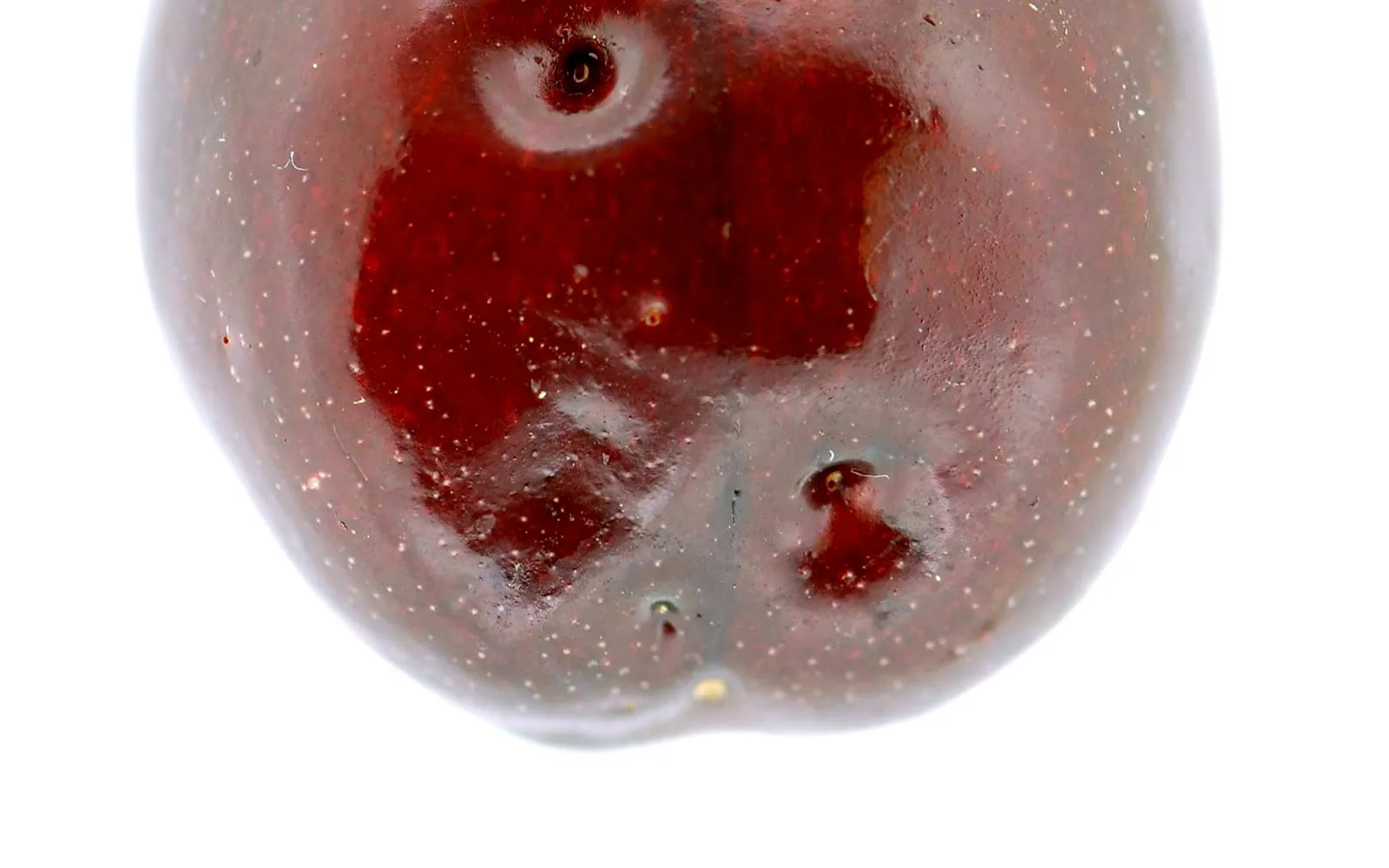
Soft fruit that collapses into a bruised, weeping mush within a day of picking, because this fruit fly lays eggs in ripening fruit while it is still on the plant rather than waiting for it to spoil. Established across North America and Europe since 2008, still a quarantine pest in Australia and New Zealand, and now one of the costliest soft fruit pests worldwide.
At a glance
- Type
- Pest
- Cause
- Insect
- Severity
- Destroys the crop or display
- Affects
- Herbs and edibles
- Active
- June to September
- Established in
- North America, Europe, Asia and Central and South America
What you are seeing
- Ripe or nearly ripe fruit collapsing into a soft, bruised, weeping mass within a day of otherwise looking perfect
- Tiny white maggots, up to 3 to 4 mm, inside fruit that shows no obvious external hole
- A faint pinprick scar or dimple on the fruit skin where an egg was laid, easy to miss before the fruit collapses
- Fruit fermenting and souring rapidly after harvest even when refrigerated
- Damage concentrated on fruit still on the plant and ripening, rather than windfalls or fruit already overripe
- Small flies about 2 to 3 mm long hovering around ripening fruit, the males with a single dark spot near the tip of each wing
Before you treat anything
Fruit with maggots inside is unpleasant rather than dangerous to eat, but most people discard it on sight once they know what they are looking at.
What you are looking at
Fruit that looked fine yesterday and has collapsed into a soft, bruised, weeping mess today. Cut it open, or watch it a little longer, and tiny white maggots up to 3 or 4 mm long turn up inside, with no obvious entry hole visible from outside. The only external clue, easy to miss beforehand, is a faint pinprick scar or dimple on the skin where a female laid an egg through the fruit’s own surface.
This species behaves differently from most fruit flies in a way that makes it far more damaging: rather than waiting for fruit to overripe or spoil before laying eggs, the female has a serrated egg-laying organ that cuts through the skin of fruit that is still firm and ripening, on the plant. That single trait is why it does so much more harm than the fruit flies gardeners are used to finding around a compost bin.
Where it has spread
Native to East Asia, this fly was detected almost simultaneously in California and in Italy, France and Spain in 2008, and has since become established across nearly every fruit-growing region of North America and Europe. It reached parts of South America not long after. Few modern pests have crossed two continents’ worth of temperate fruit-growing regions this completely this fast.
Australia and New Zealand remain free of it, and both governments treat keeping it that way as one of their highest agricultural biosecurity priorities, given the scale of loss recorded elsewhere: 2008 alone saw losses in the United States reaching 100 per cent of some cherry crops and 70 to 80 per cent of some berry crops in the areas first hit.
What to do about it
Cover the crop with fine exclusion netting, roughly 1 mm mesh or finer, before fruit starts to colour, and keep it sealed at the edges through the picking season.
Pick every ripe fruit on schedule rather than leaving anything to over-ripen on the plant, and remove fallen or damaged fruit into a sealed bag rather than composting it.
Prune for an open, well-ventilated canopy, since this fly favours shaded, humid conditions inside a dense plant.
Set a vinegar-and-wine trap to monitor local activity, understanding that it warns rather than controls.
If maggots are suspected in harvested fruit, chilling or briefly freezing it kills eggs and stops development, which is a reasonable step for fruit already picked.
What it gets mistaken for
Grey mould grows visibly on the fruit surface and spreads from a wound or a dying flower; this pest’s damage starts inside the fruit with no fungal growth until the fruit has already collapsed and begun to rot on its own.
Raspberry beetle grubs sit at the stalk end of otherwise firm fruit and are brown rather than white. This fly’s maggots can be anywhere in fruit that is often already collapsing by the time it is noticed.
Not established in Australia and New Zealand
Do not prune, spray or otherwise treat a suspected case. Doing so risks spreading an organism the country has kept out, and it disturbs the evidence needed to identify it. Photograph what you can see, leave the plant alone, and contact your national or state plant health authority. The control advice further down this page is written for regions where this problem is already established.
Native to East Asia. Detected simultaneously in California and in Italy, France and Spain in 2008, and now established across nearly every fruit-growing region of North America and Europe, having crossed both continents within a few years of first arriving. It has also reached parts of South America. Australia and New Zealand remain free of it and both treat it as one of their highest-priority biosecurity threats, since either country's soft fruit and cherry industries would face losses on the scale seen elsewhere if it established.
What to do, in order
The steps below apply where this problem is already established.
Start here
Prevention, and the changes that stop the problem returning. Most of these pages should end at this tier.
- Pick fruit as soon as it ripens and pick clean
- Unlike most fruit flies, this species targets fruit that is still firm and ripening rather than waiting for it to spoil, so leaving ripe fruit on the plant even for a day or two gives it a longer window to lay eggs. Picking every ripe fruit on schedule, including anything too damaged to eat, removes the material the next generation would develop in.
- Remove and destroy fallen and overripe fruit promptly
- Dropped and overripe fruit left on the ground or on the plant is where populations build between crops. Collecting it into a sealed bag rather than composting it, at least through the vulnerable weeks of ripening, denies the fly a place to breed unchecked.
- Prune for an open canopy and good air movement
- This fly prefers cooler, shaded, humid conditions within the canopy. A well-ventilated, open plant with fruit exposed to sun and airflow is measurably less attractive to egg-laying females than a dense, shaded one.
Then reach for a barrier
Netting, hand removal and water. Nothing here harms anything except the target.
- Cover the crop with fine exclusion netting
- Mesh fine enough to exclude a fly this small, roughly 1 mm or less, put up before fruit starts to colour and sealed at the edges, prevents egg-laying almost entirely. This is the most reliable physical control available and is increasingly standard on commercial raspberry and blueberry plantings in infested regions.
- Trap adults with a vinegar or wine-and-vinegar bait
- A jar with a mix of apple cider vinegar and a little wine or dish soap, with small holes punched in the lid, catches adults and gives useful warning of when the fly is active locally, though trapping alone will not control a heavy population once fruit is ripening.
- Chill or freeze harvested fruit promptly if maggots are suspected
- Refrigerating fruit slows larval development without killing eggs already laid, so fruit intended for storage or sale from an infested planting is sometimes frozen briefly to kill any eggs present, which also works for home use before fruit goes into the freezer for later.
Then bring in the predators
Encourage what already lives in the garden, and buy predators in where the problem is under glass and nothing will arrive on its own.
- Support parasitic wasps where they are established
- Classical biological control is at an early stage and not yet a practical option for most growers, though it is the long-term direction research is heading in in regions where the fly is established.Several Asian parasitoid wasps that attack this fly in its native range are under research release in parts of North America and Europe; not available for a home gardener to buy or release.
Biological controls are live organisms and their sale and release are regulated country by country. An agent sold freely in one place may be unapproved in another, so buy from a licensed supplier where you live and never import or move one yourself.
Plants affected
Guides that name it among the problems to watch for. The list is the plants it is characteristic of rather than everything it will feed on.