
Disease
Ramorum disease
Phytophthora ramorum
Also called Sudden oak death, Ramorum blight, Ramorum dieback, Larch disease
Dark bleeding patches on a trunk, or blackened shoot tips on rhododendron and viburnum. It is notifiable in most countries that have it, so the first action is a report rather than a treatment.
At a glance
- Type
- Disease
- Cause
- Oomycete (water mould)
- Severity
- Can kill the plant
- Affects
- Garden plants
- Active
- March to November
- Established in
- Europe and North America
What you are seeing
- Dark reddish-brown or black bleeding patches on the trunk, weeping a sticky sap
- Bark pared back beneath a bleed showing dead orange-brown tissue with a dark line around it
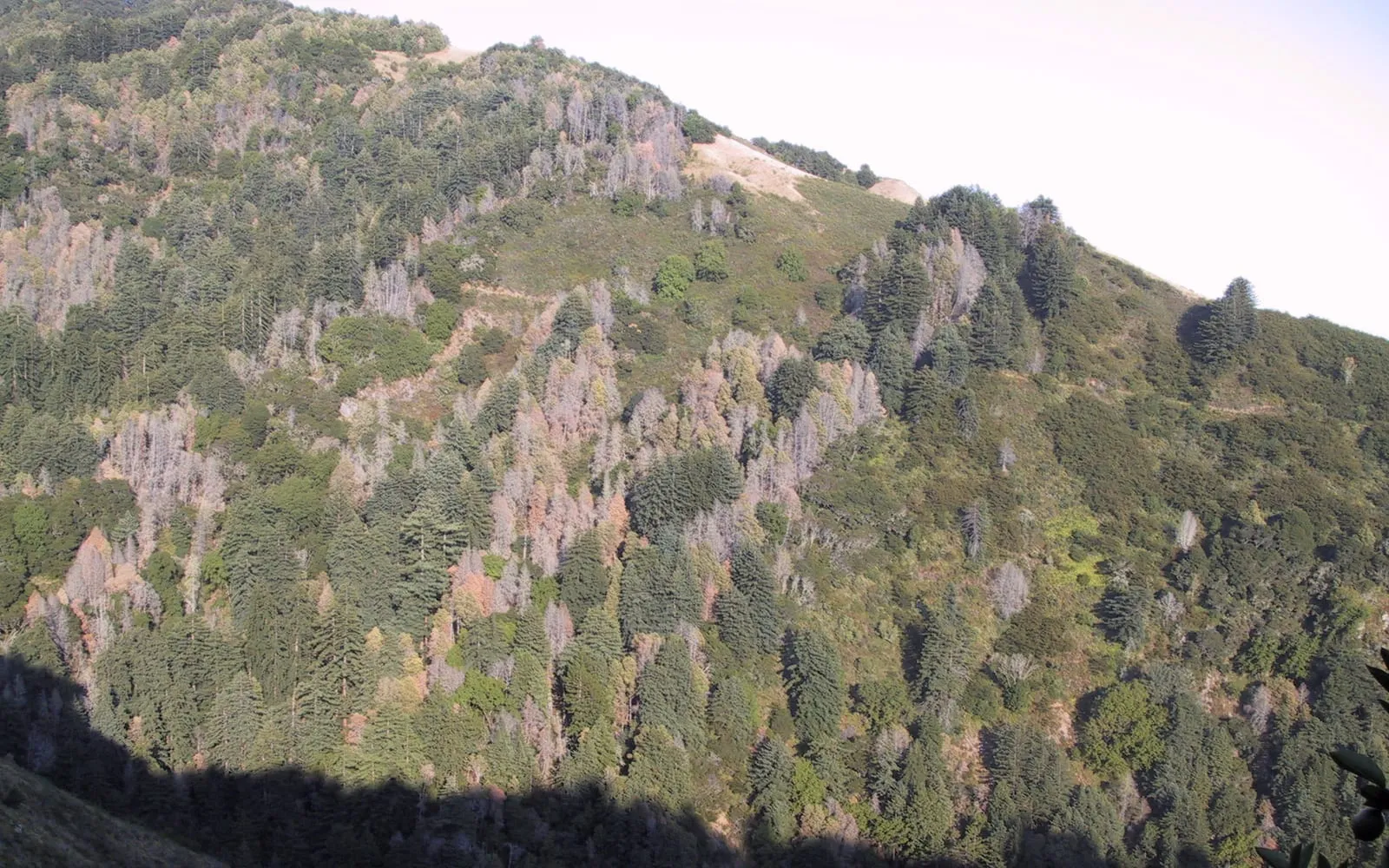
- Whole crowns of larch turning ginger out of season, often over a hillside
- Shoot tips of rhododendron blackening and dying back from the tip towards the stem
- Blackened leaf blotches spreading from the leaf tip or the petiole rather than in spots
- Viburnum tinus wilting and dying with a black lesion at the stem base
- Bilberry and other shrubs of the same family with blackened dying shoots
- Trees dying in numbers on the sheltered wet western side of a hill
Before you treat anything
Nothing here harms people or animals. The legal position is the hazard on this page: felling, pruning or moving material from a suspected case before a plant health authority has seen it can breach a statutory notice and can spread the disease into clean woodland.
Report it first
Ramorum disease is notifiable, and the duty is broader than it is for most regulated organisms. Countries that have kept it out require a report because it is exotic. Countries that already have it require a report as well, because the spread is being tracked and controlled rather than accepted.
In Britain a suspected case goes to the Forestry Commission or APHA, most easily through TreeAlert. In the United States it is federally regulated, with quarantine programmes in California and Oregon, and the report goes to the state department of agriculture. In Australia and New Zealand, which have never had it, use the exotic plant pest hotline.
Leave the plant standing while you wait. Do not prune it, do not fell it, and move nothing off the site. A statutory notice, if one follows, will say what may be moved and how.
What you are looking at
Two quite different pictures, depending on the plant.
On trees the sign is bleeding. Dark reddish-brown or black patches on the trunk weep a sticky sap that dries in streaks down the bark. Pare the bark away below a bleed and the inner tissue is dead and orange-brown, usually with a clear dark line marking the boundary of the lesion. On larch the effect shows at landscape scale, with whole crowns turning ginger out of season across a hillside.
On shrubs the sign is blight. Rhododendron shoots blacken and die back from the tip downwards. Leaf blotches spread in from the tip or down from the leaf stalk rather than appearing as discrete spots. Viburnum tinus wilts and dies with a black lesion at the stem base, and camellia, pieris and bilberry show blackened dying shoots.
Rhododendron is the engine
The name sudden oak death came from California, where tanoak and coast live oak died in large numbers from the late 1990s. The name is misleading in two ways. The death is not sudden, since a tree bleeds for years before it fails, and the oaks are not what keeps the epidemic running.
Oaks and larch are dead ends in one sense and catastrophic in another. They are killed, and they produce comparatively few spores from their trunk lesions.
The plants that produce spores in quantity are the leafy hosts. Rhododendron ponticum in particular is infected on its leaves, survives, and sheds spores in enormous numbers into rain and mist. Bay laurel plays the same role in California. A woodland with a rhododendron understorey is a machine for delivering inoculum to every trunk around it, which is why clearing rhododendron is the main control that land managers apply.
That also explains the geography. Spores need a film of water on the leaf and mild temperatures, so the disease concentrates in the wet mild west of Britain and in the coastal fog belt of California and Oregon, and does little in dry continental climates with hard winters.
How it travels
Between sites, on plants. The organism reached Europe and North America on ornamental nursery stock during the 1990s, and rhododendron, viburnum, camellia and pieris are the plants it moves on. Every long jump it has made has been in someone’s van.
Within a site, on rain and mist. Spores splash from leaves onto trunks and blow in wet air over short distances.
Between woods, on boots, tyres, tools and firewood. Soil and leaf litter on a boot sole carry it, which is how it arrives in woodland no nursery plant ever entered, and why site closures and wash-down points appear on infected land.
What to do about it
Report it, through TreeAlert in Britain, the state department of agriculture in the United States, or the exotic plant pest hotline in Australia and New Zealand.
Leave the plant standing and move nothing off the site until you are told otherwise.
Cut into the bark below a bleed only to inform the report, and stop there.
Clear rhododendron ponticum from woodland where the disease is present.
Buy nursery stock only from an inspected source.
Clean boots, tools and tyres before leaving an infected wood, and observe any closures.
Expect it in mild wet districts and not in dry ones with hard winters.
What it gets mistaken for
Root-rotting Phytophthora species kill from the collar upward and pick out the wet ground.
Bacterial canker bleeds gum from stone fruit and shot-holes the leaves.
Honey fungus leaves white mushroom-smelling sheets under the bark at the base and black bootlaces in the soil.
Box blight blackens box, which ramorum does not affect.
Frost blackens rhododendron and camellia shoot tips on the exposed side after a known cold night.
Wind and sun scorch mark the leaf edges evenly across the whole plant.
Not established in Australia and New Zealand
Do not prune, spray or otherwise treat a suspected case. Doing so risks spreading an organism the country has kept out, and it disturbs the evidence needed to identify it. Photograph what you can see, leave the plant alone, and contact your national or state plant health authority. The control advice further down this page is written for regions where this problem is already established.
Ramorum disease is statutorily notifiable within Britain and much of Europe despite being established there, so a suspected case goes to the plant health authority whether or not the country already has it, and the reporting duty reaches well beyond the regions listed as absent above. In Britain that is the Forestry Commission or APHA, through TreeAlert. In the United States it is federally regulated and California and Oregon run quarantine programmes. Australia and New Zealand have kept it out and treat it as a high-priority exotic. Whichever of these applies, report first.
What to do, in order
The steps below apply where this problem is already established.
Nothing available to a gardener will cure this once a plant has it. The steps below are about limiting the spread and deciding what to plant in its place.
Start here
Prevention, and the changes that stop the problem returning. Most of these pages should end at this tier.
- Report a suspected case before doing anything else
- This is notifiable in Britain, in much of Europe, in the United States and in every country that has kept it out, and the duty applies whether or not the disease is already established where you are. In Britain submit through TreeAlert to the Forestry Commission or contact APHA. In the United States contact the state department of agriculture. In Australia and New Zealand use the exotic plant pest hotline. Do not prune, fell or move material while you wait.
- Move no plant material off the site
- Cuttings, prunings, leaves, bark, soil and firewood all carry it, and every long-distance jump this organism has made has been on plant material moved by people. Where a statutory notice is in force it will say what may be moved and how, and until then the answer is nothing.
- Take rhododendron ponticum out of woodland where the disease is present
- Rhododendron ponticum is the engine of the epidemic rather than a casualty of it. It produces spores in enormous numbers from its leaves, survives the infection, and delivers the inoculum that then kills the larch and the oaks around it. Clearing it from infected woodland is the main control measure land managers have.
- Buy nursery stock only from a source under inspection
- The disease entered Europe and North America on ornamental nursery stock in the 1990s, and rhododendron, viburnum, camellia and pieris are the plants it travels on. A plant bought from an uninspected source is the route it uses.
- Expect it worst in mild wet districts
- Spores need a film of water on the leaf and mild temperatures, so the damage concentrates where rainfall is high and winters are soft. In Britain that is the west and the south-west, and in North America the coastal fog belt of California and Oregon. A dry continental climate with hard winters is poor ground for it.
Then reach for a barrier
Netting, hand removal and water. Nothing here harms anything except the target.
- Cut into the bark below a bleeding patch to see what is there
- Beneath an active bleed the inner bark is dead and orange-brown, usually with a distinct dark line marking the edge of the lesion. Do this only to inform a report. Where the disease is suspected, the cutting stops there and the plant health authority decides what happens next.
- Clean boots and tools before leaving an infected wood
- Soil and leaf litter on a boot sole move it between sites, and this is how it reaches woodland that no nursery plant ever entered. Brush off and disinfect before moving on, and observe any site closures.
Plants affected
Guides that name it among the problems to watch for. The list is the plants it is characteristic of rather than everything it will feed on.