
Outdoor plant
Beech
Fagus sylvatica
Also known as Common beech, European beech
How to grow beech, Fagus sylvatica. Planting a bare-root hedge, the single August trim, why a clipped beech keeps its copper leaves all winter, and beech bark disease.
At a glance
- Difficulty
- Easy
- Water
- Rarely once established
- Light
- Full sun to fairly deep shade
- Temperature
- Very hardy, and late frosts damage the young leaves
- Hardiness
- USDA 4-7, RHS H6, hardy to -30 C
- Type
- Deciduous tree, living 300 years and more
- Height
- 1.5-4 m as a hedge, and up to 40 m as a tree
- Native to
- Europe, and native to southern Britain
- Best month
- December in the Northern Hemisphere, June in the Southern Hemisphere
Free drainage decides it. Beech wants chalk, limestone or sand and dies slowly in ground that stays wet, which is why it holds the dry hills and leaves the clay to oak. Summers above about 30 C scorch the leaves, so it is a poor choice through the American south. Beech leaf disease, a nematode found in Ohio in 2012, is now spreading through the eastern United States and kills young trees within a few years.
Hardiness zones describe winter cold alone. Summer heat, humidity, rainfall and the length of the growing season decide as much, so treat the range as the outer limit rather than as a recommendation.
Every month named in this guide is for the temperate Northern Hemisphere. If you garden in the Southern Hemisphere, shift each one by six months, so December becomes June. Closer to the equator the wet and dry seasons matter more than the calendar, and the shift stops being a useful guide.
Edible, with limits
- Safe to eat
- The nuts, roasted and in moderation
- Do not eat
- The raw nuts in quantity, and the husks
- Harm from
- Eating it
- Affects
- People, cats, dogs and horses
Beech nuts, known as mast, are edible in small quantity once roasted and mildly poisonous raw in bulk. They contain saponins and an alkaloid traditionally called fagin, and eating a large handful raw causes nausea, vomiting, headache and abdominal discomfort. Roasting or boiling breaks the compounds down, and roasted beech nuts have been eaten across Europe for centuries and pressed for oil. The realistic risk is to animals rather than to people. Horses and pigs turned out under beech trees in a mast year eat enough to be poisoned, and cases of colic and neurological signs in horses are documented, so a paddock with beech trees is worth fencing off in autumn after a heavy crop. Dogs occasionally eat fallen mast and get an upset stomach. The prickly husks are also a physical hazard if swallowed. Leaves and bark are not a concern, and young beech leaves in spring are edible and were once used in salads and to flavour gin. This is a safe tree to have in a garden, with the autumn mast the only thing worth thinking about.
Sources: RHS potentially harmful garden plants, ASPCA toxic and non-toxic plants
About
A beech hedge gives you a screen in December, which hardly any other deciduous plant will do. Clip it and the dead leaves refuse to fall, hanging on in copper and russet right through winter until the new growth pushes them off in April.
That habit is called marcescence and it is a property of juvenile growth. An unclipped beech tree drops its leaves like any other deciduous tree, and the constant trimming of a hedge keeps the whole plant in a juvenile state, so the leaves stay.
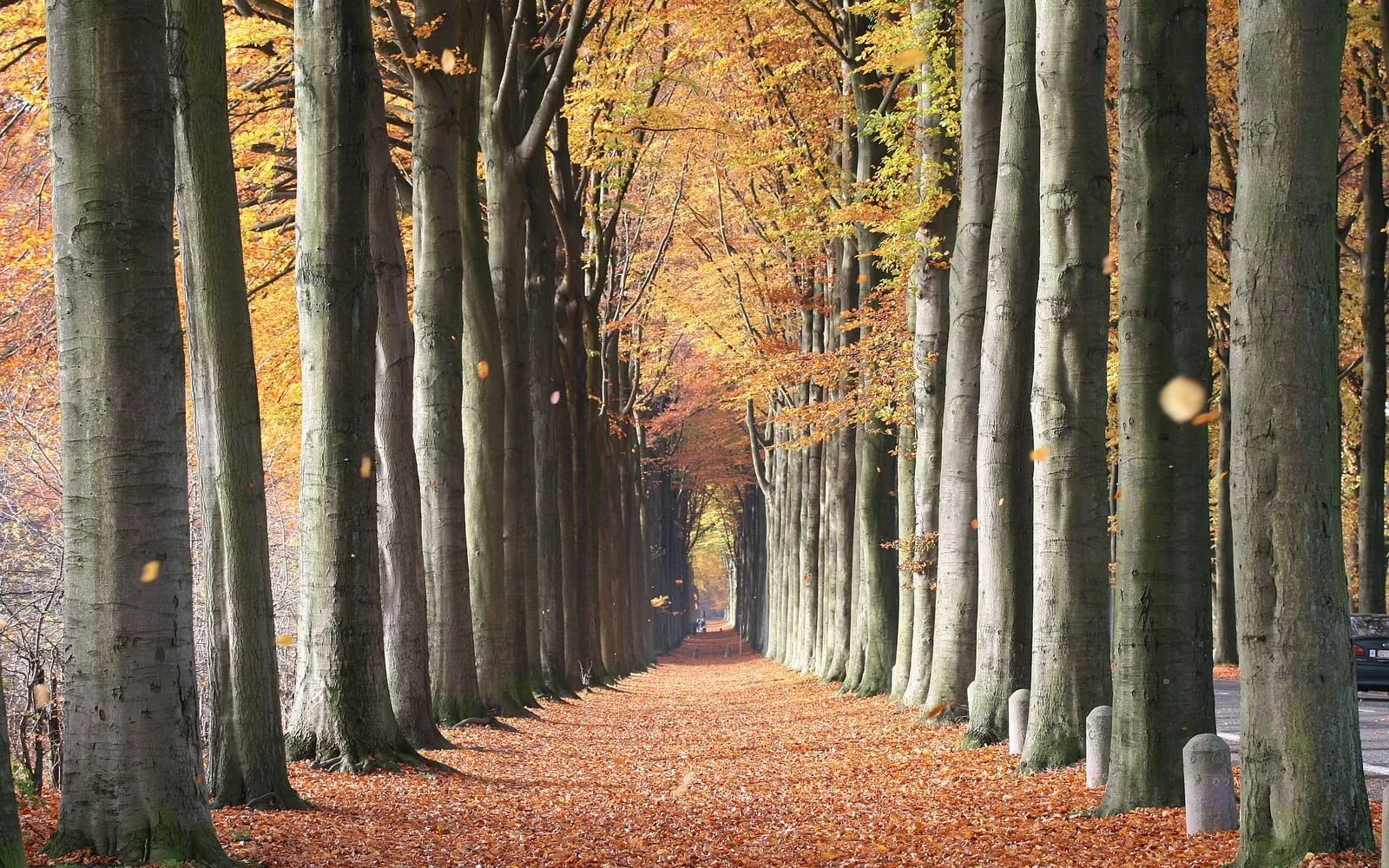
As a tree it is one of the great forest trees of Europe, with a smooth grey trunk like an elephant’s leg and a canopy so dense that almost nothing grows beneath it. Most gardens cannot take one, and almost any garden can take the hedge.
Appearance and character
A large deciduous tree reaching 40 m with a huge domed crown, or a dense hedge kept at anything from 1.5 to 4 m.
Bark is the most recognisable feature of any European tree. Smooth, thin and pale silver-grey, staying smooth into old age, which is why it attracts carved initials.
Leaves are oval and pointed, 5 to 10 cm long, with a wavy rather than toothed margin and a fringe of fine silky hairs when young. They emerge a vivid bright green in April and turn copper and russet in autumn.
Buds are long, slender, pointed and coppery-brown, held at a sharp angle from the twig, and they identify the tree in winter.
Flowers appear with the leaves in April, small and green, the males in hanging tassels and the females in pairs.
Nuts follow in autumn, small triangular beechnuts in a prickly four-lobed husk. Heavy crops come at irregular intervals in what are called mast years.
Copper beech, f. purpurea, is the same species with dark purple foliage, and the weeping form ‘Pendula’ is a large specimen tree.
Where it is from
Europe, from southern Scandinavia to Sicily, and native to southern England and south Wales, where it grows on chalk and limestone and on free-draining sandy soils.
Whether it is native north of the Thames is debated, and it has been planted so widely for so long that the natural limit is now impossible to draw.
Its preference for chalk is what makes the beech hangers of the South Downs and the Chilterns, and it is the classic tree of thin alkaline soil.
Drainage is the requirement that follows. Beech has a shallow, wide-spreading root plate and it will not tolerate waterlogged ground, which is the single commonest reason a planted beech fails.
The dense canopy casts heavy shade and the shallow roots take the moisture, so beech woods have famously bare floors, with bluebells and wood anemones flowering before the leaves come out and little else surviving.
How it grows
Plant bare-root between November and March, which is far cheaper than container-grown stock and establishes better.
For a hedge, plant a single row 30 to 45 cm apart, or a double staggered row for a thicker result, giving three to five plants per metre.
Do not cut a beech hedge back hard at planting, unlike hawthorn. Trim only the side shoots lightly and let the leaders grow until the hedge reaches the height you want.
Trim once a year in August. A single late-summer cut is all a beech hedge needs, and cutting then leaves no time for soft regrowth before winter.
Cut the sides to a slight taper, wider at the base than the top, so light reaches the bottom and the hedge stays furnished.
Water thoroughly through the first two summers. Beech establishes slowly and dies in a dry first year.
Mulch the base for the first two springs to suppress grass, which competes far more seriously than drought does.
Renovate an overgrown hedge by cutting one side back hard into old wood one year and the other side the following year. Beech takes this well, unlike many conifers.
Plant a specimen tree only where there is genuine room, allowing 20 m or more each way, and never near a building or a drain.
Through the seasons
Winter is when a clipped hedge earns its place, holding copper leaves through the season. Plant bare-root stock now.
Spring brings the new leaves in April, a particularly bright green, and the old copper leaves fall as they push through.
Summer is growth. Trim the hedge once in August, and water young plants in a dry spell.
Autumn brings the leaf colour and, in some years, a heavy mast crop. Order bare-root plants now for winter delivery.
Care difficulty
Easy on the right soil and impossible on the wrong one.
Waterlogging is the one condition beech will not survive. On heavy wet clay, plant hornbeam instead, which looks similar, holds its winter leaves the same way and tolerates wet ground.
Establishment needs watering for two summers, after which the plant is self-sufficient.
The single August trim makes a beech hedge one of the lowest-maintenance formal hedges available.
Beech bark disease and honey fungus both affect mature trees and neither is preventable by anything a gardener does.
Watering
Water new plantings thoroughly through their first two summers. This is when beech hedges fail.
Established hedges and trees need no watering in a temperate climate.
Mulch the base of a new hedge to conserve moisture and keep grass away.
Avoid waterlogged ground entirely. Beech roots are shallow and rot in standing water.
A hedge under the rain shadow of a wall or a large tree needs watering for longer than one in the open.
Warning signs, diseases and pests
Beech bark disease is the serious problem of mature trees. It begins with felted beech scale, a tiny insect that covers the bark in white woolly patches, and the feeding wounds let in Nectria fungi, which kill patches of bark and eventually the tree. Look for white woolly spots on the trunk, then oozing black tarry spots, then dieback in the crown. There is no treatment. Keep trees unstressed, and have a declining mature beech near a building or a path inspected, since they shed branches and fail suddenly.
Woolly beech aphid covers the undersides of the leaves in white fluff in summer, producing sticky honeydew below. It is disfiguring and harmless.
Beech leaf-mining weevil browns the leaves in early summer, sometimes across whole trees, and the damage is cosmetic.
Phytophthora root rot causes bleeding cankers at the base and thinning in the crown, and it follows wet ground.
Honey fungus kills beech, showing as white fungal sheets under the bark at the base.
A hedge that is thin and bare at the bottom has usually been clipped with vertical sides. Cut a taper.
Brown patches in a hedge after a hard winter are usually cold and wind damage on an exposed side, and they refill in spring.
Growing environment
Full sun to fairly deep shade. Beech is one of the most shade-tolerant large trees and a hedge grows acceptably in shade.
Free-draining soil, and it excels on chalk and limestone. Sandy loam suits it too.
Never plant on waterlogged or heavy wet clay. Use hornbeam there instead.
Shelter is helpful for a young hedge on an exposed site, since cold wind scorches the new leaves.
Allow 60 cm of width for a trimmed hedge.
Do not plant a beech tree within 20 m of a building. The root plate is shallow and wide, the tree is enormous, and mature beech drops branches.
A beech hedge suits a formal garden, a boundary or a windbreak, and it takes clipping into shapes and archways well.
Feeding
Beech needs no feeding on reasonable soil.
Mulch a new hedge with compost or bark in its first two springs, which does more by suppressing grass than by feeding.
Avoid nitrogen fertiliser, which produces soft growth prone to scorch and aphids.
A hedge that is weak is usually competing with grass at its base, sitting in compacted ground or too wet, rather than short of nutrients.
Troubleshooting
Why does a beech hedge keep its leaves in winter? Clipping keeps the plant in a juvenile state, and juvenile beech growth holds its dead leaves until spring. An unclipped beech tree drops them normally.
When should I trim it? Once a year in August. One late-summer cut is all a beech hedge needs.
My new hedge died in the first summer. Almost always drought or waterlogging. Beech establishes slowly, needs watering for two summers and will not survive wet ground.
Can I grow beech on wet clay? No. Plant hornbeam instead. It looks very similar, holds its winter leaves the same way, and tolerates heavy wet soil.
White woolly patches on the trunk. Felted beech scale, which opens the way to beech bark disease. There is no treatment, and a declining mature tree near a building should be inspected.
The hedge is bare at the bottom. It has probably been cut with vertical sides. Trim to a taper so light reaches the base.
Can I cut an overgrown beech hedge back hard? Yes. Take one side back into old wood one year and the other side the next. Beech responds well.
Are beech nuts edible? Roasted and in moderation, yes. Raw ones in quantity cause stomach upset, and they poison horses and pigs in a heavy mast year.