
Disease
Fusarium head blight
Fusarium graminearum and Fusarium culmorum
Also called Fusarium ear blight, Head blight, Fusarium scab, FHB, Ear blight
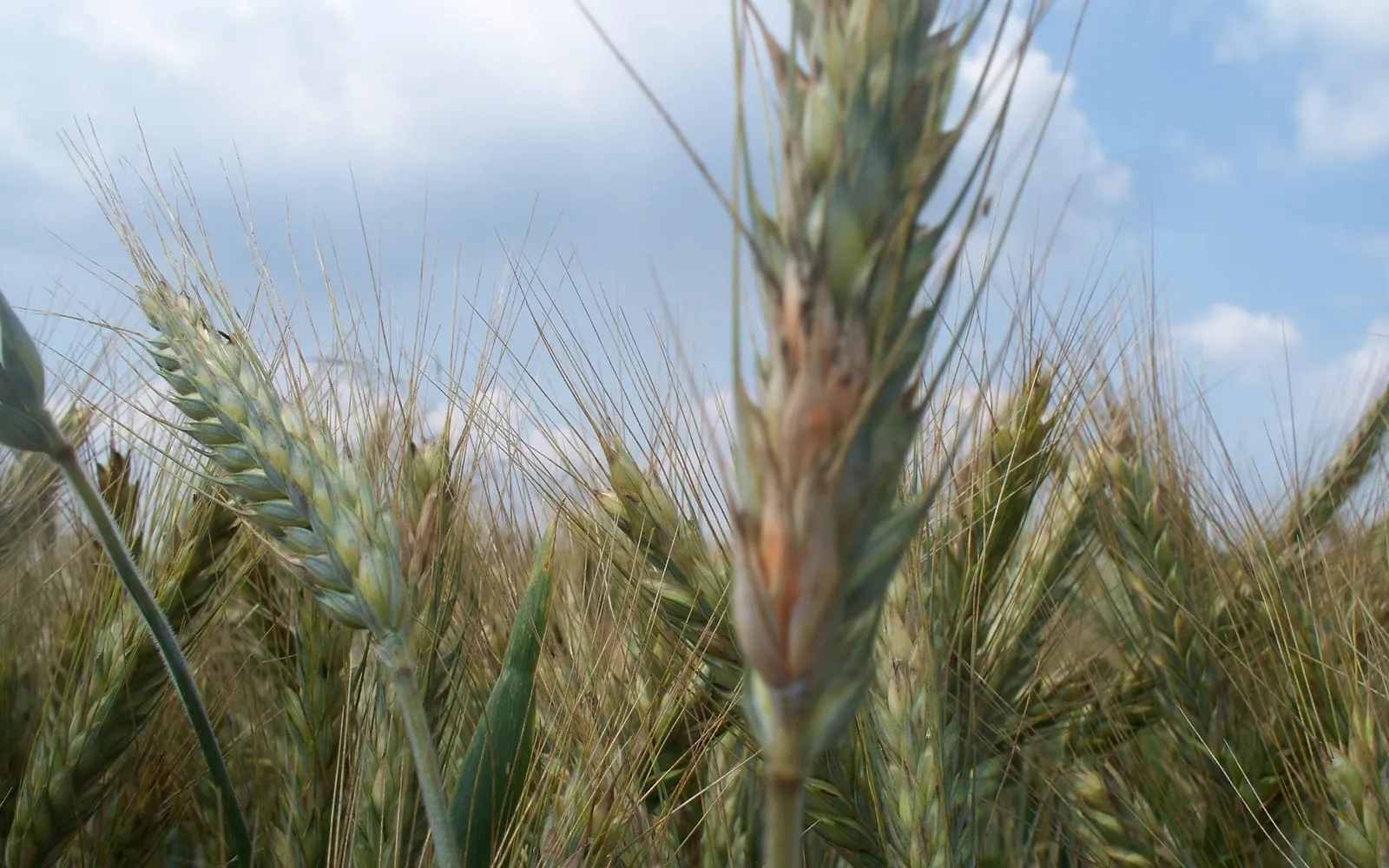
Fusarium head blight bleaches spikelets in green ears, sometimes with pink at the base. The fungus dies at harvest, but the toxins it made can remain in the grain.
At a glance
- Type
- Disease
- Cause
- Fungus
- Severity
- Destroys the crop or display
- Affects
- Garden plants, Herbs and edibles
- Active
- June to August
- Established in
- Europe, North America, Central and South America, Africa, Asia, Australia and New Zealand
What you are seeing
- Individual spikelets bleached white or straw-coloured while the rest of the ear stays green
- Whole ears bleached above the point of infection, with the stem below still green
- A pink or salmon-orange mould at the base of affected spikelets in damp weather
- Grains shrunken, chalky white or pinkish, and light enough to blow out with the chaff
- Damage patchy across a field rather than uniform
- Worst after a wet spell during flowering, and mild in a dry June
- Nothing visible until about a fortnight after flowering, whatever the weather did
Before you treat anything
This is a food safety matter rather than only a yield loss. The fungi produce deoxynivalenol, zearalenone and other mycotoxins that survive threshing, storage, milling and baking, so the toxin remains long after the fungus is dead. Legal maximum levels are set for grain and grain products in most jurisdictions. Do not mill, feed or sell suspect grain on the strength of how it looks. Test grain from a wet flowering period.
What you are looking at
An ear of wheat in which some spikelets have gone bleached white or pale straw while the rest is still green. The bleaching often takes everything above one point on the ear, so a green ear carries a white tip, and the stem below stays green.
In damp weather there is a pink or salmon-orange mould at the base of the affected spikelets, which is the clearest confirmation there is.
Open a bleached spikelet and the grain inside is shrunken, chalky white or faintly pink, and light. Those are the grains that blow out with the chaff.
The damage is patchy across a field rather than even, and none of it shows until about a fortnight after flowering.
The fungus dies and the toxin stays
Most crop diseases are a yield problem. This one is a food safety problem that also costs yield, and the reason is chemistry rather than biology.
Fusarium graminearum and its relatives produce mycotoxins as they grow in the developing grain. Deoxynivalenol is the one usually measured, with zearalenone and others alongside it depending on the species.
These compounds are stable. They survive harvest, drying, storage, milling and baking. The fungus is long dead by the time flour is made and the toxin is still in it, which is why most jurisdictions set legal maximum levels for grain and grain products, and why a merchant tests rather than looks.
Deoxynivalenol is sometimes called vomitoxin, and pigs are the animal it affects most. They refuse feed and lose condition at concentrations that cattle, sheep and poultry tolerate, so where contaminated grain has to be used on farm, which stock it goes to is a genuine decision.
The practical consequence for a grower is that visible damage is a poor guide. Grain that looks acceptable in the hand can be over the limit, and grain that looks poor can be within it. After a wet flowering, the sample gets tested.
Everything happens in the flowering window
Infection needs the flowers open and the weather warm and wet at the same time. Spores land on the exposed anthers, which are unusually easy tissue for a fungus to colonise, and grow from there into the developing grain.
That window is short, often only a few days for any one crop. A wet spell falling in it produces a bad year, and the same wet spell a fortnight later or earlier produces almost nothing.
Two things follow. Watching the weather during flowering tells you more than inspecting the crop, because the crop shows nothing for another fortnight. And splitting the flowering dates across a farm, with different varieties and drilling dates, means one unlucky week cannot catch everything at once.
Maize in the rotation is the thing to change
Fusarium graminearum survives and produces spores abundantly on crop residue, and maize stubble is by a distance the best material it has.
Wheat drilled into or immediately beside last year’s maize takes far more infection than wheat following a break crop, and the rise of maize in arable rotations has tracked the rise of this disease across Europe and North America.
The choices that matter are the rotation and the cultivation. Put a non-cereal break between maize and wheat. Plough the residue in rather than leaving it on the surface, since minimum tillage after a susceptible crop leaves the inoculum exactly where spores can reach the next ear.
Variety resistance is partial and worth having on top of both, particularly on land where maize is in the rotation.
What to do about it
Keep wheat out of maize stubble, and put a break crop between them.
Plough residue in rather than leaving it on the surface.
Pick a variety with a decent resistance rating where the land has a history.
Spread flowering dates across varieties and drilling dates.
Record the weather during flowering, since that is when the year is decided.
Harvest promptly rather than leaving a ripe crop out in the wet.
Turn the combine fan up to blow the light shrivelled grains out.
Dry the grain down promptly and watch the store for damp patches.
Have the sample tested after a wet flowering, before it is sold, milled or fed.
Keep suspect grain away from pigs.
What it gets mistaken for
Ergot replaces a grain with a hard black horn projecting from the ear.
Barley yellow dwarf stunts plants in circular patches and colours the leaves in spring.
Fusarium wilt is the same genus blocking the plumbing of tomatoes and melons.
Frost at flowering bleaches spikelets on the night it happens, across the exposed part of the field.
Rust raises pustules that rub off onto your fingers.
What to do, in order
Nothing available to a gardener will cure this once a plant has it. The steps below are about limiting the spread and deciding what to plant in its place.
Start here
Prevention, and the changes that stop the problem returning. Most of these pages should end at this tier.
- Do not sow cereals into maize stubble
- Maize residue is the single largest source of the fungus, since Fusarium graminearum survives and sporulates on it abundantly. Wheat drilled into or beside last year's maize takes far more infection than wheat following a break crop. Where maize is in the rotation, plough the residue in and put a non-cereal crop between the two.
- Bury or remove the previous crop's trash
- The fungus overwinters on cereal and maize debris on the surface, so minimum tillage after a susceptible crop keeps the inoculum where the spores can reach the next ear. Ploughing that residue down cuts the risk substantially and it is the main reason cultivation choice matters here.
- Choose a variety with a decent resistance rating
- Resistance is partial rather than complete and it is rated in the national variety lists. On land with maize in the rotation or a history of the disease, the rating is worth more than a few points of yield potential, because what it protects is the saleability of the grain.
- Spread the flowering dates across the farm
- Infection happens over a narrow window at flowering, so a single wet spell can catch an entire crop that flowers together. Different varieties and different drilling dates split that exposure, and one block flowering in the wrong week costs less than all of it doing so.
- Watch the weather at flowering rather than the crop
- Warm wet conditions during flowering set the outcome, and nothing is visible on the ear for about a fortnight afterwards. A grower who records the weather in that window knows what to expect at harvest and can plan the testing and the storage, which is more useful than inspecting a green crop that shows nothing.
- Harvest promptly and do not leave a ripe crop standing
- Toxin levels go on rising in a mature crop left in the field through wet weather. Getting a suspect crop cut and dried is one of the few actions still available once infection has happened.
Then reach for a barrier
Netting, hand removal and water. Nothing here harms anything except the target.
- Blow the light grains out
- The most heavily infected grains are shrivelled and light, and they carry a disproportionate share of the toxin. Turning up the fan on the combine and cleaning the sample afterwards removes a useful part of the contamination along with a small part of the yield.
- Dry the grain down and keep it dry
- Fusarium stops producing toxin in properly dried grain, and storage moulds that produce their own toxins start in grain that is not. Dry to the recommended moisture promptly and monitor the store, since a damp patch in a heap is where a second problem begins.
- Test the grain rather than judging it by eye
- Toxin levels do not track visible damage reliably, and grain that looks acceptable can exceed the legal limit. Where the flowering weather was wet, have the sample tested before it is sold, milled or fed. Merchants and advisory laboratories run the tests routinely.
- Keep suspect grain away from pigs
- Pigs are far more sensitive to deoxynivalenol than cattle, sheep or poultry, and they refuse feed and lose condition at concentrations others tolerate. Where grain has to be used on farm and is known to be contaminated, the class of stock it goes to is a real decision.
Plants affected
Guides that name it among the problems to watch for. The list is the plants it is characteristic of rather than everything it will feed on.