
Edible
Durum Wheat
Triticum durum
Also known as Macaroni wheat, Pasta wheat, Hard wheat
How to grow durum wheat, Triticum durum. The hardest grain in the field, why it makes pasta rather than bread, and the hot dry ripening it will not crop without.
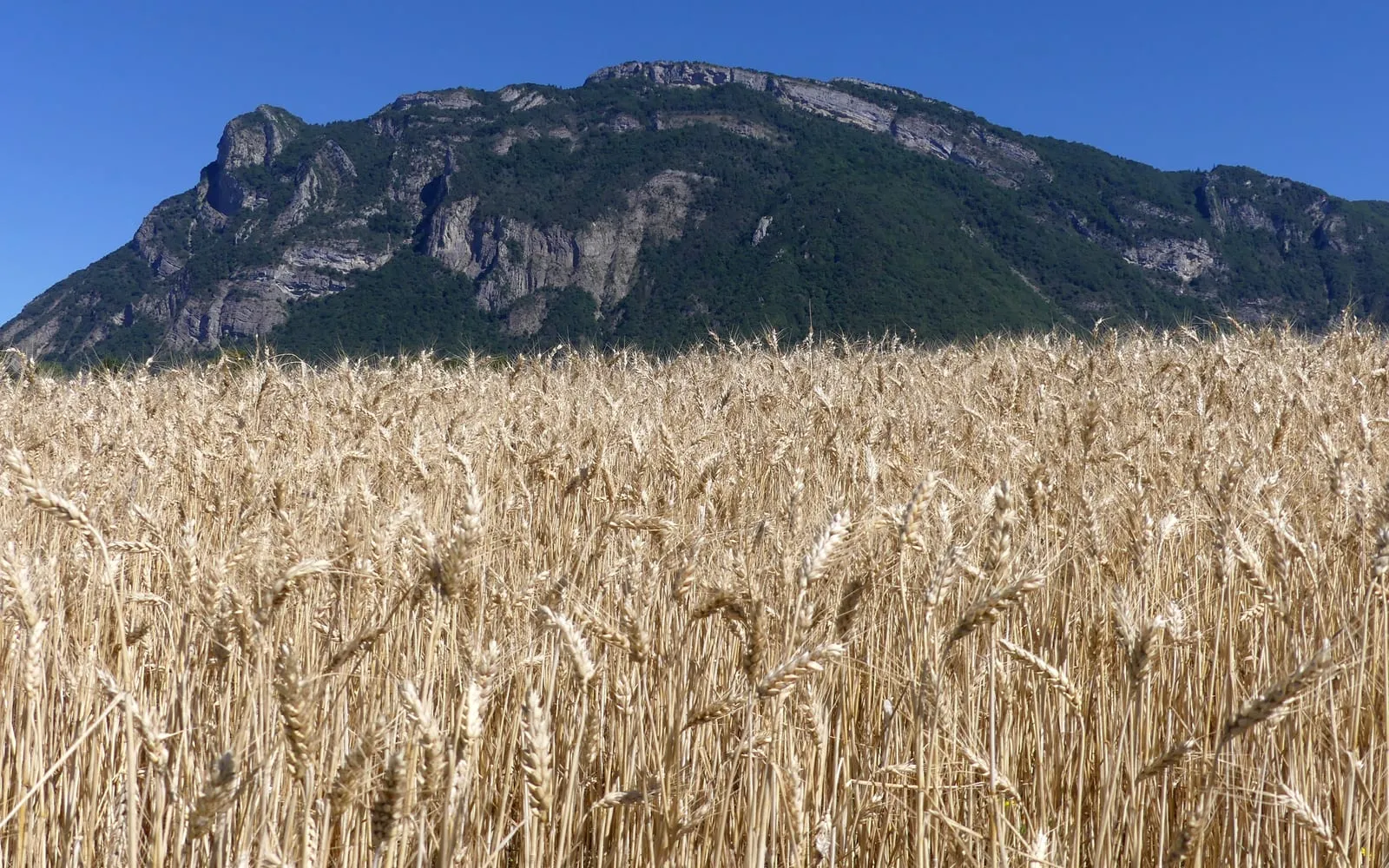
At a glance
- Difficulty
- Moderate
- Water
- Rain-fed where it is grown. A plot in a cool climate needs none after May
- Light
- Full sun
- Temperature
- Wants a hot dry ripening period above 25 deg C
- Hardiness
- USDA 4-9, RHS H4, hardy to -10 C
- Type
- Annual grass, spring sown in cool climates and autumn sown in warm ones
- Height
- 80-120 cm
- Native to
- the Near East, the Mediterranean basin
- Best month
- March and August in the Northern Hemisphere, September and February in the Southern Hemisphere
It needs a hot dry fortnight before harvest, which is why it is grown across the Mediterranean, the Canadian prairies, the northern plains of the United States, north Africa and India and not in maritime climates. Rain on a ripening ear splits the skin and downgrades the grain, and rain at flowering brings fusarium head blight, which matters more in durum than in bread wheat because the mycotoxin limits for pasta are tighter. It is also less winter-hardy than bread wheat, so autumn sowing works only in mild winters.
Hardiness zones describe winter cold alone. Summer heat, humidity, rainfall and the length of the growing season decide as much, so treat the range as the outer limit rather than as a recommendation.
Every month named in this guide is for the temperate Northern Hemisphere. If you garden in the Southern Hemisphere, shift each one by six months, so March becomes September. Closer to the equator the wet and dry seasons matter more than the calendar, and the shift stops being a useful guide.
Edible, with limits
- Safe to eat
- The grain, milled into semolina
- Do not eat
- Ergot bodies in the ear, and grain from an ear affected by fusarium
- Harm from
- Eating it
- Affects
- People
Durum is a wheat and contains gluten, so it sits under the cereals containing gluten heading in the 14 named allergens and is unsafe for anyone with coeliac disease. Pasta, couscous and bulgur are all durum products and all carry the same warning. Durum is more prone to fusarium head blight than bread wheat, and the mycotoxin that fungus leaves behind, deoxynivalenol, causes vomiting and is regulated in commercial grain. A wet flowering makes it likely, which is one reason a crop grown in a damp climate should be inspected ear by ear and any bleached or pink-tinged head discarded. Ergot applies as it does to every cereal.
Sources: Coeliac UK on the gluten-free diet, Food Standards Agency on the 14 named allergens, Food Standards Agency on mycotoxins
About
Durum is the hardest wheat grown, and its hardness is the reason it exists as a separate crop. Mill it and the grain fractures into coarse angular particles rather than crushing to powder, and those particles are semolina. Mix semolina with water and you get a dough stiff enough to be forced through a bronze die and dried into a shape that holds until it is cooked.
The plant is tetraploid, carrying two genomes where bread wheat carries three. It descends directly from domesticated emmer through a free-threshing mutation, so where emmer clings to its grain, durum releases it cleanly. What it lost along the way is the third genome that gives bread wheat its dough strength, which is why durum makes flatbreads and pasta and a poor risen loaf.
Roughly 5 per cent of world wheat is durum, and almost all of it grows where summers are hot and dry. Italy, Turkey and North Africa grow it, and so do the Canadian prairies and the northern plains of the United States. Almost none is grown in maritime climates, and the ripening weather is the reason.
Appearance and character
The ear is dense, flattened and heavily awned, with awns often longer than the ear itself standing stiffly upright in a bundle. Against a bread wheat it reads as compact and bristling. The spikelets pack tightly on a tough axis and each holds two to four large grains.
The grain is what sets the species apart. It is long, amber-coloured, and vitreous, meaning that a cut grain looks glassy and translucent rather than chalky and white. That vitreous character is measured and paid for, and a crop that ripens through humid weather goes starchy and loses the premium.
The straw is short and stiff compared with the older wheats, and the plant stands well. The leaves are a distinctly blue-green with a waxy bloom, which is a drought adaptation and shows clearly when durum grows beside bread wheat.
Where it is from
Durum arose in the Near East from cultivated emmer, through mutations that loosened the glumes and let the grain thresh free. Free-threshing tetraploid wheat appears in the archaeological record from around 7000 BC, and the modern crop is the end of that line.
The Mediterranean made it what it is. Durum spread west along the north African coast and into Sicily and southern Italy, where the combination of a hot dry summer and a grain that could be dried and stored produced dried pasta as a trade good by the twelfth century. Arab agriculture in Sicily is where the written record of that begins.
Canada and the United States grow enormous quantities now, on prairie land whose dry continental summers suit the crop as well as Sicily does. Italy remains the largest consumer and imports much of what it uses.
How it grows
Durum grows on the same pattern as any wheat. Germination, tillering, stem extension, ear emergence, self-pollination, then six weeks of grain fill. The differences are in the timing and in what the plant wants from the weather at each stage.
Most durum is spring sown where winters are cold and autumn sown where they are mild, because the crop is less winter-hardy than bread wheat. A Mediterranean crop goes in with the autumn rains, grows through a mild winter, and ripens before the summer heat becomes destructive.
What durum needs at the end is dryness. The vitreous grain that the mills want forms when ripening happens fast in hot dry air. Rain on a ripe crop rewets the grain, and repeated wetting and drying turns the endosperm chalky and occasionally splits the skin. A wet harvest month supplies exactly the wrong conditions.
Through the seasons
Where winters are too wet or cold for autumn sowing, sow in March into a warm dry seedbed and treat it as a spring cereal. It emerges quickly, tillers modestly, and extends through May.
The ear comes in late June, flowers within a week, and fills through July. The crop is at its most vulnerable during those few days of flowering, since rain then invites fusarium into the ear.
Harvest is August in a cool climate, and it wants a hot dry fortnight beforehand that a maritime summer supplies about one year in four. In Italy or Turkey the same crop is cut in June, ahead of the worst heat.
Care difficulty
Growing durum is no harder than growing bread wheat. The seed germinates readily, the plant stands up, and the disease programme is much the same. The difficulty is that a crop grown without a hot dry ripening rarely comes to anything worth milling.
Two things go wrong. The grain does not reach vitreousness without a hot dry ripening period, so it mills to something closer to flour than to semolina. And a wet flowering brings fusarium, which durum resists less well than bread wheat, and which is a food safety problem rather than a quality one.
Grow a patch for interest and for the look of the ears, which are handsome. Do not plan a pasta harvest from it. If you want to make pasta from grain you grew, bread wheat with a high protein will get you closer than a failed durum crop.
Watering
Durum is a dryland crop and dislikes wet feet at every stage. Where it is grown commercially it is largely rain-fed, taking what falls in winter and spring and finishing on stored soil moisture.
A plot in a cool climate needs watering only if March and April are unusually dry, and then only to establish it. After ear emergence, leave it dry. Watering a ripening durum crop works against the quality you are trying to produce.
Durum sitting in cold wet soil in spring yellows, roots poorly and never recovers. Put it on the free-draining end of the plot, and lift the bed if the ground is heavy.
Warning signs, diseases and pests
Fusarium head blight is the disease to watch for wherever flowering is wet. It bleaches individual spikelets while neighbouring ones stay green, and infected grain may carry a pink tinge at the base. Grain from an affected ear carries mycotoxins, so discard rather than eat it.
Yellow rust runs in bright orange-yellow stripes along the leaf veins and moves quickly through a susceptible stand in mild damp weather. Durum’s resistance is generally weaker than that of modern bread wheat varieties, so a patch grown in an English spring will often show it.
Septoria produces brown oval blotches carrying tiny black fruiting bodies, starting low and splashing upward. It is a wet-climate disease and consequently matters far more to a maritime durum crop than to a Sicilian one.
Black point is a quality defect rather than a threat. It is a dark stain at the germ end of the grain, caused by fungi during a humid ripening, and it downgrades a commercial sample. Aphids in the ear during grain fill reduce the size of the grains and are worth a look in a warm July.
Growing environment
Full sun, an open site, and heat at the end of the season. Durum is a plant built for a Mediterranean or continental summer, and the further you are from that, the more the crop compromises.
Soil should drain freely and can be poorer than bread wheat needs. Durum performs well on alkaline soils, including thin chalk and limestone, and a pH between 6.5 and 8 suits it. Heavy wet clay is the wrong choice.
Cold is a genuine limit. Durum is less winter-hardy than bread wheat and an autumn-sown crop in a hard winter can thin badly or die out. Spring sowing sidesteps that at the cost of yield.
Feeding
Durum is bought on protein, and protein comes from nitrogen. Commercial crops are fed generously and often split the nitrogen three ways, with a late application after the ear has emerged aimed at protein rather than yield.
For a garden patch, a single balanced feed in early spring is enough. Adding more will not produce semolina if the summer is wet, and it will make the crop softer and more prone to disease.
The plant benefits from a sulphur-containing feed on light soils, since sulphur deficiency shows in cereals as pale young leaves while the older ones stay green. That is the reverse of nitrogen shortage, which pales the oldest leaves first, and the two are easy to confuse.
Troubleshooting
Will it crop where I am? The plant grows almost anywhere wheat does. Getting a crop worth milling into semolina is another matter, because the vitreous grain needs a hot dry fortnight before harvest, which a maritime summer supplies rarely and a Mediterranean or continental one supplies most years.
What is the difference between durum and bread wheat? Durum has four sets of chromosomes and bread wheat six. The extra pair in bread wheat supplies the gluten proteins that make dough stretch and hold gas, so durum makes pasta and flatbread while bread wheat makes a risen loaf.
Is semolina the same as durum flour? Semolina is coarsely milled durum, gritty between the fingers. Milling it finer gives durum flour, sold in Italy as semola rimacinata, which is what most fresh pasta and Sicilian bread is made from.
Can I make pasta from ordinary flour? Yes, and much of northern Italy does, using soft wheat flour and eggs. Dried pasta that holds its shape in boiling water is a durum product, and the difference shows the moment you cook it.
Why are the awns so long? They photosynthesise, and in a hot dry climate an awn keeps working when the leaves have shut down. That is a genuine yield contribution in a Mediterranean summer, which is where the crop was selected.
My durum grain looks white and chalky inside. It ripened through humid weather, or it was rewetted after ripening. Vitreous amber grain forms in fast dry ripening, and a chalky sample is downgraded commercially. It is still edible.
Is couscous made from durum? Yes. Couscous is semolina moistened and rolled into small pellets, then steamed. Bulgur is durum too, parboiled, dried and cracked.
Durum Wheat problem guides
Not sure what is wrong? See the common vegetable pests guide.