
Edible
Triticale
x Triticosecale rimpaui
Also known as Wheat-rye hybrid
How to grow triticale, x Triticosecale rimpaui. Sowing, harvesting, its wheat-rye parentage and the history of the modern cereal.
At a glance
- Difficulty
- Easy
- Water
- Rain-fed. A garden patch needs nothing after establishment
- Light
- Full sun
- Temperature
- Hardy, and productive at the cold end of the cereal range
- Hardiness
- USDA 3-8, RHS H7, hardy to -30 C
- Type
- Hardy annual grass, autumn or spring sown
- Height
- 100-150 cm
- Native to
- Edinburgh, created in cultivation
- Best month
- October and August in the Northern Hemisphere, April and February in the Southern Hemisphere
It was bred to carry rye's tolerance of cold, drought and poor acid soil with wheat's yield and grain quality, and it does. That makes it a crop for marginal ground rather than good ground, since on fertile land wheat beats it. Winter and spring types both exist and the winter ones take cold as hard as rye does.
Hardiness zones describe winter cold alone. Summer heat, humidity, rainfall and the length of the growing season decide as much, so treat the range as the outer limit rather than as a recommendation.
Every month named in this guide is for the temperate Northern Hemisphere. If you garden in the Southern Hemisphere, shift each one by six months, so October becomes April. Closer to the equator the wet and dry seasons matter more than the calendar, and the shift stops being a useful guide.
Edible, with limits
- Safe to eat
- The grain, milled or whole
- Do not eat
- Ergot bodies in the ear
- Harm from
- Eating it
- Affects
- People
Triticale is a wheat and rye hybrid and contains the gluten proteins of both parents, so it falls under cereals containing gluten in the 14 named allergens and is unsafe for anyone with coeliac disease. Because rye is one of its parents, triticale inherits rye's openness to ergot, which is the most important practical hazard on this page. Ergot replaces a grain with a hard purple-black body carrying alkaloids that constrict blood vessels, and historic mass poisonings from ergot-infected rye flour are recorded as St Anthony's fire. Commercial grain is screened. A garden crop is not, so inspect the ears before threshing and discard any carrying a dark body.
Sources: Coeliac UK on the gluten-free diet, Food Standards Agency on the 14 named allergens
About
Triticale is the one cereal in this collection that nobody found growing anywhere. Wilson made the first wheat and rye hybrid in Edinburgh in 1875, and it was sterile, as crosses between two genera usually are. It stayed a curiosity for fifty years until colchicine, a chemical from autumn crocus that doubles chromosome number, was applied to such hybrids in the 1930s and made them fertile.
The point of the cross was to combine wheat’s grain quality with rye’s toughness. Rye grows on acid sand in cold winters where wheat gives up, and wheat produces a grain that mills and bakes. Triticale gets a reasonable share of both, and it does particularly well on marginal land and in cold or acid soils that would produce a thin wheat crop.
Most of what is grown goes to animals. World production sits around 15 million tonnes, concentrated in Poland, Germany, Belarus and France, and pigs and poultry eat the bulk of it. Human food use is small and mostly in mixed flours and breakfast cereals.
Appearance and character
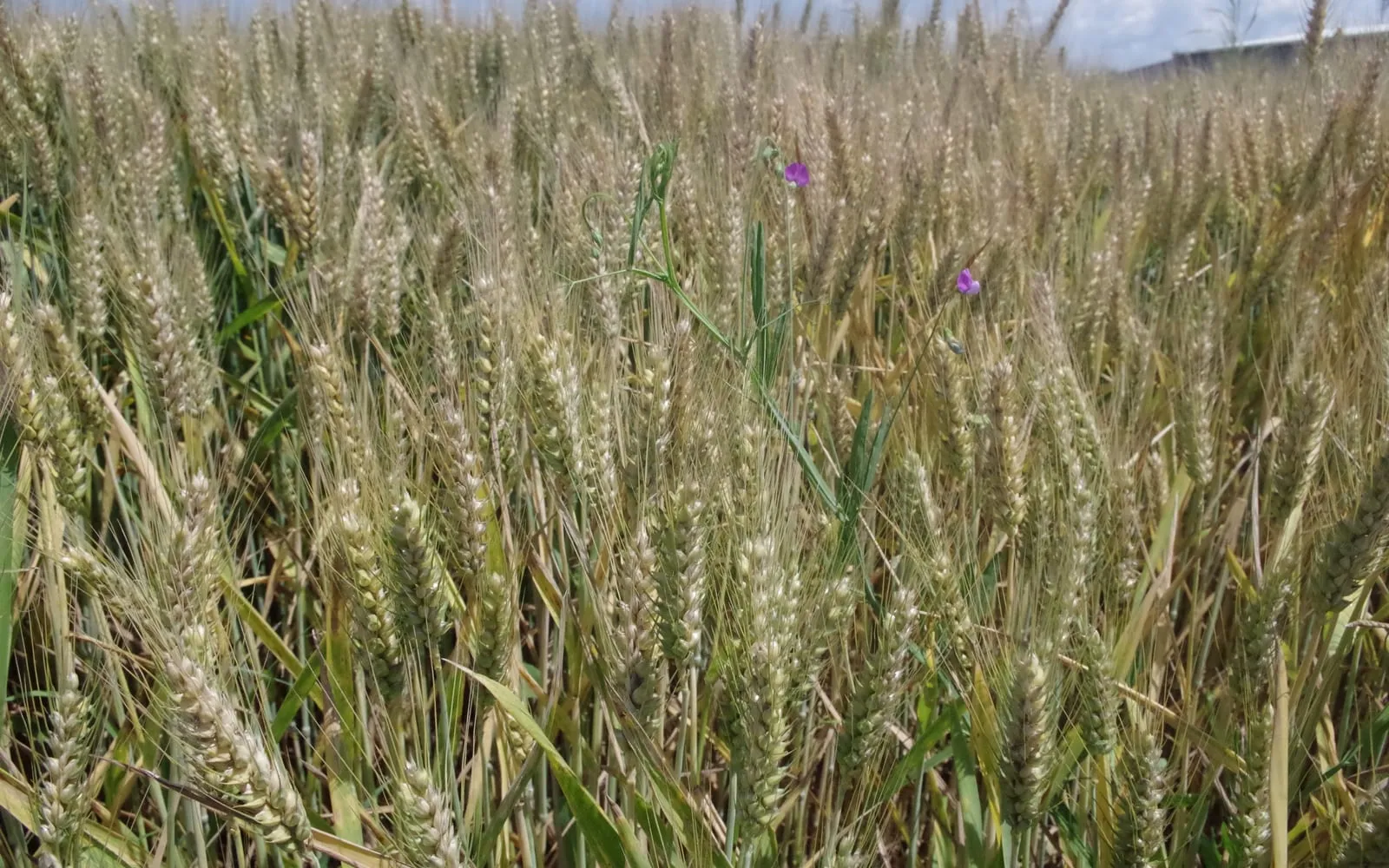
Triticale looks like a heavy-set wheat with rye’s awns. The ear is long, wider than a rye ear and less dense than a wheat one, with prominent awns that give a ripening field a bristling texture. The stems are thick and the plant is vigorous, often standing taller than either parent.
The grain is larger than wheat’s and more shrivelled, with a wrinkled surface that comes from the endosperm failing to fill the space available. Breeding has reduced that, but a triticale sample still looks less plump than a wheat sample beside it.
Leaves are broad and a dark blue-green with a waxy bloom, closer to rye than to wheat. Seedlings often show a purple tinge in cold weather, another rye inheritance.
Where it is from
Triticale has no wild origin because it was made. Wilson’s Edinburgh cross in 1875 produced the first plants, and Wilhelm Rimpau in Germany produced the first partially fertile ones in 1888, which is why the botanical name carries his.
The crop became practical in the twentieth century. Colchicine treatment in the 1930s allowed chromosome doubling to restore fertility, and serious breeding programmes ran in Sweden, Hungary and later at CIMMYT in Mexico from the 1960s. Those programmes fixed the early problems of shrivelled grain and poor fertility.
Adoption has been steady rather than dramatic. Poland grows more triticale than any other country, and its cold winters and light acid soils are exactly the conditions the cross was aimed at. Britain grows a modest amount, largely for livestock and increasingly for anaerobic digestion.
How it grows
Triticale grows like a robust winter cereal with good early vigour. It establishes fast, tillers strongly, and covers the ground earlier in the spring than wheat does, which helps it compete with weeds.
Stem extension takes it high, and modern varieties have been bred shorter to control that. The ear emerges in early summer and pollinates itself, though rye’s influence means a proportion of cross-pollination occurs and seed saved from a patch may vary.
The one persistent weakness is sprouting. Rye and triticale grain has low dormancy at harvest, so a ripe crop caught by a wet fortnight will start germinating in the ear. Cut it as soon as it is ready rather than leaving it standing for convenience.
Through the seasons
Sow in October, or in March for a spring crop. Autumn-sown triticale establishes quickly and goes into the winter with more growth on it than wheat.
The crop moves early in the spring, extends through April and May, and comes into ear in late May or June. It is generally the tallest cereal on a mixed plot.
Harvest is August, and timeliness matters more here than with wheat because of the sprouting risk. Cut when the grain is hard, dry it under cover, and thresh by rubbing the ears, which release their grain freely since triticale is free-threshing like both its parents.
Care difficulty
Triticale is the easiest cereal in this collection for a gardener to grow. It threshes free, so there is no dehulling to do. It tolerates poor and acid soil. It resists most of the diseases that require a spray programme in wheat. Sow it, net it against birds, and cut it in August.
The only real judgement call is when to harvest. Leave it standing too long through a wet spell and the grain sprouts in the ear, which ruins it for milling though the birds will not mind.
Its reputation as an animal feed puts people off eating it, which is a shame. The flour makes a reasonable loaf when blended with bread flour, with a flavour somewhere between wheat and rye.
Watering
Rain-fed in every climate where it is grown, and a plot in a cool climate will need nothing once it is up. Triticale’s roots are deep and vigorous, another rye inheritance, and drought tolerance is one of the traits the cross was aimed at.
Water once at sowing if October is dry, purely to get even germination. After that leave it alone through to harvest.
The plant handles wet ground better than wheat, though not indefinitely. A plot that floods in winter will still thin it out.
Warning signs, diseases and pests
Triticale’s disease resistance is one of its selling points, and most varieties stand clean through a season that would need two fungicide passes in wheat. Rusts appear as orange or yellow pustules that rub off on a finger, and they tend to arrive later and spread more slowly here.
Ergot is the disease to take seriously, and triticale inherits its openness to it from rye. The fungus infects open flowers, and because triticale’s flowering is less strictly self-pollinating than wheat’s, more flowers stay open long enough to be infected. The sign is a hard purple-black body up to 2 cm long protruding from a spikelet.
Sprouting in the ear shows as short white roots emerging from grains in a standing crop after rain. It cannot be reversed, and the grain is then fit only for animals or the compost heap.
Slugs take sown seed in a wet autumn, and aphids bring barley yellow dwarf virus into autumn crops, showing the following spring as stunted plants with yellow or reddened leaf tips in scattered patches.
Growing environment
Full sun on an open site. Triticale is unfussy about exposure and stands up to wind better than its height suggests, though the tallest varieties will still lodge if fed hard.
Soil tolerance is the point of the crop. It grows on acid sands down to about pH 5, on light drought-prone ground, and on soils with manganese or copper availability problems that would leave wheat pale and stunted. Give it the difficult corner of the plot.
Cold suits it. Autumn-sown triticale survives Polish and Belarusian winters as a matter of routine, which puts a temperate winter well inside its range.
Feeding
Feed it less than wheat and more than einkorn. Triticale responds to nitrogen but the taller varieties lodge if pushed, so a single dose as growth restarts in March covers a garden crop.
Its efficiency at scavenging nutrients from poor soil is part of what it was bred for, and on a plot with reasonable fertility it will need nothing beyond what the previous crop left behind.
Where the ground is acid, lime is worth more than feed. Triticale tolerates acidity better than wheat, but tolerance is not preference, and a pH lifted from 5 to 6 improves the crop more than a bag of nitrogen would.
Troubleshooting
What is triticale? A hybrid between wheat and rye, first made in Edinburgh in 1875 and made fertile in the 1930s by doubling its chromosomes with colchicine. The name joins Triticum and Secale.
Can I eat it? Yes. Most of the crop goes to livestock, which has given it a reputation it does not deserve. The flour makes a decent loaf blended half and half with bread flour, and the whole grain cooks like wheat berries.
Is it gluten-free? No. It carries gluten proteins from both parents and is unsafe for anyone with coeliac disease.
Will seed saved from my patch come true? Roughly. Triticale is mostly self-pollinating but less strictly so than wheat, so a saved population drifts a little each generation. For a garden patch that hardly matters.
Why is my grain shrivelled? Some shrivelling is inherent to the crop and early varieties were much worse. Severe shrivelling points to drought or disease during grain fill, or to a variety that was never bred for grain quality.
What is the black growth in my ear? Ergot, and triticale gets it more than wheat does. Discard the affected ears, burn rather than compost them, and do not mill grain from a crop where you found several.
Does it need a spray programme? Not in a garden. Triticale carries good resistance to the rusts and to septoria, which is one of the reasons it appeals to growers working without much chemistry.
Triticale problem guides
Not sure what is wrong? See the common vegetable pests guide.