
Disease
Bacterial soft rot
Pectobacterium and Dickeya species
Also called Soft rot, Slimy rot, Erwinia soft rot, Bacterial rot
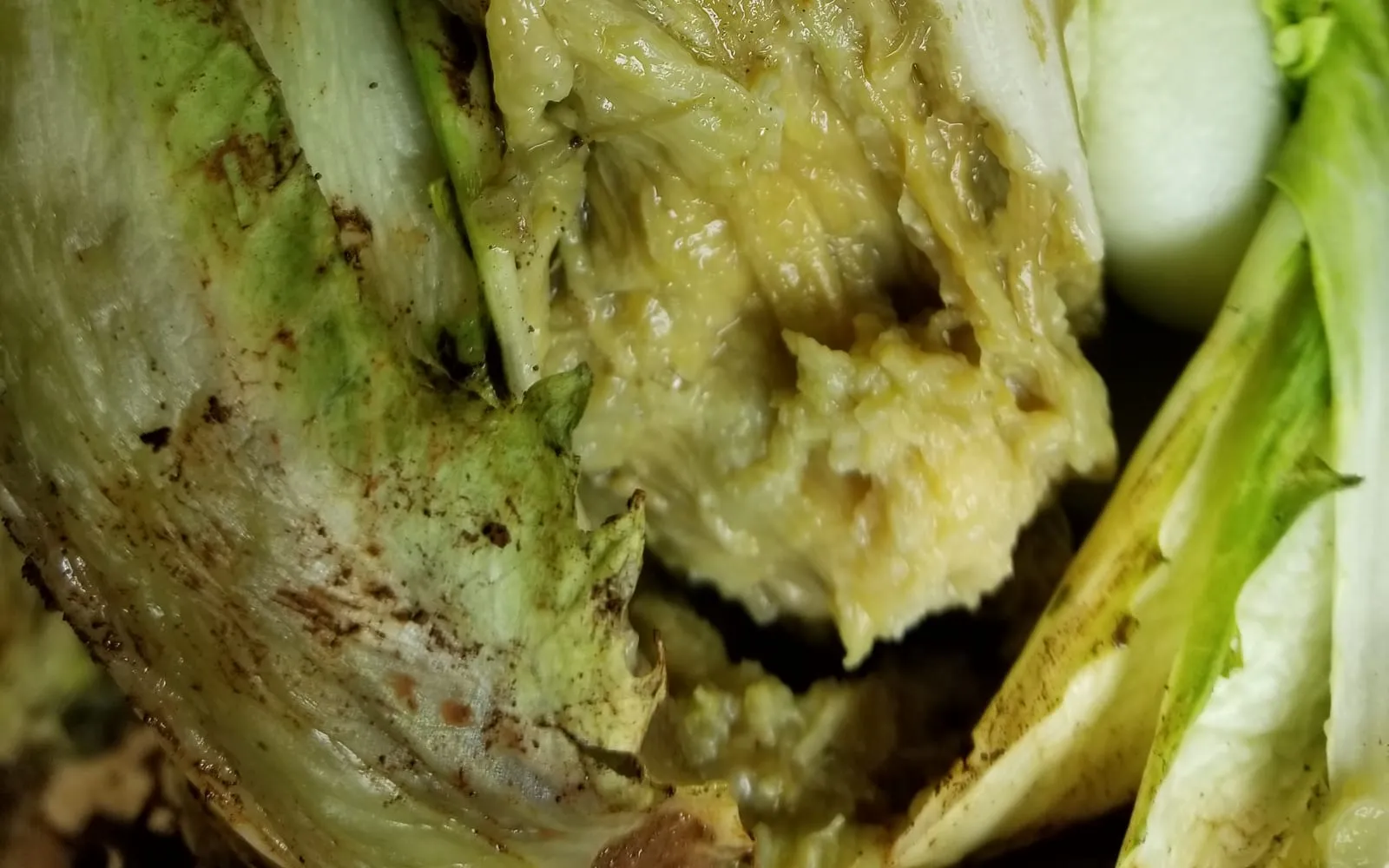
Tissue collapsing into a wet slimy mush with a foul smell. Bacteria dissolve the glue holding plant cells together, and they can only get in through a wound, which is where the prevention sits.
At a glance
- Type
- Disease
- Cause
- Bacterium
- Severity
- Destroys the crop or display
- Affects
- Garden plants, Herbs and edibles, Houseplants
- Active
- June to November
What you are seeing
- Tissue collapsing into a wet slimy mush rather than drying or shrivelling
- A strong foul smell, sour and rotten, unlike anything a fungal rot produces
- A sharp line between sound firm tissue and the rotted area
- Rot starting at a bruise, a cut, a frost split or an insect hole
- Stored potatoes, onions and carrots turning to liquid inside an intact skin
- Iris and other rhizomes soft and stinking at the growing end, lifting away in mush
- The centre of a cabbage, celery or lettuce turning to slime while the outside looks sound
- Rot spreading fast in warm wet weather and stopping in cold dry conditions
Before you treat anything
Do not eat or cut around soft-rotted produce. Once the tissue has liquefied, bacteria and their breakdown products have spread well beyond the visible edge, and other organisms have moved into the same wound. The smell is the warning and it should be taken at face value. Compost bins and sacks of rotting produce can also produce enough gas to be unpleasant in a closed shed, so open them in the air.
What you are looking at
Tissue that has gone to mush. Not brown and dry, not shrivelled, not furred with mould. Wet, slimy, structureless, running between your fingers when you pick it up, with a sharp line where the sound firm tissue starts.
And the smell. Sour, rotten and strong enough that you often meet it before you find the source, from a sack in the shed or a bin of stored onions. Nothing else in this section smells like that, and the smell alone is close to a diagnosis.
The outside can look sound while the inside has gone. A potato with intact skin that squashes to liquid, a cabbage with a firm outer leaf wrapping a slimy heart, an onion that collapses when you press it.
What the bacteria are doing
Plant cells are held together by pectin, the same substance that sets jam. Pectobacterium and Dickeya produce pectin-digesting enzymes in quantity, and they pump them out into the tissue around them.
Dissolving the pectin unglues the cells from one another. The structure of the tissue collapses and the contents leak out, which is where the slime comes from and what the bacteria then feed on. The smell is the byproduct of that fermentation and of the other organisms that arrive to join in.
A potato can go from firm to liquid in days in a warm shed. Cold slows the enzymes to a crawl, so a cool store holds and a warm one does not.
They cannot get in without a wound
These bacteria have no way of breaking into intact healthy tissue. They need an opening, and the openings are ordinary.
A fork through a potato at lifting. A bruise from tipping a crate. A frost split in a cabbage stem. A slug hole. A carrot fly tunnel. A cut where a cabbage was harvested. A crack in a swollen heart pushed by too much nitrogen.
So the prevention is handling rather than treatment. Lift carefully, cure and dry before storing, keep the store cool and airy, and deal with the pests that make the holes. Where soft rot keeps returning in one crop, look for the animal that is wounding it rather than for a spray.
The bacteria are already present in most soils and in surface water, so keeping them out is not on the table. Keeping the wounds shut is.
The one time cutting works
Iris, calla lilies and similar rhizomatous plants are the exception to the rule that a rotting plant cannot be saved.
Lift the clump, and cut away every part that is soft or smells, working back until only firm sound tissue is left. Wash the knife between cuts. Replant the firm pieces shallowly, in drier ground, with the top of the rhizome exposed to the sun.
That works because the rot is advancing through the rhizome rather than being distributed through the whole plant, and because a rhizome dried and sunned is a poor place for the bacteria to restart. It does not transfer to potatoes, to a cabbage or to a houseplant crown, where by the time you can see it the plant is usually finished.
What to do about it
Trust the smell, and take it as the identification.
Lift in dry weather and handle the crop as though everything bruises.
Cure potatoes at around 15 deg C for a fortnight so the skin sets.
Store cool, dry and ventilated, in a single layer or slatted trays.
Sort the store every few weeks and take out anything soft.
Water the soil rather than the foliage, and water in the morning.
Ease off the nitrogen on brassicas and leafy crops.
Rotate, and start with certified seed potatoes and healthy rhizomes.
Cut iris and calla rhizomes back to firm tissue and replant them shallow and dry.
Deal with the slugs, root flies and soil grubs that make the wounds.
Bin the rot rather than composting it.
What it gets mistaken for
Brown rot firms and browns the flesh and grows buff pustules in rings on the surface.
Blackleg is the same bacteria working up a potato stem from an infected seed tuber.
Grey mould raises a visible fuzzy grey coat.
Sclerotinia fills the stem with white cotton and hard black resting bodies.
Waterlogging kills roots and sours them without dissolving them.
Overwatered houseplant roots go brown and mushy and can be trimmed back to sound tissue.
What to do, in order
Nothing available to a gardener will cure this once a plant has it. The steps below are about limiting the spread and deciding what to plant in its place.
Start here
Prevention, and the changes that stop the problem returning. Most of these pages should end at this tier.
- Handle the crop as though it bruises, because the wound is the way in
- These bacteria cannot break into intact healthy tissue. They need a cut, a bruise, a frost split, a slug hole or a pest tunnel. Lifting potatoes without spearing them, tipping onions rather than dropping them and cutting cabbages with a clean knife prevent more rot than any treatment cures.
- Lift and store dry, and cure before storing
- Bacteria need free water on the surface to multiply and spread. Lift in dry weather, let potatoes and onions dry off thoroughly before they go into store, and never bag anything damp. Curing potatoes at around 15 deg C for a fortnight lets the skin set and small wounds seal over.
- Keep the store cool, dry and ventilated
- Soft rot runs fast in warmth and stops in cold. A cool airy store with the crop in a single layer or in slatted trays keeps it in check, and a sealed bag of damp produce in a warm shed is the perfect culture vessel.
- Sort the store and take the rotten ones out
- One liquefying potato in a sack infects everything it touches, and the liquid spreads. Check stored crops every few weeks and remove anything soft, rather than opening the sack in spring and finding the lot gone.
- Improve drainage and avoid overhead watering late in the day
- Standing water on leaves and crowns overnight lets the bacteria move and multiply. Water the soil rather than the plant, and water in the morning so the foliage dries.
- Do not feed brassicas and leafy crops too hard with nitrogen
- Soft sappy growth pushed by heavy nitrogen splits more easily and rots faster once it does. Feeding a cabbage into a swollen split heart is a common way to lose it.
- Rotate, and use clean seed and rhizomes
- The bacteria survive in crop debris, in soil water and in infected planting material. Certified seed potatoes, healthy rhizomes and a rotation off the same ground are what stop it carrying over.
Then reach for a barrier
Netting, hand removal and water. Nothing here harms anything except the target.
- Cut a rhizome or corm back to firm sound tissue
- On iris, calla and similar plants, lift the clump, cut away every soft stinking part until only firm tissue remains, wash the knife, and replant the sound pieces shallowly in a drier spot with the rhizome top exposed to the sun. This is the one situation where cutting works, and it works because the rest of the rhizome is still uninfected.
- Control the pests that make the wounds
- Slugs, cabbage root fly, carrot fly, wireworms and cutworms all open the door for this. Where soft rot keeps recurring in a crop, the pest that wounds it is the thing to treat.
- Take the rot away rather than composting it
- A garden compost heap rarely reaches a temperature that kills these bacteria, and the liquid carries them into whatever the compost is spread on. Bin it.
Plants affected
Guides that name it among the problems to watch for. The list is the plants it is characteristic of rather than everything it will feed on.