
Outdoor plant
Calla Lily
Zantedeschia aethiopica
Also known as Arum lily, White arum lily, Zantedeschia
How to grow Zantedeschia aethiopica. Why it will grow in standing water when its coloured cousins rot, how to get it through a cold winter, and why it is not a lily.
At a glance
- Difficulty
- Easy
- Water
- Constantly. This plant cannot be overwatered in the growing season
- Light
- Full sun or partial shade
- Temperature
- Hardy to about -10 deg C with the rhizome deep or submerged
- Hardiness
- USDA 8-10, RHS H4, hardy to -10 C
- Type
- Rhizomatous perennial, evergreen in mild areas
- Height
- 60-100 cm
- Native to
- Marshes, streamsides and seasonally wet ground in southern Africa
- Best month
- June in the Northern Hemisphere, December in the Southern Hemisphere
It grows in standing water and tolerates a waterlogged winter that would rot most rhizomes, which is the opposite of the usual advice for a tender plant. Below about -10 C the rhizome needs a deep mulch or a pot brought under cover. It is a declared pest in Western Australia and naturalised across New Zealand, coastal California and parts of South Africa outside its native range, so check before planting near a watercourse.
Hardiness zones describe winter cold alone. Summer heat, humidity, rainfall and the length of the growing season decide as much, so treat the range as the outer limit rather than as a recommendation.
Every month named in this guide is for the temperate Northern Hemisphere. If you garden in the Southern Hemisphere, shift each one by six months, so June becomes December. Closer to the equator the wet and dry seasons matter more than the calendar, and the shift stops being a useful guide.
Toxic if eaten
- Do not eat
- Every part, the rhizome and leaves most of all
- Harm from
- Eating it and handling it
- Affects
- People, cats and dogs
Every part contains insoluble calcium oxalate raphides, the same needle-shaped crystals carried by its relatives in the arum family. The ASPCA lists Zantedeschia aethiopica as toxic to cats, dogs and horses, with intense burning of the mouth and tongue, drooling, vomiting and difficulty swallowing. The RHS lists it as harmful if eaten and as a skin irritant. The reaction begins at the first bite, which limits most incidents to one mouthful and a distressed animal. Sap on skin causes itching and irritation, so wear gloves when dividing the rhizomes. The name is the risk worth naming. This plant is not a lily and has no relationship to Lilium or Hemerocallis, which cause acute kidney failure in cats and are a genuine emergency. If a cat has eaten something called a lily, establishing which plant it was matters more than any other step.
Sources: ASPCA (Calla Lily, Zantedeschia aethiopica), RHS potentially harmful garden plants
About
Most people who fail with a calla lily have bought the wrong one. The white Zantedeschia aethiopica is a marsh plant that grows happily in shallow standing water and survives a winter down to about -10 deg C in the ground. The pink, orange and yellow hybrids sold in spring are bred from different, summer-dormant species, and they rot if treated the same way.
The two want opposite things through winter. The white one wants to stay wet. The coloured ones want to be lifted, dried and stored frost-free.
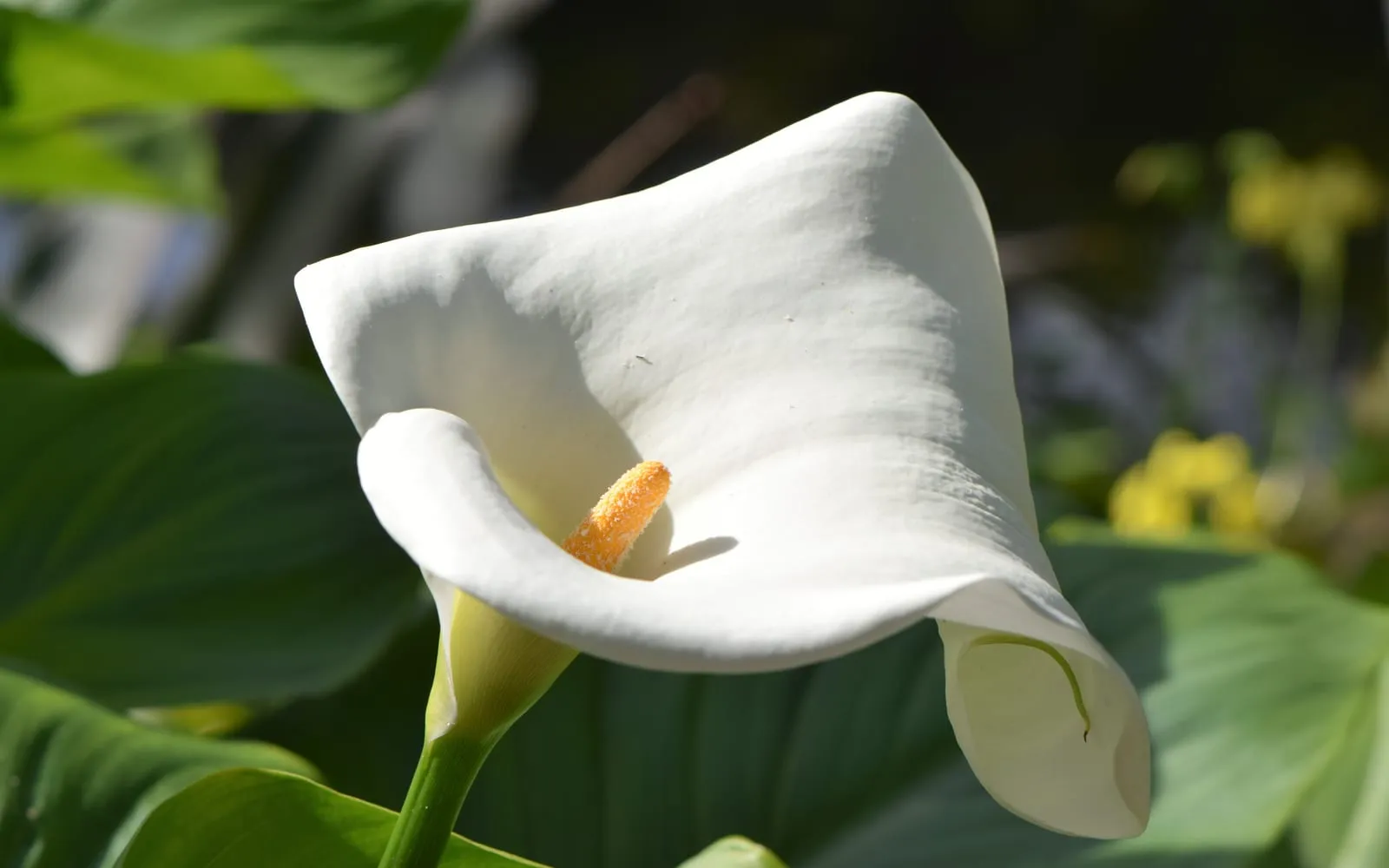
The elegant white funnel is a spathe, a modified leaf wrapped around the yellow column in the centre. The actual flowers are the minute bumps covering that column, and the plant belongs to the arum family alongside cuckoo pint in Europe and jack-in-the-pulpit in North America.
Appearance and character
Large arrow-shaped leaves, glossy dark green, up to 45 cm long on long fleshy stalks rising directly from the rhizome. The clump reaches 60 cm to a metre.
The spathe is pure white, funnel-shaped with a recurved tip and a slight twist, held on a stout stem clear of the foliage.
Inside sits a yellow spadix, and the whole structure has a faint sweet scent in warm weather.
Flowering runs from May into July in a temperate summer, with scattered later flowers in a mild autumn.
‘Crowborough’ is the selection to look for in a cold garden, raised in Sussex and noticeably hardier than the type. ‘Green Goddess’ has a spathe streaked and flushed green.
Leaves stay through winter in mild coastal gardens and die back to the rhizome after a hard frost inland. Both are normal.
Where it is from
Southern Africa, in marshes, ditches, streamsides and ground that floods through the wet season, from the Cape northward.
Standing in water for months is what the plant is built for. The rhizome and stems carry air channels that supply oxygen to roots sitting in mud with none, which is why a calla thrives where most perennials drown.
That habitat explains the one common failure in gardens. Planted in an ordinary well-drained border and watered like a normal perennial, the plant survives and flowers poorly. In wet clay beside a pond it does what it is supposed to.
The Cape climate is wet in winter and dry in summer, so the plant grows through the cool wet months and rests in the dry heat. Anywhere the rain falls in summer instead the timing inverts and it grows through spring and summer, which suits it well enough.
It has become an invasive weed in Western Australia and parts of New Zealand and coastal California, spreading along watercourses.
How it grows
A perennial growing from a thick fleshy rhizome sitting at or just below the soil surface, sending up leaves and flower stems directly from growth points along it.
New leaves appear from March in a temperate climate, earlier in a mild winter, and the clump builds through spring before flowering.
The rhizome thickens and branches each year, so a single plant becomes a substantial clump within three or four seasons.
Divide in early spring as growth restarts. Lift the clump, cut the rhizome into pieces each with at least one growth point, and replant at once. Wear gloves.
Seed forms in the spadix as a yellow-orange cob if flowers are pollinated. It germinates readily and takes three years to reach flowering size.
Growth stops and the plant may die back entirely after hard frost, returning from the rhizome in spring.
Through the seasons
Spring is when growth restarts and the best time to divide or plant. Slugs target the emerging leaves, so protect them.
Early summer brings the flowers, from May into July. Feed fortnightly and never let the soil dry.
Late summer is when flowering tails off. Keep watering, since the plant is still building the rhizome for next year.
Autumn brings the die-back after the first hard frost inland. Leave the dead foliage over the crown as protection, or mulch deeply.
Winter needs a decision by region. In mild coastal gardens the plant stays evergreen and needs nothing. Inland, mulch the crown with 10 cm of bark or compost, or grow it in a pot and move it into a cold greenhouse.
Care difficulty
Easy, once you accept that the ordinary rules about drainage do not apply.
The commonest mistake is treating it as a normal border perennial. Planted in free-draining soil and watered occasionally, it produces small leaves, few flowers and a rhizome that never bulks up.
The second is winter. The rhizome survives frost well when it is deep, wet or submerged, and it is vulnerable when shallow and dry. Planting 10 to 15 cm deep, or in the shallow margin of a pond below the level ice reaches, gets it through most temperate winters.
The third is confusing it with the coloured hybrids and lifting it for winter storage, which dries out a rhizome that wanted to stay wet.
Watering
Keep the soil wet throughout the growing season. This plant does not suffer from overwatering between March and September.
In a border, water generously and often, and mulch heavily to hold moisture. In dry weather a daily soak is not excessive.
In a container, stand the pot in a saucer or tray with several centimetres of water and keep it topped up. This is the easiest way to grow a good one.
At a pond margin, plant it in the shallows with the rhizome 5 to 30 cm under water. It will grow as a true marginal.
Reduce watering after flowering finishes and through winter for plants under cover, keeping the compost damp rather than saturated so a cold dormant rhizome does not rot.
Warning signs, diseases and pests
Small pale leaves and few flowers usually mean the soil is too dry. This is the single most common problem and the easiest to fix.
Yellowing leaves after flowering are normal as the plant begins to rest.
Leaves collapsing with a soft foul-smelling rhizome mean bacterial soft rot, which follows cold damage or damage from a spade. Cut away the affected rhizome into clean firm tissue and replant elsewhere.
Slugs and snails shred emerging spring leaves and can strip a young plant.
Aphids cluster on flower stems and distort the developing spathes.
Brown scorched leaf margins come from strong sun combined with dry soil.
A plant that fails to reappear in spring after a hard winter was probably too shallow and too dry. Deeper planting and a thicker mulch prevent it.
Spathes opening green rather than white can indicate too much nitrogen.
Growing environment
Full sun or partial shade. Full sun gives more flowers provided the soil stays wet, and partial shade suits it better on dry ground.
Heavy, rich, moisture-retentive soil is ideal. Clay that other plants struggle in is close to perfect here. Work in plenty of compost or well-rotted manure.
Pond margins, bog gardens and ditch sides are the natural home for it in a garden, planted in the shallow water or the saturated ground beside it.
Hardy to about -10 deg C when the rhizome is deep or submerged. Plant 10 to 15 cm deep in a border and mulch after the first frost.
Coastal and southern gardens can leave it out year-round with no protection. Cold inland gardens do better growing it in a large pot moved into a cold greenhouse or porch for winter.
Choose a sheltered spot. The large leaves tear in strong wind.
Feeding
Feed fortnightly from April to August with a balanced liquid fertiliser, switching to a high-potassium tomato feed once the flower stems appear.
The plant is a hungry grower on wet soil, and feeding makes a visible difference to flower numbers.
A generous mulch of well-rotted manure or compost in spring feeds it and holds moisture at the same time, which serves both needs at once.
Avoid high-nitrogen feeds, which produce large leaves at the expense of flowers.
Stop feeding by the end of August so the plant hardens before winter.
Troubleshooting
Mine died over winter. Either too shallow or too dry. Plant the rhizome 10 to 15 cm deep, mulch thickly after the first frost, or grow it in a pot brought under cover. Look for ‘Crowborough’, which is the hardiest selection.
It has leaves but no flowers. Dry soil is the usual cause, and too much nitrogen is the next. Water far more, and switch to a potassium-rich feed.
Can I grow it in a pond? Yes. This is the one calla that grows as a true marginal, in up to about 30 cm of water. The coloured hybrids will not.
My pink one rotted when I did the same thing. The coloured hybrids come from different species with a summer growth cycle and a dry dormancy. Lift them in autumn, dry the tubers, and store them frost-free.
The leaves have brown scorched edges. Sun combined with dry soil. Water more and mulch.
Is it safe around cats? No, and the name is the danger. It causes painful mouth irritation through calcium oxalate. It is not a true lily and does not carry the kidney toxicity of real lilies, which are far more serious for cats.
When do I divide it? Early spring as growth restarts. Cut the rhizome so each piece has a growth point, wear gloves, and replant immediately.
The spadix has turned into an orange cob. That is the seed head. Cut it off unless you want to raise seedlings, which take about three years to flower.