
Disease
Brown rot
Monilinia fructigena
Also called Blossom wilt, Monilinia, Fruit rot
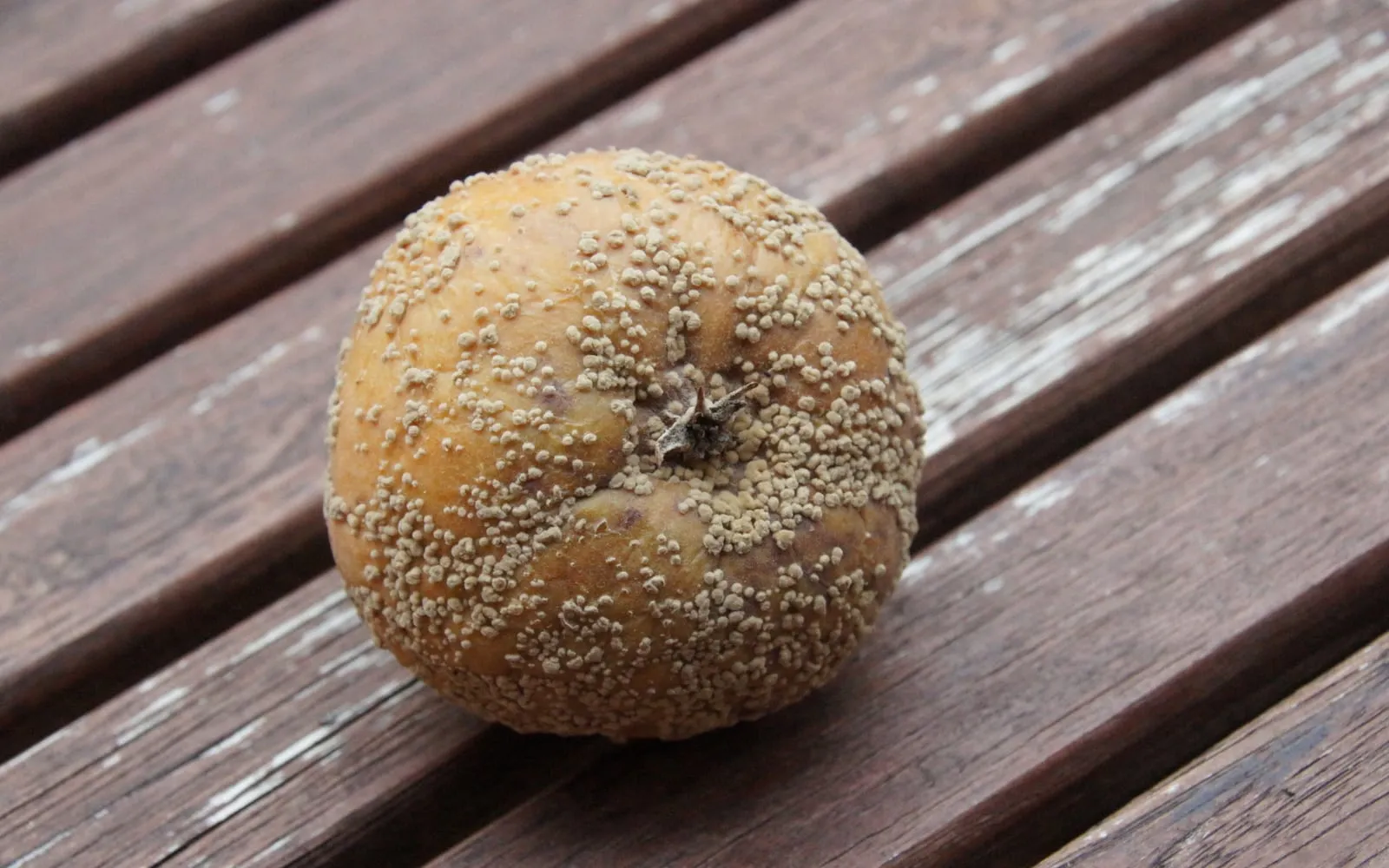
Brown rot makes apples and plums rot on the tree in concentric rings of buff pustules, then shrivel to hard black mummies. Remove mummified fruit in winter to reduce the next infection cycle.
At a glance
- Type
- Disease
- Cause
- Fungus
- Severity
- Destroys the crop or display
- Affects
- Herbs and edibles
- Active
- April to October
- Established in
- Worldwide
What you are seeing
- A soft brown patch spreading across a fruit until the whole thing is brown
- Rings of raised buff or cream pustules arranged in circles on the rotted surface
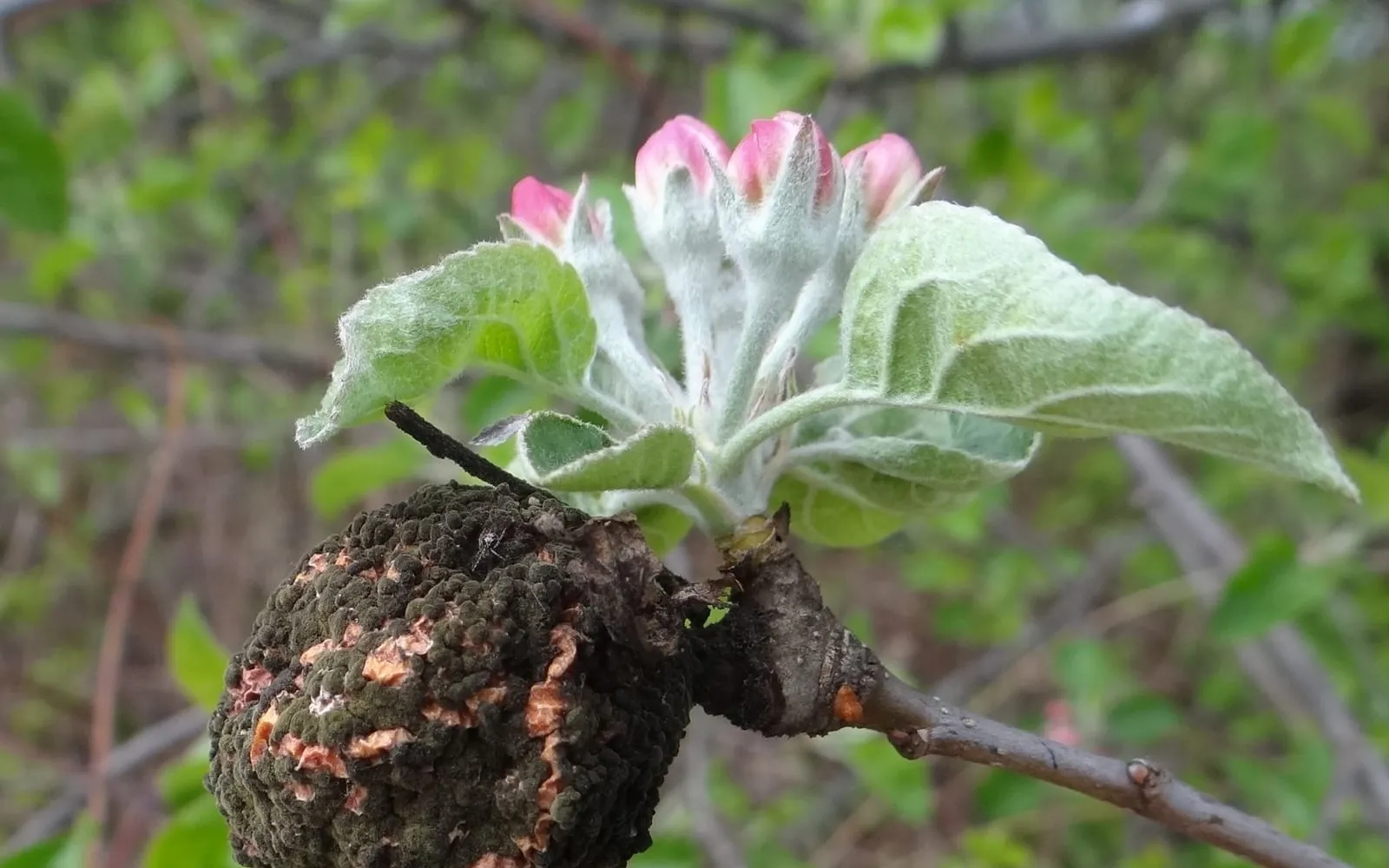
- Fruit shrivelling to a hard, wrinkled, blackish mummy that stays attached all winter
- Blossom and the spur behind it browning and dying suddenly in spring, with the dead flowers hanging on
- Small cankers on the spur or shoot behind a dead cluster of blossom
- Rot starting at a wound, a wasp hole or a codling moth entry
- Fruit rotting in store weeks after picking, from a single soft point
Before you treat anything
Discard rotted fruit rather than cutting the good part out. The rot supports moulds that produce compounds you would rather not eat, and the fungus has usually spread further through the flesh than the brown patch shows.
What you are looking at
A brown patch appears on an apple, pear or plum and spreads until the whole fruit is brown and soft. Within days, small raised pustules the colour of clotted cream push through the surface, and they are arranged in rings around the point where the rot started. That concentric pattern is the diagnosis.
The fruit then dries rather than falling apart. It shrivels, darkens to blackish-brown, hardens, and stays hanging in the branches through the winter as a mummy.
On cherry, plum and apricot the same group of fungi does something different in spring. Whole trusses of blossom brown and die within a day or two, the dead flowers stay attached, and the spur behind them dies back with a small canker at its base.
The mummies are the disease
Everything about brown rot runs through the fruit that stayed on the tree.
Through winter, a mummy sits a few centimetres from the buds that will open in March. When they do, it produces spores that land straight into the blossom or onto the developing fruitlets. In summer the pustules on any rotting fruit release spores that splash and blow onto neighbours, and the rot moves through a touching cluster from one to the next.
Sound, unbroken skin resists infection well. What lets the fungus in is a wound. A wasp hole, a bird peck, a codling moth entry, a crack over an apple scab and a bruise from careless picking will all do it, which makes brown rot the disease that follows other problems, and it is why controlling wasps and moths pays off twice.
None of this is reached by anything sold to a gardener. There is no amateur fungicide for brown rot in Britain. What there is instead is an hour in January with a pair of secateurs and a bucket, which works.
What to do about it
Go over the tree in December or January and pick off every mummified fruit, including the ones lodged in a fork or lying in the grass. Bin or burn them and keep them out of the compost.
Prune out spurs and shoots that died back at blossom time, cutting 10 to 15 cm into sound wood. On plums and cherries do that in summer, never in winter.
Thin the fruitlets in June so no two touch.
Pick off any fruit that starts to rot, twice a week through late summer, and carry it away from the tree.
Collect windfalls weekly.
Pick the crop gently into a lined container and store only unmarked fruit, spaced out so nothing touches.
Deal with wasps and codling moth, since most infections start in the holes they make.
What it gets mistaken for
Codling moth leaves a round entry hole plugged with dry brown crumbs and a tunnel to the core. Brown rot has no tunnel, and the two are found together because the hole is how the fungus got in.
Apple scab makes dry corky patches that crack the skin over sound firm flesh.
Grey mould covers a fruit in a loose grey fuzz that releases a cloud of spores when knocked, and its growth is not arranged in rings.
Bitter rot and other storage rots produce a sunken brown patch without the ringed pustules. If in doubt, the rings settle it.
Bird and wasp damage leaves open ragged craters with the flesh eaten away rather than rotted, and brown rot usually follows into them a few days later.
What to do, in order
Start here
Prevention, and the changes that stop the problem returning. Most of these pages should end at this tier.
- Take every mummified fruit off the tree in winter
- The shrivelled black fruit hanging in the branches is next spring's infection, and it will produce spores at blossom time from a few centimetres away. Go over the tree in December or January and pick off every one, along with any lying underneath. Bin them or burn them. This is the most effective thing anyone can do about brown rot and it costs an hour.
- Thin the fruit so none of them touch
- The rot moves from fruit to fruit by contact, which is why a cluster goes as a group. Thinning to single fruits in June leaves each one isolated and improves the size at the same time.
- Handle the crop carefully at picking
- Every bruise and every puncture is a way in. Pick into a lined basket rather than tipping fruit from one container to another, and keep fingernails out of the skin.
- Store only sound fruit, and keep them apart
- Sort at picking and store nothing with a mark on it. Wrapped individually, or spaced out on slatted trays so no two touch, apples keep for months. Packed tight in a box, one infected fruit takes the lot.
- Deal with what makes the wounds
- Wasps, birds, codling moth and scab cracks all open the skin for this fungus. A tree where those are managed carries much less rot, and that is often a better use of effort than anything aimed at the rot itself.
Then reach for a barrier
Netting, hand removal and water. Nothing here harms anything except the target.
- Pick off rotting fruit as soon as it appears
- A rotting apple left on the branch produces millions of spores that infect its neighbours. Take affected fruit off twice a week through late summer, and take it away from the tree rather than dropping it on the ground.
- Prune out spurs and shoots that died at blossom time
- Where blossom wilts and dies suddenly on cherry, plum or apricot, the fungus has moved back into the wood behind it. Cut those spurs out in summer, going 10 to 15 cm into healthy wood, and take the prunings away. Prune Prunus in summer rather than winter, which is the same rule silver leaf and bacterial canker both demand.
- Keep the fallen fruit picked up
- Windfalls rot on the ground and keep the spore load up around the tree for the rest of the season. Collect them weekly.
In pictures
Plants affected
Guides that name it among the problems to watch for. The list is the plants it is characteristic of rather than everything it will feed on.