
Disease
Blackleg
Pectobacterium atrosepticum
Also called Potato blackleg, Blackleg of potato, Stem rot
A potato plant yellowing and toppling with a slimy black stem base. Where blackleg comes from, why certified seed is the whole prevention, and how it turns into soft rot in store.
At a glance
- Type
- Disease
- Cause
- Bacterium
- Severity
- Destroys the crop or display
- Affects
- Herbs and edibles
- Active
- May to August
- Established in
- Worldwide
What you are seeing
- Shoots emerging and then yellowing, stunting and rolling their leaves upwards
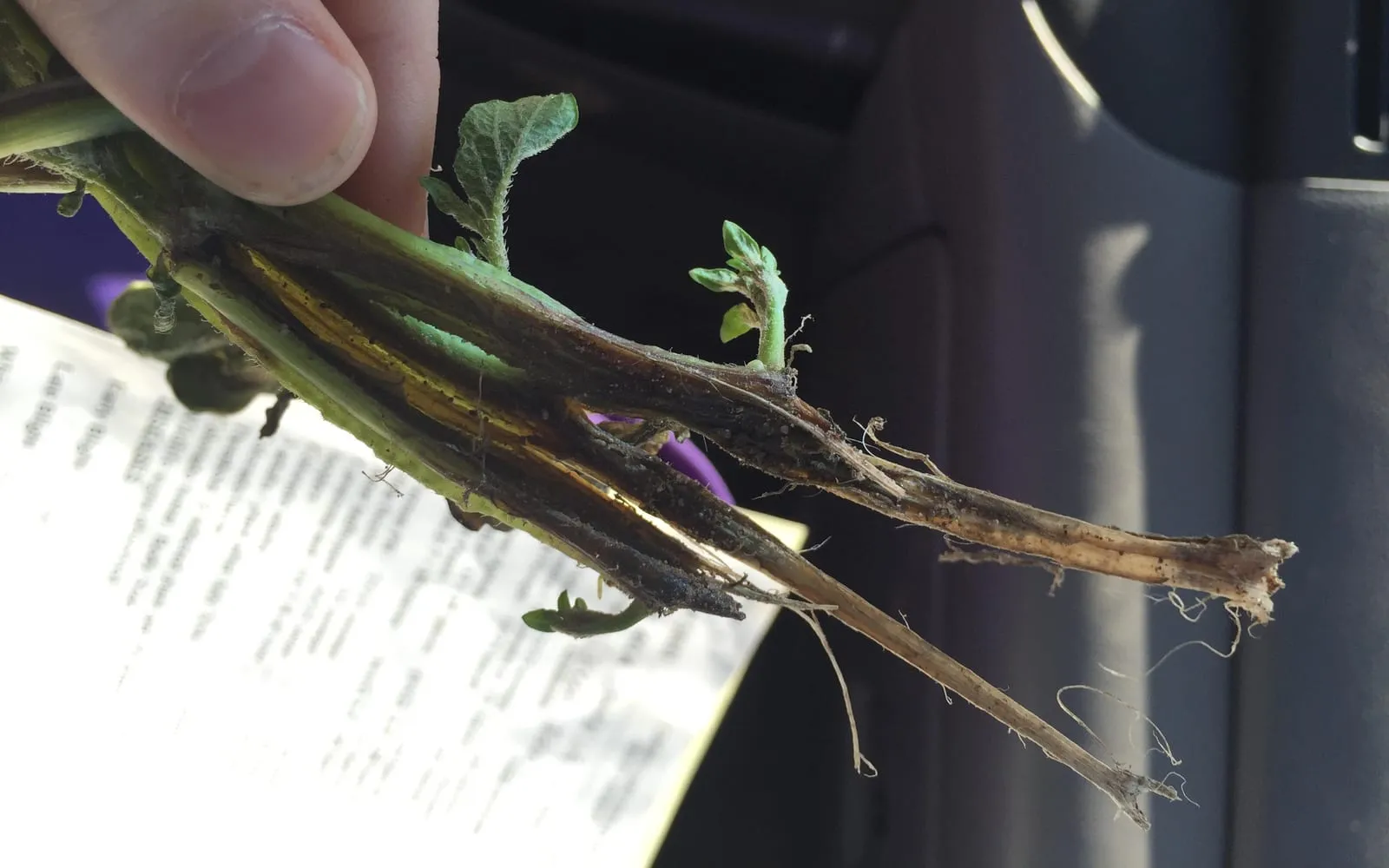
- The stem base turning inky black, soft and slimy for the lowest few centimetres
- Plants toppling over, with the stem pulling away easily at the rot
- A foul smell from the rotted tissue
- One or two plants affected in a row while their neighbours grow away normally
- Tubers rotting from the stolon end inwards, wet and cream to grey
- Sound-looking tubers collapsing into slime weeks into storage
Before you treat anything
Discard rotted tubers rather than cutting the good part out. The rot is wet, spreads further through the flesh than it appears to, and smells strongly enough that nobody is tempted anyway.
What you are looking at
One potato plant in a row is wrong. The shoot came up, then yellowed, stunted and rolled its leaves upwards while the plants either side grew away normally.
Follow the stem down to the soil. The bottom few centimetres are inky black, soft and slimy, and the whole plant lifts or topples with almost no resistance because the stem has rotted through at the base. It smells foul.
Underground, the seed tuber has usually turned to a wet cream or grey mush, and any new tubers rot from the stolon end inwards.
The other place it appears is in the sack. Tubers that looked sound at lifting collapse into slime weeks later, and one takes several of its neighbours with it.
It came in on the seed tuber
That is the fact the rest of the page hangs from. This bacterium lives inside apparently healthy potatoes, and it travels from one season to the next in planting stock rather than in the ground.
It does not persist well in soil. Without potato debris to live in it dies out within a season or two, which makes it far less intractable than clubroot or white rot and means a normal rotation helps.
What it needs to cause damage is moisture and a lack of oxygen. Cold wet soil around a seed tuber, a waterlogged bed, a cut face on a tuber, or a polythene bag in a damp shed all supply that. Plant a clean tuber into warm ground that drains, and lift and cure the crop dry, and the same bacteria that would have destroyed the crop do nothing at all.
Certified seed is the whole of the prevention. It is grown under inspection in regions chosen for low disease pressure, and it is why blackleg is a nuisance in British gardens rather than a catastrophe. Saving tubers from a crop that had it reproduces the problem faithfully.
What to do about it
Buy certified seed potatoes each year rather than saving your own or planting supermarket ones.
Plant them whole. Do not cut them to make the bag go further.
Wait for the soil to warm and to drain rather than planting to a date.
Pull any affected plant as soon as you see it, with its seed tuber and its new tubers, and bin or burn the lot.
Lift the crop on a dry day, dry the tubers off, and cure them in the dark for a fortnight before storing.
Sort ruthlessly and store nothing that is cut, marked, soft or slug-holed.
Use paper or hessian sacks somewhere cool, dark and airy rather than polythene.
Check the store every few weeks and take out anything soft.
Pull volunteer potatoes out of the rotation.
What it gets mistaken for
Blight begins on the leaves as brown blotches with pale margins, works down the plant, and turns the tubers a firm reddish-brown from the outside in. Blackleg starts underground and rots wet and soft.
Potato scab roughens the skin and stops there.
Waterlogging kills plants across a whole bed together, on the wettest ground, without blackening the stem base.
Slug damage bores holes into tubers, and the soft rots that follow into those holes are the same family of bacteria arriving by a different route.
Frost damage on early shoots blackens the leaves and growing tips above ground and leaves the stem base sound.
What to do, in order
Start here
Prevention, and the changes that stop the problem returning. Most of these pages should end at this tier.
- Buy certified seed potatoes every year
- The bacterium comes in on the seed tuber almost every time, sitting inside apparently healthy stock. Certified seed is grown under inspection in areas chosen for low disease pressure, and it is the single reason British gardeners see so little of this. Saving your own tubers from a crop that had blackleg reliably reproduces it.
- Do not cut seed tubers to make them go further
- A cut face is an open wound on a tuber going into cold wet soil, and it is how a clean tuber becomes an infected one. Plant them whole.
- Plant into warm soil that drains
- Cold, wet, airless soil is what lets the bacteria multiply faster than the seed tuber can defend itself. Wait for the soil to warm rather than planting to the calendar, improve the drainage on heavy ground, and avoid planting into a waterlogged bed.
- Do not water heavily early on
- Watering matters enormously during tuber formation and very little before the shoots are up. Keeping the ground merely moist in the first few weeks after planting reduces the risk considerably.
- Harvest in dry weather and cure the crop
- Lift on a dry day, leave the tubers on the surface for a few hours to dry, and let them cure in the dark for a fortnight before storing. Skin that has hardened resists the soft rot that finishes the crop off in January.
- Rotate, and take some comfort
- Unlike white rot and clubroot, this bacterium does not survive long in soil without potato debris to live in. A normal rotation, with volunteer potatoes pulled out, is enough on its own.
Then reach for a barrier
Netting, hand removal and water. Nothing here harms anything except the target.
- Pull affected plants as soon as you see them
- Lift the whole plant with its seed tuber and any new tubers, and bin or burn it. Leaving it in the row spreads the bacteria to neighbours in wet soil and guarantees a rotten tuber turning up in the sack later.
- Sort ruthlessly at lifting
- Store nothing with a soft patch, a cut, a slug hole or a mark on it. One rotting tuber in a paper sack will take a large share of the crop with it, and the loss usually happens quietly in a shed in midwinter.
- Store cool, dark, dry and airy
- Paper or hessian sacks rather than polythene, somewhere frost-free and ventilated. The bacteria need moisture and no oxygen, so a sealed damp bag is the one condition to avoid.
- Check the store every few weeks
- Tip the sack out, remove anything soft, and the rest keeps. This is ten minutes that saves a sack.
Plants affected
Guides that name it among the problems to watch for. The list is the plants it is characteristic of rather than everything it will feed on.