
Edible
Oil Palm
Elaeis guineensis
Also known as African oil palm, Red palm, Dende, Macaw fat
How to grow the oil palm, Elaeis guineensis. The two different oils one fruit produces, the reason it yields more per hectare than any other oil crop, and why that is the argument in both directions.
At a glance
- Difficulty
- Difficult
- Water
- Twice a week in growth, less in winter
- Light
- Full sun when mature, light shade when young
- Temperature
- 24-32 deg C, and it is damaged below 15
- Humidity
- High
- Hardiness
- USDA 10-12, RHS H1b, hardy to 12 C
- Type
- Tender evergreen palm
- Height
- 20-30 m in the tropics, 2-3 m in a pot
- Native to
- West and Central Africa
- Best month
- May in the Northern Hemisphere, November in the Southern Hemisphere
Wet lowland west Africa, needing high rainfall spread through the year and full sun. It is the highest-yielding oil crop by area grown and the driver of large-scale rainforest clearance in south-east Asia, so the sourcing question sits alongside the growing one.
Hardiness zones describe winter cold alone. Summer heat, humidity, rainfall and the length of the growing season decide as much, so treat the range as the outer limit rather than as a recommendation.
Every month named in this guide is for the temperate Northern Hemisphere. If you garden in the Southern Hemisphere, shift each one by six months, so May becomes November. Closer to the equator the wet and dry seasons matter more than the calendar, and the shift stops being a useful guide.
Not known to be toxic
- Safe to eat
- The fruit pulp and the kernel, both processed into oil
Oil palm is a food crop and nothing about it is poisonous. Palm oil from the fruit pulp and palm kernel oil from the seed are both edible, and unrefined red palm oil is a staple cooking fat across West Africa, high in carotenoids and vitamin E. Neither the RHS nor the ASPCA lists Elaeis guineensis. The nutritional debate around palm oil concerns saturated fat in refined products rather than any toxicity, and the environmental debate concerns land use rather than the plant. The fronds carry sharp spines along the stalks and are a puncture hazard when pruning, which is the only practical caution for anyone growing one.
Sources: RHS potentially harmful garden plants, ASPCA toxic and non-toxic plants
About
The oil palm produces two different oils from one fruit. The orange fibrous pulp gives palm oil, and the hard seed inside gives palm kernel oil, and the two have different fatty acid profiles and different industrial uses. No other crop plant does this.
Yield is the reason it dominates. A hectare of oil palm produces several times the oil of a hectare of rapeseed, soya or sunflower, which makes it the cheapest vegetable oil in the world and puts it in roughly half the packaged products in a supermarket.
That same yield is the centre of the argument. Producing the same oil from anything else would take far more land, and the land oil palm is planted on has too often been lowland tropical rainforest and peat swamp in Indonesia and Malaysia, with the orangutan as the emblem of what was lost.
West Africa has grown it for millennia without any of that, in mixed smallholder groves, pressing red palm oil for the kitchen. The plant and the industry are separate questions.
Appearance and character
A single-trunked evergreen palm reaching 20 to 30 m in plantation and easily kept to 2 or 3 m in a container for years, since it grows slowly when young.
The trunk is stout, unbranched, and covered in the persistent bases of old fronds, which give it a rough stepped surface until they weather away.
Fronds are pinnate, 3 to 5 m long on a mature palm, with 100 to 150 stiff leaflets each side of a central rib. The base of each frond stalk carries hard sharp spines.
A mature palm holds 30 to 45 fronds in the crown, replacing them steadily.
Flowers come in dense branched clusters at the frond bases, with male and female clusters produced separately on the same palm at different times.
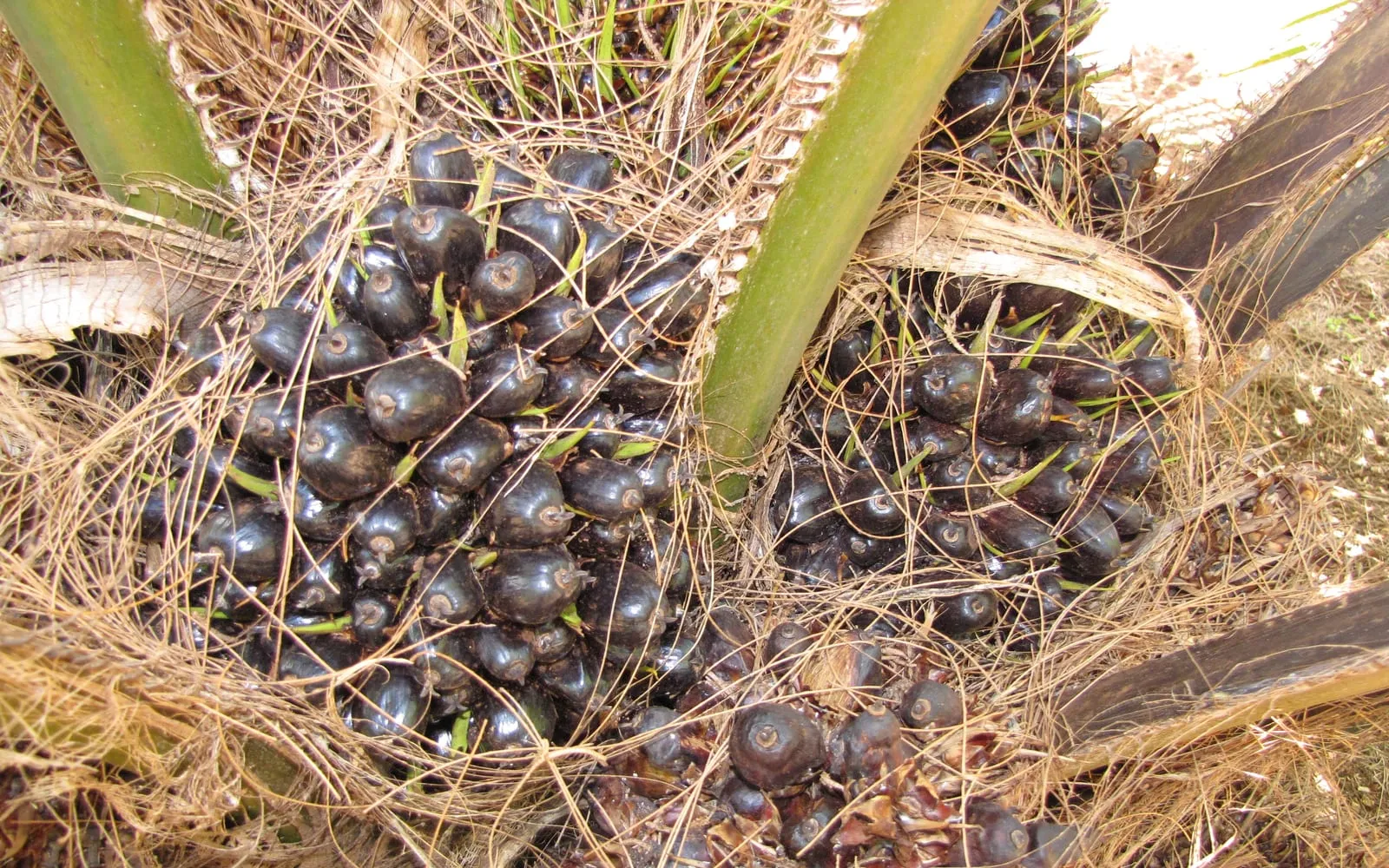
Fruit forms in a tight bunch that can weigh 10 to 25 kg, holding a thousand or more individual fruits.
Each fruit is a plum-sized drupe, dark purple ripening to orange-red, with a thick orange oily pulp around a single hard nut.
Crack the nut and the kernel inside is white and oily, and it gives the second oil.
Where it is from
Elaeis guineensis is native to the coastal belt and river margins of West and Central Africa, from Senegal round to Angola and inland along the Congo, in forest gaps and swamp margins.
West African use goes back thousands of years. Palm oil residues are found in Egyptian tombs, presumably traded up the continent, and smallholder groves have supplied cooking oil across the region for as long as there are records.
Enslaved West Africans carried it to Brazil, where dende oil became the defining fat of Bahian cooking.
The plant reached South East Asia as an ornamental in the nineteenth century. Four seedlings planted in the Bogor botanical garden in Java in 1848 are the ancestors of much of the Asian industry.
Indonesia and Malaysia now produce the great majority of the world crop, with Thailand, Colombia and Nigeria some way behind. West Africa, its homeland, is now a net importer.
How it grows
Sow fresh seed, which needs heat treatment to break a stubborn dormancy. Commercial nurseries hold seed at 39 deg C for two to three months before sowing, and germination without it is slow and erratic.
Sow at 28 to 30 deg C in free-draining compost and expect two to four months even after treatment.
Give young plants light shade, since a seedling grows in a forest gap rather than in the open.
Grow in a heated greenhouse or conservatory outside the tropics, above 15 deg C at all times.
Keep humidity high, since dry air browns the frond tips and brings red spider mite.
Water evenly and generously through the growing season.
Feed monthly with a palm fertiliser containing magnesium, since palms show magnesium deficiency readily as yellow bands on older fronds.
Pot on as it fills its container, and expect it to outgrow any greenhouse in ten or fifteen years.
Wear gloves when removing old fronds, since the stalk bases are spined.
Expect no fruit. A palm bears from three or four years old in the tropics and needs conditions a cool climate cannot supply.
Through the seasons
Spring is for repotting, resuming the feed and removing dead fronds.
Summer is the main growth period, and the months to keep humidity and water up.
Autumn is when to reduce feeding as light drops.
Winter is a warm humid rest above 15 deg C, watered sparingly, with the palm in full leaf.
Any month may produce a new frond, since palms grow steadily rather than seasonally when they are warm enough.
Care difficulty
Difficult, and the difficulty starts at the seed.
Germination needs a heat treatment at 39 deg C for two to three months before sowing, and without it the seed is slow and erratic.
The plant then needs 15 deg C as an absolute floor and high humidity year round.
Red spider mite in dry greenhouse air is the standard failure, and it disfigures a palm quickly.
Magnesium deficiency shows readily and needs a palm-specific feed.
It will outgrow a greenhouse in time, which is a problem worth thinking about before starting.
Watering
Water twice a week through the growing season.
Keep the compost evenly damp and never let it dry out fully.
Reduce in winter without letting the root ball go dry.
Keep humidity high with damp gravel, misting or grouping.
Use rainwater in a hard water area.
Drain fully every time, since the roots will not sit in cold water.
Warning signs, diseases and pests
Brown crisp frond tips mean dry air.
Fine speckling and webbing on the leaflets is red spider mite, which palms suffer badly in a dry greenhouse.
Yellow or orange bands along the older fronds while the newest stay green is magnesium deficiency, which is common in palms.
Brown limpets along the frond stalks are scale.
White waxy fluff in the crown is mealybug.
A frond that emerges pale and distorted usually means the plant is short of a nutrient or has been too cold.
Wilting with soft brown tissue at the base is root rot from cold wet compost.
Puncture wounds on the hands come from the spines at the frond bases, and gloves prevent them.
Red palm weevil is an outdoor plantation risk, hollowing out the trunk from within until the crown collapses. It is native to Asia and has since spread across North Africa and the Mediterranean, and has never established in most of North America, Australia or New Zealand.
Coconut rhinoceros beetle leaves clean, V-shaped cuts across unfurled fronds, damage done weeks earlier inside the crown. Native to Africa and tropical Asia, it has spread through much of the Pacific and continues gaining ground. Clear rotting logs and compost near plantings, since that is where it breeds.
Growing environment
A heated humid greenhouse or a large conservatory.
Light shade when young, full sun when mature.
Minimum 15 deg C year round, with 24 to 32 deg C for growth.
High humidity.
Deep rich free-draining compost.
A large container, and progressively larger ones.
Room for a palm that will keep growing for as long as you keep it.
Feeding
Feed a palm fertiliser containing magnesium monthly from April to September.
Reduce through winter without stopping entirely.
Watch for magnesium deficiency, which shows as yellow banding on older fronds, and correct it with Epsom salts.
Top dress with fresh compost each spring.
Avoid heavy nitrogen alone, which produces soft growth and worsens nutrient imbalance.
Feed nothing to a palm standing still because it is cold.
Troubleshooting
Why does one fruit give two oils? Palm oil comes from the orange fibrous pulp and palm kernel oil comes from the seed inside the nut. They have different fatty acid profiles and different uses, and no other crop does this.
Why is palm oil in everything? Yield and price. A hectare of oil palm gives several times the oil of a hectare of rapeseed, soya or sunflower, which makes it the cheapest vegetable oil there is.
Is growing it bad for the environment? The crop is not the problem; where it was planted is. Clearance of lowland rainforest and peat swamp in Indonesia and Malaysia caused most of the damage. West African smallholder groves have produced palm oil for millennia without it.
What is red palm oil? Unrefined palm oil from the fruit pulp, deep orange from its carotenoids, and a staple cooking fat in West Africa and in Bahian Brazilian cooking as dende.
My seed never germinated. Oil palm seed has a stubborn dormancy. Commercial nurseries hold it at 39 deg C for two to three months before sowing, and without that treatment germination is slow and unreliable.
Why are the older fronds going yellow in bands? Magnesium deficiency, which palms show readily. Use a palm fertiliser containing magnesium, or correct it with Epsom salts.
Will it fruit in a greenhouse? No. It bears from three or four years old in the tropics and needs conditions no heated greenhouse can supply.
How big will it get? Too big, eventually. It grows slowly for the first years and then keeps going, and it will outgrow a greenhouse in ten or fifteen years.
Why are there spines? The frond stalk bases carry hard sharp spines, which is normal for the species. Wear gloves when pruning.
Oil Palm problem guides
Not sure what is wrong? See the common vegetable pests guide.
- Red spider mite under dry glass, which palms suffer badly
- Scale insects along the frond stalks
- Mealybug in the crown
- Root rot in cold wet compost
- Leaf scorch and brown frond tips from dry air
- Red palm weevil outdoors, established across Asia, North Africa and the Mediterranean
- Coconut rhinoceros beetle, an established and still-spreading Pacific invader