
Edible
Love-Lies-Bleeding
Amaranthus caudatus
Also known as Kiwicha, Tassel flower, Velvet flower, Foxtail amaranth, Inca wheat
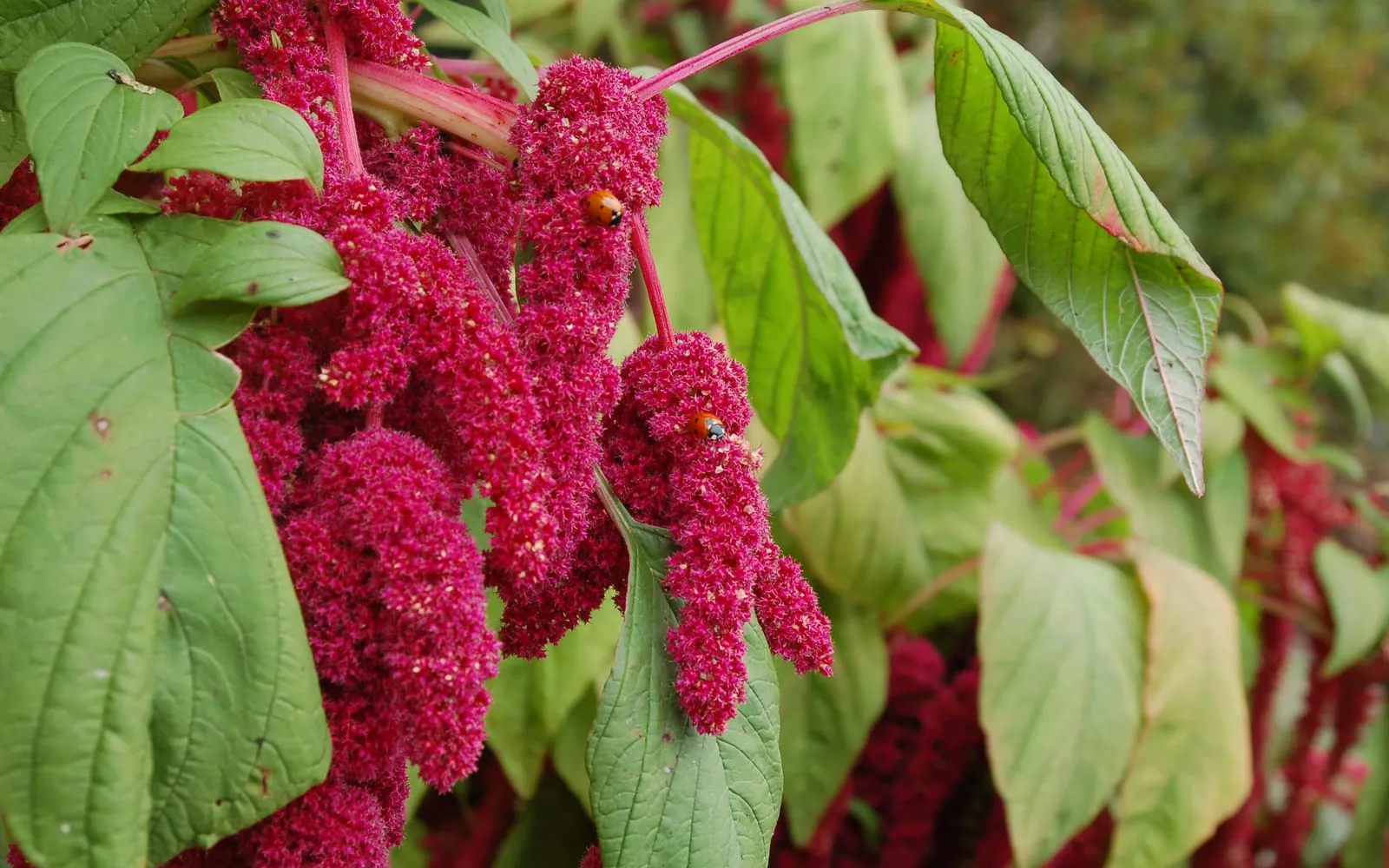
How to grow love-lies-bleeding, Amaranthus caudatus. Crimson ropes hanging to the ground, a Victorian border favourite, and an Andean grain crop under another name.
At a glance
- Difficulty
- Easy
- Water
- Water through establishment, then sparingly
- Light
- Full sun
- Temperature
- 18-28 deg C, and it tolerates cool nights better than its Mexican relatives
- Hardiness
- USDA 2-11, RHS H2, hardy to 2 C
- Type
- Tender annual
- Height
- 90-150 cm
- Native to
- the Andes, Peru and Bolivia
- Best month
- May, June and September in the Northern Hemisphere, November, December and March in the Southern Hemisphere
It is Amaranthus caudatus, an Andean grain amaranth grown at higher and cooler altitudes than the Mexican species, which is why it fills seed in a cool summer where they will not. The ornamental sold for its ropes of crimson tassels and the grain crop of the Andes are the same plant. Frost ends it and soil needs about 15 C to germinate.
Hardiness zones describe winter cold alone. Summer heat, humidity, rainfall and the length of the growing season decide as much, so treat the range as the outer limit rather than as a recommendation.
Every month named in this guide is for the temperate Northern Hemisphere. If you garden in the Southern Hemisphere, shift each one by six months, so May becomes November. Closer to the equator the wet and dry seasons matter more than the calendar, and the shift stops being a useful guide.
Edible, with limits
- Safe to eat
- The seed, and the young leaves cooked
- Do not eat
- Large quantities of raw leaf, and leaf from heavily fertilised plants
- Harm from
- Eating it
- Affects
- People, horses, cats and dogs
The grain contains no gluten and is safe, and kiwicha is eaten daily across the Peruvian and Bolivian highlands. The leaves carry the two qualifications that apply across the genus. They contain oxalates in the way spinach and chard do, so anyone limiting oxalate for kidney stones should treat them the same way and cook them with the water discarded. And Amaranthus species accumulate nitrate, particularly on heavily manured ground, with nitrate poisoning of cattle, sheep, pigs and horses grazing pigweed species recorded in veterinary literature. Do not feed quantities of the foliage to livestock or to rabbits and guinea pigs. As a border plant grown for its tassels rather than eaten, none of this arises.
Sources: RHS on potentially harmful garden plants, British Horse Society on poisonous plants
About
Love-lies-bleeding is grown in temperate borders for one thing. Ropes of deep crimson flower hang from the top of the plant to the ground, sometimes a metre of them, and they hold their colour from August until the frost. Victorian gardeners adored it, and it appears in bedding schemes and in dried arrangements throughout the nineteenth century.
The same plant is a staple grain in the Andes. Kiwicha was domesticated in Peru and Bolivia and grown alongside quinoa and potato, and it is still cultivated there for a tiny pale seed that pops, mills into flour and cooks into porridge. European seed catalogues sell the ornamental and Andean markets sell the grain, and they are the same species.
It is the easiest of the three grain amaranths to grow in a cool climate, because the Andean highland origin means it tolerates cooler nights than the Mexican species do. A plant sown in May will be flowering by August and cropping seed by early October.
Appearance and character
The tassels are unmistakable. Long, thick, velvety ropes of tiny flowers, usually deep crimson and occasionally pale green in the cultivar sold as Viridis, hanging vertically from the top of the plant and often reaching the soil. Each tassel is made of thousands of individual flowers with papery bracts.
The plant beneath is upright and branching, with a thick grooved stem that is often flushed red and broad oval leaves up to 15 cm long. In the crimson forms the pigment runs through leaves, stems and flowers alike.
The seed is tiny, about 1 mm, round and shiny, and in the Andean grain types it is pale cream or gold rather than the black of the ornamental strains. Pale seed generally indicates a grain variety, since dark seed coats are the wild condition.
Where it is from
Amaranthus caudatus was domesticated in the Andes of Peru, Bolivia and Ecuador, probably from Amaranthus quitensis, and it has been cultivated there for at least four thousand years. Seed has been recovered from Andean tombs.
It grew alongside quinoa and potato in the highland farming system, at altitudes from 1,500 to 3,500 m, and it survived the colonial period better than the Mexican grain amaranths did because it carried less ritual weight.
European gardeners took it up as an ornamental in the sixteenth century, and it appears in English gardening literature from the seventeenth. Its ornamental career in Britain has been continuous ever since, entirely separate from its career as a food crop in South America.
How it grows
The seed is minute and germinates at the surface, needing light and warmth around 18 deg C. Seedlings are small and slow for their first three weeks, which is the vulnerable stage.
Once established the plant grows quickly, branching from the base and building the frame that will carry the tassels. It is a C4 plant and handles heat and drought well, though the Andean origin makes it more tolerant of cool nights than its relatives.
Flowering starts in late summer and the tassels lengthen over several weeks, reaching full size by September. The plant is wind-pollinated and outcrosses, so saved seed from a mixed planting will vary. Ripe seed shatters. Shaking the tassel into a bucket is the practical way to collect it.
Through the seasons
Sow indoors in April in modules, barely covering the seed, or outdoors from late May once the soil is above 15 deg C. Plant out or thin to 40 cm apart.
Growth is slow through June and rapid through July, and the tassels start forming in early August. They lengthen and deepen in colour through the month and hold into October.
Harvest seed from late September when the tassels begin to dry and seed falls when rubbed. Shake or strip them into a bucket, dry the seed, and winnow. For dried arrangements, cut the tassels before they are fully mature and hang them upside down in a dry place. Frost ends the plant.
Care difficulty
Easy once it is past the seedling stage, and the seedling stage is where people lose it. The seed is minute, the plants are slow for three weeks, and slugs will clear a direct sowing overnight. Start it in modules.
Everything afterwards is straightforward. The plant tolerates drought, needs no spraying, and flowers for two months without deadheading.
The two things to plan for are wind and self-seeding. A plant carrying full tassels is top heavy, so stake it in an exposed garden. And a plant allowed to shed produces hundreds of volunteers that look like pigweed, which will keep appearing for several years.
Watering
Water at planting and through establishment. Once the plant is 30 cm tall it is drought tolerant and prefers the dry side.
The period that repays watering is tassel formation in August. A drought then gives short thin tassels, which for an ornamental is the whole crop.
Waterlogging causes yellowing and collapse. Free drainage matters more than fertility, and the plant does well in a raised bed or on light ground.
Warning signs, diseases and pests
Slugs take seedlings, and that is the failure most people meet. Plant out from modules at 10 cm rather than sowing into open ground.
Aphids gather on the growing tips and inside the developing tassels, where they leave honeydew that makes the flower sticky and attracts sooty mould. A tassel that has gone tacky is usually aphid work.
Leaf miner produces winding pale trails in the lower leaves and does little real harm on a vigorous plant.
Wind rock is the physical failure. A plant carrying a metre of wet tassel after rain is heavy, and an unstaked one in an exposed border will lean over or snap at the base. Birds take ripening seed if you want it for grain.
Growing environment
Full sun, though the plant tolerates a little shade at the cost of shorter tassels and paler colour.
Soil should be free-draining and moderately fertile. Very rich ground produces large leaves and less impressive flowers, and very poor ground gives a small plant. A pH from 5.5 to 7.5 suits it.
Shelter is worth arranging. The Andean origin means it copes with cool nights better than the Mexican grain amaranths, so a cool summer suits it, but a full tassel in an exposed spot is a liability in the September gales.
Feeding
Feed moderately. One dressing of a balanced granular feed at around six weeks supports the frame without pushing the plant into leaf at the expense of flower.
Do not use a high-nitrogen feed. It produces a big leafy plant with short tassels, and on a plant grown for the leaf it raises nitrate levels, which matters if any of it is going near an animal.
On a bed that grew a manured crop last year, apply nothing at all and the plant will be the better for it.
Troubleshooting
Is this the same as grain amaranth? Yes, the same species. Andean kiwicha and garden love-lies-bleeding are both Amaranthus caudatus, grown for different purposes. Grain varieties usually have pale seed and ornamentals dark.
Can I eat the seed from my border plant? Yes, though ornamental strains have dark seed with a tougher coat and give a less pleasant result than a grain variety. Both pop in a dry pan.
Why are my tassels short? Drought during August, when the tassels are forming, or too little sun. Very rich soil also produces leaf at the expense of flower.
How do I dry the tassels? Cut them just before they are fully mature, strip the leaves, and hang them upside down in a dark airy place for two or three weeks. Cut too late and they shed seed all over the floor.
Why did my plant fall over? Wind rock on a top-heavy plant, particularly after rain has soaked the tassels. Stake it in August before the tassels reach full size.
Will it come back next year? Not the same plant, since it is a tender annual killed by the first frost. It self-seeds prolifically, so you will very likely have seedlings, though they will not match the parent if more than one variety was grown.
How is it different from the upright amaranths? The tassels hang. Amaranthus cruentus and Amaranthus hypochondriacus carry stiff upright flower heads, and this species carries pendulous ropes, which is where the name comes from.
Love-Lies-Bleeding problem guides
Not sure what is wrong? See the common vegetable pests guide.