
Edible
Jute
Corchorus olitorius
Also known as Tossa jute, Molokhia, Jew's mallow, Ewedu, Saluyot
How to grow jute mallow, Corchorus olitorius. The leaf that becomes molokhia, why the soup is slippery, and the same plant's second life as a fibre crop.
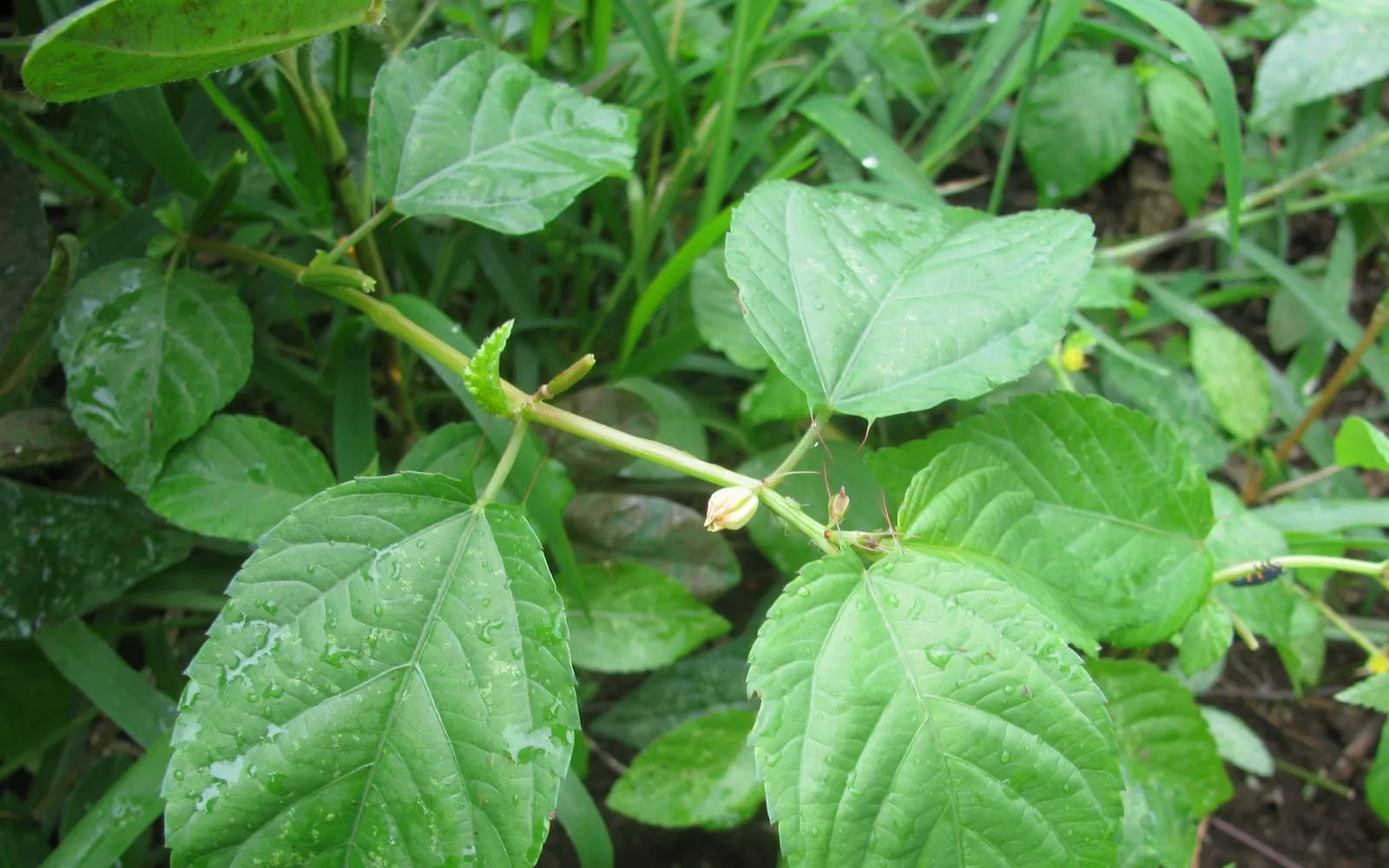
At a glance
- Difficulty
- Easy
- Water
- Twice a week, more in hot weather
- Light
- Full sun
- Temperature
- 25-30 deg C, and it stops below 15
- Humidity
- Moderate to high
- Hardiness
- USDA 10-12, RHS H1b, hardy to 8 C
- Type
- Tender annual
- Height
- 1-3 m
- Native to
- Africa, South Asia
- Best month
- May and July in the Northern Hemisphere, November and January in the Southern Hemisphere
Heat and humidity are what it wants, with 25 to 30 deg C and nothing below 15, and it crops through a monsoon that rots most leaf vegetables. Flowering is short-day. Seed germinates poorly without a hot-water soak, which catches out most first attempts.
Hardiness zones describe winter cold alone. Summer heat, humidity, rainfall and the length of the growing season decide as much, so treat the range as the outer limit rather than as a recommendation.
Every month named in this guide is for the temperate Northern Hemisphere. If you garden in the Southern Hemisphere, shift each one by six months, so May becomes November. Closer to the equator the wet and dry seasons matter more than the calendar, and the shift stops being a useful guide.
Edible, with limits
- Safe to eat
- The young leaves and shoot tips, cooked
- Do not eat
- The seeds, which contain cardiac glycosides
- Harm from
- Eating it
- Affects
- People, cats and dogs
The leaves are a staple green across Egypt, West Africa and South East Asia and are safe cooked. The seeds are not. Corchorus seed contains cardiac glycosides of the corchoroside and olitoriside group, which act on the heart in the same way as digitalis, and seed contamination of grain has caused livestock poisoning. Strip the leaves and discard the seed pods rather than cooking a plant whole once it has set seed. Older leaves and stems go tough and bitter and are not worth eating in any case. Neither the RHS nor the ASPCA lists Corchorus olitorius by name, and the glycoside content is reason enough to keep the seed away from cats, dogs and livestock.
Sources: RHS potentially harmful garden plants, ASPCA toxic and non-toxic plants
About
Jute mallow is two crops in one plant. Grown for its bast fibre it is tossa jute, the softer and stronger of the two jutes, and Bangladesh and India spin millions of tonnes of it a year into sacking, twine and carpet backing. Grown for its leaves it is molokhia, and it is one of the oldest cooked greens in the world.
Egyptian molokhia is the dish it is famous for. The leaves are stripped, chopped very fine, and cooked into a soup that goes slippery and green, thickened by the same mucilage that makes okra behave the way it does. Nigerians make ewedu from the same plant, Filipinos make saluyot, and Japanese shops sell it as moroheiya.
In a cool climate it is quick and easy under cover. Sown in May it gives pickings from July, and the only real skill is keeping it watered so it makes leaves rather than rushing to flower.
Appearance and character
An upright annual, 1 to 3 m tall, with a slender green or red-flushed stem that branches lightly and goes woody at the base.
Leaves are narrow and lance-shaped to oval, 6 to 12 cm long, finely toothed all round, bright green and thin.
Two thread-like tails hang from the base of each leaf, one on each side, which is a reliable field character and separates it from white jute at a glance.
Flowers are small, yellow, five-petalled, 1 cm across, sitting singly or in pairs opposite a leaf.
Pods are the second identification. Tossa jute makes a long slim cylindrical capsule 3 to 6 cm, ribbed, splitting into valves. White jute makes a short round one.
Seeds are small, angular and blue-grey to brown-black.
The stem yields the fibre. Retted in water, the bark separates into long lustrous strands that dry to a pale golden colour.
Where it is from
Corchorus olitorius is native across Africa and into South Asia, with wild populations from the Sahel through East Africa and into India, and its exact centre of origin is still argued over.
Egypt has the longest continuous record of eating it. Molokhia appears in pharaonic contexts and the dish has a documented history through the Fatimid period, when one caliph is said to have banned it, which only made it more popular.
West Africa uses it as a daily green, with ewedu among the Yoruba and similar dishes across the Sahel.
Fibre production moved east. Bengal became the centre of the jute industry under British rule in the nineteenth century, with mills in Dundee spinning Bengali fibre, and Bangladesh and India still dominate world production.
Japan adopted it as a health food in the 1980s under the name moroheiya, and it turns up in Middle Eastern and African grocers worldwide, frozen and finely chopped, ready for the soup.
How it grows
Sow in May at 22 to 25 deg C. The seed is small, so sow shallowly, about 5 mm deep, and keep the compost damp but not wet.
Sow direct into a greenhouse or polytunnel border, or into modules for transplanting.
Thin or space at 15 to 20 cm for leaf, which is closer than most crops, since the point is to keep the plants young and soft.
Give full sun and warmth. It stops below 15 deg C.
Water regularly. A dry check sends it straight into flower and the leaves toughen within days.
Feed a nitrogen-rich feed fortnightly, since leaf rather than fruit is the crop.
Pinch the growing tip at 30 cm to encourage side shoots and more pickings.
Harvest from six to eight weeks, taking the top 15 cm of each shoot with the young leaves on it.
Cut and come again. A well-watered plant gives three or four harvests.
Pull the plants once they flower heavily and the leaves go tough, or leave one for seed and discard the pods safely afterwards.
Through the seasons
May is for sowing under cover, direct or in modules.
June is growth, thinning and the first pinching of the tips.
July brings the first pickings, about six weeks after sowing.
August is the heaviest cropping month, with a cut every ten days on a well-watered plant.
September carries on until the light drops or the plant flowers hard.
October finishes it, and the frost takes any plant left standing.
Winter does not apply. Save seed from one plant and sow again in May.
Care difficulty
Easy under cover and marginal outdoors in a cool climate.
Germination is straightforward at 22 deg C with shallow sowing.
Regular water is the whole technique, since drought sends it to flower and ruins the leaf.
It crops within six to eight weeks, which is quicker than anything else here.
Slugs on the seedlings are the main early risk.
Nothing about it is fussy once it is warm and watered.
Watering
Water twice a week from germination, and more in hot weather.
Keep the soil evenly damp throughout, since drought is what pushes it into flower.
Water at the root in the morning.
Mulch to hold moisture and to keep slugs at bay.
Increase watering after each cut, which is when the plant regrows fastest.
Reduce only at the end of the season.
Warning signs, diseases and pests
Flowering early and heavily means the plant went short of water, and the leaves will have toughened with it.
Seedlings collapsing at soil level are damping off from cold wet compost.
Grazed seedlings are slugs.
Curled tips with sticky residue are aphids.
Fine speckling with webbing is red spider mite in dry air.
Tough bitter leaves mean the plant is old, dry, or both, and a fresh sowing is the answer.
Pods forming should be cut off and discarded, since the seed carries cardiac glycosides.
Yellowing lower leaves usually means the plant needs nitrogen.
Growing environment
A greenhouse or polytunnel where summers are cool. Outdoors is possible in a hot one.
Full sun.
Minimum 15 deg C, with 25 to 30 deg C for growth.
Rich moisture-retentive soil with compost dug in.
Close spacing of 15 to 20 cm for a leaf crop.
Moderate to high humidity.
Regular access, since it wants cutting every ten days.
Feeding
Dig in compost or rotted manure before sowing.
Feed a nitrogen-rich liquid feed fortnightly, which is the opposite of the advice for most crops here and reflects that leaf is what you are picking.
Feed again after each cut to push the regrowth.
Avoid high potash, which encourages flowering.
Mulch in June.
Stop feeding at the end of September.
Troubleshooting
Why is molokhia slippery? Mucilage, the same class of polysaccharide that makes okra behave the way it does. Chopping the leaves fine and cooking them releases it, and that texture is what the dish is for.
Is this the same jute as sacking? Yes, the same species. Tossa jute is grown for both fibre and leaves, and the fibre comes from the stem after retting.
How do I tell it from white jute? The seed pod. Tossa jute makes a long slim cylinder; white jute makes a short round capsule. Tossa leaves are also palatable and white jute leaves are bitter.
Why did mine flower so quickly? It went short of water. Jute mallow bolts on any drought check, and the leaves toughen at the same time.
Can I eat the leaves raw? They are cooked everywhere they are eaten. Raw they are unpleasant rather than harmful.
What about the seeds? Discard them. Corchorus seed contains cardiac glycosides and is not food.
Can I grow it outdoors in a cool climate? In a hot summer, yes, though it will be smaller and slower. A polytunnel makes it reliable.
How often can I cut it? Every ten days or so on a well-watered plant, taking the top 15 cm of each shoot. Three or four cuts is a good season.
Is moroheiya the same plant? Yes. Moroheiya in Japan, molokhia in Egypt, ewedu in Nigeria, saluyot in the Philippines, all Corchorus olitorius.
Jute problem guides
Not sure what is wrong? See the common vegetable pests guide.