
Edible
Sesame
Sesamum indicum
Also known as Gingelly, Til, Benne
How to grow sesame, Sesamum indicum. Why the pods split and scatter the seed, growing it under glass in Britain, and the phrase that comes from that habit.
At a glance
- Difficulty
- Difficult
- Water
- Weekly while growing, then kept dry as the pods fill
- Light
- Full sun, under glass in Britain
- Temperature
- Needs 3 to 4 months above 20 deg C. Killed by frost
- Hardiness
- USDA 10-11, RHS H2, hardy to 10 C
- Type
- Half-hardy annual
- Height
- 50-150 cm
- Native to
- Africa, South Asia
- Best month
- May and September in the Northern Hemisphere, November and March in the Southern Hemisphere
It wants three or four months above 20 C and it is one of the most drought-tolerant crops in cultivation, which is why it is grown across the dry tropics and subtropics rather than anywhere cool. The harvesting problem is the capsule, which splits and scatters the seed when ripe, giving the phrase open sesame and forcing hand harvest at exactly the right moment. Indehiscent cultivars were bred to allow combining.
Hardiness zones describe winter cold alone. Summer heat, humidity, rainfall and the length of the growing season decide as much, so treat the range as the outer limit rather than as a recommendation.
Every month named in this guide is for the temperate Northern Hemisphere. If you garden in the Southern Hemisphere, shift each one by six months, so May becomes November. Closer to the equator the wet and dry seasons matter more than the calendar, and the shift stops being a useful guide.
Edible, with limits
- Safe to eat
- The seeds and the oil
- Do not eat
- None, though sesame is a major allergen
- Harm from
- Eating it
- Affects
- People
Sesame is not toxic and it appears on neither the RHS list of potentially harmful garden plants nor the ASPCA list. It is, however, one of the principal food allergens recognised in law in Britain, the European Union and the United States, and reactions can be severe. Anyone with a sesame allergy should avoid the plant as well as the seed, since handling the harvest and threshing the pods produces dust. That is the only meaningful caution attached to it. The seed and the oil are eaten in enormous quantities worldwide.
Sources: RHS potentially harmful garden plants, ASPCA toxic and non-toxic plants
About
Sesame is one of the oldest oilseed crops in the world and one of the hardest things in this wave to bring to a harvest in Britain. The plant needs three or four months above 20 deg C to flower and fill its pods, which an ordinary cool-temperate summer does not supply outdoors.
Its harvest habit gave English a phrase. Ripe pods split open suddenly along their length and scatter the seed, so the crop is cut before it is fully ripe and dried standing. Open sesame, in the Ali Baba story, refers to exactly that snapping open.
Under glass it works. Sown in April in a warm greenhouse, it will flower in July and fill pods by September, and a dozen plants produce a worthwhile jar of the freshest sesame you will ever taste.
Appearance and character
An upright annual, 50 cm to 1.5 m, branching in the upper half, with a slightly sticky feel to the stems and leaves.
Leaves vary along the stem, broad and lobed at the base and narrow and pointed higher up.
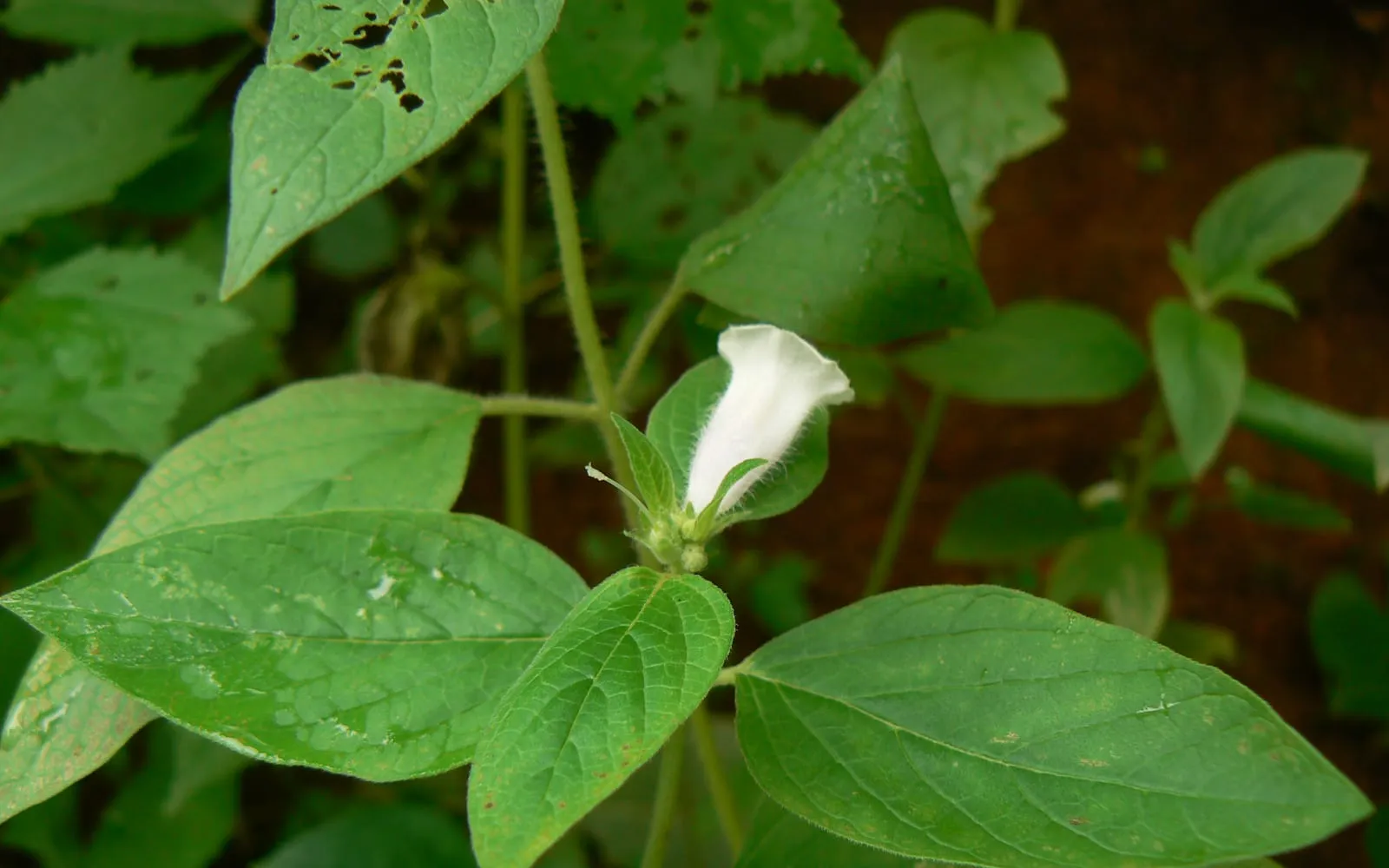
Flowers are foxglove-shaped, 3 to 5 cm long, white to pale pink or lilac with darker speckling in the throat, hanging singly in the leaf axils from July.
Pods are held upright close to the stem, oblong and four-sided, 2 to 5 cm long, each holding fifty to a hundred seeds.
Seeds are small, flat, oval and pointed at one end, and they may be white, cream, brown or black depending on the variety.
The pods are the character to watch. They dry from the bottom of the plant upwards and split along their length when ripe, shedding the seed.
Where it is from
Sesame is native to Africa and the Indian subcontinent, with the wild ancestor generally placed in India, and it is among the oldest oilseed crops in cultivation.
Archaeological evidence puts its cultivation in the Indus valley by around 2500 BC, and it reached Mesopotamia and Egypt shortly after.
Its oil mattered because it keeps. Sesame oil resists going rancid better than most vegetable oils, which made it valuable in hot climates long before refrigeration.
Its uses are worldwide. Tahini and halva in the Middle East, gomashio and sesame oil in Japan, benne wafers in the American south, laddu in India and the seeds on bread and buns nearly everywhere.
Myanmar, India, China, Tanzania and Sudan are the main producers now, and much of the crop is still harvested by hand because of the shattering habit.
How it grows
Sow in April under glass at 20 to 25 deg C. Cold sowings fail.
Sow into deep modules or straight into a greenhouse border, since the taproot resents disturbance and transplanting checks the plant badly.
Germination takes one to two weeks in warmth.
Space at 20 to 30 cm.
Grow it in a polytunnel, greenhouse or conservatory. Outdoors in southern England it will sometimes flower and it rarely fills seed.
Water while growing and reduce as the pods form.
Ventilate. A still humid greenhouse brings aphids and mildew.
Harvest before the pods split. Cut whole plants when the lowest pods have gone brown and the leaves have started to yellow, stand them upright in a paper sack somewhere dry, and let the pods open as they finish drying.
Shake the seed out and winnow it.
Expect a small crop from each plant. Grow a dozen or more for a useful quantity.
Through the seasons
Winter there is nothing. It is a tender annual.
Spring is sowing, in April, under glass in warmth.
Early summer is steady growth. The plant makes most of its frame in June.
Midsummer brings flowering, from July, and this is when heat matters most.
Late summer is when the pods fill, and warmth through August decides the crop.
Autumn is harvest, cutting before the pods shatter, in September.
Care difficulty
Difficult in Britain, and the requirement is heat.
Sesame wants three or four months above 20 deg C, which a cool summer outdoors does not provide in most places or most years.
Under glass it becomes straightforward. Sow in April, keep it warm, ventilate, and harvest in September.
Transplanting checks the plant, so sow into deep modules or direct.
Harvest timing needs attention. The pods split and scatter the seed when fully ripe, so the plants are cut before that and finished under cover.
Greenhouse pests build up on a soft plant in still warm air, so ventilation matters.
Yields per plant are modest, so grow more than seems necessary.
Watering
Water regularly while the plants are growing, keeping the soil evenly damp.
Water at the base rather than over the plant.
Reduce watering once flowering finishes and the pods start to fill. Dry conditions at ripening give better seed.
A container needs watering every two or three days in a warm greenhouse. Use a deep pot.
Do not let the plant dry out completely before ripening, since a check costs weeks the season cannot spare.
Stop watering a week or two before harvest.
Warning signs, diseases and pests
Pods that never fill mean the plant did not get enough heat or enough season. Grow under glass and sow in April.
Seed lost on the greenhouse floor means the pods were left too long. Cut when the lowest pods brown and finish the drying under cover.
Damping off kills seedlings in cold wet compost. Sow into warm fresh compost.
Aphids build up under glass on the growing tips. Rub them off or use a biological control.
Spider mite produces stippling and webbing in hot dry air.
Plants that stayed small were sown cold or transplanted.
Yellowing and collapse in a wet greenhouse is root rot from overwatering.
Growing environment
Under glass. A greenhouse, polytunnel or conservatory is the right environment in Britain.
Full sun and heat, above 20 deg C throughout the plant’s life.
Free-draining soil of moderate fertility, or good multipurpose compost in a deep pot.
pH from 5.5 to 8. It is unfussy.
Ventilation matters as much as heat.
Outdoors against a south wall in an exceptional summer it will sometimes produce seed in the far south. Treat that as a bonus.
Feeding
Nothing is needed in decent compost or greenhouse soil.
Avoid nitrogen, which delays flowering. In a season this tight, anything that slows the plant costs the crop.
A weak balanced feed every three weeks suits a container plant.
Fresh compost each year is more useful than feeding a greenhouse border that has run down.
Lean growing gives better-filled seed.
Troubleshooting
Where does open sesame come from? From the pods. A ripe sesame pod splits suddenly along its length and scatters the seed, and the phrase in the Ali Baba story refers to that snapping open.
The pods opened and I lost the seed. Cut the plants when the lowest pods have browned and the leaves are yellowing, before the pods split, and stand them upright in a paper sack to finish drying.
Nothing filled. Not enough heat. Sesame needs three or four months above 20 deg C. Grow it in a greenhouse or polytunnel, sown in April.
Can I grow it outside? In an exceptional summer in the far south, sometimes. Treat outdoor sesame as an experiment.
Can I grow it from supermarket seed? Untoasted whole sesame seed will sometimes germinate, though the rate is poor. Buy proper seed for a crop.
White or black sesame? Different varieties of the same species. Black sesame is stronger and slightly bitter, and it is used more in Japanese and Chinese cooking.
Is it an allergen? Yes, and a major one recognised in law in Britain, the EU and the United States. Anyone with a sesame allergy should avoid the plant as well as the seed, since threshing produces dust.
Sesame problem guides
Not sure what is wrong? See the common vegetable pests guide.