
Edible
Habanero
Capsicum chinense
Also known as Scotch bonnet, Bonnet pepper, Naga, Bhut jolokia
How to grow habaneros, Capsicum chinense. The long season and heat they need, why the species is not Chinese, ripening under glass, and handling capsaicin safely.
At a glance
- Difficulty
- Moderate
- Water
- Every two or three days in summer, sparingly in winter
- Light
- Full sun under glass, or a bright sheltered windowsill
- Temperature
- 25-30 deg C. Growth stops below 15 deg C
- Hardiness
- USDA 10-11, RHS H1b, hardy to 5 C
- Type
- Tender perennial grown as an annual, or overwintered
- Height
- 60-120 cm
- Native to
- The Amazon basin, and domesticated in the Caribbean
- Best month
- February in the Northern Hemisphere, August in the Southern Hemisphere
The longest season of the common chillies, wanting 100 to 120 days from transplanting to a ripe pod and steady warmth throughout. Cool summer nights stall it more than cool days do. Growers outside the subtropics start it in January under lights and finish it under glass.
Hardiness zones describe winter cold alone. Summer heat, humidity, rainfall and the length of the growing season decide as much, so treat the range as the outer limit rather than as a recommendation.
Every month named in this guide is for the temperate Northern Hemisphere. If you garden in the Southern Hemisphere, shift each one by six months, so February becomes August. Closer to the equator the wet and dry seasons matter more than the calendar, and the shift stops being a useful guide.
Toxic if eaten
- Safe to eat
- The ripe fruit, in small quantities
- Harm from
- Eating it, handling it and sap in the eyes
- Affects
- People, cats and dogs
Habanero fruit is a food used worldwide and the hazard is capsaicin rather than poison. Capsicum chinense varieties run from 100,000 to over 1,000,000 Scoville heat units, which puts them among the hottest peppers grown, and at those concentrations capsaicin is a genuine irritant. Cut fruit blisters skin on prolonged contact and the oil transfers readily to eyes and other mucous membranes, where it causes severe pain lasting hours. Wear disposable gloves when preparing more than one or two, and do not rub your eyes. Capsaicin is not water-soluble, so milk, yoghurt or oil remove it where water spreads it. Ventilate a kitchen when frying or roasting them, since the airborne compound irritates airways and has caused hospital admissions in commercial settings. Eating a very hot chilli causes vomiting, abdominal pain and occasionally oesophageal injury, and there is a documented case of a spontaneous oesophageal rupture after a chilli-eating contest. The ASPCA lists Capsicum species as toxic to cats and dogs, which is the same irritant mechanism. Keep fruit and plants away from pets, who have no cultural reason to stop eating.
Sources: ASPCA toxic and non-toxic plants, RHS potentially harmful garden plants
About
Capsicum chinense is the species behind almost every famously hot chilli. Habaneros, Scotch bonnets, nagas, bhut jolokia and the Carolina Reaper are all this one plant, selected in different directions.
It is also the slowest of the five domesticated chilli species. Seed needs three weeks to germinate, the plant needs five months to fruit, and the fruit needs weeks more to ripen from green to orange or red. A February sowing under glass is what makes the crop work in a short season, and an April sowing gives green fruit at the first frost.
The species name is a mistake that stuck. Nikolaus von Jacquin named it in 1776 believing it came from China. It comes from the Amazon basin and was domesticated in the Caribbean, which is where the Scotch bonnet and the habanero both belong.
Appearance and character
A bushy upright plant, 60 cm to 1.2 m, woodier at the base than a sweet pepper and often multi-stemmed.
Leaves are oval to lance-shaped, mid to dark green, slightly puckered, and larger than those of Capsicum annuum.
Flowers are the reliable identification for the species. Small, greenish-white to cream, and borne two or three together at each node, where an annuum carries one white flower.
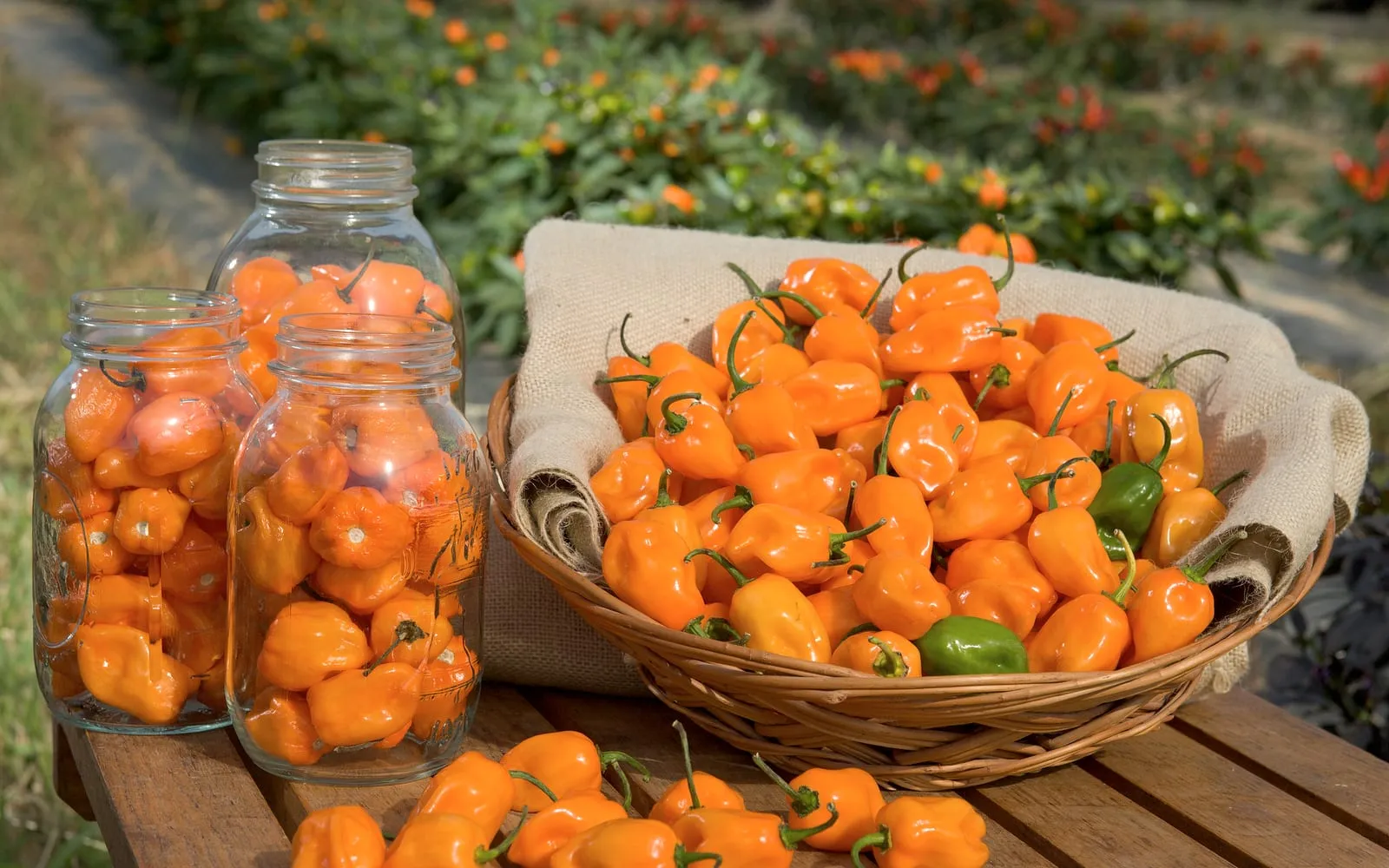
Fruit is lantern or bonnet-shaped in the classic habanero, wrinkled and irregular, 2 to 6 cm, hanging on long stalks. The naga and ghost types are longer and more pointed with a rough pimpled skin.
Colour ripens through green to orange, red, chocolate, white or peach depending on variety.
Flavour under the heat is the reason the species is prized. Fruity, floral and apricot-like, quite unlike the flat burn of a hot annuum.
Where it is from
Capsicum chinense originated in the Amazon basin and was carried north through the Caribbean, where it was domesticated well before European contact.
Archaeological remains in Peru and Ecuador go back several thousand years.
The Yucatan peninsula in Mexico is the centre of habanero production, and the name means “from Havana”, reflecting the trade route rather than the origin.
Jamaica gave the Scotch bonnet, named for its resemblance to a tam o’ shanter, and it is the defining chilli of Caribbean cooking.
South Asia developed its own branch of the species. Bhut jolokia from Assam and Nagaland held the world heat record from 2007, and the Trinidad and Carolina selections that followed pushed it higher.
How it grows
Sow indoors in January or February at 25 to 28 deg C. This is earlier and warmer than a sweet pepper needs, and a heated propagator is close to essential.
Germination takes fourteen to twenty-eight days and is erratic. Soaking the seed overnight in warm water helps.
Prick out into 9 cm pots at the first true leaf and grow on above 18 deg C.
Pot on into a 25 to 30 cm pot, a growbag or a greenhouse border in May.
Pinch out the growing tip at 20 cm to force branching, which increases the number of fruits.
Stake the plant. A well-cropped habanero is top-heavy.
Pick from August. Fruit is edible green and worth waiting for, since the flavour and much of the heat develop as it colours.
Overwinter the plant at 10 to 15 deg C, cut back by two thirds, watered sparingly. A second-year plant fruits weeks earlier and yields far more.
Through the seasons
Midwinter is sowing, in January or February at 25 to 28 deg C in a propagator.
Spring grows the plants on above 18 deg C. Pot on twice rather than let them become potbound.
Early summer moves them to their final pot or the greenhouse border in May. Pinch out at 20 cm and stake.
Summer is flowering and fruiting. Water every two or three days, feed weekly with high potash from first fruit set, and damp down against red spider mite.
Autumn is the harvest, from August to October. Reduce watering and feeding from late September. Cut the plant back and overwinter it, or strip the fruit and compost the plant.
Care difficulty
Moderate, and the whole difficulty is the length of the season.
Sowing in January or February is the decision that decides the crop. Later sowings give green fruit in October.
Heat is the second requirement. Growth stops below 15 deg C and the plant wants 25 to 30, which means glass or a very bright warm windowsill.
Germination is slow and uneven, so sow more seed than you need and be patient.
Blossom drop follows cold nights, dry roots or too much nitrogen.
Overwintering is the technique that transforms the crop, and it is easier than most people expect.
Handling the fruit safely is a kitchen skill rather than a growing one, and it is worth taking seriously at these heat levels.
Watering
Water every two or three days in summer, keeping the compost evenly damp.
Never waterlog. Chillies rot at the roots in standing water and a pot that stays saturated kills a plant faster than one that dries out occasionally.
A slight drought stress once the fruit has set raises the capsaicin content, so growers who want maximum heat water a little less from August.
Damp the greenhouse floor on hot mornings against red spider mite.
Water sparingly in winter for an overwintered plant, perhaps once a fortnight, just enough to stop the compost drying out entirely.
Container plants in a 25 cm pot need daily watering in a hot greenhouse.
Warning signs, diseases and pests
Red spider mite speckles and bronzes the leaves and spins fine webbing in dry glasshouse heat. Damp down every morning and introduce Phytoseiulus predators early.
Aphids cluster on the growing tips and distort new growth. Wash them off and use Aphidius under glass.
Whitefly coat the leaves in honeydew. Use Encarsia parasitic wasps.
Blossom drop means cold nights below 15 deg C, dry roots, or too much nitrogen. Correct all three.
Grey mould rots damaged stems in a still humid greenhouse. Ventilate.
Green fruit in October means a late sowing or a cool summer. Pick it green and use it, or hang whole plants indoors.
Root rot follows waterlogging in a pot without drainage.
Growing environment
Full sun under glass or in a polytunnel. A bright south-facing windowsill works for a single plant.
Free-draining, moderately fertile soil or good multipurpose compost with added grit.
Neutral to slightly acid, pH 6 to 7.
Temperatures of 25 to 30 deg C by day and above 15 at night.
A pot of 25 to 30 cm, a growbag, or a greenhouse border.
Frost-free space at 10 to 15 deg C for overwintering.
Rotate with tomatoes, aubergines and potatoes on three years, or use fresh compost each year.
Feeding
Use a balanced liquid feed from potting on until the first flowers.
Switch to a high-potash tomato feed weekly once the first fruit has set.
Avoid nitrogen after flowering. It gives a large leafy plant, delays fruiting and causes blossom drop, and it is the commonest feeding error with chillies.
Stop feeding in October.
An overwintered plant needs no feeding until growth restarts in March.
Troubleshooting
The fruit was still green at the first frost. Sown too late. Habaneros need five months plus ripening time. Sow in January or February, or overwinter a plant for a head start.
Nothing germinated. Too cold or too impatient. Capsicum chinense needs 25 to 28 deg C and up to four weeks. Soak the seed overnight and use a propagator.
Flowers appear and drop off. Blossom drop from cold nights, dry roots or too much nitrogen. Keep nights above 15 deg C, water evenly, and switch to potash.
Fine webbing and speckled leaves. Red spider mite. Damp the greenhouse floor daily and introduce Phytoseiulus predators.
The chillies are not very hot. Heat rises with sun, warmth and a little drought stress. Water slightly less from August, and let the fruit colour fully before picking.
My hands burned for hours after chopping them. Capsaicin. Wear disposable gloves, and wash with milk, yoghurt or oil rather than water, which spreads it.
Can I keep the plant for next year? Yes, and it is the single best thing you can do for the crop. Cut back by two thirds, keep at 10 to 15 deg C, water sparingly, and it will fruit weeks earlier next season.
Why is it called chinense if it is from the Americas? A naming error by Nikolaus von Jacquin in 1776, who believed it came from China. The name has priority under the rules of nomenclature, so it stands.
Habanero problem guides
Not sure what is wrong? See the common vegetable pests guide.