
Edible
Sweet Wormwood
Artemisia annua
Also known as Sweet Annie, Annual wormwood, Qinghao
How to grow sweet wormwood, Artemisia annua. The tall feathery annual behind artemisinin, sowing it in spring, and why the plant should not be used as a home malaria treatment.
At a glance
- Difficulty
- Easy
- Water
- Weekly in dry weather while growing
- Light
- Full sun
- Temperature
- Hardy as a seedling, killed by hard frost in autumn
- Hardiness
- USDA 6-9, RHS H4, hardy to -10 C
- Type
- Hardy annual
- Height
- 100-250 cm, occasionally 3 m
- Native to
- temperate Asia
- Best month
- May and August in the Northern Hemisphere, November and February in the Southern Hemisphere
Artemisinin peaks just before the flowers open and falls away afterwards, so the cutting date decides the crop. Flowering is short-day, which at high latitude puts it in September and leaves little time. Poor dry soil and full sun raise the content, and rich ground gives a big plant with less in it.
Hardiness zones describe winter cold alone. Summer heat, humidity, rainfall and the length of the growing season decide as much, so treat the range as the outer limit rather than as a recommendation.
Every month named in this guide is for the temperate Northern Hemisphere. If you garden in the Southern Hemisphere, shift each one by six months, so May becomes November. Closer to the equator the wet and dry seasons matter more than the calendar, and the shift stops being a useful guide.
Harmful if eaten
- Do not eat
- The whole plant as a herbal preparation, and the pollen for hay fever sufferers
- Harm from
- Eating it and handling it
- Affects
- People
Sweet wormwood is the source of artemisinin, the compound behind the most effective malaria treatments in use, and the plant deserves a clear statement about that rather than a vague one. The World Health Organization advises against using Artemisia annua plant material, in any form, to treat or prevent malaria. The reason is that the artemisinin content of the plant varies enormously and a sub-therapeutic dose helps the parasite develop resistance to the whole drug class. Growing it and brewing tea from it does active harm in a malarial region. In an ordinary garden the plant is not toxic to handle and it is not on the RHS list of potentially harmful garden plants. Some people develop contact dermatitis from Artemisia species, and the pollen is a recognised hay fever allergen. The ASPCA holds no entry for it.
Sources: WHO on non-pharmaceutical forms of Artemisia against malaria, RHS potentially harmful garden plants
About
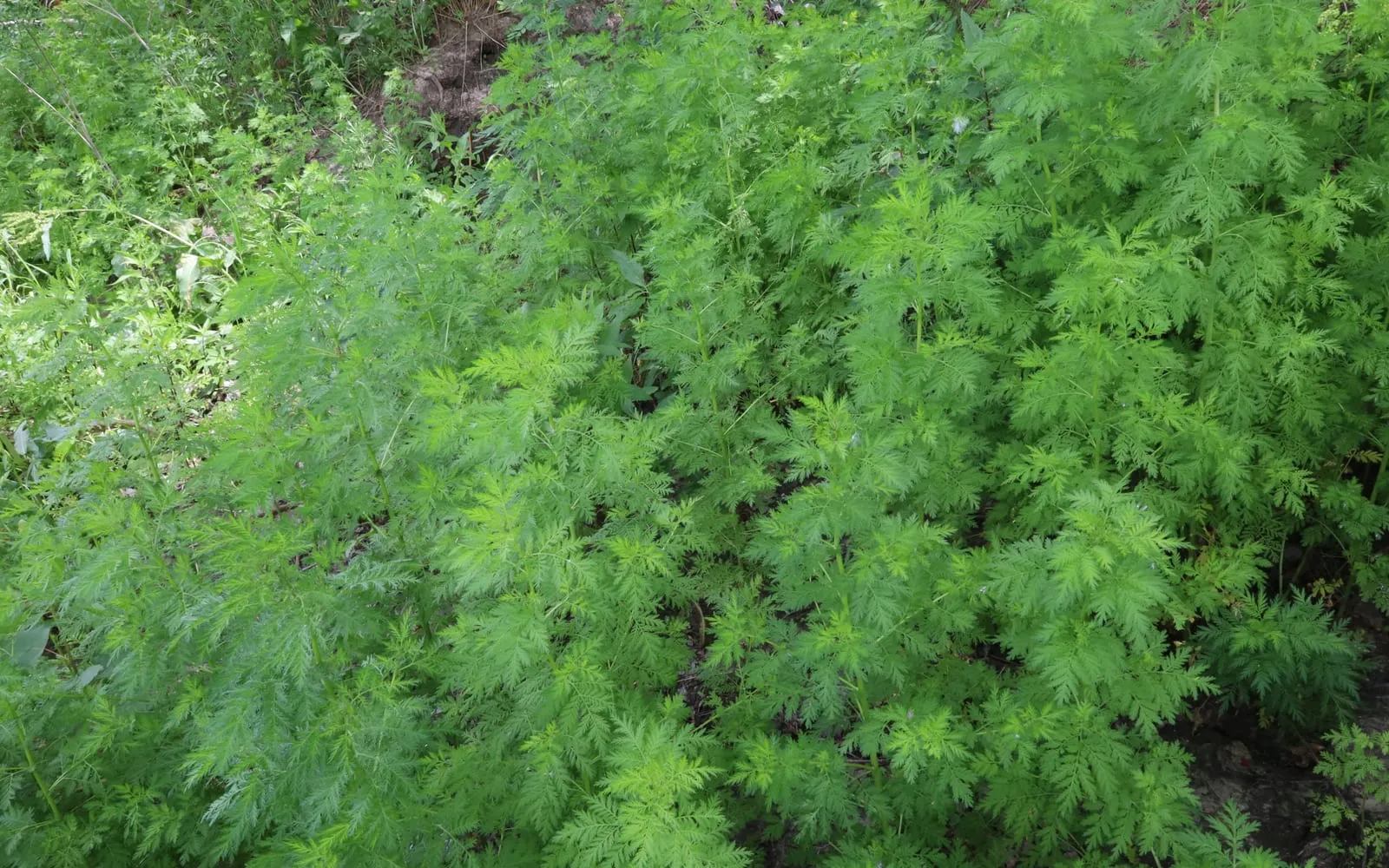
Sweet wormwood is a tall feathery annual that grows two metres and more in a season and smells sharply sweet when you brush past it. In a border it is a striking foliage plant, and in a garden it seeds itself into a forest if you let it.
Its importance is medical. Artemisinin, extracted from this plant, is the basis of the artemisinin combination therapies that are the standard treatment for falciparum malaria worldwide. Tu Youyou shared the 2015 Nobel Prize in Physiology or Medicine for isolating it, working from a fourth-century Chinese text that specified a cold water extraction, which turned out to be the reason earlier hot extractions had failed.
One thing needs saying plainly. Growing it and making tea from it is not a malaria treatment, and the World Health Organization advises against using the plant material for that purpose because uneven dosing drives drug resistance.
Appearance and character
A tall upright annual, 1 to 2.5 m and occasionally 3 m, branching heavily from about half its height.
Leaves are finely divided two or three times into narrow segments, bright fresh green, giving the whole plant a fern-like appearance.
Flowers are tiny nodding yellow-green heads, 2 to 3 mm across, carried in enormous airy panicles from August. They are inconspicuous individually and the mass of them is what you notice.
Stems are ribbed, green flushing purple-brown, and stout enough to stand without staking.
The scent is sweet, camphorous and strong, released when the plant is brushed, and it lingers on clothing.
The dried flowering stems hold their scent for months, which is why the plant is sold in America as Sweet Annie for wreath making.
Where it is from
Sweet wormwood is native to temperate Asia, particularly China, and it has naturalised widely across Europe and North America on waste ground and riverbanks.
Chinese medicine used it for fever for at least two thousand years, and the name qinghao appears in a silk manuscript recovered from a Han dynasty tomb.
Its modern history begins in 1967 with a Chinese military research programme into malaria treatments. Tu Youyou’s team screened traditional remedies and found this one, and the breakthrough came when she read a fourth-century handbook by Ge Hong that specified soaking the plant in cold water rather than boiling it. Artemisinin degrades with heat, which is why every previous extraction had failed.
Artemisinin combination therapies became the World Health Organization’s recommended treatment for falciparum malaria in the early 2000s, and they are credited with saving millions of lives.
The plant is grown commercially in China, Vietnam, Madagascar, Kenya and Tanzania, and semi-synthetic artemisinin now supplements the crop.
How it grows
Sow in spring, from March under cover or April outdoors. The seed is extremely fine, so surface sow and press it in rather than covering it.
Germination takes one to two weeks in warmth.
Prick out carefully and plant out at 60 cm after the last frost, or thin a direct sowing to the same spacing.
Choose an open sunny position. The plant is large and it shades everything behind it.
Water in dry weather through the growing season. It grows fast and a check costs height.
No staking is needed on most sites. In an exposed garden a single cane helps.
Harvest leafy stems in August as flowering begins, which is when the aromatic content peaks, and hang them to dry for scent or for wreaths.
Cut the flower heads off before the seed ripens if you want to avoid a forest of seedlings next spring.
Pull the plants after the first hard frost.
Through the seasons
Winter there is nothing. It is an annual.
Spring is sowing, from March under cover, and seedlings appear in quantity from any plant that seeded last year.
Early summer is rapid growth. The plant puts on most of its height through June and July.
Midsummer is when it reaches full size and the panicles begin to form.
Late summer is flowering, from August, and the best time to cut stems for drying.
Autumn ripens seed in enormous quantity. Cut the heads off unless you want seedlings, and pull the plants after the first hard frost.
Care difficulty
Easy. Sweet wormwood grows fast, needs little and looks after itself.
The one thing to plan for is size. A well-grown plant reaches two metres and more, and it is much broader than a seed packet photograph suggests.
Self-seeding is heavy. One plant produces an immense quantity of very fine seed, and a bed that carried it will produce hundreds of seedlings the following spring. Cut the heads off before they ripen.
Hay fever is worth mentioning. Artemisia pollen is a recognised allergen and a large plant in flower is a real consideration for anyone sensitive to it.
It needs no feeding, no staking on most sites and no protection.
The plant dies at the first hard frost, which ends the season without any decision on your part.
Watering
Water seedlings and young plants regularly while they establish.
Water weekly in dry weather through June and July, when the plant is putting on most of its growth.
An established plant in decent ground copes with an ordinary cool summer without much help.
Water at the base rather than over the foliage.
A container needs watering every day or two in summer, and a plant this size needs a very large pot.
Stop worrying about it from late August, when the plant is flowering and finishing.
Warning signs, diseases and pests
Aphids gather on the growing tips in early summer and rarely need action.
Slugs take seedlings, which are tiny and vulnerable for the first few weeks.
Powdery mildew appears on crowded plants in late summer and does little harm.
Plants that stay short were sown late, crowded, or grown in shade.
A carpet of seedlings the following spring means the heads ripened. Cut them earlier.
Hay fever symptoms around a flowering plant are the pollen. Cut the panicles off before they open if anyone in the household is sensitive.
A rash after handling it is contact dermatitis, which some Artemisia species cause in some people. Wear gloves.
Growing environment
Full sun. It grows tall and leans in shade.
Free-draining soil of moderate fertility. It grows on waste ground and riverbanks in the wild and needs nothing special.
pH from 5.5 to 8. It is unfussy.
Give it room. The back of a large border, a corner of the vegetable garden or a bed of its own all work, and a small herb bed does not.
It is hardy enough to sow outdoors in April and it dies at the first hard frost in autumn.
As a foliage plant it earns its space, providing height and a fine texture through summer, and the scent when you brush past it is part of the appeal.
Feeding
Nothing is needed in reasonable ground. It grows fast enough without help.
Avoid nitrogen, which produces a taller softer plant that needs staking.
Compost dug in the previous autumn is adequate preparation.
A container plant takes a balanced feed fortnightly through summer, since a pot cannot supply a plant this size.
Rich ground gives you a bigger plant and no more of what it is grown for, which is true across the aromatic crops in this wave.
Troubleshooting
Can I use it to treat malaria? No, and this is worth being firm about. The World Health Organization advises against using Artemisia annua plant material in any form to treat or prevent malaria, because the artemisinin content varies enormously and under-dosing drives resistance to the whole drug class. The extracted drug is a different thing from the plant.
It grew to three metres. That happens on good ground. Give it space at the back of a border.
Seedlings everywhere the next spring. One plant produces a vast quantity of fine seed. Cut the flower heads off in early autumn before they ripen.
It set off my hay fever. Artemisia pollen is a recognised allergen. Cut the panicles before they open, or grow something else.
What is Sweet Annie? The same plant, sold under that name in America for dried flower arrangements and wreaths, because the dried stems hold their scent for months.
Is it the same as wormwood? Related but different. Common wormwood, Artemisia absinthium, is a grey perennial and the absinthe plant. This one is a green annual and it is not used in absinthe.
When do I cut it for drying? In August, as the flowers begin to open, which is when the aromatic content peaks.