
Edible
Rocoto
Capsicum pubescens
Also known as Manzano, Locoto, Tree pepper, Apple chilli
How to grow rocoto, Capsicum pubescens. The only chilli that takes a frost outdoors, its hairy leaves and black seeds, and the years it needs to fruit well.
At a glance
- Difficulty
- Moderate
- Water
- Every two or three days in summer, sparingly in winter
- Light
- Full sun, and it tolerates cooler conditions than any other chilli
- Temperature
- 15-25 deg C. Survives brief frosts to about -5 deg C
- Hardiness
- USDA 8-10, RHS H3, hardy to -5 C
- Type
- Hardy-ish perennial, living and cropping for many years
- Height
- 1-3 m, and larger with age
- Native to
- The Andes of Peru and Bolivia
- Best month
- January in the Northern Hemisphere, July in the Southern Hemisphere
The one Capsicum that takes a light frost, coming from Andean valleys at 1500 to 3000 m, and it survives brief dips to about -5 deg C once woody. Cool nights are a requirement rather than a tolerance. It flowers poorly in the hot lowland tropics, which is the reverse of every other chilli here, and it needs a second plant for a decent set.
Hardiness zones describe winter cold alone. Summer heat, humidity, rainfall and the length of the growing season decide as much, so treat the range as the outer limit rather than as a recommendation.
Every month named in this guide is for the temperate Northern Hemisphere. If you garden in the Southern Hemisphere, shift each one by six months, so January becomes July. Closer to the equator the wet and dry seasons matter more than the calendar, and the shift stops being a useful guide.
Toxic if eaten
- Safe to eat
- The ripe fruit, deseeded
- Harm from
- Eating it, handling it and sap in the eyes
- Affects
- People, cats and dogs
Rocoto fruit is a food used across the Andes and the hazard is capsaicin rather than poison. Capsicum pubescens runs from around 30,000 to 100,000 Scoville heat units, which puts it well above a jalapeno, and the heat is concentrated in the seeds and the placenta to an unusual degree, which is why Peruvian cooks deseed it carefully. The thick juicy flesh gives it a reputation for being milder than it is, and people underestimate it because it looks like a small sweet pepper. Cut fruit transfers capsaicin readily to eyes and mucous membranes, so wear gloves for any quantity. Capsaicin is not water-soluble, so milk, yoghurt or oil remove it where water spreads it. The ASPCA lists Capsicum species as toxic to cats and dogs on the same irritant grounds, and the foliage carries solanine-type glycoalkaloids like other Solanaceae, so keep pets from chewing the plant.
Sources: ASPCA toxic and non-toxic plants, RHS potentially harmful garden plants
About
Rocoto is the chilli that behaves like a shrub. It is the only one of five domesticated Capsicum species that tolerates cold, it lives and crops for a decade or more, and in the Andes it grows into a small tree.
For a garden with frost that makes it the most interesting chilli in this wave. A rocoto in a large pot, moved into a porch or an unheated greenhouse over winter, survives temperatures that kill every other chilli, and it will occasionally come through a mild winter outdoors against a south-facing wall.
The trade-off is patience. A first-year rocoto grows into a substantial plant and sets very little fruit. The crop starts in year two and improves for several years after that, which makes it a poor choice for anybody wanting chillies this summer and an excellent one for anybody prepared to wait.
Appearance and character
A sprawling woody shrub, 1 to 3 m outside its native range and larger with age, with thick stems that lignify from the second year.
Leaves are the identification along with the flowers. Dark green, thick and covered in fine hairs, which is what pubescens means, and quite unlike the smooth leaves of every other chilli.
Flowers are unmistakable. Purple or violet-blue with white markings, larger than any other chilli flower, held singly at the nodes.
Seeds are black rather than the cream of every other Capsicum, which is the final confirmation.
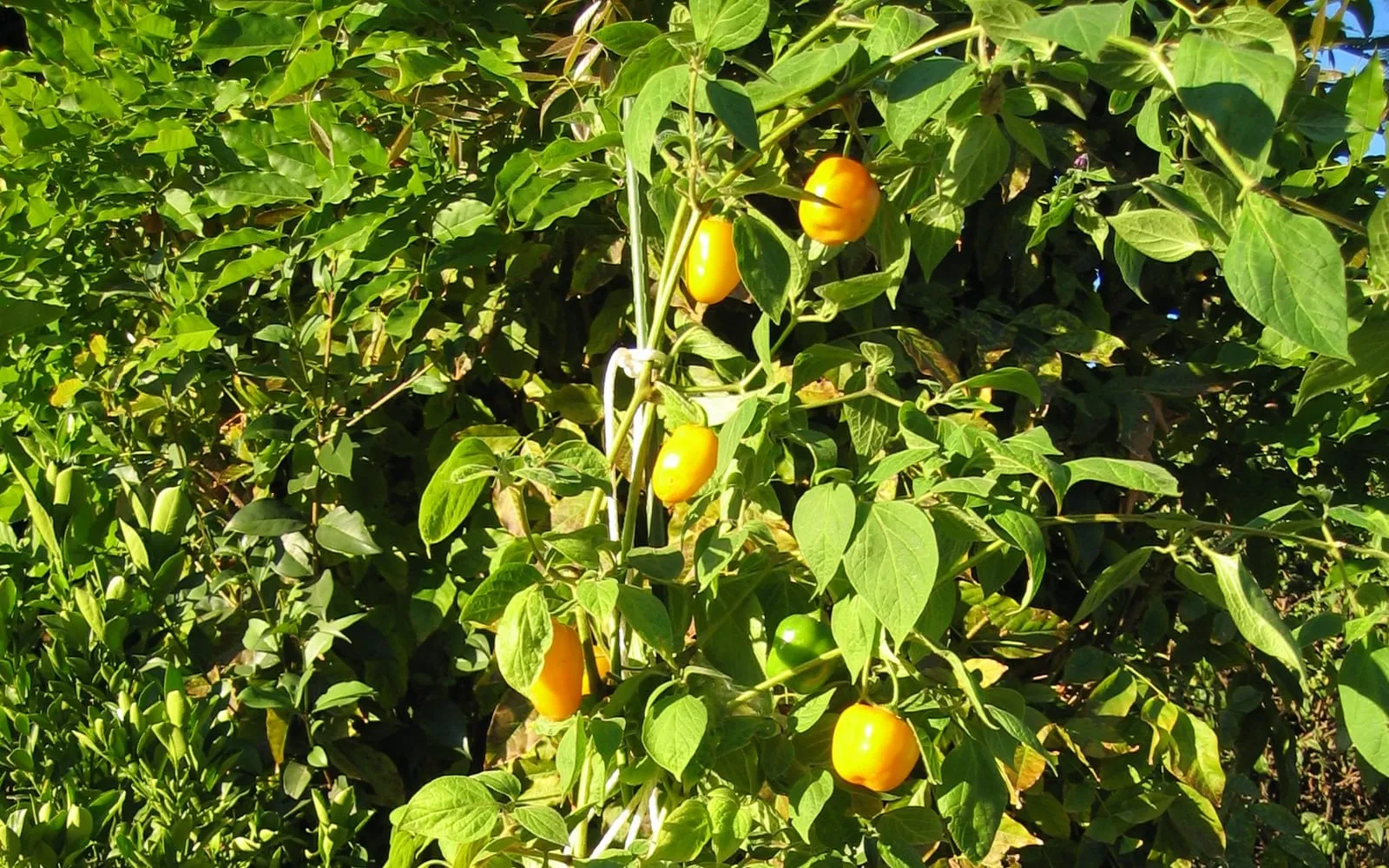
Fruit is thick-walled and juicy, round to slightly elongated, 3 to 8 cm, looking much like a small sweet pepper, ripening to red, orange or yellow.
Flavour is clean and fruity with a sharp heat concentrated in the seeds and the white placenta, and the thick flesh makes it eat like a vegetable rather than a spice.
Where it is from
Capsicum pubescens comes from the Andes of Peru and Bolivia, and it grows at higher altitudes than any other cultivated chilli, up to 3,000 metres.
That altitude explains its cold tolerance and its intolerance of extreme heat, which is unusual in the genus.
No wild population is known, which is a sign of a long domestication. Its closest wild relatives are the Bolivian Capsicum cardenasii and Capsicum eximium, and it does not cross with any other domesticated chilli species, which has kept it genetically separate.
Peru uses it in rocoto relleno, a stuffed baked chilli from Arequipa, and the thick flesh is what makes that dish possible.
Mexico grows it as manzano, meaning apple, for the shape of the fruit.
European nurseries have only carried it since the 2000s, and then only the specialist chilli growers.
How it grows
Sow indoors in January at 22 to 25 deg C. Germination is slow and erratic, often taking three to five weeks, and it is the slowest chilli seed to come up.
Prick out into 9 cm pots and grow on above 15 deg C. The plant tolerates cooler growing-on conditions than other chillies.
Pot on generously and keep potting on. A mature rocoto wants a 40 litre pot or a border, and root restriction limits it badly.
Plant out or move outdoors in June, into the sunniest sheltered position, or grow it under glass.
Prune in early spring, cutting back by a third to a half to keep the shrub in shape and encourage new fruiting wood.
Pick from September in the first year and from August in subsequent years. Fruit takes a long time to ripen.
Overwinter at 5 to 10 deg C, which is cooler than other chillies need, in a porch, a cold greenhouse or a frost-free shed with light. Water sparingly.
Through the seasons
Midwinter is sowing, in January at 22 to 25 deg C, and it needs patience.
Spring grows the plants on and prunes established ones back by a third in March. Repot into fresh compost.
Early summer moves plants outdoors in June or into a greenhouse border. Water and feed steadily.
Summer is growth and flowering. Rocoto flowers over a long period and sets fruit through the season. Water every two or three days and feed fortnightly. Unusually for a chilli, a hot dry spell causes blossom drop, so shade and water in a heatwave.
Autumn and winter are the harvest and the rest. Pick into November under cover. Move the plant to a frost-free place at 5 to 10 deg C and water sparingly.
Care difficulty
Moderate, and the difficulty is patience rather than technique.
The first year produces a plant and very little fruit. That is normal and not a failure. Judge the plant in its second and third seasons.
Germination is slow, taking up to five weeks, so sow early and do not give up.
Overwintering is the whole point of the species and it is easy, since the plant wants a cool frost-free rest rather than warmth.
Root space matters more than for other chillies. Keep potting on.
Heat is the one condition it dislikes, which is the opposite of every other chilli. A hot greenhouse in July causes blossom drop.
Winter waterlogging is the main way an established plant dies.
Watering
Water every two or three days in summer, keeping the compost evenly damp.
Water more in a heatwave rather than less, since heat stress causes blossom drop in this species.
Avoid winter waterlogging absolutely. A dormant rocoto in cold wet compost rots at the roots, and this is the commonest way an established plant is lost.
Water an overwintering plant once every two or three weeks, just enough to stop the compost drying out.
Damp the greenhouse floor in hot weather against red spider mite.
A large plant in a 40 litre pot needs daily watering in a hot summer.
Warning signs, diseases and pests
Aphids cluster on the growing tips, and the hairy leaves make them harder to wash off than on a smooth-leaved chilli. Use Aphidius under glass.
Red spider mite bronzes the leaves in dry glasshouse heat. Damp down daily.
Whitefly coat the leaves in honeydew under cover. Use Encarsia wasps.
Blossom drop in a hot dry spell is the unusual one. Other chillies drop flowers when cold, and rocoto drops them when hot. Shade and water through a heatwave.
Root rot follows winter waterlogging and kills established plants.
Very little fruit in the first year is normal for the species rather than a problem.
Leaf drop over winter at low temperatures is normal, and the plant reshoots in spring.
Growing environment
Full sun, outdoors in summer in a sheltered position or under glass.
Free-draining, moderately fertile compost. Add grit for winter drainage, which matters more here than for any other chilli.
Neutral to slightly acid, pH 6 to 7.
Cool rather than hot. Rocoto grows best at 15 to 25 deg C and suffers above 30.
A large pot, 40 litres or more for a mature plant, or a border.
Frost-free winter storage at 5 to 10 deg C with some light, which can be a porch, a cold greenhouse or a light shed.
Against a warm south-facing wall in a mild district it may come through winter outdoors with fleece protection.
Feeding
Use a balanced liquid feed from potting on until the first flowers open.
Switch to a high-potash tomato feed fortnightly once fruit has set.
Avoid nitrogen after flowering.
Stop feeding in October and give nothing over winter.
Repot into fresh compost each March after pruning, and resume feeding when new growth appears. An established plant in a large pot needs this annual refresh more than a feed.
Troubleshooting
Almost no fruit in the first year. Normal for the species. Rocoto is a long-lived shrub and crops from its second year onwards, improving for several seasons.
Nothing germinated after three weeks. Keep waiting. Rocoto seed is the slowest of any chilli and often takes four or five weeks at 22 to 25 deg C.
Flowers dropped during a hot spell. Unusual among chillies and characteristic of this one. It is an Andean highland plant and suffers above 30 deg C. Shade and water through a heatwave.
The plant died over winter. Almost always root rot from wet compost rather than cold. Water sparingly over winter and add grit to the compost.
It is far hotter than it looks. The thick flesh and sweet-pepper shape mislead people. The heat is concentrated in the black seeds and the white placenta, so deseed it thoroughly.
How do I know it is a rocoto? Three signs together. Hairy leaves, purple flowers, and black seeds. No other cultivated chilli has any of them.
Can it survive a winter outdoors? In a mild coastal district, against a warm wall and with fleece, sometimes. Anywhere colder, move it to a frost-free porch or a cold greenhouse.
Can I cross it with my other chillies? No. Capsicum pubescens does not cross with the other domesticated species, so seed saved from it comes true even in a mixed greenhouse.
Rocoto problem guides
Not sure what is wrong? See the common vegetable pests guide.