
Edible
Tomatillo
Physalis philadelphica
Also known as Mexican husk tomato, Tomate verde, Miltomate
How to grow tomatillos, Physalis philadelphica. Why you must grow two plants, picking when the husk splits, and the sprawling habit that needs staking.
At a glance
- Difficulty
- Easy
- Water
- Weekly. It is more drought-tolerant than a tomato
- Light
- Full sun
- Temperature
- 18-28 deg C. Killed by frost
- Hardiness
- USDA 9-11, RHS H2, hardy to 0 C
- Type
- Tender annual
- Height
- 60-120 cm, sprawling wider
- Native to
- Mexico and Central America
- Best month
- April in the Northern Hemisphere, October in the Southern Hemisphere
It sets fruit across a wider temperature range than tomato and tolerates drought better, which is why it crops in a poor summer where tomatoes sulk. Two plants are needed. Tomatillo is largely self-incompatible, so a lone plant fills its husks with air and nothing else.
Hardiness zones describe winter cold alone. Summer heat, humidity, rainfall and the length of the growing season decide as much, so treat the range as the outer limit rather than as a recommendation.
Every month named in this guide is for the temperate Northern Hemisphere. If you garden in the Southern Hemisphere, shift each one by six months, so April becomes October. Closer to the equator the wet and dry seasons matter more than the calendar, and the shift stops being a useful guide.
Toxic if eaten
- Safe to eat
- The ripe fruit inside the husk, raw or cooked
- Harm from
- Eating it
- Affects
- People, cats and dogs
The ripe tomatillo fruit is a food crop eaten daily across Mexico and is safe. The rest of the plant is not. Tomatillo is in the Solanaceae with potato, tomato and deadly nightshade, and its leaves, stems, husks and unripe fruit contain solanine and related glycoalkaloids. The husk is inedible and is always discarded. Unripe fruit, meaning fruit picked while still small and tight in the husk, carries higher glycoalkaloid levels and causes stomach upset. The RHS lists Physalis species among plants harmful if eaten, and the ASPCA lists them as toxic to cats and dogs for the same reason, so keep pets from chewing the foliage or windfall fruit. The sticky coating on the fruit under the husk is a natural resin, and it washes off in warm water. It is unpleasant rather than harmful, and it is worth removing because it tastes bitter. Ripe fruit that has filled its husk and turned from bright green to a paler, slightly yellow-green is what to eat.
Sources: RHS potentially harmful garden plants, ASPCA toxic and non-toxic plants
About
Tomatillos are the sharp green fruit behind salsa verde, and they are far easier to grow in a cool summer than the tomatoes they resemble. They tolerate cooler weather, they crop heavily, and they are much less troubled by blight.
The failure that catches most growers out is pollination. Tomatillos are largely self-incompatible, which means a single plant will produce a great many husks and almost no fruit. Two plants is the minimum and three is better. Every account of a failed tomatillo crop starts with somebody who grew one.
The other thing to know is when to pick. The fruit swells inside its papery lantern, and it is ready when it fills the husk and starts to split it. A husk still loose around a small hard fruit means wait.
Appearance and character
A sprawling branching plant, 60 cm to 1.2 m tall and considerably wider, with brittle angular stems that flop outwards without support.
Leaves are oval to lance-shaped with slightly wavy or toothed margins, mid-green and thin.
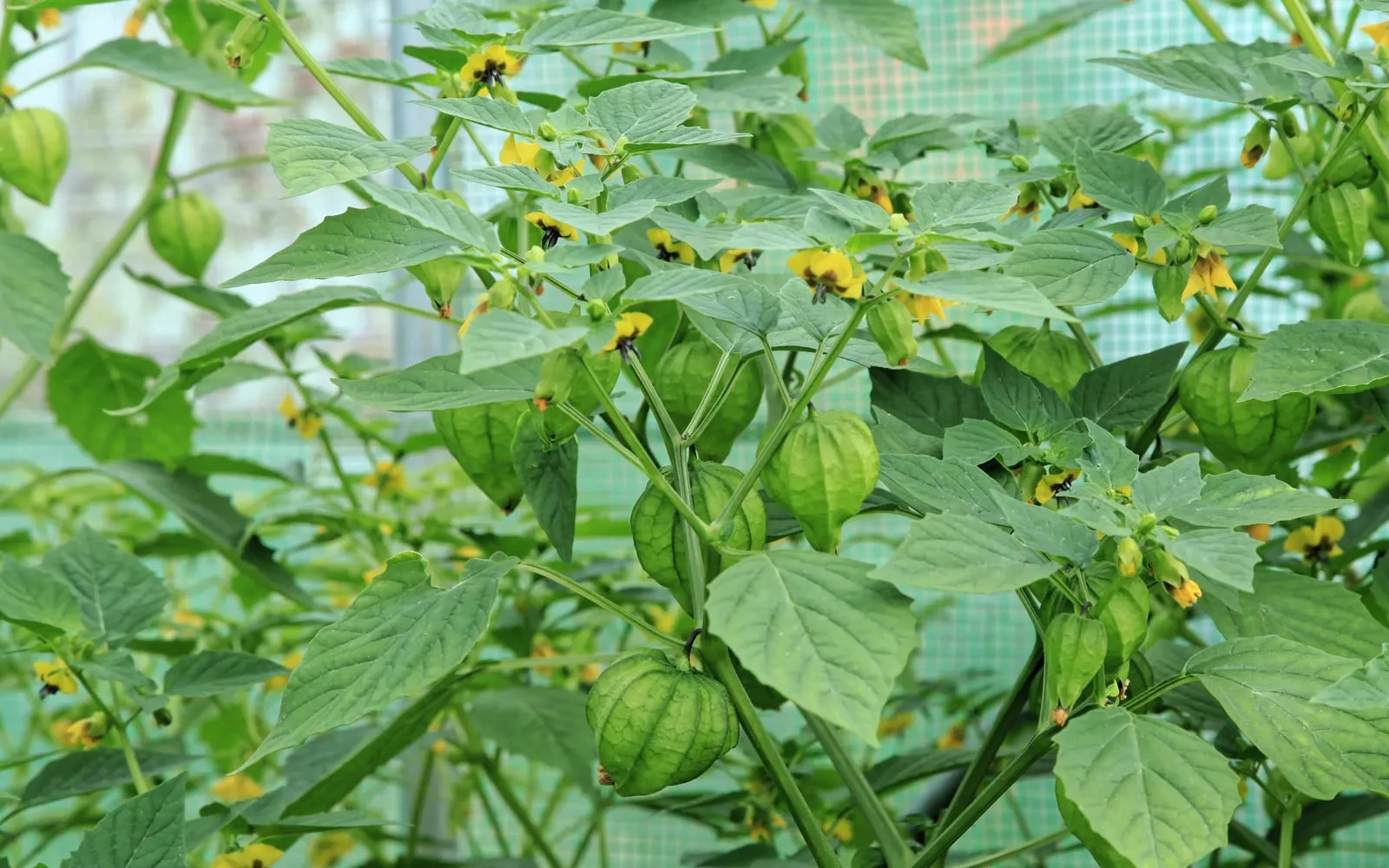
Flowers are small, yellow with dark purple-brown blotches at the throat, five-lobed, hanging singly from the leaf axils.
The husk is the distinguishing feature. An inflated papery lantern formed from the calyx hangs beneath the stem, pale green at first and turning straw-coloured as the fruit ripens.
Fruit inside is round, 3 to 5 cm across, bright green in the common varieties and purple in ‘Purple de Milpa’, with a sticky resinous coating that washes off.
Flavour is sharp, citrusy and slightly herbal, quite unlike a tomato, and it sweetens a little as the fruit ripens.
Where it is from
Tomatillo comes from Mexico and Central America, where it was domesticated well before the tomato and was the more important of the two in Aztec cooking.
The Nahuatl tomatl is the origin of the English word tomato, and it originally referred to this plant. The tomato was xitomatl, meaning navel tomato, which is why Mexican Spanish still distinguishes tomate for tomatillo from jitomate for tomato.
Archaeological remains in the Tehuacan valley put cultivation back several thousand years.
Spanish colonists sent the tomato to Europe and largely ignored the tomatillo, which is why one became a global crop and the other stayed regional.
European seed catalogues have only carried it since the 1990s, on the back of interest in Mexican cooking.
How it grows
Sow indoors in March or April at 18 to 20 deg C, exactly as for tomatoes. Germination takes seven to fourteen days.
Grow at least two plants and preferably three. This is the single most important instruction for the crop.
Prick out into 9 cm pots and pot on. Plant out after the last frost in late May or early June, at 90 cm apart. The plants sprawl far more than a tomato.
Stake or cage the plants at planting. The stems are brittle and a fruiting plant collapses under its own weight, which lets slugs and rot at the fruit.
Do not pinch out side shoots. Unlike a cordon tomato, tomatillos fruit on their side branches and should be left to bush.
Pick from August when the husks split and the fruit fills them. Fruit that has fallen is usually the ripest and is worth collecting.
Keep picking. The plant crops until the first frost kills it.
Through the seasons
Early spring is sowing, indoors in March or April at 18 to 20 deg C.
Late spring grows the plants on. Pot on rather than let them become potbound, and harden off over a fortnight in May.
Early summer is planting out, after the last frost, at 90 cm apart with stakes or cages already in place.
Summer grows a large sprawling plant. Water weekly, feed fortnightly once fruit sets, and tie in the main stems.
Autumn is the harvest, from August until the first frost. Pick as the husks split, and collect windfalls. Green fruit picked before a frost ripens indoors in its husk.
Care difficulty
Easy, and easier than tomatoes in a cool summer.
Growing two or three plants is the requirement rather than a refinement. One plant gives husks and no fruit.
Staking is the practical job. A sprawling unsupported plant snaps and the fruit sits on wet soil.
Picking at the right stage decides the flavour. Wait for the husk to split.
Blight can affect tomatillos in a wet summer and much less severely than it affects tomatoes.
Otherwise the plant is undemanding, drought-tolerant and generous.
Watering
Water weekly, around 12 litres per square metre in dry weather.
Tomatillos are more drought-tolerant than tomatoes and over-watering gives a large leafy plant with less fruit.
Water at the base rather than over the foliage, which reduces blight risk.
Mulch after planting to hold moisture and keep the fruit off bare soil.
Irregular watering causes some splitting, though far less than in tomatoes.
Container growing works in a pot of 30 litres or more, and two pots are needed rather than one for pollination.
Warning signs, diseases and pests
Empty husks are the classic tomatillo failure and mean only one plant was grown. The species is largely self-incompatible. Grow two or three.
Slugs graze young plants and rasp at fruit lying on the soil. Stake the plants and mulch.
Aphids cluster on the growing tips and spread virus. Wash them off.
Whitefly build up under cover. Ventilate and use Encarsia wasps under glass.
Blight browns the leaves and rots the fruit in a wet summer, and tomatillos resist it better than tomatoes do. Water at the base, space the plants, and remove affected material.
Wind rock snaps the brittle stems. Stake or cage at planting.
Small hard fruit in a loose husk means it was picked too early. Wait for the husk to split.
Growing environment
Full sun.
Free-draining, moderately fertile soil. Rich soil gives a very large plant and proportionally less fruit.
Neutral to slightly acid, pH 6 to 7.
Space at 90 cm each way. The plants sprawl and crowding them makes picking and airflow both worse.
A sheltered position helps, since the stems are brittle.
Stakes or cages in place at planting.
Rotate with tomatoes, potatoes, peppers and aubergines on three years, since all are in the Solanaceae.
Feeding
Dig compost into the bed before planting, moderately.
Feed fortnightly with a high-potash tomato feed once the first fruit has set.
Avoid nitrogen, which gives an enormous sprawling plant and less fruit. This is a more pronounced effect in tomatillos than in tomatoes.
Never use fresh manure.
Container plants need feeding from six weeks after planting.
Troubleshooting
Lots of husks and no fruit inside. Only one plant was grown. Tomatillos are largely self-incompatible and need at least two plants, ideally three, close enough for insects to move between them.
The plant collapsed under its own weight. Brittle stems and no support. Stake or cage at planting.
The fruit is small and hard. Picked too early. Wait until the fruit fills the husk and starts to split it.
The fruit is covered in a sticky film. A natural resin. Wash it off in warm water. It tastes bitter and is otherwise harmless.
Brown patches on leaves and rotting fruit in a wet August. Blight. Less severe than in tomatoes. Water at the base, space the plants and remove affected material.
An enormous plant with little fruit. Too much nitrogen or too rich a soil. Feed with potash rather than nitrogen.
Can I use them before they are ripe? Green is the normal eating stage, but the fruit must have filled the husk. A small hard fruit in a loose husk is unripe and will upset your stomach.
Do they store? Yes. Left in their husks in a cool dry place they keep for several weeks, and they freeze well whole.
Tomatillo problem guides
Not sure what is wrong? See the common vegetable pests guide.