
Edible
Yellow Mombin
Spondias mombin
Also known as Hog plum, Caja, Jobo, Golden apple
How to grow yellow mombin, Spondias mombin. The caja behind Brazilian juices, the hog plum of the Caribbean, and the tree that fruits within four years from a stuck branch.
At a glance
- Difficulty
- Moderate
- Water
- Weekly in growth, nearly dry when leafless
- Light
- Full sun
- Temperature
- Minimum 8 deg C. Damaged by frost
- Humidity
- Moderate to high
- Hardiness
- USDA 10-11, RHS H1b, hardy to 5 C
- Type
- Tender deciduous tree
- Height
- 15-25 m in the open, 1.5-2 m in a pot
- Native to
- tropical America, the Amazon basin
- Best month
- June, July and September in the Northern Hemisphere, December, January and March in the Southern Hemisphere
Seasonally dry tropical America. Deciduous through the dry months and flowering on bare wood, and like its red relative it strikes readily from large cuttings.
Hardiness zones describe winter cold alone. Summer heat, humidity, rainfall and the length of the growing season decide as much, so treat the range as the outer limit rather than as a recommendation.
Every month named in this guide is for the temperate Northern Hemisphere. If you garden in the Southern Hemisphere, shift each one by six months, so June becomes December. Closer to the equator the wet and dry seasons matter more than the calendar, and the shift stops being a useful guide.
Not known to be toxic
- Safe to eat
- The ripe fruit, and the young leaves as a vegetable
- Do not eat
- The large fibrous stone
Yellow mombin is not toxic and nothing in it is listed as harmful to people or to cats and dogs. The fruit is eaten fresh or, far more often, juiced, and the young leaves are eaten as a green in parts of West Africa and tropical America. The stone is large, woody and fibrous, and takes up much of the fruit; it is inedible and is a choking hazard for a small child. As with the other Spondias here, the species sits in the Anacardiaceae with mango and cashew, so anyone strongly sensitive to poison ivy may react to the sap when pruning.
Sources: ASPCA toxic and non-toxic plants, RHS potentially harmful garden plants
About
Yellow mombin is a juice fruit. Fresh it is sharp, aromatic and mostly stone, which is why almost nobody eats it out of hand and almost everybody in north eastern Brazil drinks it. Suco de caja is on every menu from Salvador to Fortaleza.
The Caribbean and West Africa call it hog plum, from the habit of letting pigs clear the windfalls, and it is a common wayside tree throughout.
It shares the useful Spondias trait of rooting from a stuck branch, so propagation is simple and a cutting fruits within three or four years.
Appearance and character
An upright deciduous tree with a spreading crown and a straight trunk, 15 to 25 m in the open.
Bark is thick, grey-brown and corky, often with blunt conical projections on older trunks.
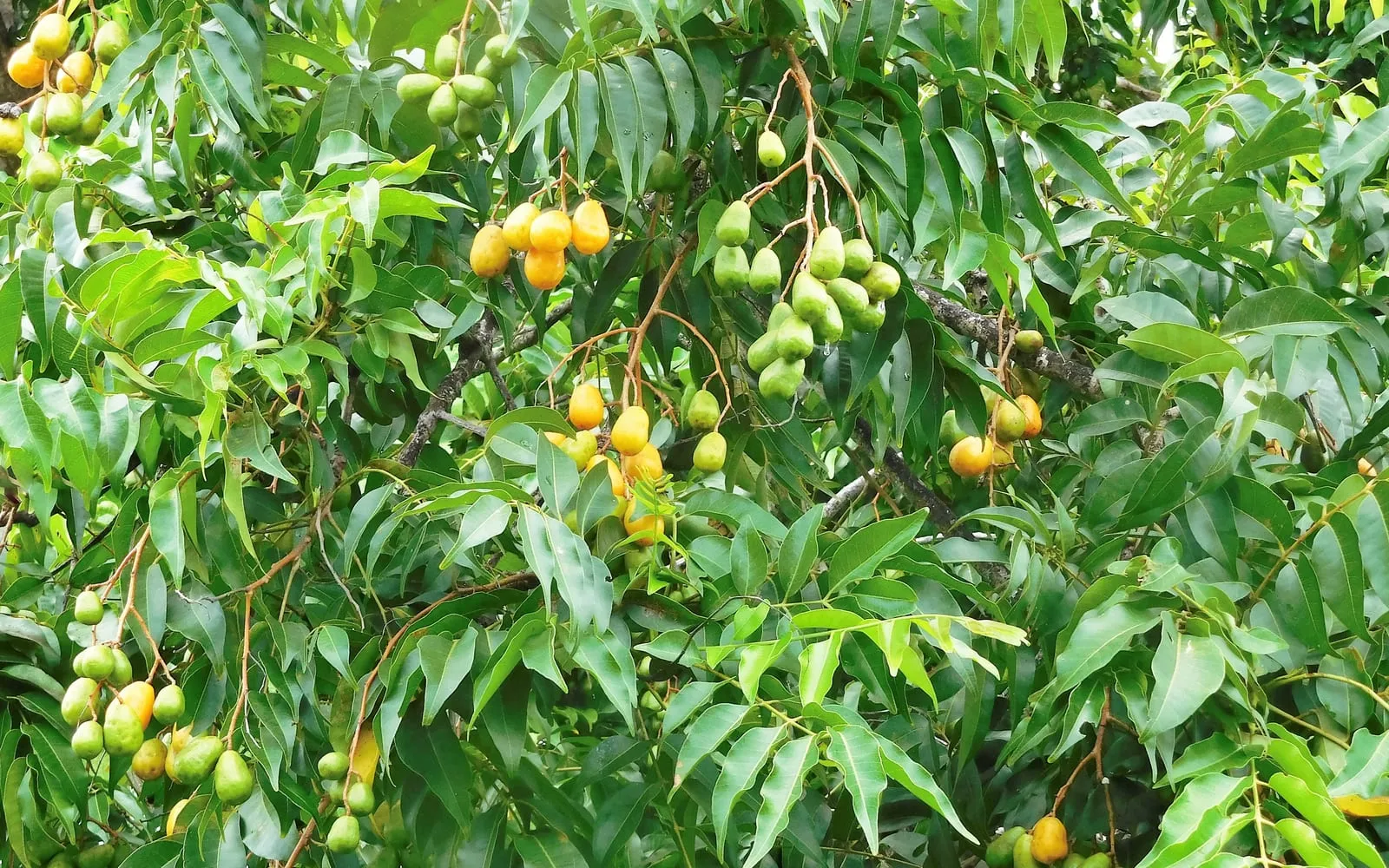
Leaves are pinnate, 20 to 40 cm, with 5 to 20 pairs of oblong leaflets, and they fall in the dry season.
Flowers are small, white to cream, in large loose terminal panicles, and they appear alongside the new leaves or a little ahead of them.
Fruit hangs in clusters, oval to oblong, 2.5 to 4 cm, ripening from green to a clear bright yellow.
Flesh is thin, yellow, juicy, sharp and strongly aromatic, with a scent between mango and pineapple.
The stone is large, woody and fibrous, taking up much of the fruit, which is why the flesh is generally juiced rather than eaten.
Where it is from
Yellow mombin is native to tropical America, from Mexico through Central America and across the Amazon basin into Brazil and the Caribbean.
Brazil made it a commercial fruit. The north east grows caja for pulp and juice, and the frozen pulp is sold nationally and exported to Brazilian communities abroad.
Slave ships and colonial trade carried it to West Africa, where it naturalised thoroughly and is now a common wayside tree from Senegal to Nigeria.
It also reached Asia and is grown in a small way in India and South East Asia.
The name hog plum comes from the Caribbean practice of letting pigs eat the windfalls, and the tree is often left standing in pasture for that reason.
Temperate markets see frozen caja pulp in Brazilian and Latin American food shops.
How it grows
Take a large hardwood cutting, as with red mombin. A thick branch set in free-draining compost roots readily.
Sow seed if no cutting is available. Germination is slow and uneven, taking four to twelve weeks at 22 to 28 deg C, and the stone often produces several seedlings.
Grow in free-draining compost. The species tolerates poor ground.
Give full sun and a minimum of 8 deg C.
Water weekly in growth and keep the plant nearly dry while leafless.
Feed monthly from April to September.
Prune while dormant. The tree is large in the open and needs restraint in a pot.
Expect fruit in three to four years from a cutting and five to seven from seed.
Give a cool dry winter rest, which is what triggers flowering.
Through the seasons
Winter is dormancy. Hold above 8 deg C, keep the compost nearly dry, and feed nothing.
Late winter is the pruning window while the plant is bare.
Spring brings flowers alongside the new leaves or a little ahead of them.
Early summer is fruit set.
Midsummer is fruit swell.
Late summer to autumn is harvest.
Late autumn is leaf fall and dormancy.
Care difficulty
Moderate, and similar to red mombin.
The deciduous habit is the advantage, since a cool dry cool winter suits it.
Propagation from a cutting is easy and fruit follows in three or four years.
Soil is undemanding.
Size is the obstacle. Yellow mombin is larger than red mombin in the open and needs harder pruning in a pot.
Overwatering during dormancy is the commonest cause of loss.
The fruit is mostly stone, so a crop is a juice crop rather than a dessert one, so allow for that before committing the space.
Watering
Water weekly in growth, giving a thorough soak.
Keep the compost nearly dry through winter dormancy.
Water steadily during fruit swell.
Drain fully.
Tap water is fine.
Keep humidity moderate to high in summer.
Resume watering as the flowers and leaves appear.
Warning signs, diseases and pests
A bare tree in winter is normal.
Wilting in damp compost during dormancy is root rot.
Brown limpets on the stems are scale.
White fluff in the leaf axils is mealybug.
Fine webbing on the leaves is spider mite.
Blackened tips after a cold night are frost damage.
No flowers after a warm wet winter means there was no proper dry rest.
Fruit dropping green is irregular watering.
Several seedlings from one stone is normal for the genus.
Growing environment
A frost-free greenhouse or conservatory, standing outdoors in a warm summer.
Winter at 8 to 14 deg C, dry, with the plant leafless.
Summer at 22 to 32 deg C.
Full sun.
Moderate to high humidity in summer.
Free-draining compost of moderate fertility.
pH from 5.5 to 7.5.
A large pot and hard annual pruning, since the tree is naturally big.
Feeding
Feed monthly from April to September with a balanced liquid feed.
Switch to high potash as fruit swells.
Stop feeding at the end of August so the wood hardens.
Give nothing through winter.
Repot or top-dress in late winter while the plant is bare.
Keep feeding moderate.
Add magnesium if older leaves yellow between the veins.
Troubleshooting
What is caja? The Brazilian name for this fruit and for the juice made from it. Suco de caja is a fixture across north eastern Brazil, and the frozen pulp is what reaches temperate markets.
Why is it called hog plum? From the Caribbean practice of letting pigs clear the windfalls under the tree.
Can I eat it fresh? You can, and most of the fruit is stone. It is sharp and aromatic and is nearly always juiced instead.
How is it different from red mombin? Yellow mombin is larger in tree and fruit, yellow rather than purple-red, sharper, and native to the Amazon and the Caribbean rather than to Central America.
How do I propagate it? A large hardwood cutting roots readily, as with red mombin, and fruits in three or four years.
It never flowered. It needs a cool dry winter rest. A warm wet winter prevents flowering.
Several plants came from one stone. Normal for the genus.
Is it related to mango? Yes, both are in the Anacardiaceae, and the sap can irritate anyone strongly sensitive to poison ivy.
Yellow Mombin problem guides
Not sure what is wrong? See the common vegetable pests guide.