
Edible
Cape Gooseberry
Physalis peruviana
Also known as Physalis, Goldenberry, Peruvian groundcherry, Inca berry
How to grow cape gooseberries, Physalis peruviana. The long season it needs, overwintering the plant under glass, and waiting for the husk to go papery.
At a glance
- Difficulty
- Moderate
- Water
- Weekly. It is drought-tolerant once established
- Light
- Full sun, under glass or in the warmest outdoor position
- Temperature
- 18-28 deg C. Growth stops below 15 deg C and frost kills it
- Hardiness
- USDA 8-11, RHS H2, hardy to 0 C
- Type
- Tender perennial grown as an annual, or overwintered under glass
- Height
- 90-180 cm
- Native to
- The Andes of Peru, Ecuador and Colombia
- Best month
- March in the Northern Hemisphere, September in the Southern Hemisphere
Warm days and cool nights are what it was selected under, and fruit set falls away above about 30 deg C. Frost kills the top growth outright, so most temperate growers treat it as an annual raised from seed each spring. It has naturalised widely in Australia, Hawaii and the Pacific, where birds spread it into disturbed ground.
Hardiness zones describe winter cold alone. Summer heat, humidity, rainfall and the length of the growing season decide as much, so treat the range as the outer limit rather than as a recommendation.
Every month named in this guide is for the temperate Northern Hemisphere. If you garden in the Southern Hemisphere, shift each one by six months, so March becomes September. Closer to the equator the wet and dry seasons matter more than the calendar, and the shift stops being a useful guide.
Toxic if eaten
- Safe to eat
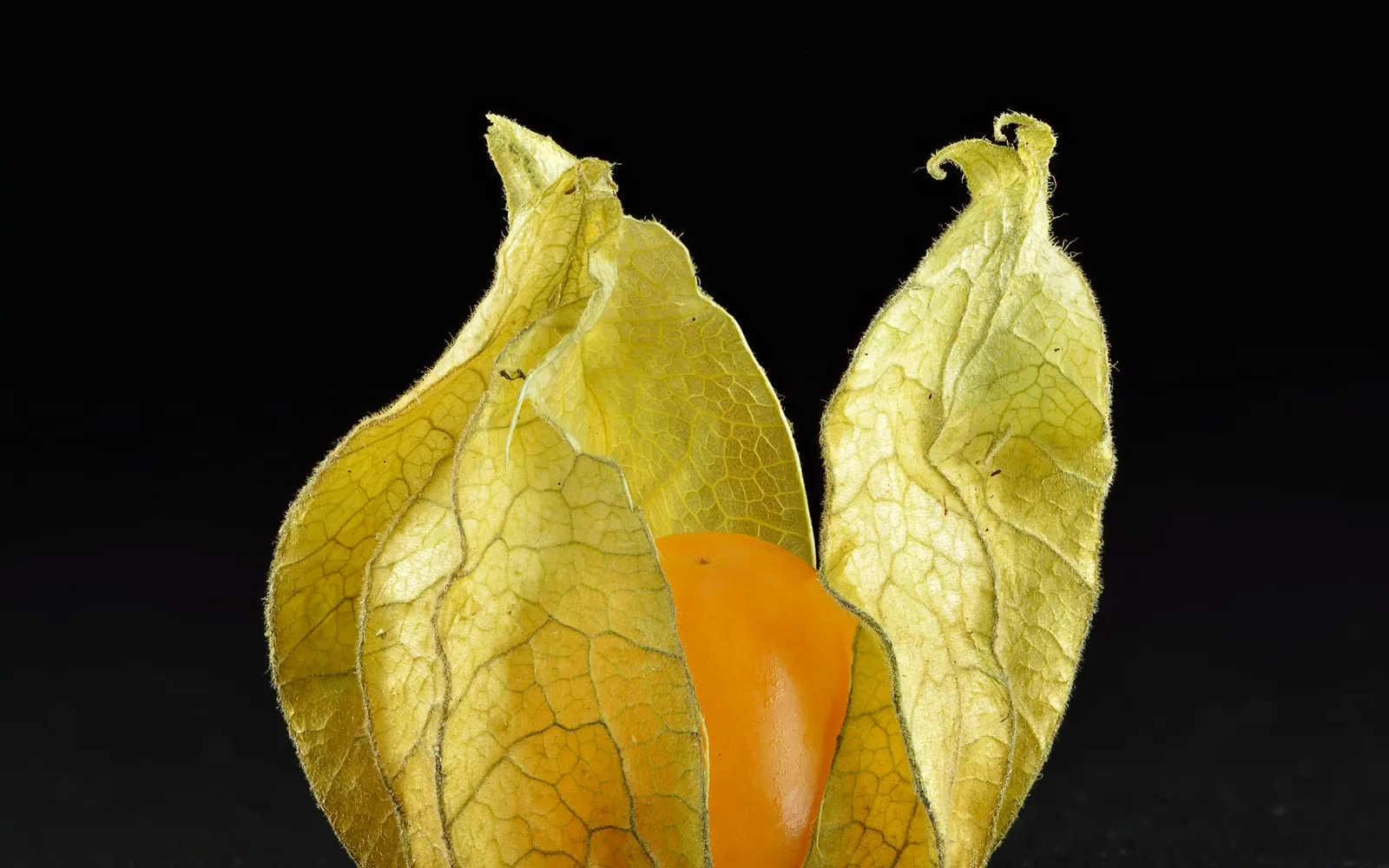
- The ripe orange fruit inside a papery husk
- Harm from
- Eating it
- Affects
- People, cats and dogs
The ripe cape gooseberry is a food crop grown commercially in South America and southern Africa and is safe. The rest of the plant is not. Physalis peruviana is in the Solanaceae, and its leaves, stems, husks and unripe fruit contain solanine and related glycoalkaloids. The RHS lists Physalis among plants harmful if eaten, and the ASPCA lists the genus as toxic to cats and dogs, so keep pets away from foliage and windfalls. Unripe fruit is the practical risk, because a green berry looks much like a ripe one inside its husk and causes stomach upset. The test is the husk rather than the fruit. A ripe berry sits inside a dry, papery, straw-coloured lantern and is deep golden-orange; a green berry in a green fleshy husk is not ready. Fruit that has fallen from the plant is generally ripe, which is why commercial growers harvest windfalls. The husk itself is inedible and always discarded.
Sources: RHS potentially harmful garden plants, ASPCA toxic and non-toxic plants
About
The cape gooseberry is the golden berry in a papery lantern that arrives on restaurant desserts with its husk peeled back like wings. It grows well under glass in a cool climate and marginally outdoors, and the difficulty is the length of its season rather than any fussiness about care.
The plant needs about five months from planting out to ripe fruit, which in practice means sowing in February or March and picking in September and October. A May sowing gives a large handsome bush covered in green husks when the first frost arrives.
The name has nothing to do with the Cape of Good Hope being its home. The plant is Andean. It reached the Cape early enough in the colonial period that British importers named it after where the ships came from rather than where the plant did.
Appearance and character
A bushy spreading plant, 90 cm to 1.8 m, with soft, hairy, angular stems that branch freely and sprawl.
Leaves are heart-shaped, softly velvety on both sides, mid-green, and larger than a tomatillo’s.
Flowers are bell-shaped and pale yellow with five dark purple-brown blotches in the throat, hanging singly and nodding.
The husk inflates as the fruit develops, forming a ribbed papery lantern that starts green and dries to straw or pale brown when the fruit is ripe.
Fruit is a round berry, 1.5 to 2 cm across, turning deep golden-orange, with a smooth waxy skin and many tiny seeds.
Flavour is sweet and sharp together, something between a gooseberry, a pineapple and a tomato, and considerably better from a ripe fruit than from a shop.
Where it is from
Cape gooseberry comes from the Andes of Peru, Ecuador and Colombia, where it grows between 1,500 and 3,000 metres and has been cultivated since Inca times.
Colombia is now the largest commercial producer, exporting under the name uchuva.
The plant reached the Cape Colony in South Africa in the early nineteenth century and was grown there commercially, which is where the English name comes from.
British and Australian gardeners took it from there. Australia grew it widely enough in the nineteenth century that it naturalised and became a weed in places.
The genus Physalis also gives the tomatillo and the Chinese lantern grown as an ornamental, and all three share the inflated calyx.
How it grows
Sow indoors in February or March at 18 to 20 deg C. This is earlier than a tomato and the extra weeks matter.
Germination takes ten to twenty-one days and can be slow and uneven.
Prick out and pot on. Plant into a greenhouse border, a large pot or the warmest outdoor bed in late May at 90 cm apart.
Stake or cage the plant. The stems are soft and a fruiting bush sprawls badly.
Pinch out the growing tip at 60 cm to make the plant branch, which increases the number of fruiting stems.
Pick from September. The reliable signal is the husk drying to a papery straw-brown and the berry inside turning deep orange. Fallen fruit is ripe fruit and worth collecting daily.
Overwinter the plant under glass at 10 deg C or more, cut back by half, and it crops earlier and more heavily in its second year.
Through the seasons
Late winter is sowing, in February or March at 18 to 20 deg C.
Spring grows the plants on under cover. Pot on twice and harden off from mid-May.
Early summer is planting out, in late May, into a greenhouse border or the warmest sheltered outdoor position. Stake at planting.
Summer is growth and flowering. Water weekly, feed fortnightly once fruit sets, and tie in the sprawling stems.
Autumn is the harvest, from September into November under glass. Collect windfalls daily. Cut the plant back and overwinter it under cover, or pull it and start again from seed.
Care difficulty
Moderate, and the season length is the difficulty rather than the care.
Sowing early is the key decision. February or March, not May.
Warmth extends the ripening period at the far end. A greenhouse or polytunnel turns a marginal crop into a reliable one, and outdoors only the warmest sheltered position in a mild district ripens a decent crop.
Overwinter a plant if you can. A second-year plant flowers and fruits weeks earlier and yields far more.
Whitefly under glass is the pest that troubles it, and cape gooseberry attracts them strongly.
Judging ripeness is straightforward once you know to watch the husk rather than the berry.
Watering
Water weekly, around 12 litres per square metre in dry weather.
The plant is drought-tolerant once established and over-watering gives a huge leafy bush with less fruit.
Water at the base rather than over the foliage.
Damp the greenhouse floor in hot weather against red spider mite.
Reduce watering in autumn as the fruit ripens and again over winter for a plant being held over, which needs to be kept just moist.
Container growing works well in a pot of 30 litres, and a potted plant is easier to move under cover in autumn.
Warning signs, diseases and pests
Whitefly are the main glasshouse pest and this plant attracts them more than most. They coat the leaves in honeydew that turns sooty. Introduce Encarsia parasitic wasps early rather than after the population builds.
Red spider mite bronzes the leaves in dry glasshouse heat. Damp down daily and use Phytoseiulus predators.
Aphids cluster on the growing tips and spread virus. Wash them off.
Slugs find fallen fruit before you do. Collect windfalls daily and mulch to keep fruit off bare soil.
Wind rock snaps the soft stems on an unstaked plant.
Green fruit at the first frost means the plant was sown too late or grown too cold. Cut whole branches and hang them indoors, and some will ripen.
Blight is uncommon in this species and can occur in a very wet summer.
Growing environment
Full sun. A greenhouse or polytunnel where summers are short, or the warmest sheltered bed in a mild district.
Free-draining, moderately fertile soil. Rich ground gives a large plant with proportionally less fruit.
Neutral to slightly acid, pH 6 to 7.
Space at 90 cm. The plant sprawls widely.
Stakes or a cage at planting.
Frost-free space at 10 deg C or more if you intend to overwinter the plant, which is worth doing.
Rotate with tomatoes, tomatillos, peppers, aubergines and potatoes on three years.
Feeding
Dig compost into the bed before planting, moderately rather than generously.
Feed fortnightly with a high-potash tomato feed once fruit has set.
Avoid nitrogen, which produces an enormous bush and delays fruiting. This is the commonest feeding mistake with the crop.
Stop feeding in October.
An overwintered plant needs no feeding until growth restarts in March.
Troubleshooting
A big plant covered in green husks at the first frost. Sown too late, or grown too cold. Sow in February or March and grow under glass. Cut whole branches and hang them indoors, since some fruit ripens off the plant.
The fruit tasted unpleasant and upset my stomach. It was unripe. Judge by the husk, which must be dry and papery straw-brown, not by the size of the berry.
A huge leafy bush with few flowers. Too much nitrogen or too rich a soil. Feed with potash rather than nitrogen.
Clouds of small white flies under glass. Whitefly, which this plant attracts strongly. Introduce Encarsia parasitic wasps early.
The plant sprawled and snapped. Soft stems and no support. Stake or cage at planting and pinch out at 60 cm to make it branch.
Slugs are eating the fallen fruit. Collect windfalls daily. Fallen fruit is usually the ripest and is worth having.
Can I keep the plant for next year? Yes, and it is worth doing. Cut it back by half and overwinter under glass at 10 deg C or more. A second-year plant fruits earlier and much more heavily.
Is this the same as a tomatillo? No. Both are Physalis with papery husks. Cape gooseberry ripens to a small sweet orange berry; tomatillo stays green, grows much larger, and is used savoury.
Cape Gooseberry problem guides
Not sure what is wrong? See the common vegetable pests guide.